
Animal Classification Normal Worksheets for Ages 4-6
5 filtered results
Difficulty Level
Grade
Age
-
From - To
Subject
Activity
Standards
Discover an engaging way to teach young learners about animal classification with our Normal Worksheets designed for ages 4-6! These printable activities introduce children to various animal groups, including mammals, birds, reptiles, and amphibians, fostering their understanding of the natural world. Each worksheet incorporates colorful illustrations and easy-to-follow instructions to captivate their interest and enhance comprehension. Through sorting, matching, and coloring exercises, children will develop critical thinking skills while having fun. Perfect for classroom settings or at-home learning, our worksheets promote creativity and foundational science knowledge, making learning about animals an exciting adventure for young minds!
Favorites
With answer key
Interactive
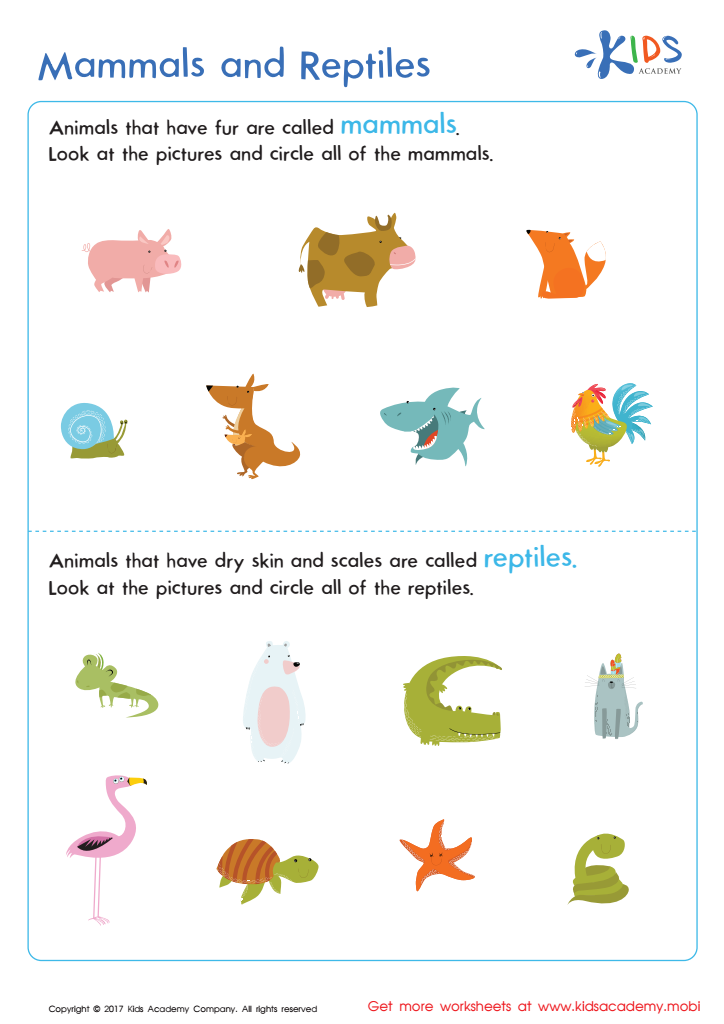
Mammals and Reptiles Worksheet
Challenge your child to identify mammals and reptiles with this worksheet. It's a great way to help them recognize the differences between these two types of animals.
 Assign to My Students
Mammals and Reptiles Worksheet
Worksheet
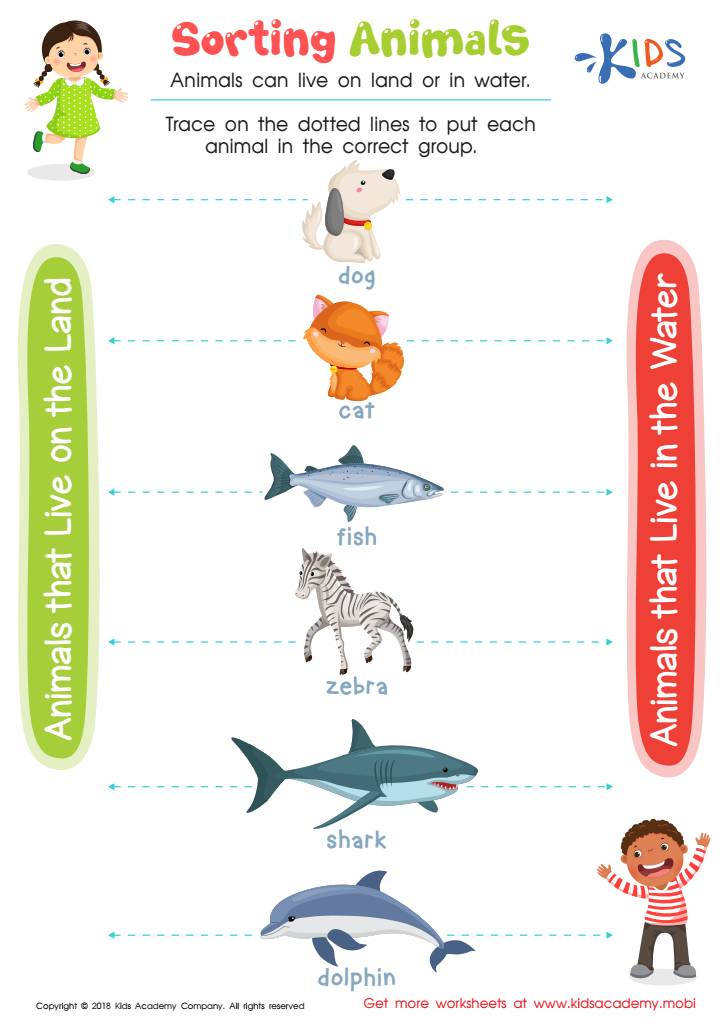
Sorting Animals Worksheet
Your kids will love this free, interactive worksheet! With image clues, they can read and trace the animal names, and then sort them into groups of land or water animals. It's an enjoyable way to boost their critical thinking, fine motor and prior knowledge skills.
Sorting Animals Worksheet
Worksheet
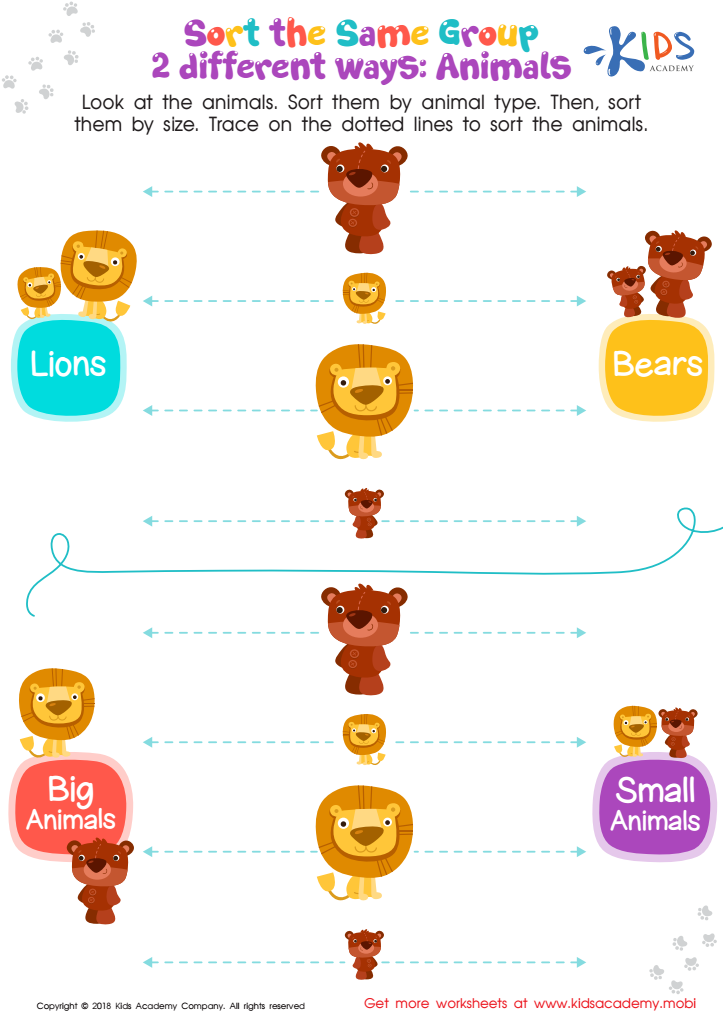
Sort the Same Group 2 Different Ways: Animals Worksheet
Look at the animals with your child. Ask them to name them, then sort them by type (e.g. lions and bears). Next, help them sort by size, tracing the dotted lines. This will teach them sorting skills.
Sort the Same Group 2 Different Ways: Animals Worksheet
Worksheet
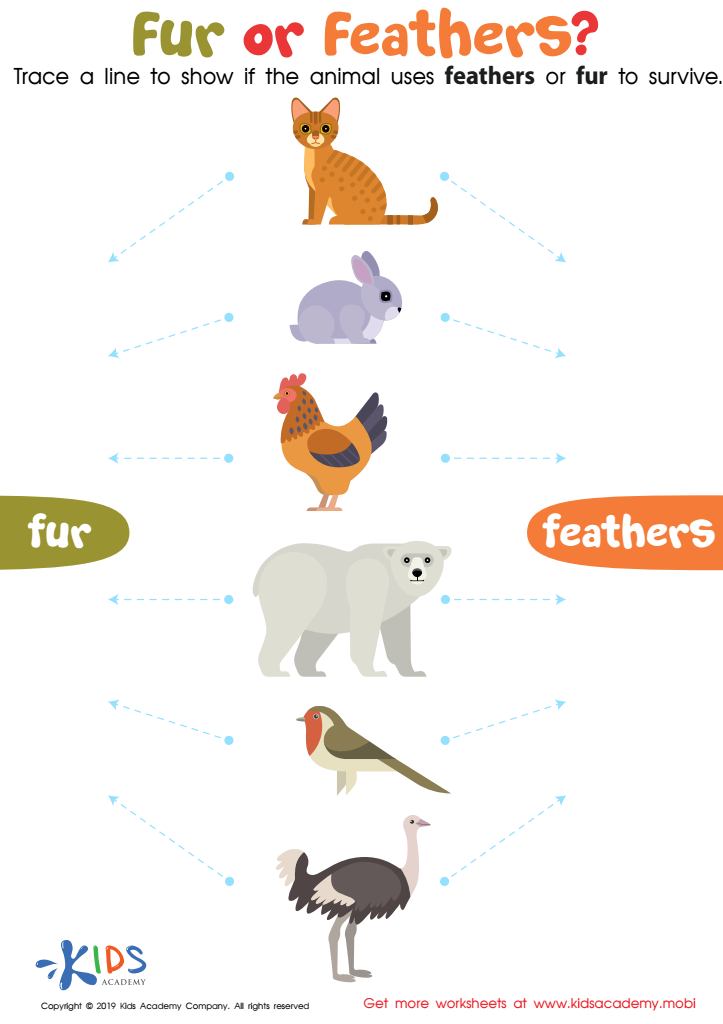
Fur or Feathers? Worksheet
Examine animals you see daily. How do they differ from humans? With a pet in your home, ask your child to touch it and identify what covers the animal's body - fur or feathers? Birds have feathers, while mammals have fur. Guide your kids to identify animals in this worksheet and determine if fur or feathers keep them alive.
Fur or Feathers? Worksheet
Worksheet
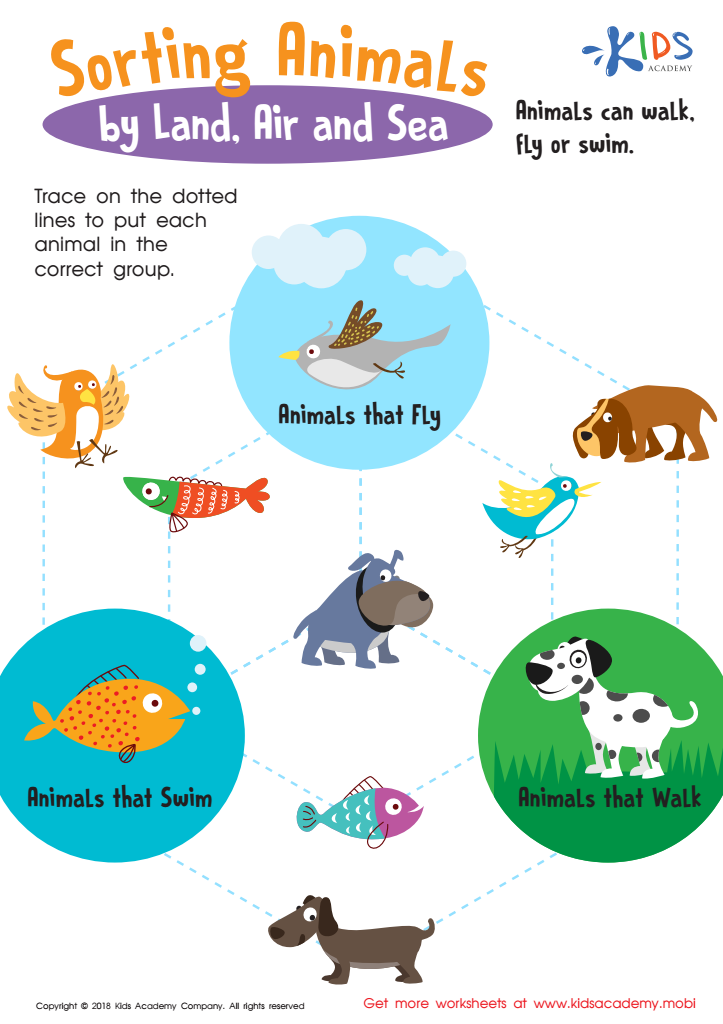
Sorting Animals by Land, Air and Sea Worksheet
Kids will use critical thinking and fine motor skills with this worksheet! They'll analyze animal traits and draw lines to sort them into groups of those that fly, swim, or walk. It's a fun way to hone skills and have a great time!
Sorting Animals by Land, Air and Sea Worksheet
Worksheet
Join Kids Academy for Free
Who is primarily going to use this learning content?








Animal classification is an essential foundational concept for children ages 4-6, as it sets the stage for understanding the natural world. At this age, children are naturally curious about animals, and teaching them how to categorize animals fosters their observational skills and critical thinking. By exploring classifications—such as mammals, birds, reptiles, amphibians, and fish—children learn to recognize similarities and differences, which enhances their ability to make connections and expand their vocabulary.
Moreover, understanding animal classification integrates several key areas of early learning, including science, literacy, and social skills. Parents and teachers can use engaging activities—like sorting animals or creating simple charts—to make learning fun and interactive. This hands-on approach captivates young learners' attention and encourages their innate desire to explore.
Additionally, discussions about animal habitats and behaviors spark empathy and a sense of responsibility toward living creatures and the environment. Recognizing that animals have unique roles within ecosystems fosters a sense of interdependency and respect for nature. By introducing animal classification in a timely manner, parents and teachers enrich children's educational experiences, laying a strong foundation for lifelong learning and stewardship of the world around them.








