Critical thinking development Normal Worksheets for Ages 4-6
4 filtered results
-
From - To
Introduce your little learners to the world of logic and reasoning with our "Critical Thinking Development" worksheets for ages 4-6. Specially designed to cultivate young minds, these engaging activities focus on problem-solving, pattern recognition, and analytical thinking. By encouraging children to explore questions, make connections, and understand cause and effect, these worksheets create a foundation for lifelong critical thinking skills. Perfect for parents and educators, our exercises blend fun and learning to help kids develop crucial cognitive abilities that are essential for academic and personal success. Empower your child's mind today with vibrant, expert-designed activities!
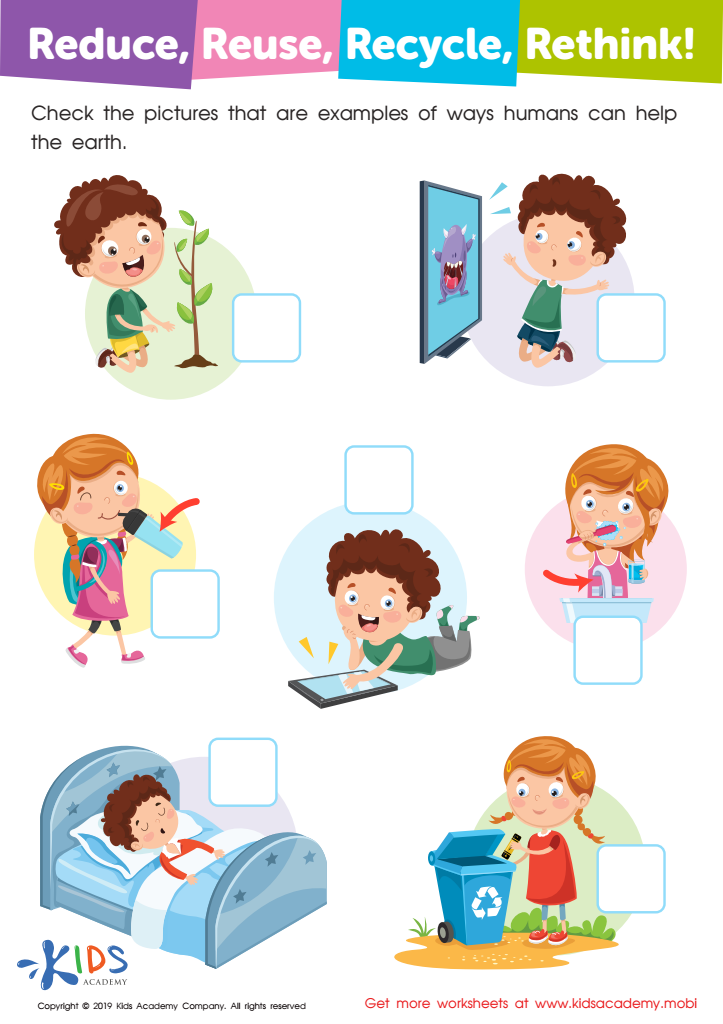
Reduce, Reuse, Recycle, Rethink Worksheet
 Assign to My Students
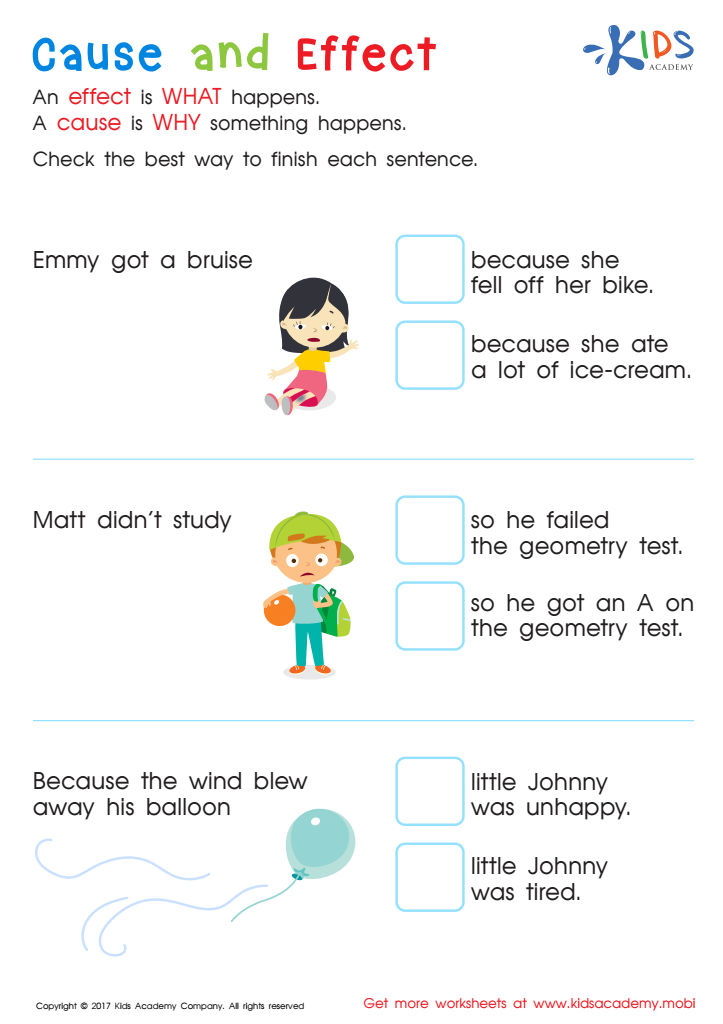
Cause and Effect Worksheet
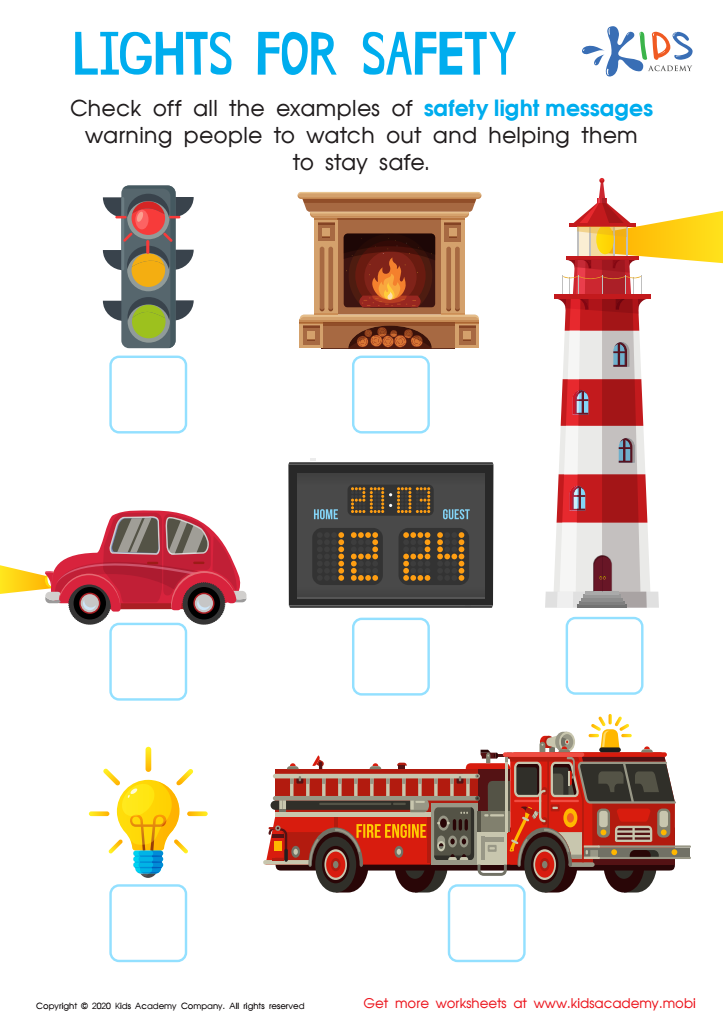
Lights for Safety Worksheet
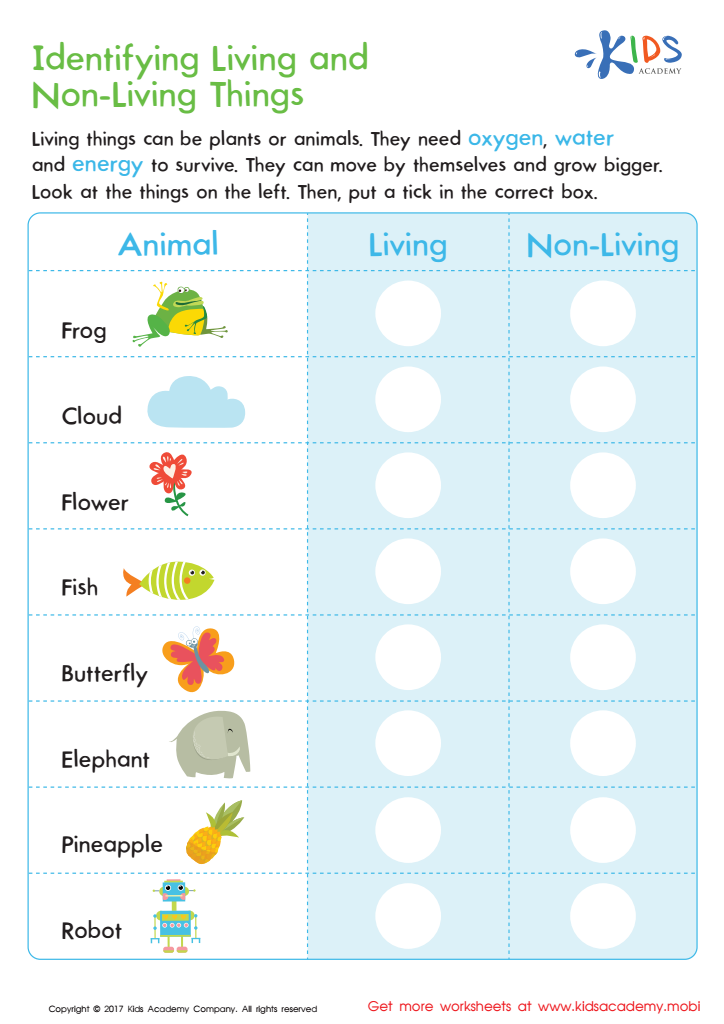
Identifying Living or Non–living Worksheet






Critical thinking development in children aged 4-6 is essential as it lays the foundation for future learning and problem-solving skills. During these formative years, children are naturally curious and more receptive to exploring new concepts. Fostering critical thinking can enhance their ability to analyze, evaluate, and create, rather than just memorize information.
When children develop critical thinking skills early, they learn how to ask questions, understand different viewpoints, and make informed decisions. This skill set aids them in academic settings where more complex problem-solving is required in later grades. Enhanced critical thinking abilities also translate to improved reading comprehension, mathematical reasoning, and scientific inquiry.
Moreover, promoting critical thinking helps children navigate social situations more effectively. They learn to interpret emotions, intentions, and actions, which is vital for forming and maintaining friendships. It encourages empathy and understanding, as they begin to consider others' perspectives and reason through conflicts.
Parents and teachers play a pivotal role in this development. By creating environments where questions are encouraged and reasoning is practiced, adults can help children build these essential skills. Activities like open-ended play, storytelling, puzzles, and group discussions all promote an atmosphere of inquiry and learning, setting a strong foundation for a child's future educational journey.








