
Critical thinking skills Normal Worksheets for Ages 4-6
6 filtered results
Difficulty Level
Grade
Age
-
From - To
Subject
Activity
Standards
Unlock your child's potential with our engaging Critical Thinking Skills Worksheets designed for ages 4-6. These thoughtfully crafted worksheets encourage young learners to explore, analyze, and solve problems in a fun and interactive way. Foster creativity and cognitive skills with activities that challenge their reasoning and decision-making. Perfect for guided learning or independent play, our worksheets offer a balanced mix of puzzles, matching games, and sequencing tasks. Support your child’s early development and prepare them for future academic success. Discover the joy of learning and critical thinking at Kids Academy—where young minds grow and thrive!
Favorites
With answer key
Interactive
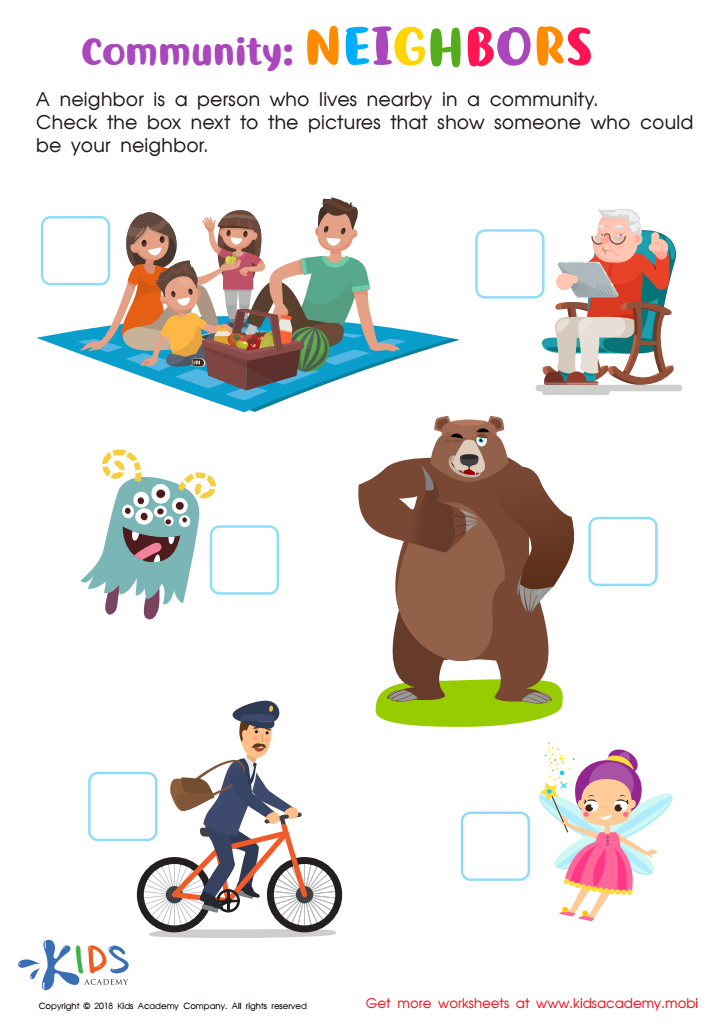
Community: Neighbors Worksheet
This free worksheet helps young learners understand who neighbors are and how they fit into their community. Have your student check out the options, decide which can and can't be neighbours and develop essential social and emotional skills. It's a fun and cheery way to learn about the social sciences!
 Assign to My Students
Community: Neighbors Worksheet
Worksheet
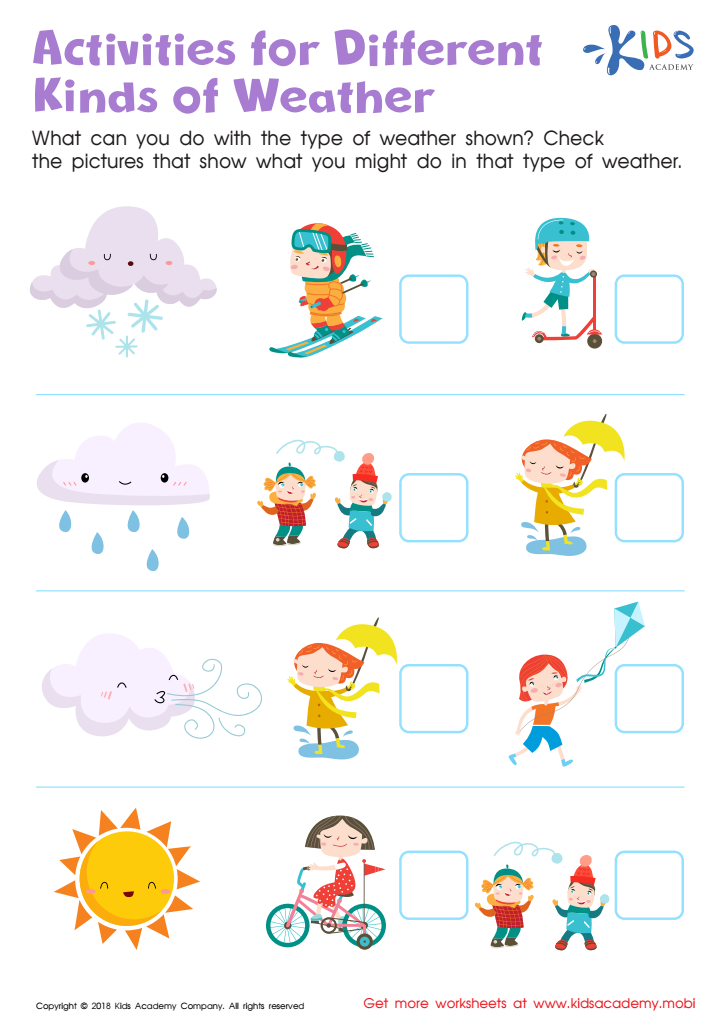
Activities for Different Kinds of Weather Worksheet
Help your child explore the changing seasons with this interactive worksheet. Ask them to name the different seasons and activities associated with each type of weather. Show the pictures and explain what they can do in that kind of weather. Have them check off the activities to help them learn and enjoy the changing seasons.
Activities for Different Kinds of Weather Worksheet
Worksheet
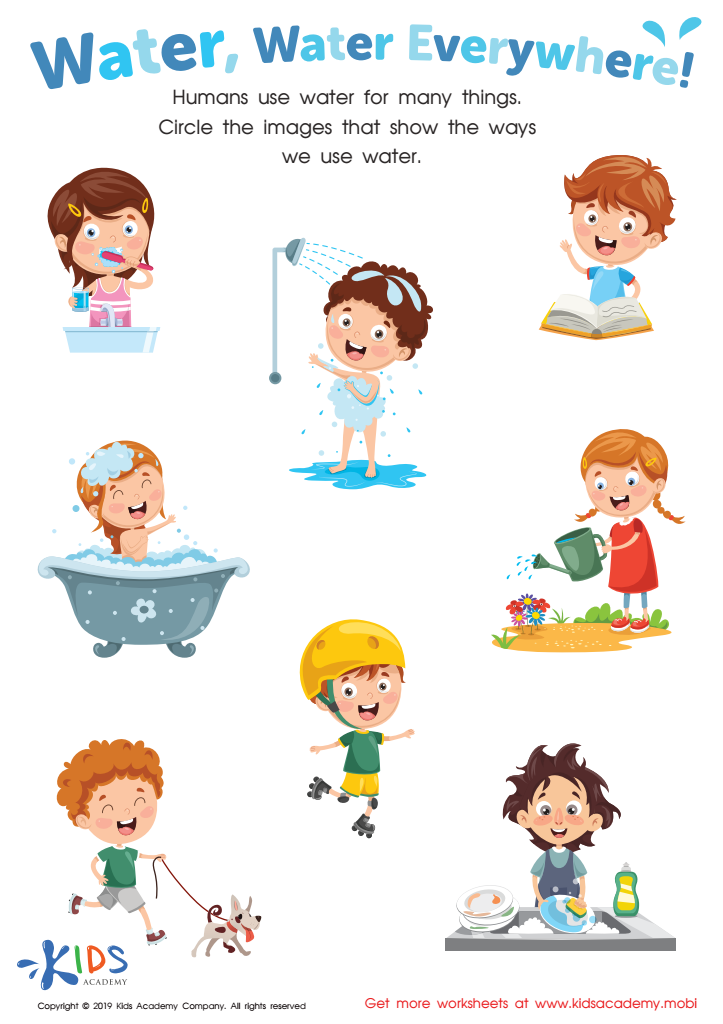
Water, Water Everywhere! Worksheet
Ask your kids how we use water daily. Point out how vital it is to the environment, as many living things couldn't exist without it. Show them this worksheet with kids doing different things that involve water. Ask them to identify what each one is doing, then help them circle the images which show the ways we use the water.
Water, Water Everywhere! Worksheet
Worksheet
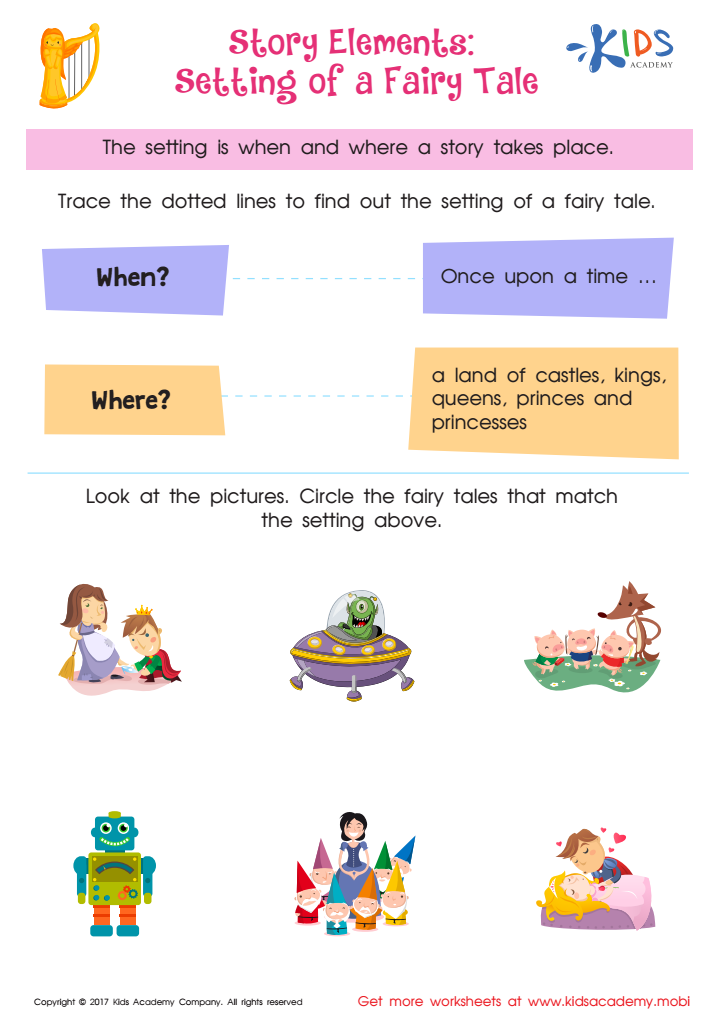
Story Elements: Setting of a Fairy Tale Printable
Help your child learn to analyze stories starting with setting. Use Story Elements worksheet to break down setting into two parts. This will help your child recognize setting quickly and understand its importance in the plot.
Story Elements: Setting of a Fairy Tale Printable
Worksheet
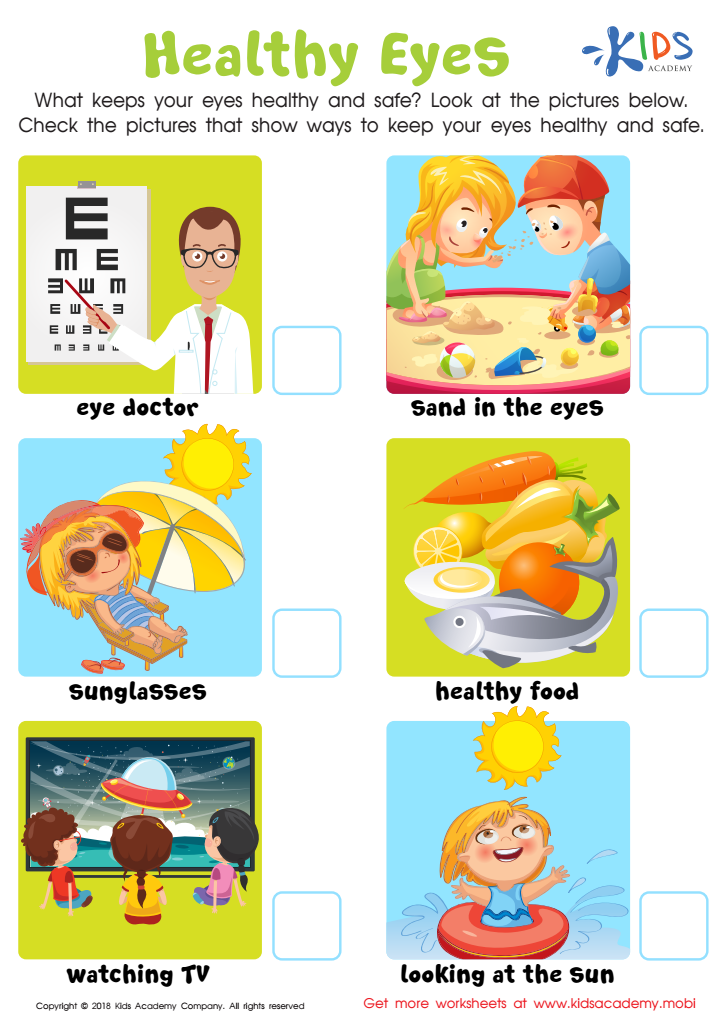
Healthy Eyes Worksheet
Does your child know how to care for their eyes? Help them understand with this worksheet. Look through the pictures together and discuss the different ways to keep the eyes healthy and safe. These include visits to the doctor, wearing sunglasses, and eating healthy food.
Healthy Eyes Worksheet
Worksheet
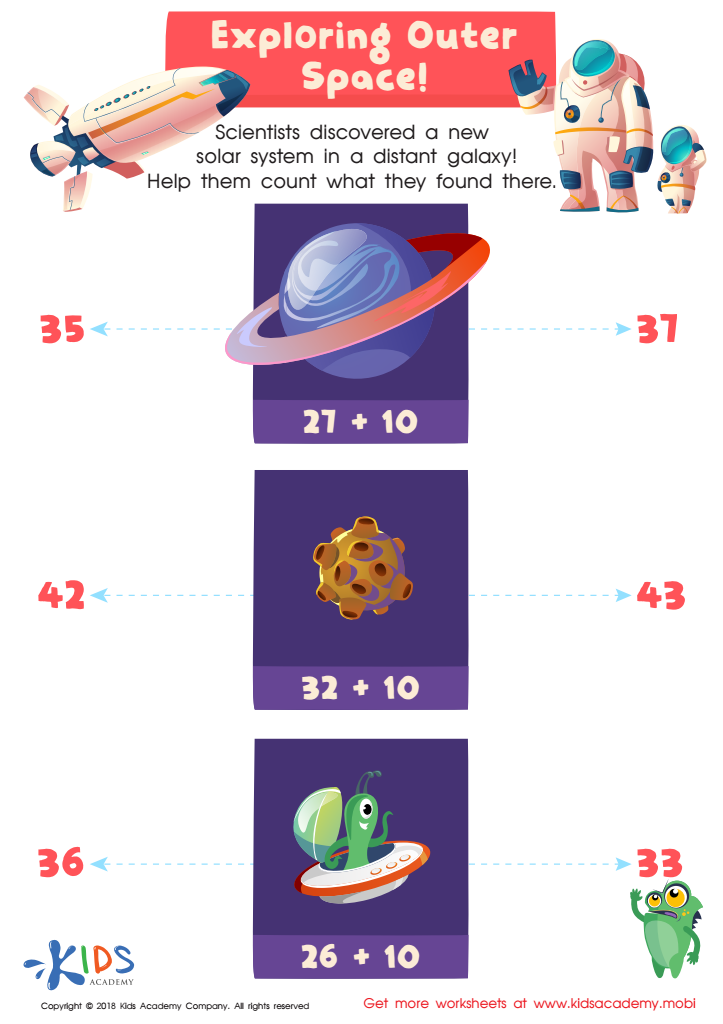
Exploring Outer Space Worksheet
Outer space is an intriguing world. Physics behave differently than on Earth, and much remains to be uncovered. In this worksheet, scientists have located a new solar system in a distant galaxy. Explain to your kids what these two things are, then have them help count the findings. Solve the math problems, then link the lines to the right answer.
Exploring Outer Space Worksheet
Worksheet
Join Kids Academy for Free
Who is primarily going to use this learning content?








Critical thinking skills are crucial for children aged 4-6 for several reasons. During these formative years, young minds are highly impressionable and are rapidly developing foundational cognitive abilities. Cultivating critical thinking skills at this stage helps children become better learners and problem solvers.
First, critical thinking fosters curiosity, helping children to ask questions and explore the world more deeply. Rather than passively absorbing information, children learn to engage with their surroundings, fostering a lifelong love of learning. They start to understand cause and effect, recognize patterns, and make connections, which are essential for academic success and intellectual growth.
Second, these skills promote independence. When children learn to think critically, they become more confident in making decisions, solving problems, and facing challenges. They learn to analyze situations, appreciate different perspectives, and predict outcomes, autonomy which is essential in both social and educational contexts.
Finally, critical thinking supports emotional and social development: analyzing their thoughts and feelings helps them understand and manage their emotions better. Additionally, children who can evaluate and reflect are more empathic, adept at resolving conflicts, and effective communicators.
Developing critical thinking skills early sets the stage for a lifetime of intellectual engagement, resilience, and self-assuredness. Teachers and parents play a key role in fostering this invaluable set of skills.








