Math problem-solving Normal Worksheets for Ages 4-6
3 filtered results
-
From - To
Discover our engaging Math Problem-Solving Worksheets designed specifically for children aged 4-6! These colorful and interactive worksheets provide young learners with a fun way to develop foundational math skills. Each activity emphasizes critical thinking, encouraging kids to approach problems strategically and creatively. With diverse exercises that cover basic concepts such as addition, subtraction, and pattern recognition, children will enhance their problem-solving abilities while boosting their confidence in math. Perfect for both classroom use and homeschooling, our worksheets align with early learning standards, ensuring a comprehensive educational experience. Explore our collection and watch your child thrive in their math journey!
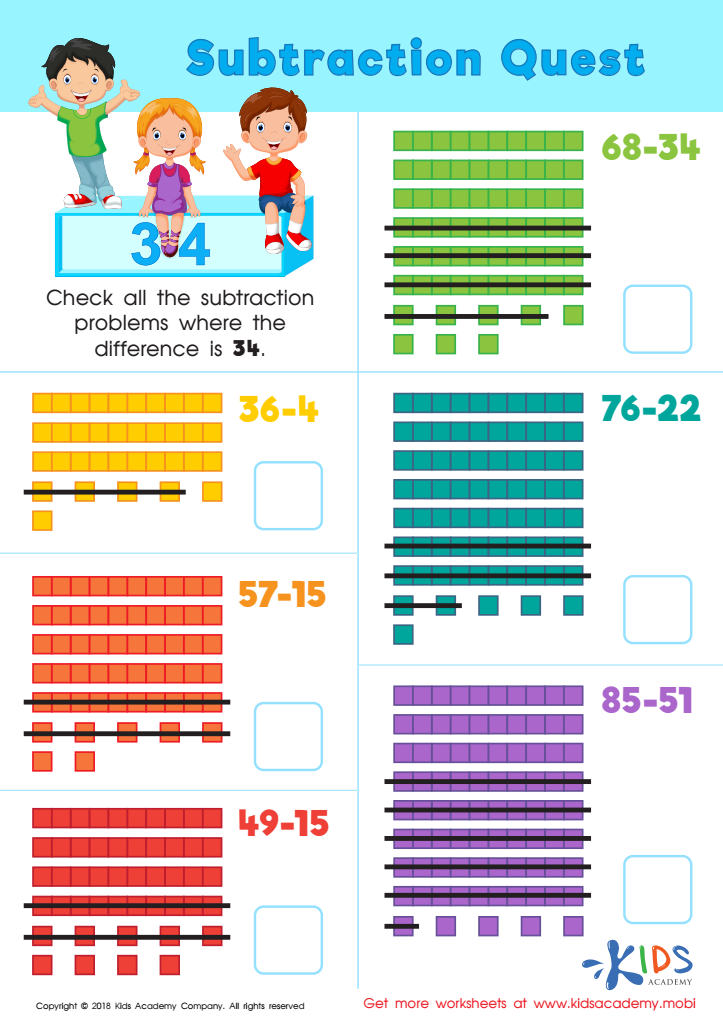
Subtraction Quest Worksheet
 Assign to My Students
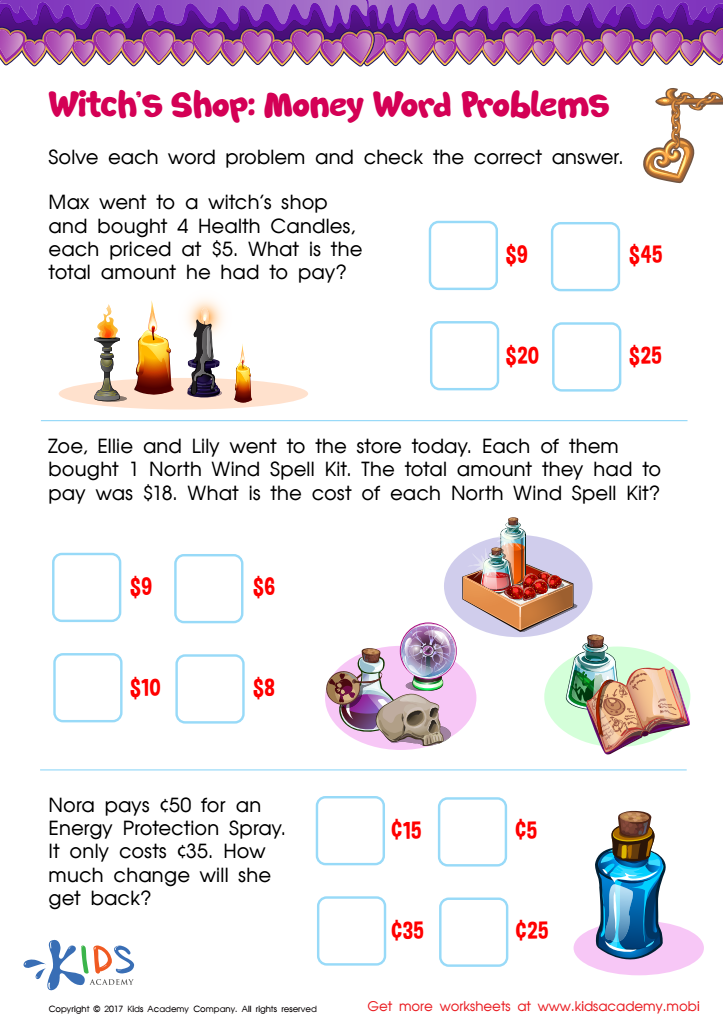
Money Word Problems Printable
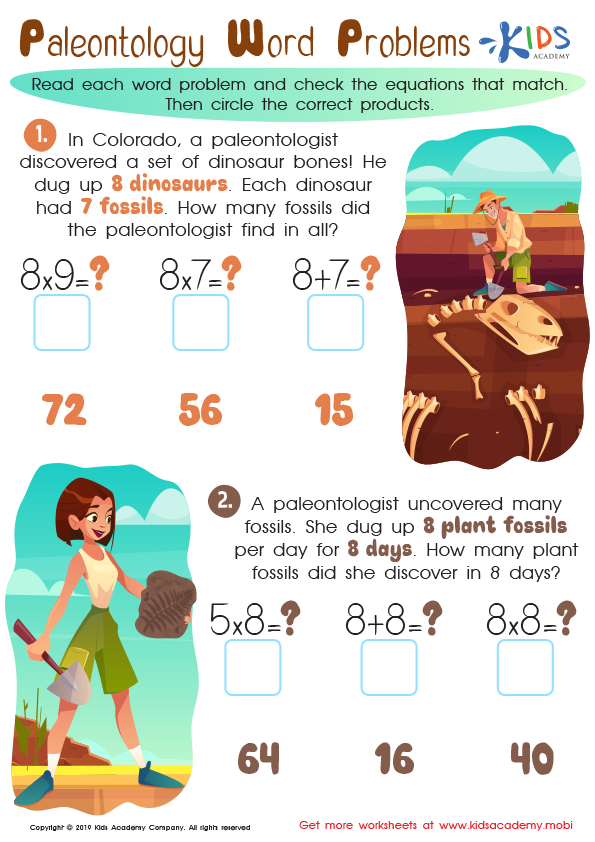
Archeology Word Problems Worksheet








Parents and teachers should care about math problem-solving for ages 4-6 because this foundational stage greatly influences children's cognitive development and lifelong learning skills. At this age, children are developing critical thinking and reasoning abilities, which are essential in math. Engaging young children in problem-solving activities not only helps them understand basic concepts like numbers and shapes but also enhances their ability to analyze situations, make decisions, and find solutions.
Collaborative problem-solving during these formative years fosters communication skills and encourages teamwork, building social connections and emotional intelligence. Likewise, arithmetic and logical thinking are integral to numerous everyday situations, such as counting objects or comparing sizes, nurturing practical life skills.
Moreover, early math experience is a predictor of future academic success. Research indicates that strong problem-solving skills in early childhood are closely linked to higher achievement in math as children progress through their schooling. Lastly, exposing children to math in playful and engaging ways lays the groundwork for a positive attitude towards the subject, diminishing anxiety about math later on. By supporting math problem-solving at this stage, educators and parents play a vital role in developing not just competent mathematicians, but confident problem solvers.








