Recognizing Patterns Normal Worksheets for Ages 4-6
6 filtered results
-
From - To
Discover our engaging "Recognizing Patterns Normal Worksheets" designed for ages 4-6! These worksheets offer exciting activities that help young learners identify and understand patterns through colorful visuals and interactive exercises. Each worksheet promotes critical thinking and fine motor skills as children recognize sequences, sort objects, and complete patterns. Perfect for home or classroom use, our age-appropriate materials encourage creativity while building a solid foundation in math and problem-solving. Enhance your child's cognitive development and keep them entertained with our playful, educational resources. Browse now to find the ideal worksheets that make learning about patterns both fun and effective!
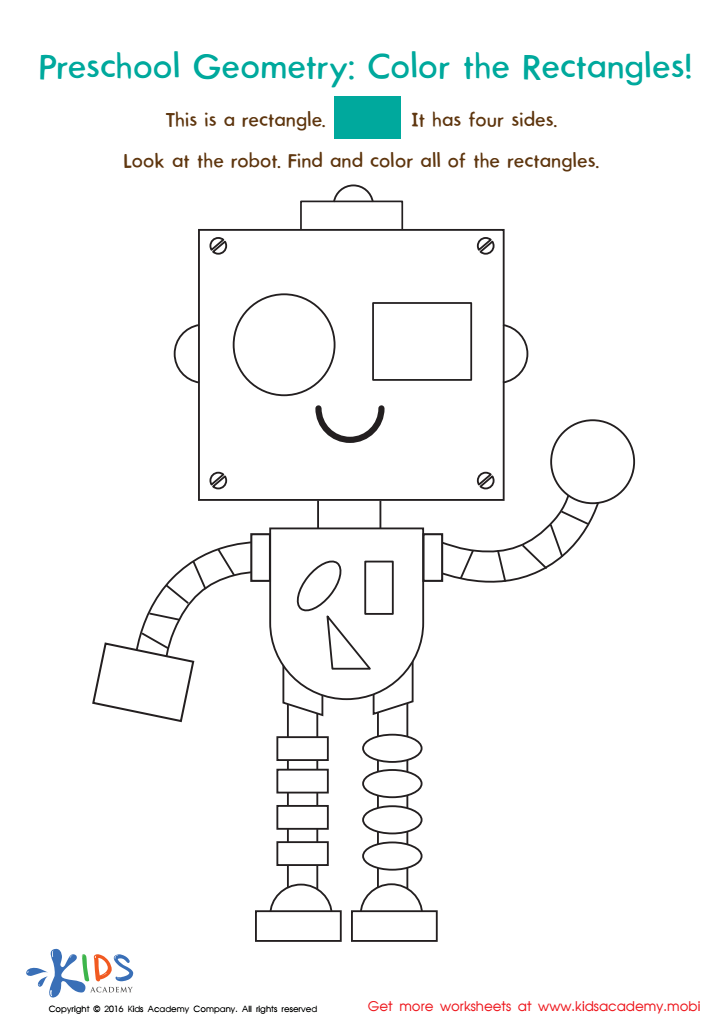
Geometry Worksheet
 Assign to My Students
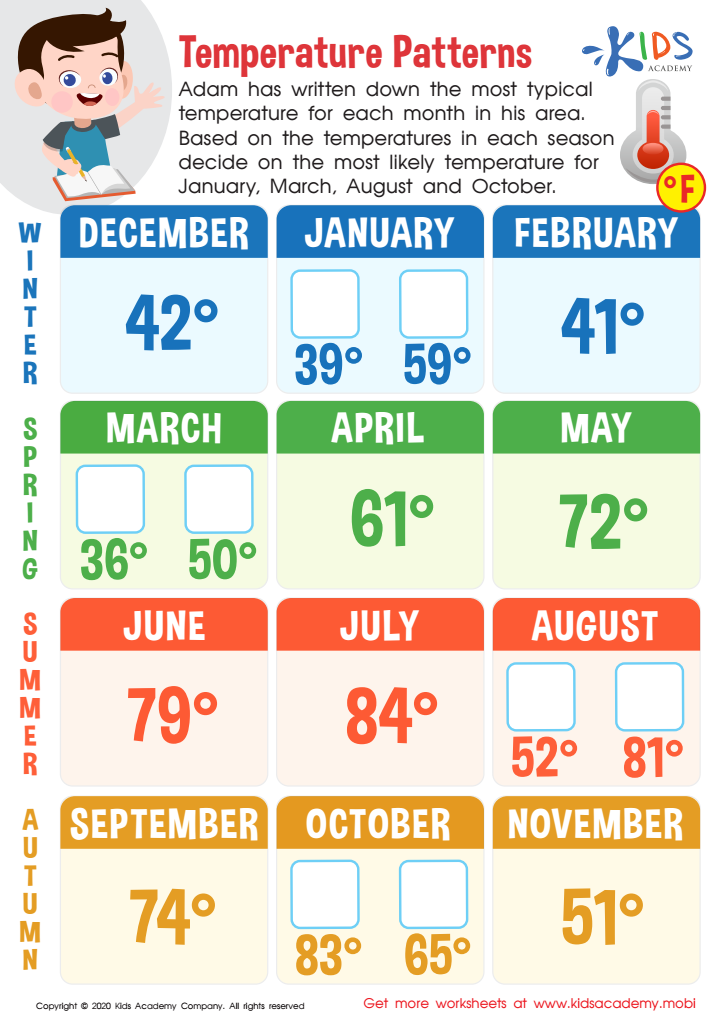
Temperature Patterns Worksheet
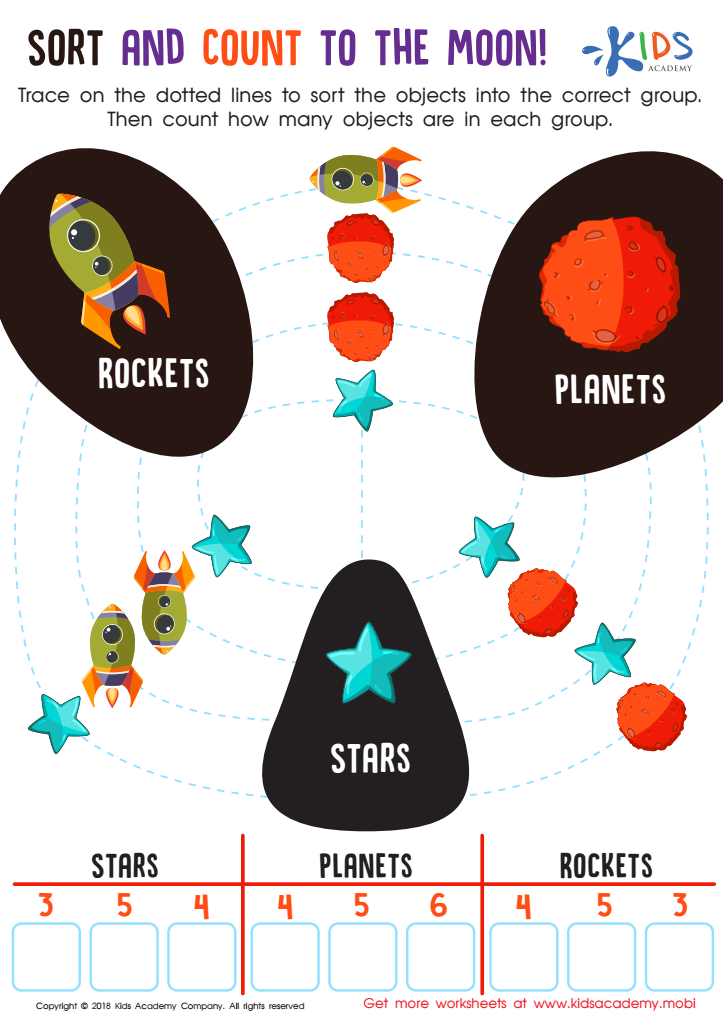
Sort and Count to the Moon Worksheet
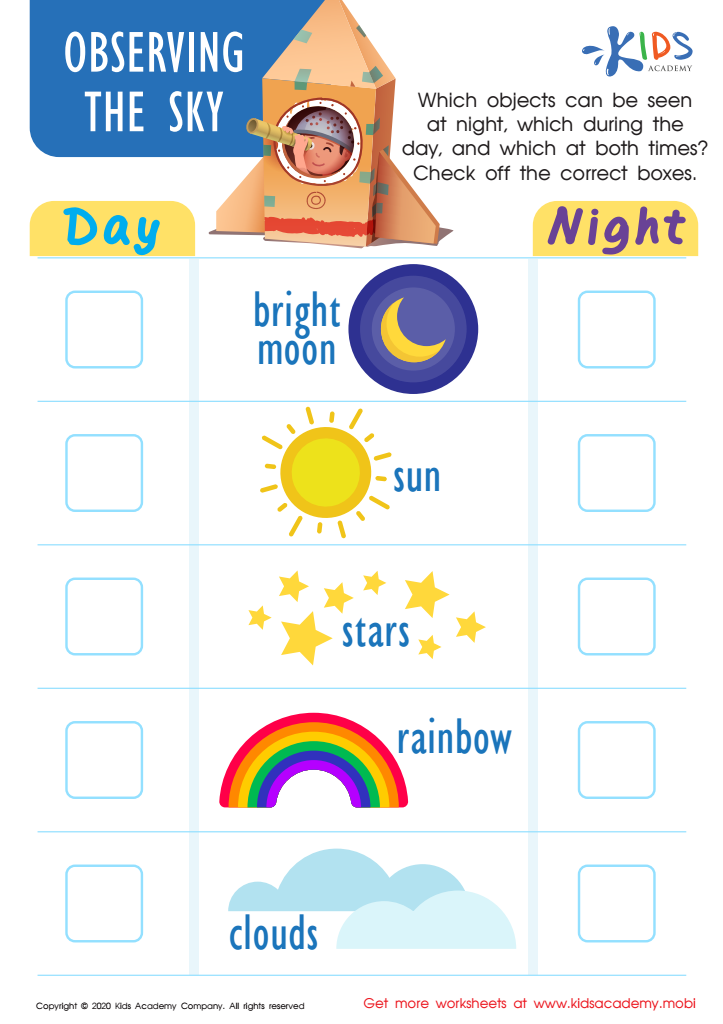
Observing the Sky Worksheet
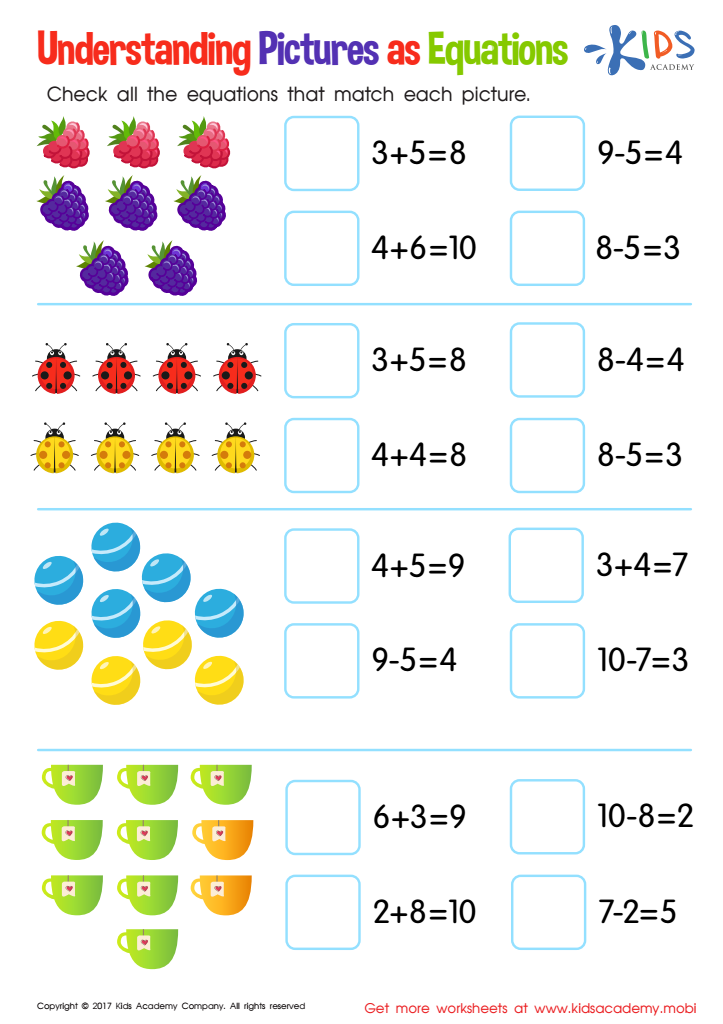
Understanding Pictures as Equations Worksheet
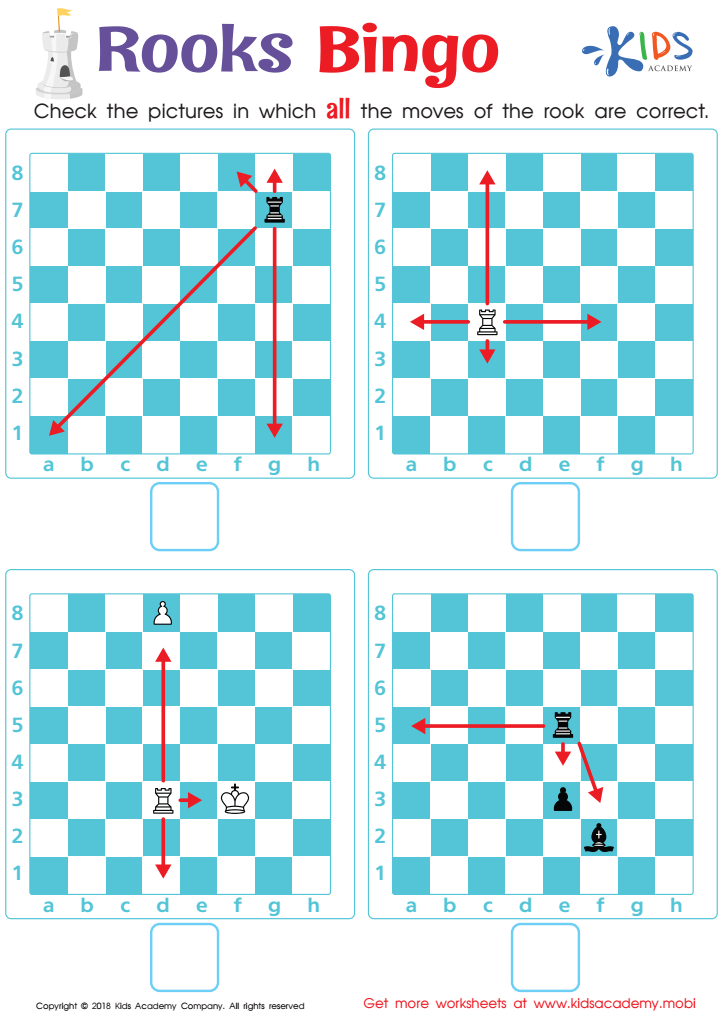
Rooks Bingo Worksheet







Recognizing patterns is a foundational skill that is crucial for children's cognitive development and mathematical understanding, particularly for ages 4-6. During this stage of early childhood, children are highly receptive to learning through play and exploration. Identifying patterns—whether visual, auditory, or behavioral—helps children make connections between concepts, enhancing their logical thinking skills.
Parents and teachers should care about this skill because it lays the groundwork for more complex problem-solving abilities. When children recognize and extend patterns, they develop skills in critical thinking and reasoning that are applicable in various subjects, especially mathematics. For instance, understanding patterns aids in grasping concepts like addition, subtraction, and sequencing, which are essential for future learning.
Moreover, pattern recognition fosters creativity and observation skills, as children learn to notice relationships and differences in their environment. Engaging activities such as sorting, building patterns with blocks, or playing rhythm games can make this learning fun and interactive.
Ultimately, fostering an early awareness of patterns sets children on a path for academic success while also enhancing their everyday understanding of the world around them. Encouraging these skills in early education nurtures lifelong learners and innovative thinkers.








