Science vocabulary expansion Normal Worksheets for Ages 4-6
3 filtered results
-
From - To
Elevate your child's science learning with our Science Vocabulary Expansion Normal Worksheets for Ages 4-6. These engaging worksheets, specially crafted for young minds, introduce fundamental science terms through fun activities. Kids will bolster their emerging vocabulary, enhance comprehension, and learn to identify key scientific concepts. Perfect for early learners, each worksheet combines colorful illustrations with age-appropriate exercises, making science both educational and enjoyable. These worksheets support curiosity and critical thinking, setting a strong foundation for future scientific inquiry. Explore our collection and bring the fascinating world of science to your child's fingertips today!
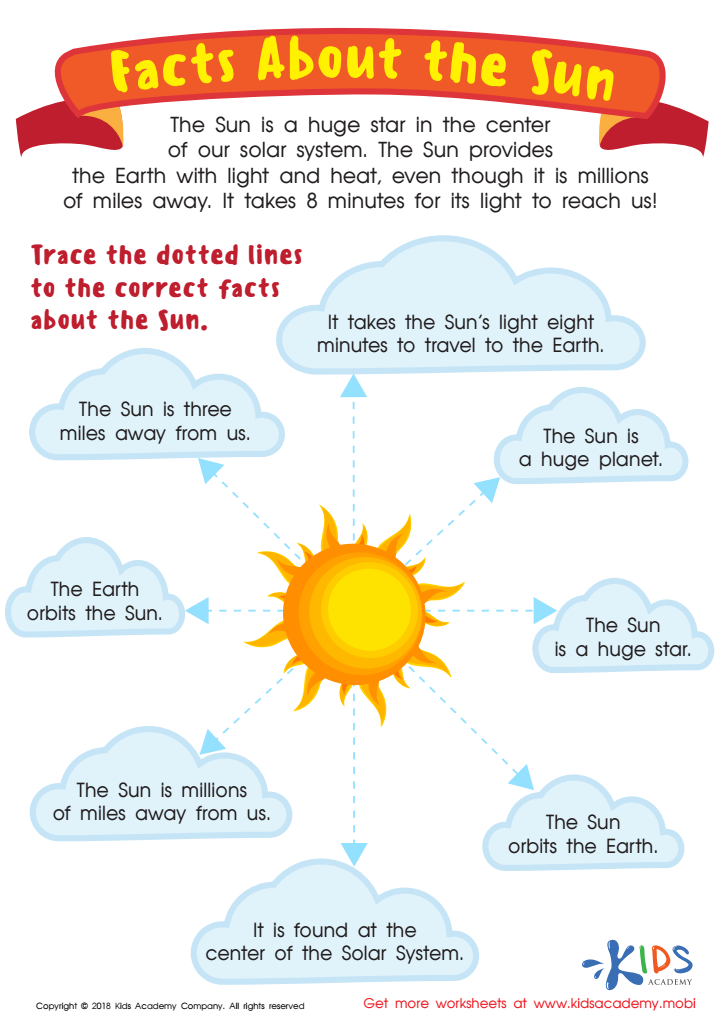
Facts About the Sun Worksheet
 Assign to My Students
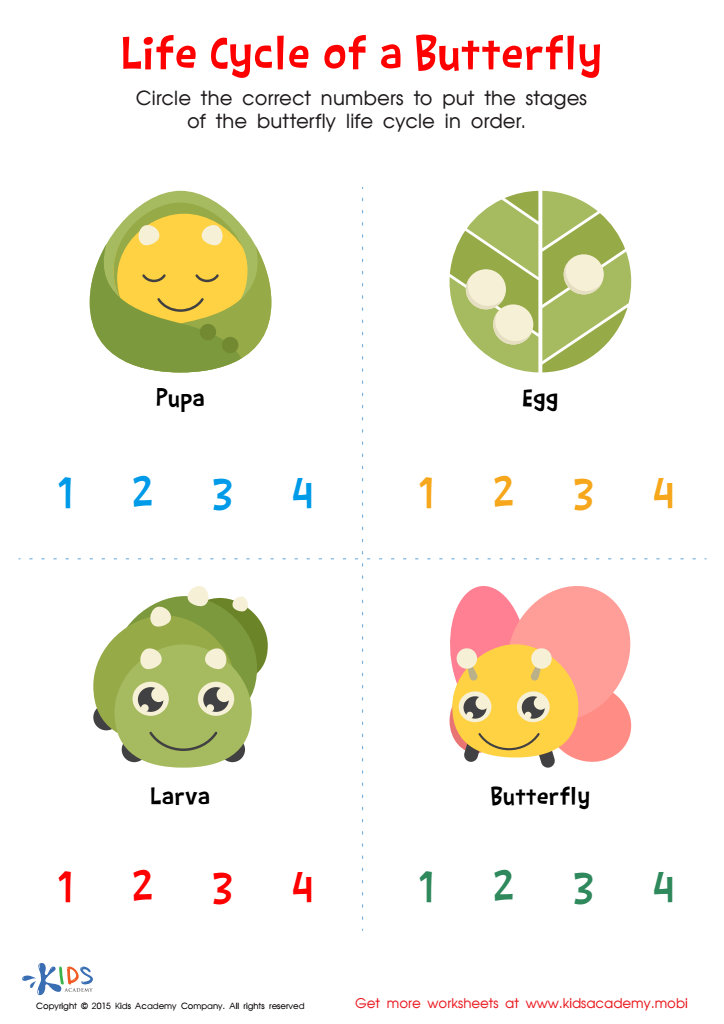
Life Cycle of Butterfly Printable
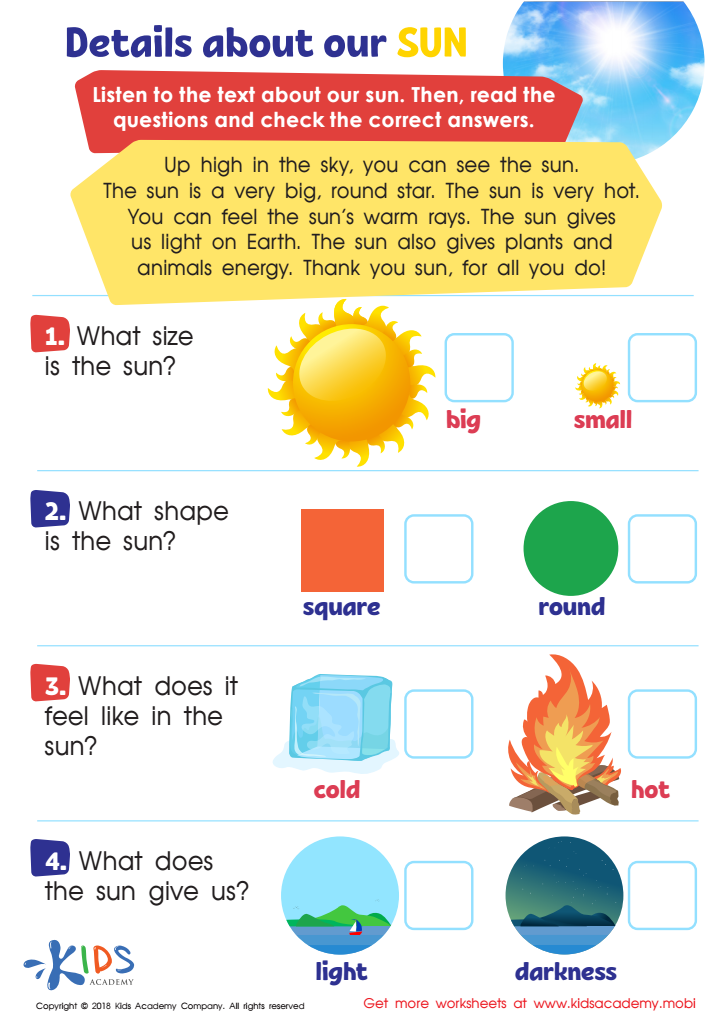
Details About Our Sun Worksheet








Science vocabulary expansion for ages 4-6 is crucial because it lays the foundation for future academic success and stimulates intellectual curiosity in young children. During these formative years, children's brains are exceptionally receptive to learning new words and concepts. Introducing science-related vocabulary enhances their cognitive development by fostering critical thinking and problem-solving skills.
Understanding scientific terms helps children make sense of the world around them. For instance, learning words like “observe,” “measure,” and “predict” enables them to engage with natural phenomena more meaningfully and accurately. This early exposure encourages a sense of wonder and curiosity, essential traits for lifelong learning.
Additionally, a robust science vocabulary helps children perform better in school. It contributes to improved reading comprehension and communication skills, as many scientific words find their way into various academic subjects. For example, knowing what "photosynthesis" means can boost understanding in both science and reading classes.
Parents and teachers play a pivotal role in this educational journey. By incorporating science vocabulary into daily conversations and activities, they create enriching learning environments that stimulate curiosity and imagination. Whether through storybooks, games, or nature walks, integrating science vocabulary makes learning a fun, explorative, and engaging process. This strong foundational knowledge paves the way for a lifetime of enthusiasm and success in science and other disciplines.








