Syllable identification Normal Worksheets for Ages 4-6
3 filtered results
-
From - To
Unlock the world of reading with our Syllable Identification Normal Worksheets specially designed for ages 4-6! Perfect for early learners, these engaging worksheets help children break down words into manageable parts, enhancing their phonetic skills and reading fluency. Each fun activity focuses on counting, clapping, and exploring syllables in common words, making learning interactive and enjoyable. Foster early literacy in your child by reinforcing syllable recognition, a crucial step in their reading journey. Our expertly crafted worksheets ensure that kids build a solid linguistic foundation while having loads of fun. Dive into syllable exploration today!
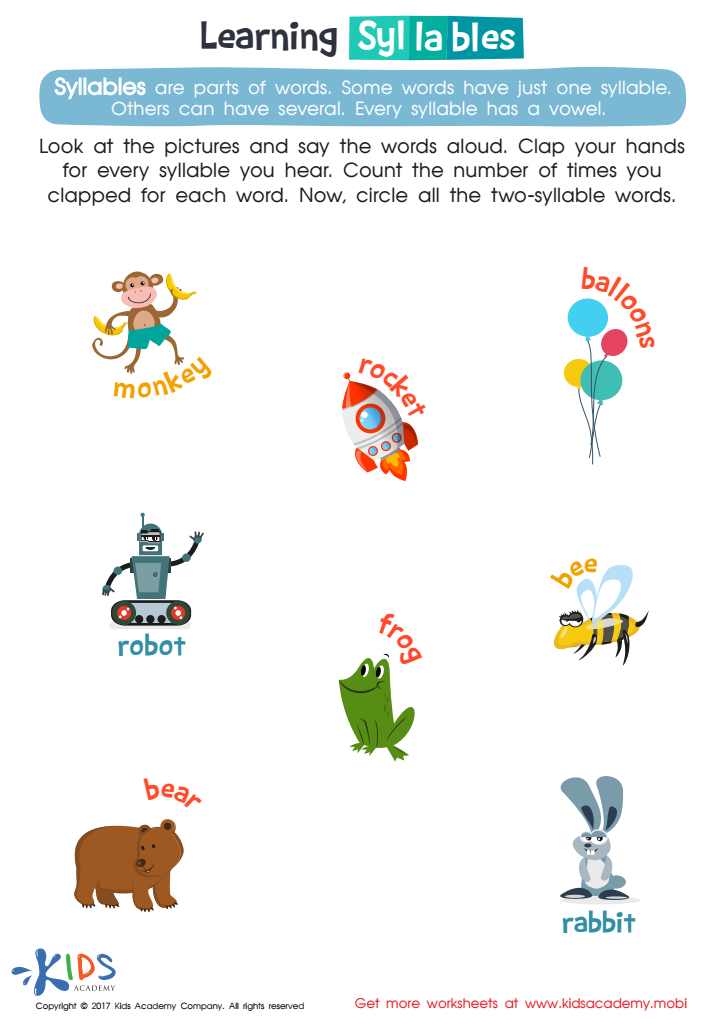
Learning Syllables Word Structure Worksheet
 Assign to My Students
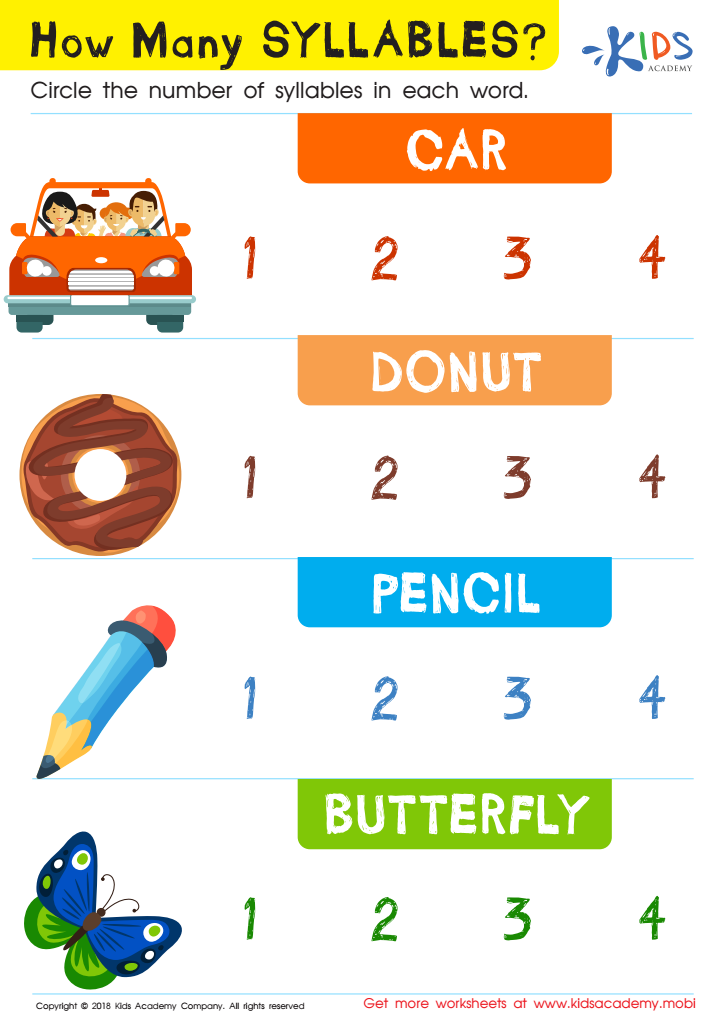
How Many Syllables? Worksheet
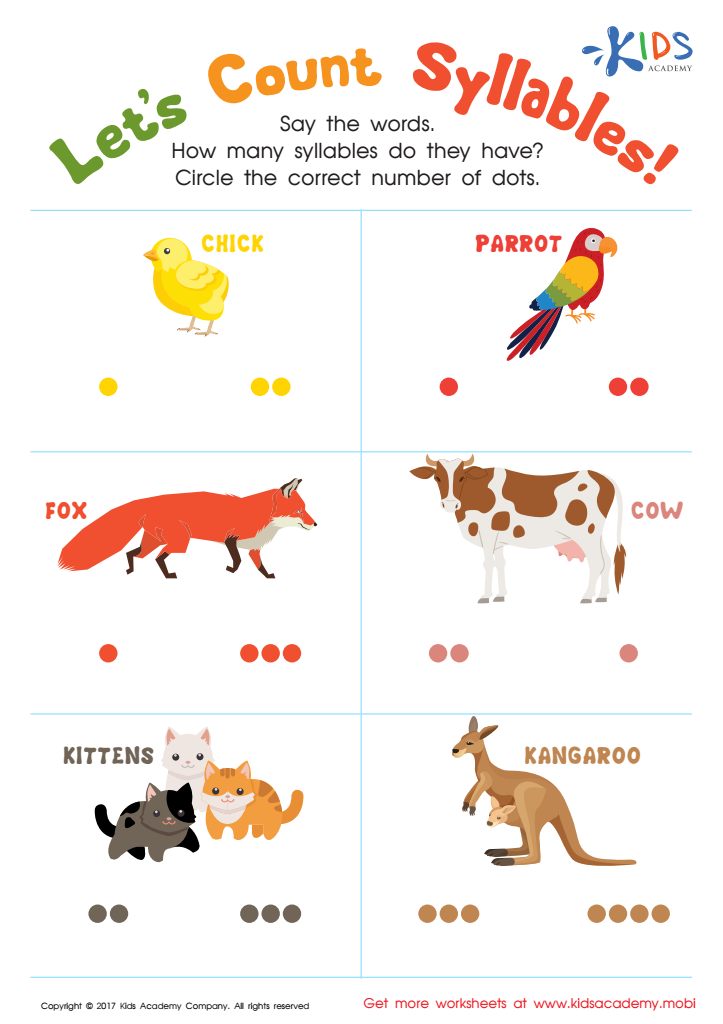
Lets Count Syllables Worksheet








Syllable identification is a crucial skill for children ages 4-6 because it forms the foundation of their reading and writing abilities. By recognizing syllables, children can better understand the structure of words, which helps in decoding new words and improves their spelling. This age range is particularly receptive to learning through phonemic awareness, and syllable identification enhances this crucial stage by making children aware of how words can be broken down into smaller, more manageable parts.
For parents and teachers, focusing on syllable identification aids in developing a child's phonological awareness, an essential predictor of future reading success. It allows children to understand that words are not just random streams of sounds but are composed of systematic chunks. This realization makes the process of learning to read more intuitive and less frustrating, setting a solid groundwork for later literacy skills.
Moreover, activities like clapping out syllables or segmenting words into parts can be both educational and engaging for young children, making learning feel like play. When parents and teachers emphasize syllable identification, they are nurturing a child's love for language and equipping them with tools that are critical for academic success. Thus, paying attention to this skill in early childhood can have long-lasting benefits for a child's educational journey.








