Unlock your child's potential with our engaging Visual Perception Skills worksheets designed specifically for ages 4-6. These fun and interactive worksheets help young learners enhance critical visual processing abilities, such as shape recognition, spatial orientation, and attention to detail. Perfect for at-home or classroom use, our high-quality printable resources support early childhood development while making learning enjoyable. With a variety of exercises tailored to different skill levels, children will build a strong foundation for future learning. Explore our collection today and witness your child’s confidence and capabilities grow as they master essential visual perception skills!

Check out this FREE "Visual Perception Skills" Trial Lesson for age 4-6!

Describing Objects in the Environment

Favorites
With answer key
Interactive
  • 4-6
  • Visual Perception Skills
  • Normal
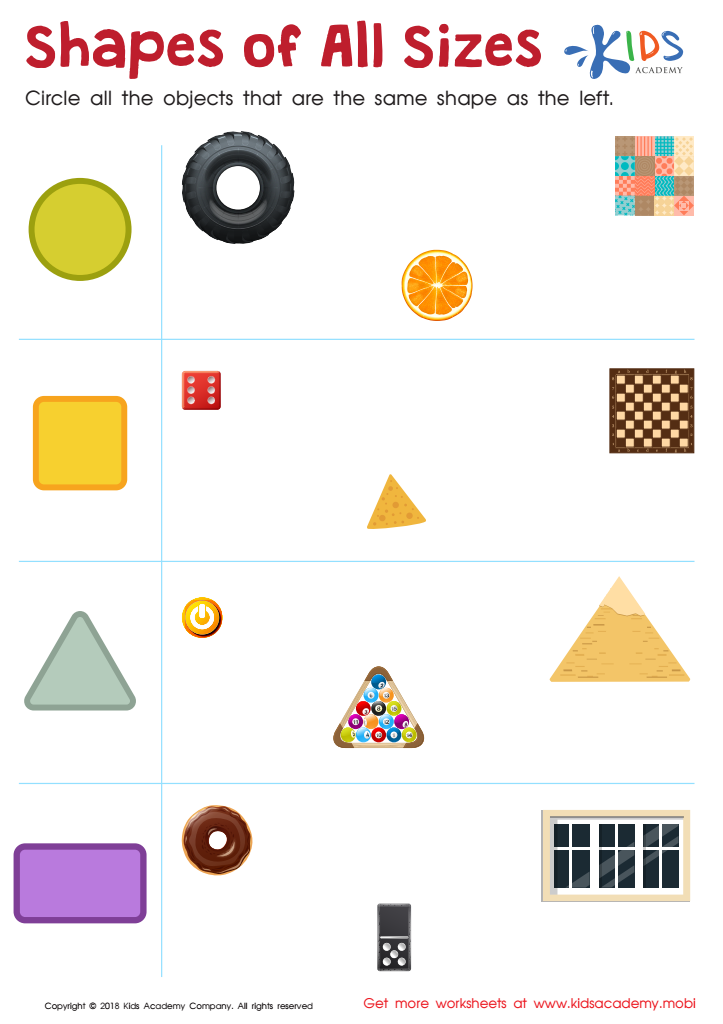
Shapes of All Sizes Worksheet

Shapes of All Sizes Worksheet

Students will have fun comparing basic shapes to familiar objects with this worksheet. It's an excellent way to help them recognize similarities in geometric shapes, building strong foundations for understanding congruence and similarity.
Shapes of All Sizes Worksheet
Worksheet
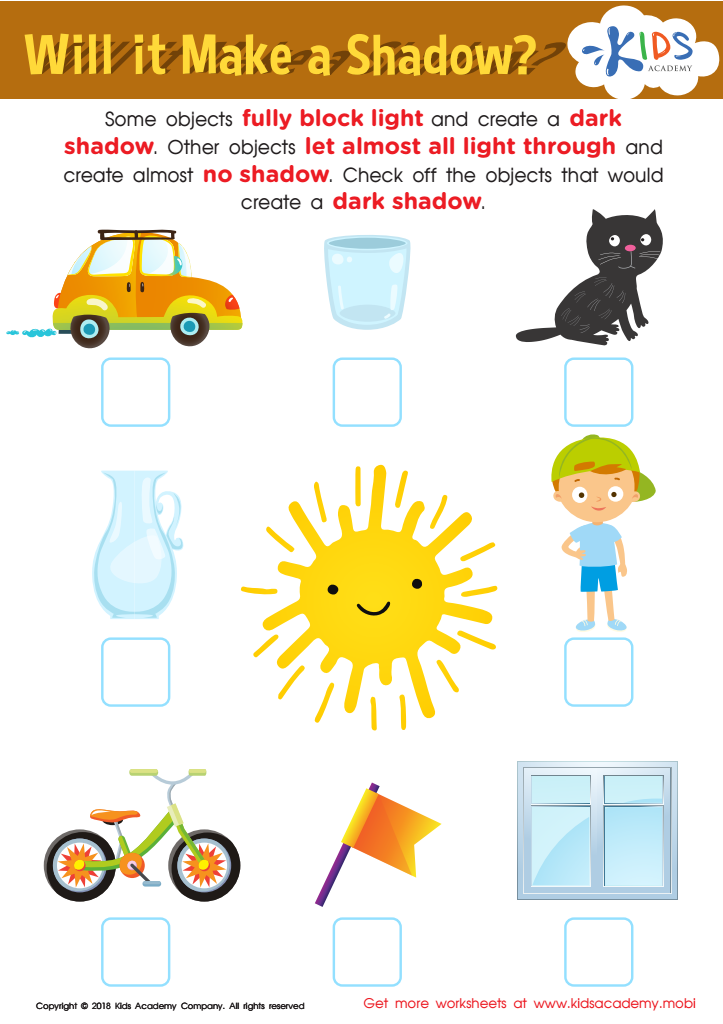
Will It Make a Shadow? Worksheet

Will It Make a Shadow? Worksheet

Teach your students about shadows with this printout. Ask them to check off the boxes next to the pictures that create a shadow. Explain that some objects block light, forming a shadow, while others don't and thus don't create a shadow. Your students are likely already familiar with their own shadow.
Will It Make a Shadow? Worksheet
Worksheet
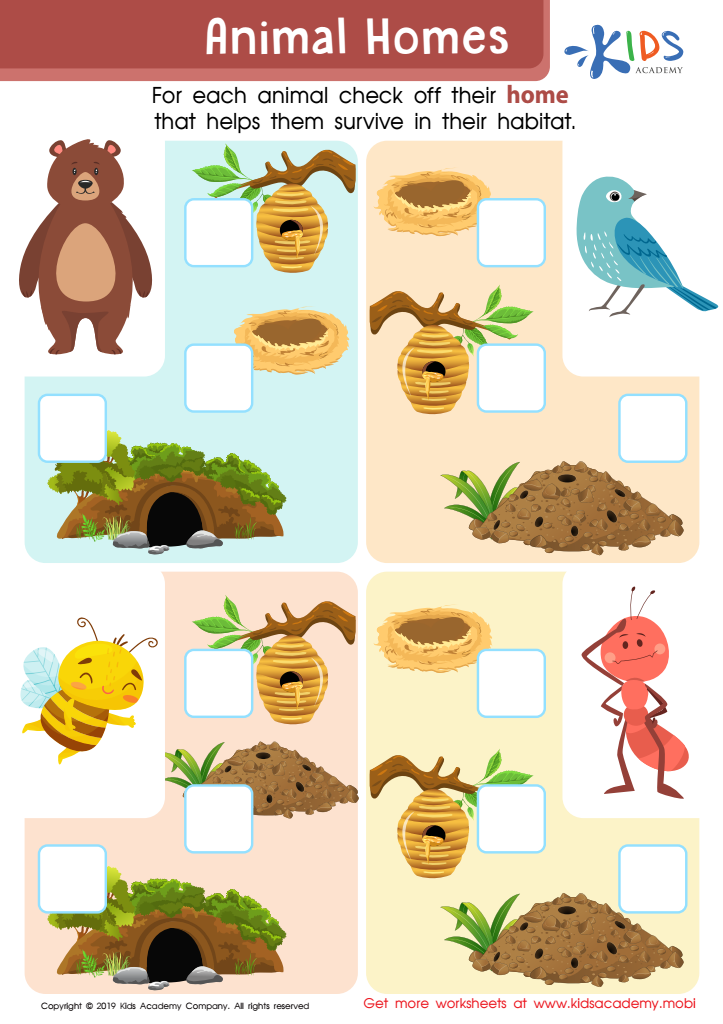
Animal Homes Worksheet

Animal Homes Worksheet

It's your duty as a teacher to protect, direct and guide your students while they're at school. Ask your kindergartners what a home means and why it's special. Use this worksheet to teach them that both people and animals have homes. Show them the pictures, and have them check off which is the home of each animal.
Animal Homes Worksheet
Worksheet
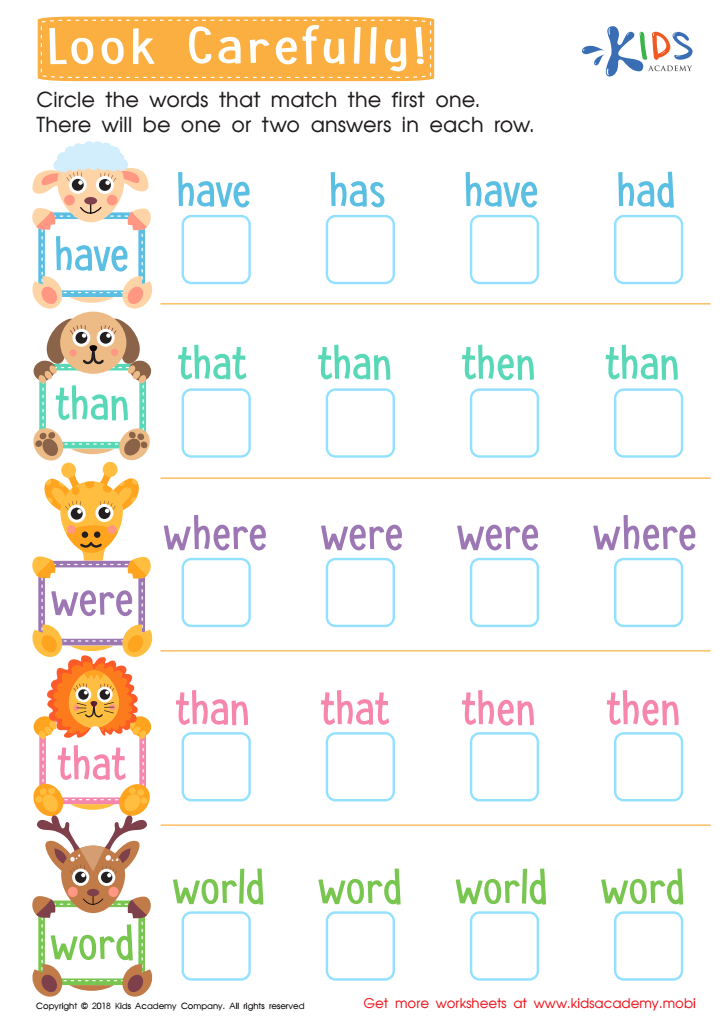
Look Carefully Worksheet

Look Carefully Worksheet

It's crucial to teach kids to identify sight words and become fluent readers. This free worksheet helps make it simpler for kids to learn the similarities and differences between similar words. They'll get practice by looking at the box word and selecting the one that matches from the row.
Look Carefully Worksheet
Worksheet
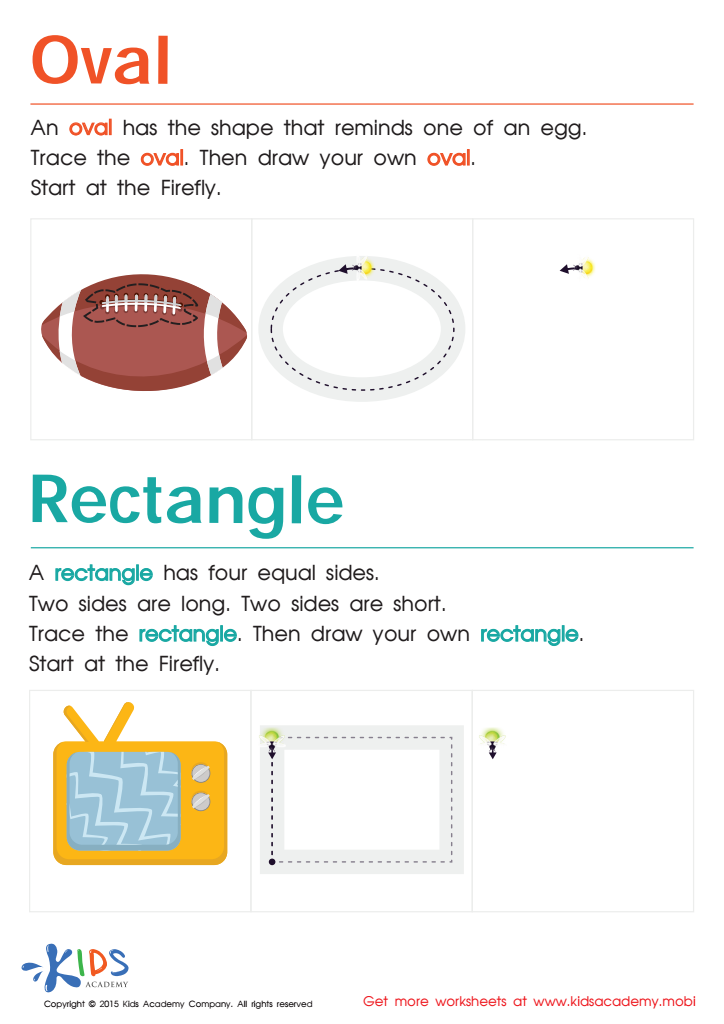
Geometric Shapes for Kids: Easy Drawing of Ovals And Rectangles PDF

Easy Drawing of Ovals And Rectangles Worksheet
Kids Academy offers free geometry worksheets to make learning more fun and interesting. Trace an oval, rectangle, and many other shapes!
Easy Drawing of Ovals And Rectangles Worksheet
Worksheet
Take a Look - Part 1 Worksheet
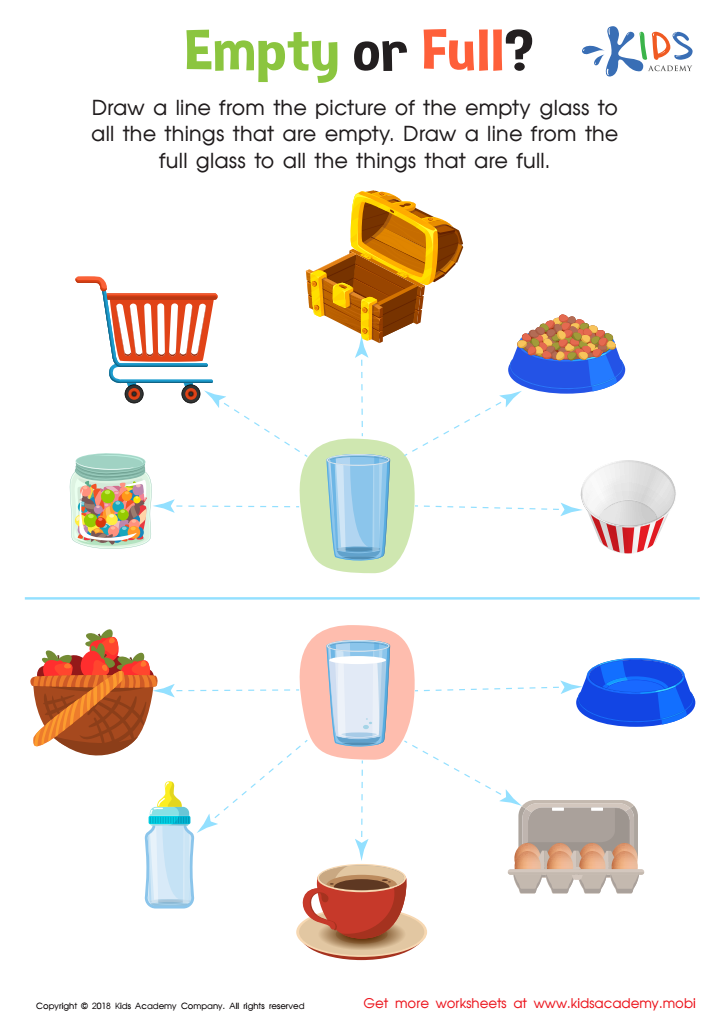

Take a Look - Part 1 Worksheet

Young learners gain understanding when using picture clues when reading. Looking at illustrations can help students learn the meaning of key vocabulary when reading fiction or informational text. Ask your students to look at the worksheet and observe what they can learn from the picture. It's a great comprehension strategy for early readers.
Take a Look - Part 1 Worksheet
Worksheet
Empty or Full? Worksheet
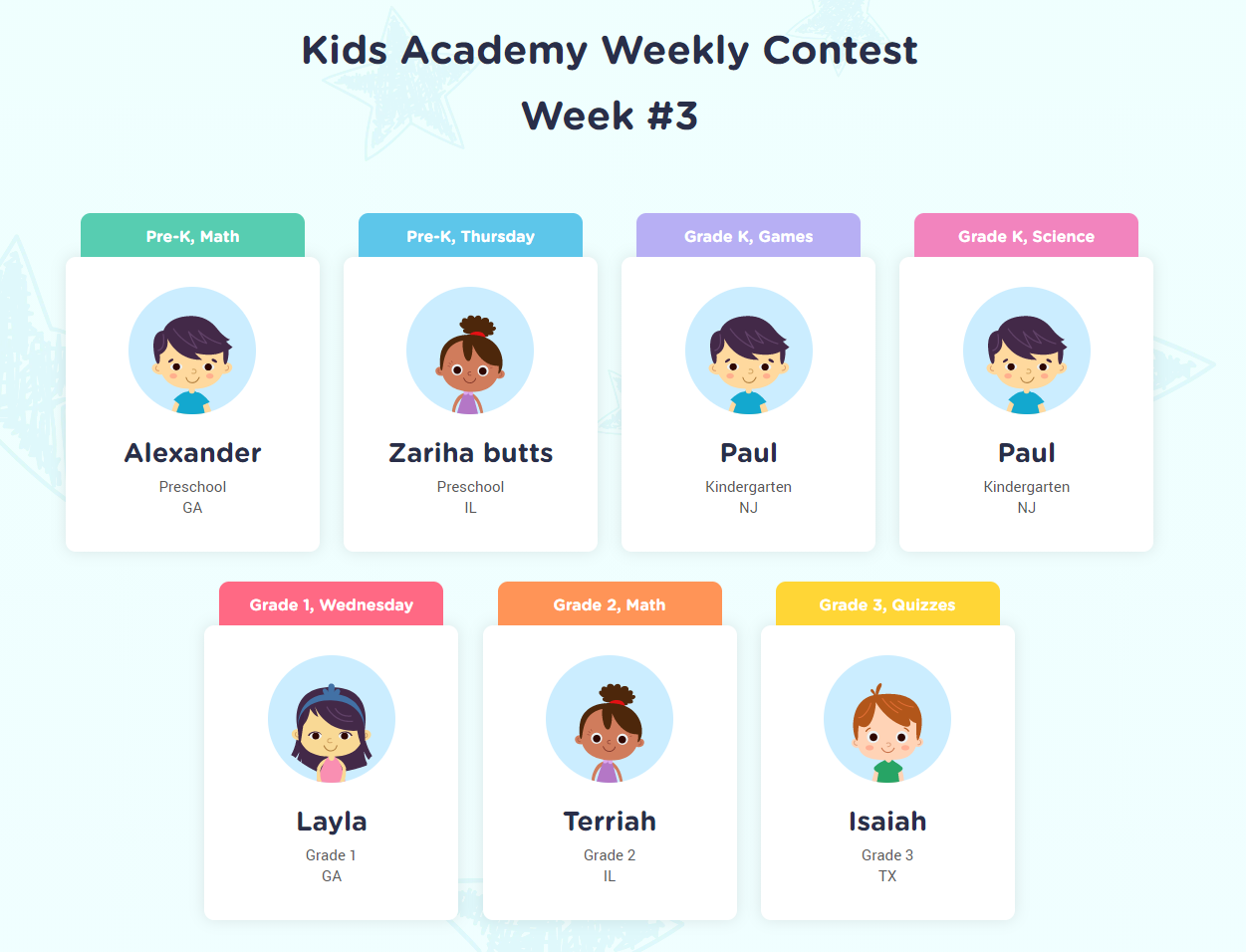
Empty or Full? Worksheet

Let students get to grips with the concepts of empty and full with this PDF worksheet. It uses fun, bright pictures to help them comprehend the difference and also helps develop fine-motor skills with tracing lines. Kids will be proud of themselves as they get answers right!
Empty or Full? Worksheet
Worksheet


Parents and teachers should prioritize the development of visual perception skills in children aged 4-6 because these skills are foundational for lifelong learning and everyday functioning. Visual perception skills enable children to interpret and make sense of what they see, which is crucial for reading, writing, and problem-solving. At this age, children start to recognize shapes, letters, and numbers, making it essential for them to develop skills such as visual discrimination and spatial awareness.

Furthermore, effective visual perception aids in hand-eye coordination, impacting children's ability to participate in various physical activities and crafts, fostering fine motor skills. As children navigate their environment, strong visual perception contributes to their safety by helping them identify hazards and understand spatial relationships.

Additionally, visual perception influences social interactions. Understanding non-verbal cues, such as body language and facial expressions, relies heavily on visual perception. By nurturing these skills early on, parents and teachers can support a child’s academic success and social development, setting the stage for a positive educational experience. Ultimately, fostering strong visual perception skills enhances children's ability to engage with the world around them, encouraging a love of learning and curiosity as they grow.