Pattern recognition Normal 2D Shapes Worksheets for Ages 4-6
3 filtered results
-
From - To
Discover engaging Pattern Recognition Normal 2D Shapes Worksheets designed specifically for young learners aged 4-6. These worksheets introduce foundational math concepts through fun, playful activities that help children identify, match, and create patterns with familiar shapes. Each worksheet is tailored to enhance observational skills and critical thinking while fostering creativity. Ideal for homeschool settings or classroom use, these printable resources encourage interactive learning, making abstract concepts tangible and enjoyable. With vibrant colors and appealing designs, our worksheets capture the attention of young minds, supporting their academic growth in an accessible and entertaining format. Explore the joy of learning with shapes today!
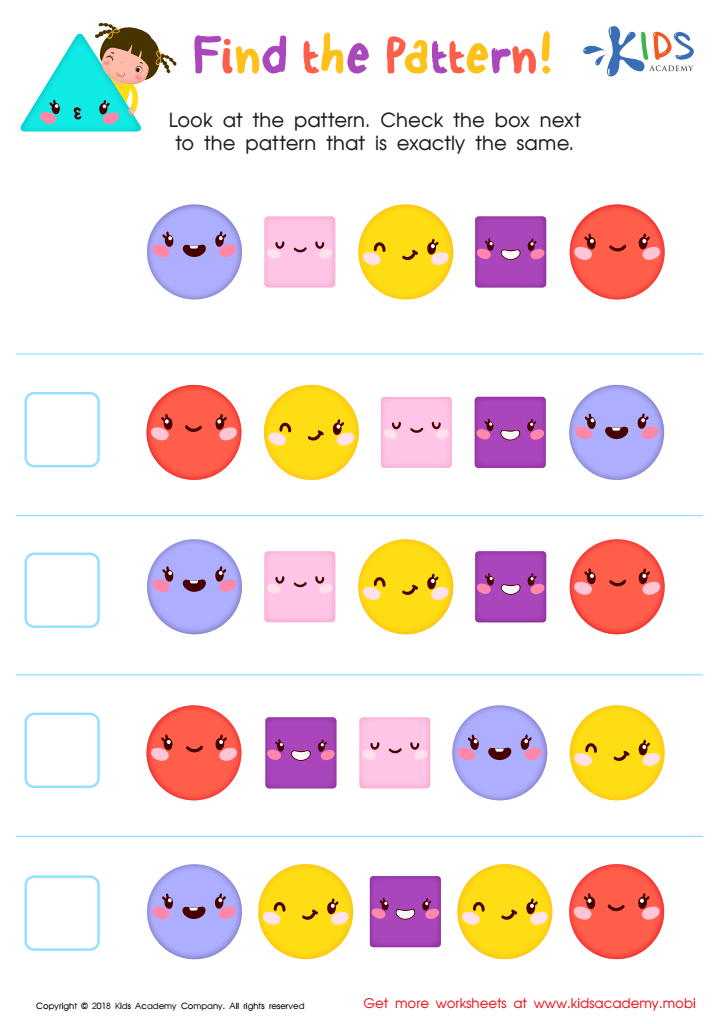
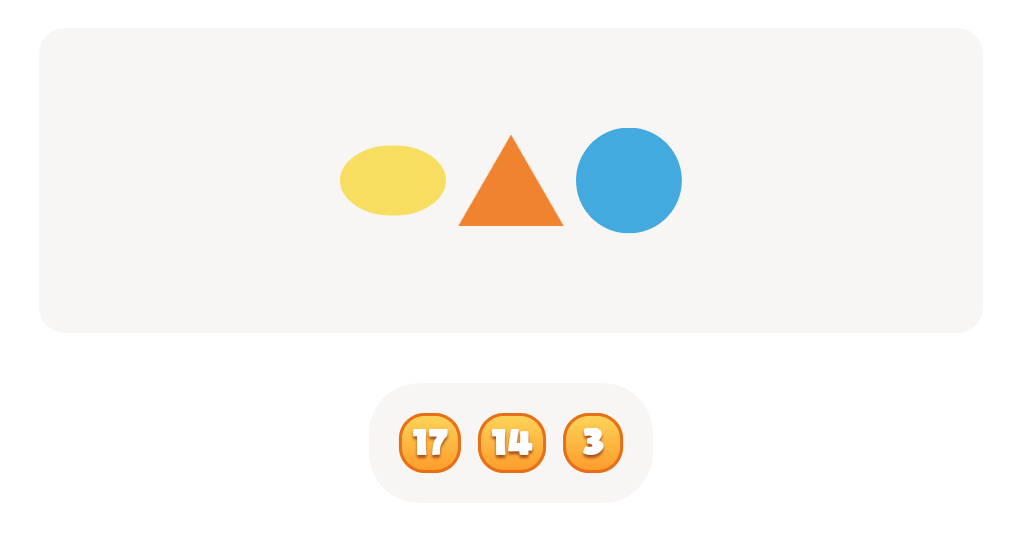
Find the Pattern Worksheet
 Assign to My Students










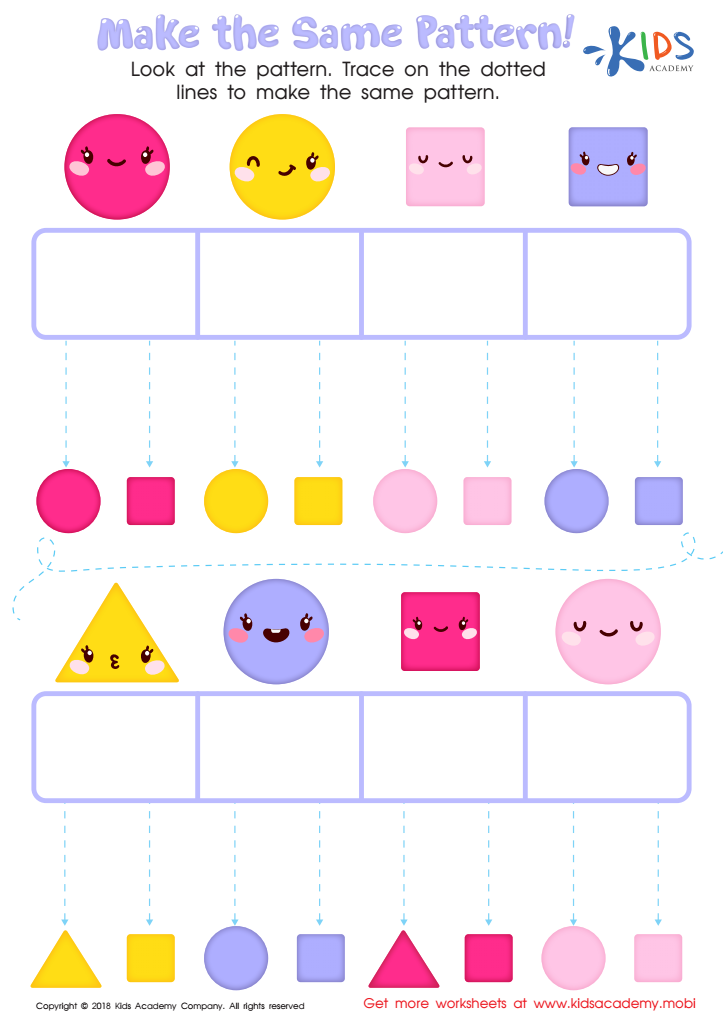
Make the Same Pattern Worksheet
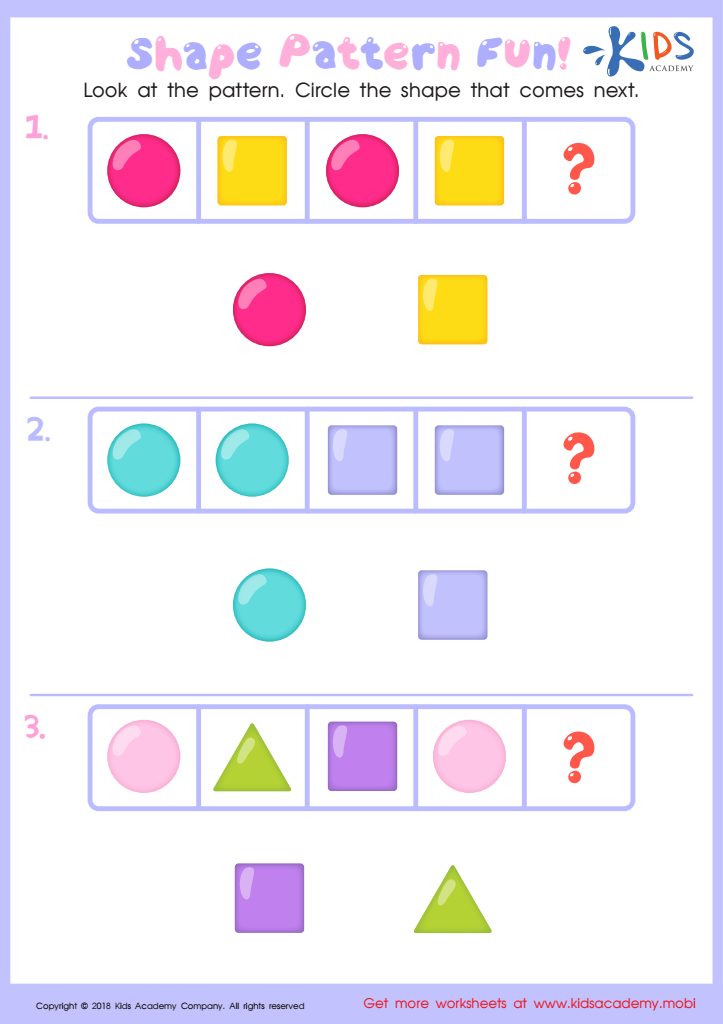
Shape Pattern Fun Worksheet








Pattern recognition and familiarity with 2D shapes are fundamental skills for children ages 4-6, shaping their cognitive development and early mathematics learning. Engaging in activities that promote these skills helps children make connections between different concepts, enhancing their ability to identify and classify objects in their environment.
Understanding patterns aids in problem-solving and critical thinking, as children learn to anticipate what comes next, laying the groundwork for algebraic reasoning. Recognizing 2D shapes not only fosters spatial awareness but also helps children develop visual discrimination skills, which are crucial for reading and writing later on.
For parents and teachers, encouraging mastery of patterns and 2D shapes helps create a more playful and nurturing learning environment. This foundational knowledge supports other educational areas, such as art and science, where shape recognition and pattern application are essential. Additionally, when children engage in these activities, they cultivate perseverance and creativity, learning to approach tasks enthusiastically.
Investing time in these skills also capitalizes on young children's natural curiosity, making learning fun and engaging. Overall, parents and teachers play a crucial role in guiding children through this early phase of developmental learning, establishing a strong base necessary for future academic success.