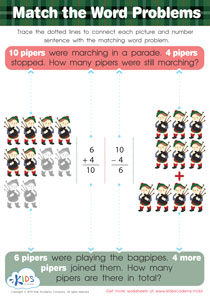
Fine Motor Skills Normal Addition Worksheets for Ages 4-6
3 filtered results
-
From - To
Enhance your child's fine motor skills with our engaging Normal Addition Worksheets designed for ages 4-6. Each worksheet combines age-appropriate math problems with activities focused on developing hand-eye coordination, pencil control, and precision. Perfect for preschoolers and kindergarteners, these worksheets aid in honing crucial skills for early academic success. By integrating fun exercises with simple addition tasks, children build a solid mathematical foundation while improving their fine motor abilities. Visit our website to explore a variety of printable worksheets that make learning math an enjoyable and developmentally beneficial experience for young learners.
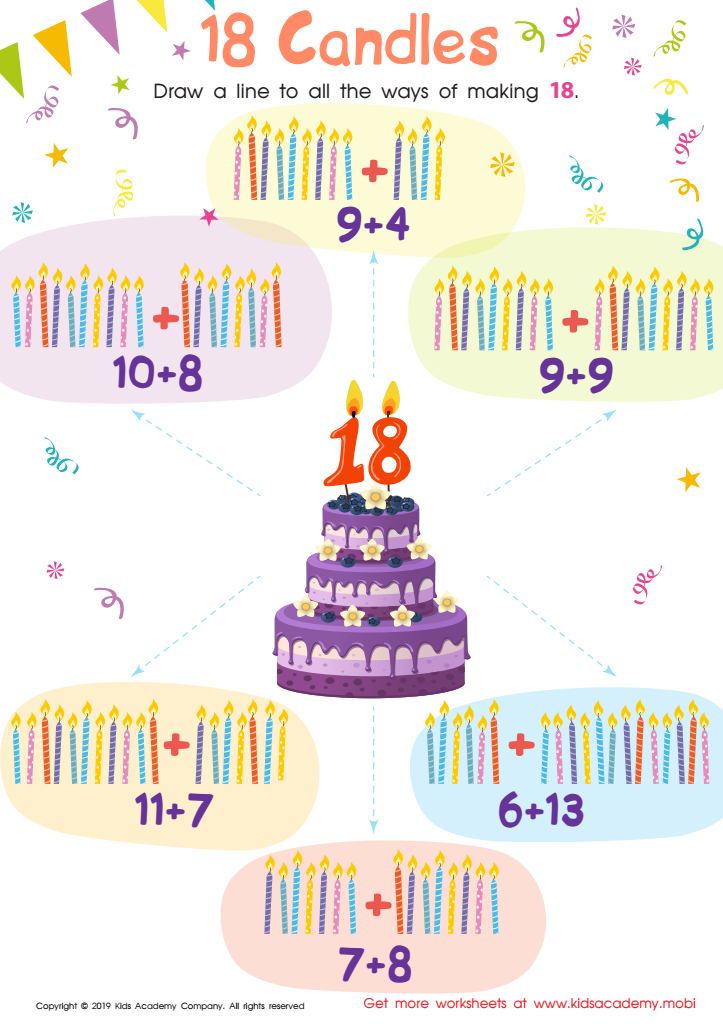
18 Candles Worksheet
 Assign to My Students
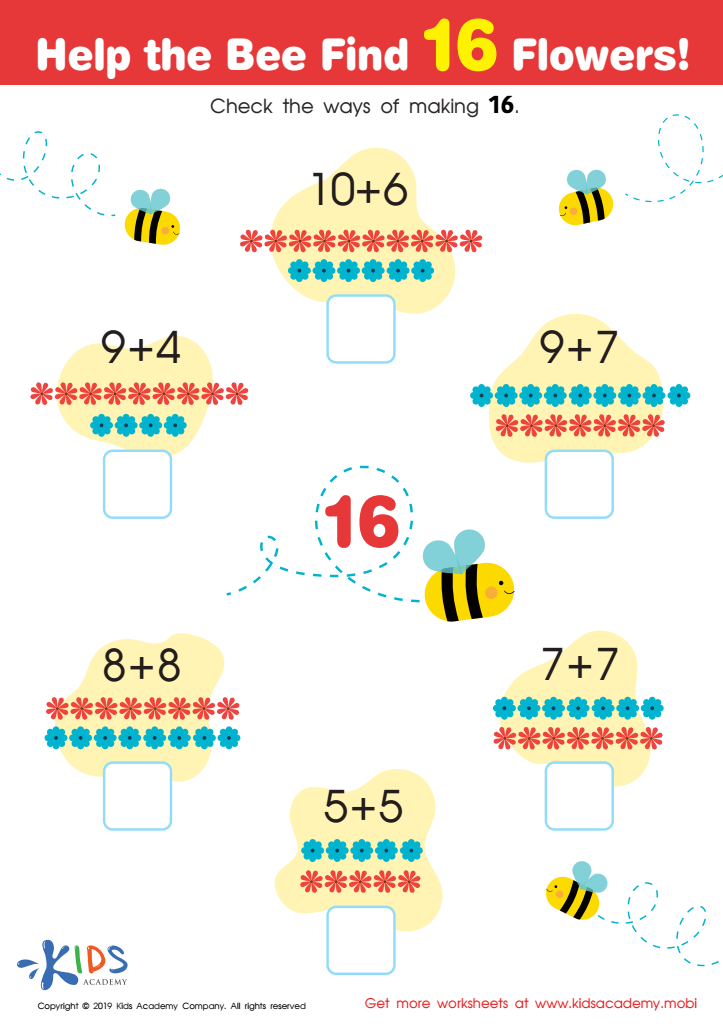
Help the Bee Find 16 Flowers Worksheet
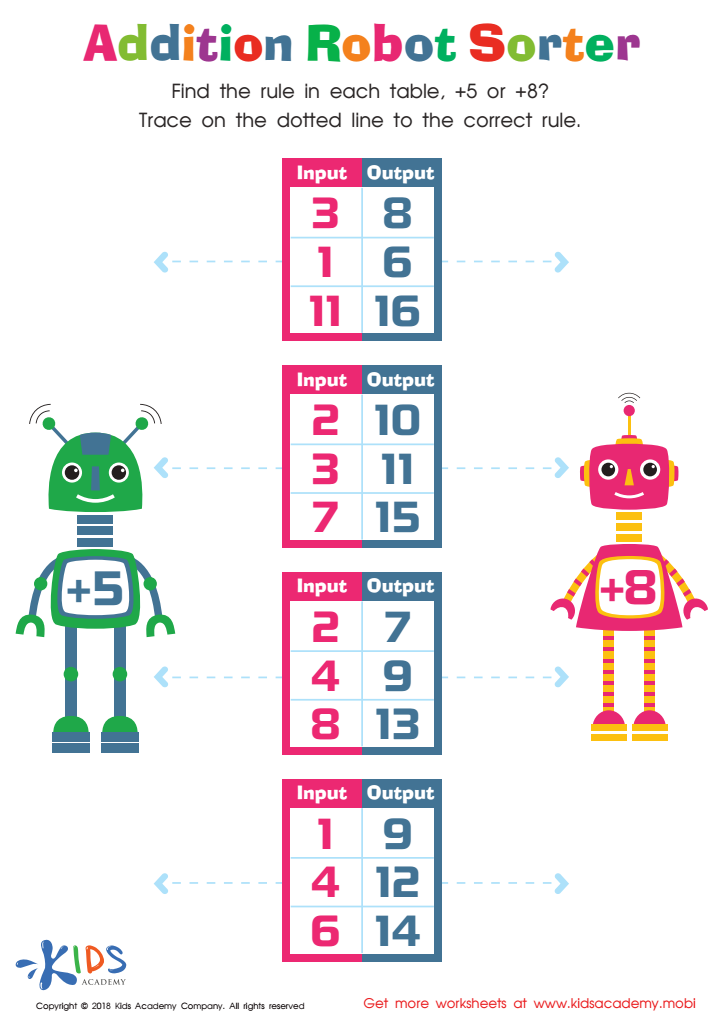
Addition Robot Sorter Worksheet








Fine motor skills, including daily activities that promote normal addition for children ages 4-6, are crucial for their overall development. These skills involve the small muscles of the hands and fingers, which are fundamental for tasks like writing, buttoning clothes, and using utensils. Developing fine motor skills enhances hand-eye coordination, precision, and control.
At this age, children are naturally curious and ready to explore their environment, making it an ideal time to nurture these skills. Activities that involve counting and adding small objects can seamlessly blend mathematical concepts with fine motor practice. For example, picking up and counting beads or buttons not only aids in understanding numbers and basic addition but also strengthens dexterity and coordination.
Strong fine motor skills are linked to better handwriting, which is essential for academic success. Poor fine motor skills can lead to frustration and impact a child's confidence and eagerness to learn. By focusing on activities that support both fine motor development and mathematical understanding, parents and teachers can provide a foundation for lifetime skills. Additionally, these activities can be fun and engaging, making learning enjoyable and setting the stage for a positive attitude towards education.
Therefore, incorporating fine motor practice with early math concepts like normal addition helps children develop in multiple areas simultaneously, setting them up for success in school and daily life.