Pattern recognition Normal Geometry Worksheets for Ages 4-6
3 filtered results
-
From - To
Discover a delightful collection of Pattern Recognition Normal Geometry Worksheets designed specifically for children aged 4-6! These engaging worksheets provide young learners with a fun and interactive way to develop essential pattern recognition skills while exploring basic geometric shapes. Designed with colorful visuals and age-appropriate activities, these worksheets encourage children to identify, extend, and create patterns, fostering critical thinking and problem-solving abilities. Whether at home or in the classroom, our resources make learning geometry enjoyable and impactful. Watch your child's confidence soar as they master pattern recognition through creativity and play. Download your free worksheets today and unlock the joy of learning!
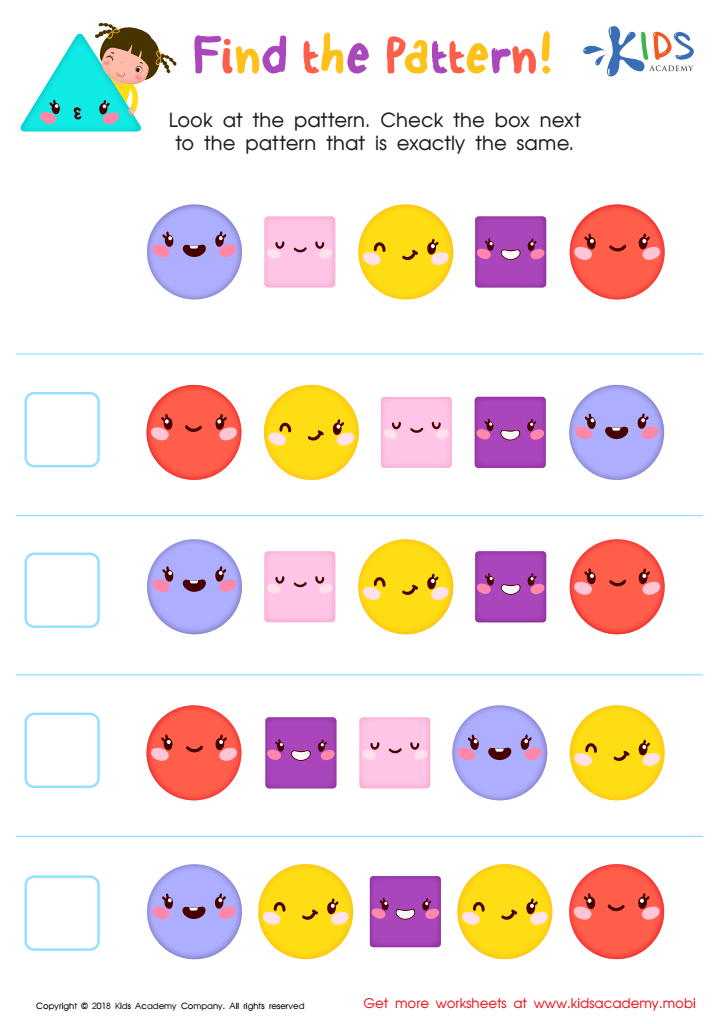
Find the Pattern Worksheet
 Assign to My Students











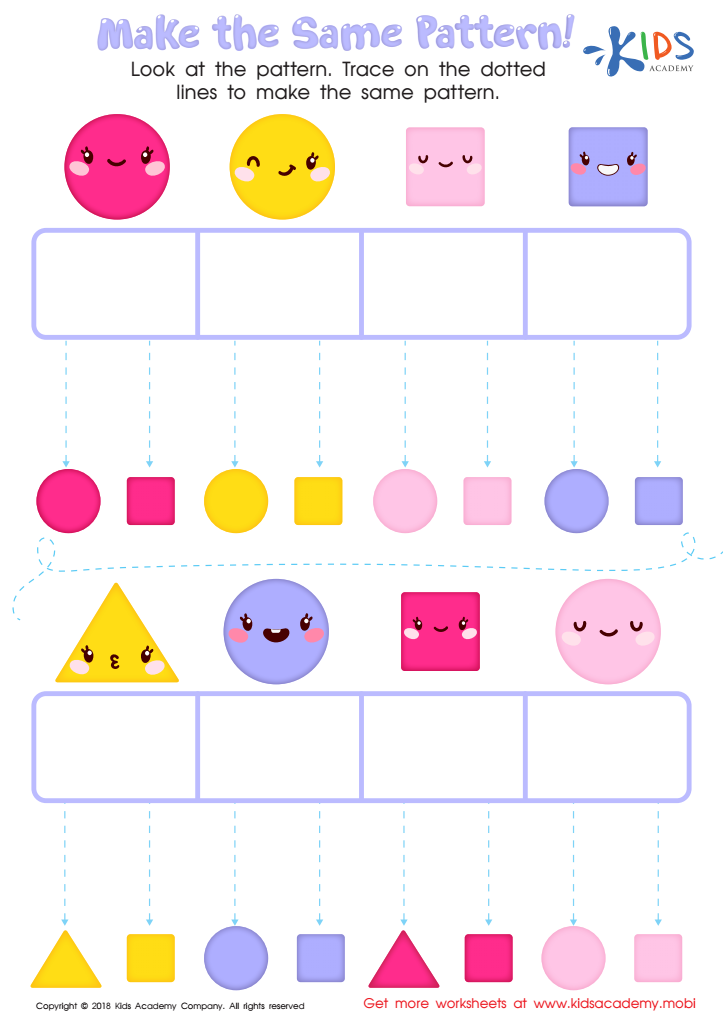
Make the Same Pattern Worksheet
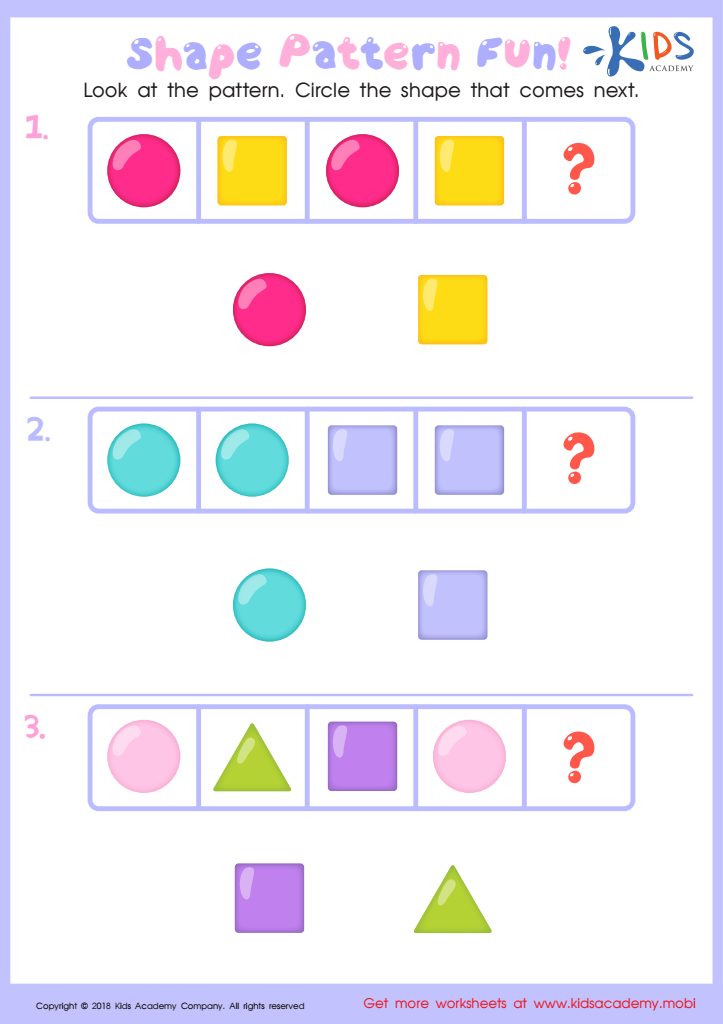
Shape Pattern Fun Worksheet








Pattern recognition and understanding of basic geometry in early childhood education are crucial for several reasons. Firstly, they lay a foundational cognitive skill that enhances a child's problem-solving abilities. By recognizing patterns, children begin to make connections between concepts, which fosters critical thinking and reasoning skills essential for mathematical learning.
For ages 4-6, engaging in activities that involve recognizing shapes, sizes, and spatial relationships helps develop fine motor skills and visual perception. These activities also encourage creativity as children experiment with different arrangements and designs through hands-on experiences with blocks or art materials.
Additionally, pattern recognition is a stepping stone to mathematics, promoting numerical understanding and enhancing abilities in later grades. Children who grasp these concepts early are more likely to excel in math-related subjects as they progress through school.
Furthermore, instilling a sense of curiosity and enjoyment through pattern exploration can foster a lifelong love of learning. Parents and teachers should prioritize incorporating fun and interactive learning opportunities that highlight patterns and geometry, ensuring children have a strong, versatile skill set for their educational journey. Ultimately, emphasizing these concepts empowers young learners and equips them with the tools necessary for academic success and everyday problem-solving.








