Enhance your child’s numerical skills with our "Number Sequencing Normal Numbers Worksheets" tailored for ages 4-6. These engaging and educational worksheets are designed to help young learners grasp number sequences, improve their counting abilities, and develop essential math skills. By arranging numbers in the correct order, kids not only learn to count confidently but also start understanding the basics of number patterns. Perfect for at-home practice or classroom activities, each worksheet provides a fun and interactive way for children to build their number sense. Empower your child’s mathematical journey with our expertly crafted worksheets today!

Check out this FREE Trial Lesson on Numbers for age 4-6!

Use Mental Strategies -Counting

Favorites
With answer key
Interactive
  • 4-6
  • Number Sequencing
  • Numbers
  • Normal
Frog Count to 120 Worksheet

Frog Count to 120 Worksheet

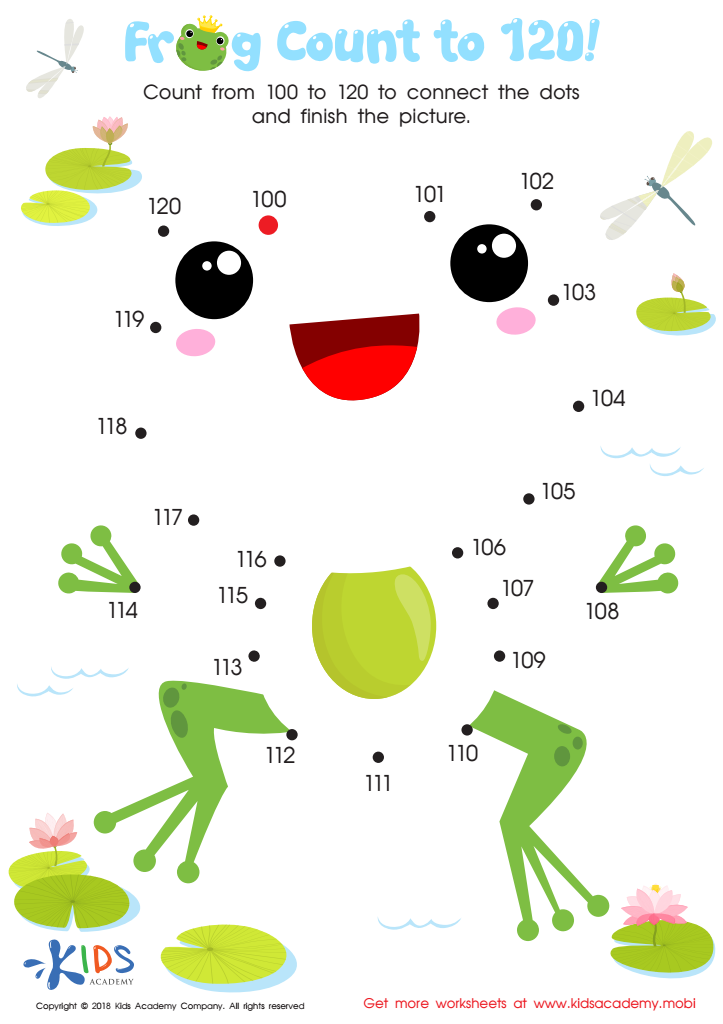
Count from 100 to 120 with your child to help them finish the worksheet! Pet owners will be especially excited to help the cute frog complete its picture. With proper counting, your child will be able to easily connect the dots and finish the picture of the green frog.
Frog Count to 120 Worksheet
Worksheet
Count by 5’s Printable Worksheet

Skip Counting by 5s: Space Math Printable
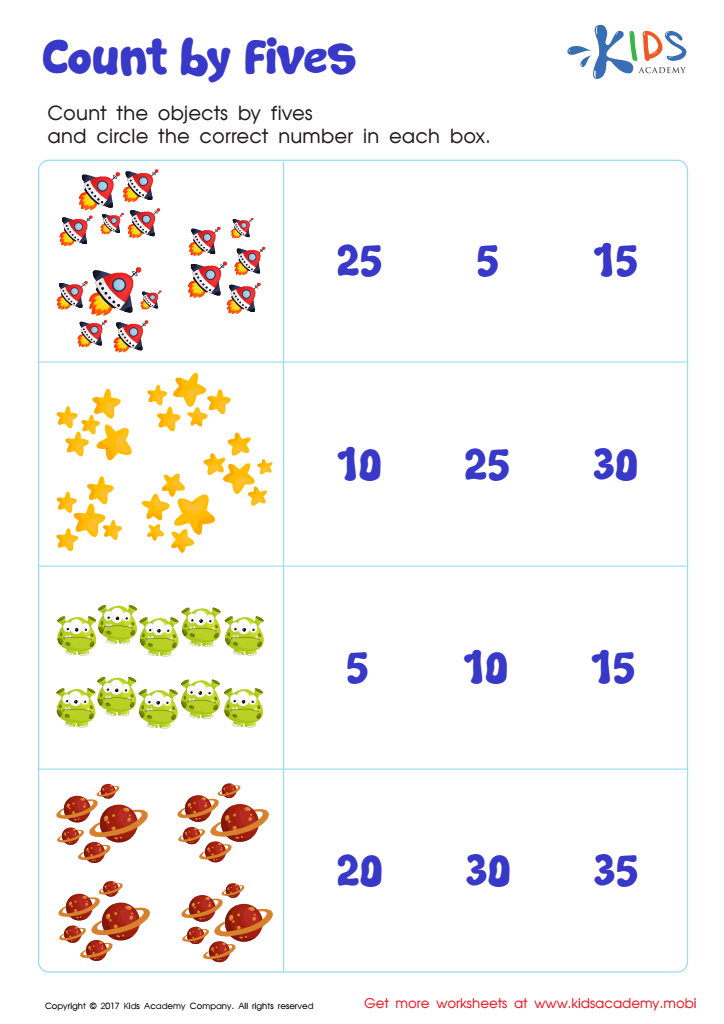
This worksheet will provide your child with fun and practice counting by 5's. It'll help them visually count numbers, use problem solving skills and make connections between individual and groups of numbers. Counting money and various math concepts will become easier with this invaluable skill. Blast off with this fun and educational worksheet featuring space graphics.
Skip Counting by 5s: Space Math Printable
Worksheet
Counting and Numbers: Assessment Worksheet

Counting and Numbers: Assessment Worksheet

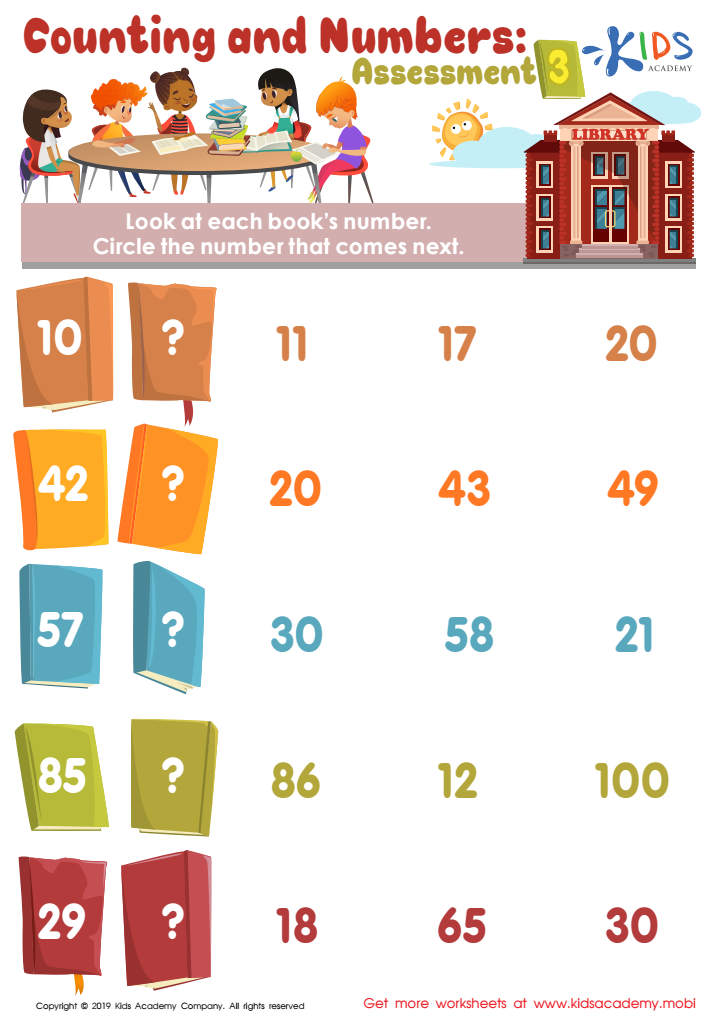
Number line thinking is an essential math skill. Kids using this skill can compute math problems accurately and quickly. Our free assessment tests number line recognition; have your child pick the right number from the given options to follow the current number on the line. This assessment will give you an idea of their counting skills.
Counting and Numbers: Assessment Worksheet
Worksheet
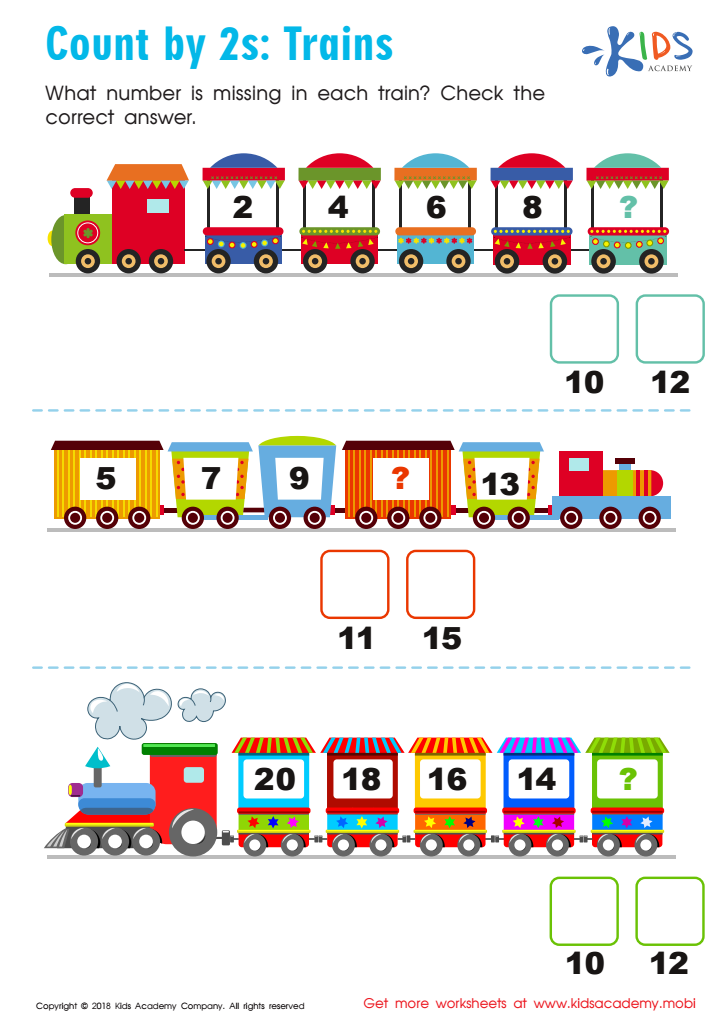
Count by 2's: Trains Worksheet

Count by 2's: Trains Worksheet

Teaching your kids quick computations? Get them skip-counting by 2s! They'll love filling in the colors of the train while counting, and it will help with 'counting up' or backward on paper or in their heads - essential for quick computations later.
Count by 2's: Trains Worksheet
Worksheet
Kindergarten number tracing worksheet

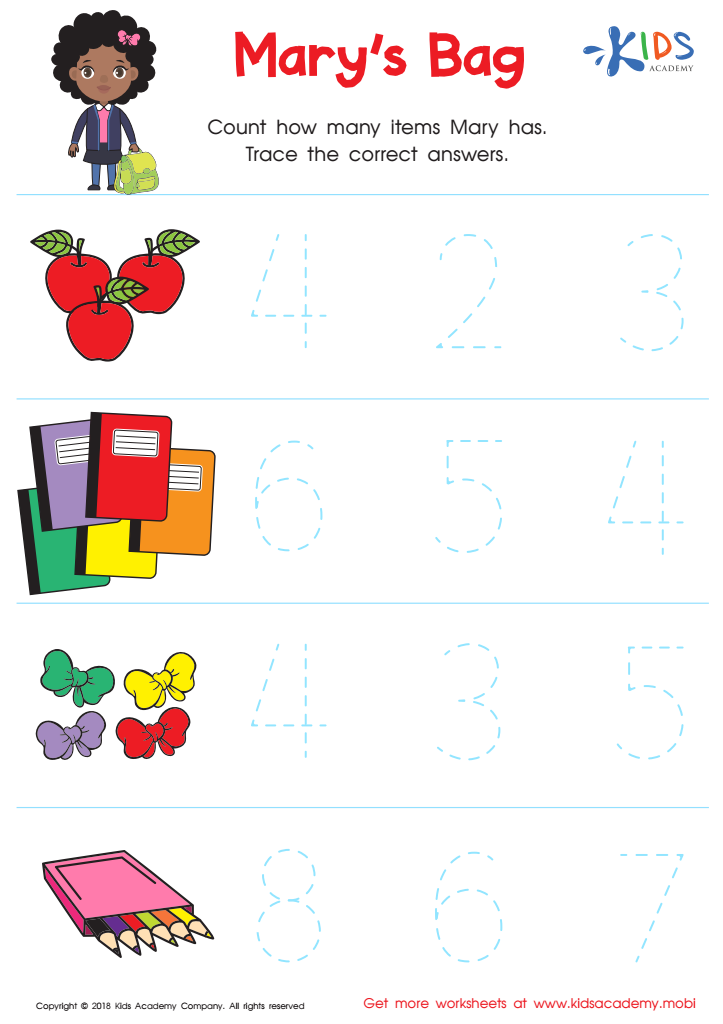
Kindergarten Number Tracing: Mary's Bag Worksheet
Counting and writing skills are honed with this kindergarten tracing worksheet. Guide Mary in counting the items in her bag then trace the correct number for each. Your child will get a great head start on essential kindergarten skills!
Kindergarten Number Tracing: Mary's Bag Worksheet
Worksheet
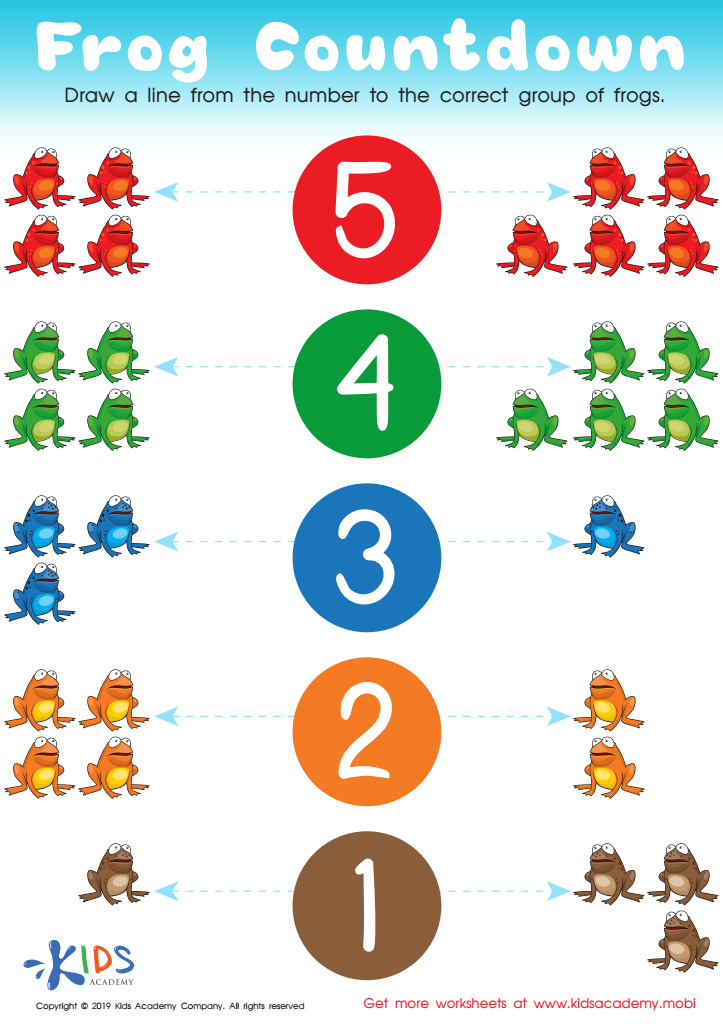
Frog Countdown Worksheet

Frog Countdown Worksheet

Make learning fun for kids with traceable printouts! This exercise has kids counting frogs and drawing a line to match the number. Expand their knowledge with activities like this, beyond the basics they learn in school. Help them explore new ways of learning and make it enjoyable.
Frog Countdown Worksheet
Worksheet
Kindergarten number tracing worksheet pdf

Kindergarten Number Tracing: Medow Flowers Worksheet

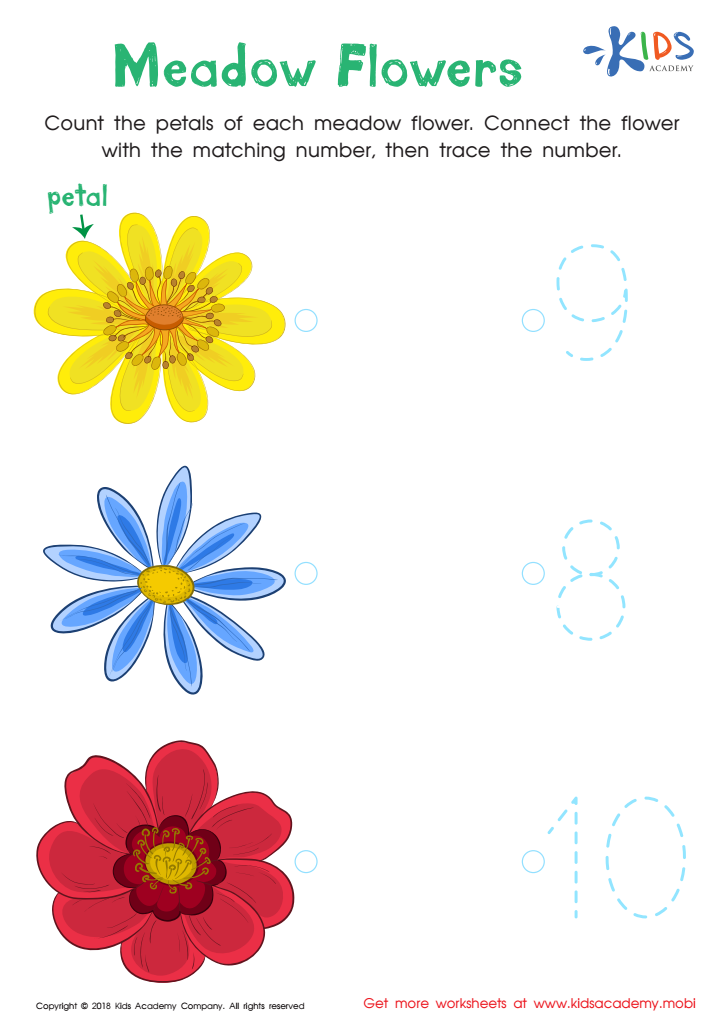
Take your child to the garden to count flower petals and trace numbers with this fun kindergarten PDF worksheet. They'll learn to count and write, all while enjoying the sweet scent of the flowers.
Kindergarten Number Tracing: Medow Flowers Worksheet

Worksheet


Number sequencing normal numbers for children ages 4-6 is fundamentally important because it forms the cornerstone of early mathematics skills, critical thinking, and logical reasoning. At this developmental stage, understanding number sequences helps young children recognize patterns and develop the ability to predict and anticipate what comes next, essential skills in both math and everyday life.

Firstly, mastering number sequences reinforces a child's understanding of the concept of numerals and their relative positions. It aids in building a solid framework for performing more complex tasks such as addition and subtraction. This sequential knowledge ensures that a child comprehends counting principles, the value of digits in different positions, and the idea of numerical order.

Secondly, it empowers cognitive development. Engaging with number sequences stimulates brain activity, honing memory, attention, and problem-solving capabilities. Children practicing these skills can think more logically and show improved observational abilities.

Another key point involves practical daily activities. Understanding sequences can help children follow routines, organize tasks, and develop better time management skills. They're likely to excel in simple planning and conducting operations step-by-step.

Ultimately, early mastery of number sequencing lays a foundation for future academic success in mathematics and various life skills. As parents or teachers, nurturing these abilities in young children supports their overall intellectual growth and prepares them for more advanced educational endeavors.