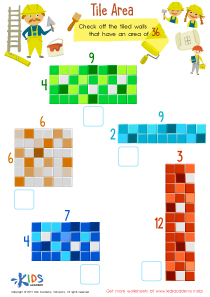
Understanding place value Normal Numbers Worksheets for Ages 4-6
5 filtered results
-
From - To
Explore our engaging "Understanding Place Value Normal Numbers Worksheets" designed for children aged 4-6. These interactive worksheets help young learners grasp the essential concept of place value through fun activities and visually appealing graphics. Tailored to enhance early math skills, our resources guide students in recognizing the value of digits in different positions and understanding the relationship between numbers. Perfect for classroom or home learning, these worksheets foster critical thinking, problem-solving, and numerical fluency in a playful environment. Equip your child with fundamental math knowledge today and watch their confidence soar with each completed worksheet!
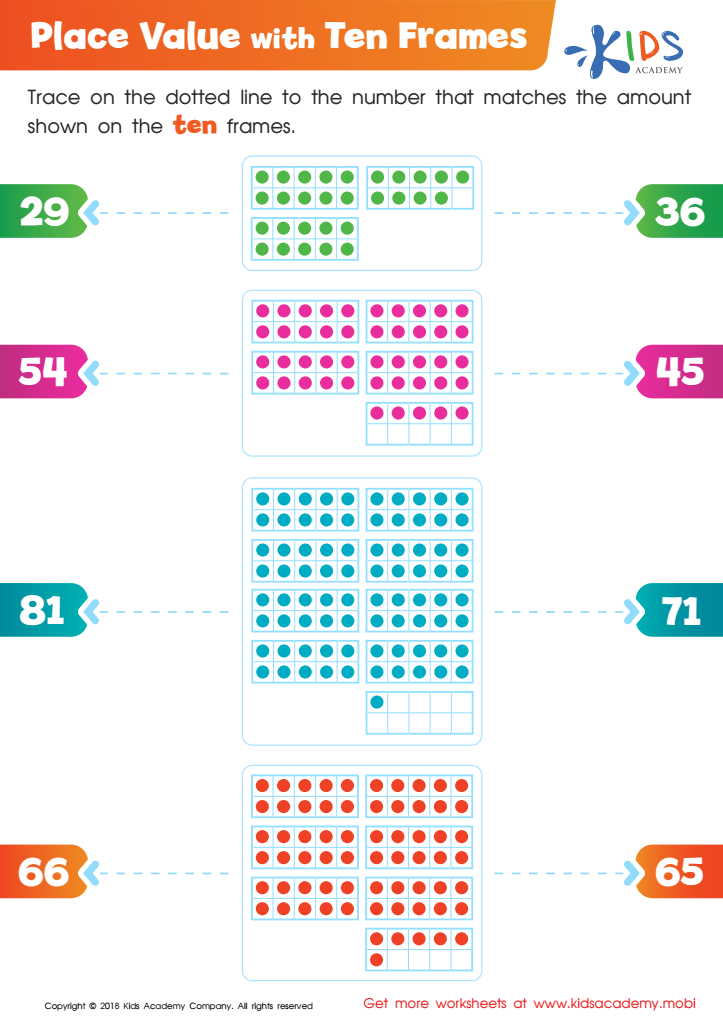
Place Values with Ten Frames Worksheet
 Assign to My Students
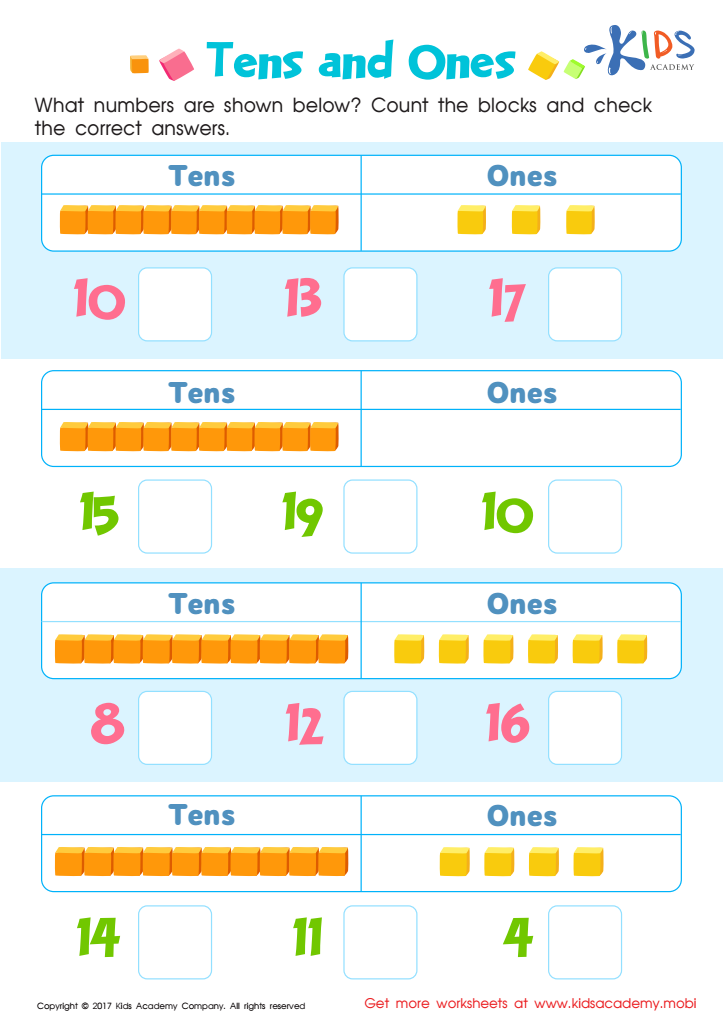
Tens and Ones Worksheet
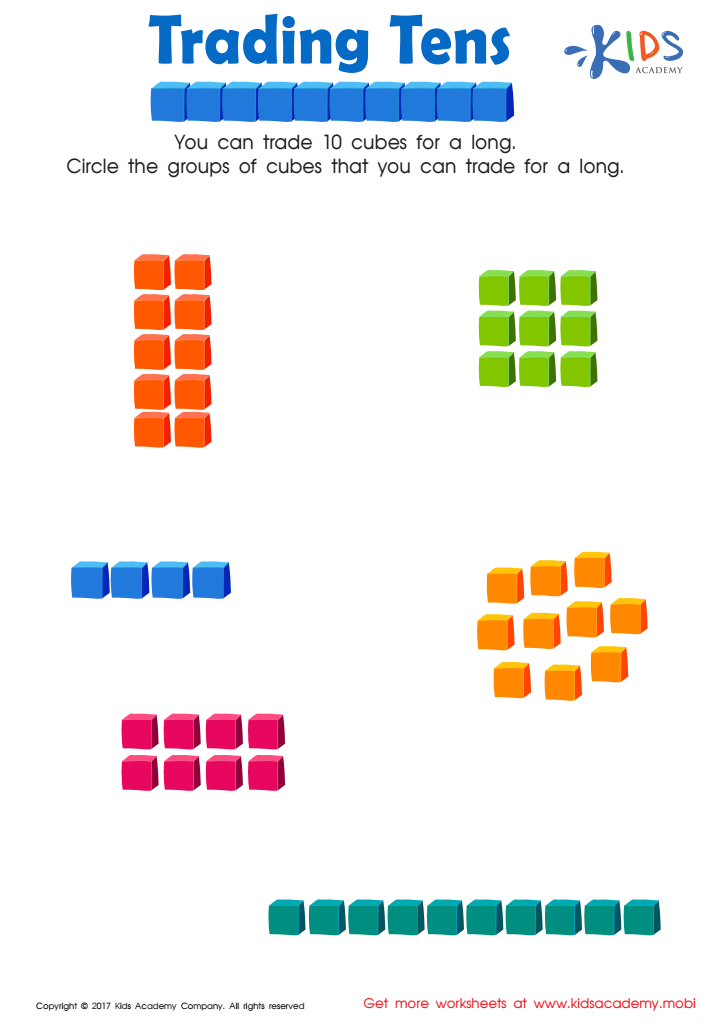
Trading Tens Worksheet
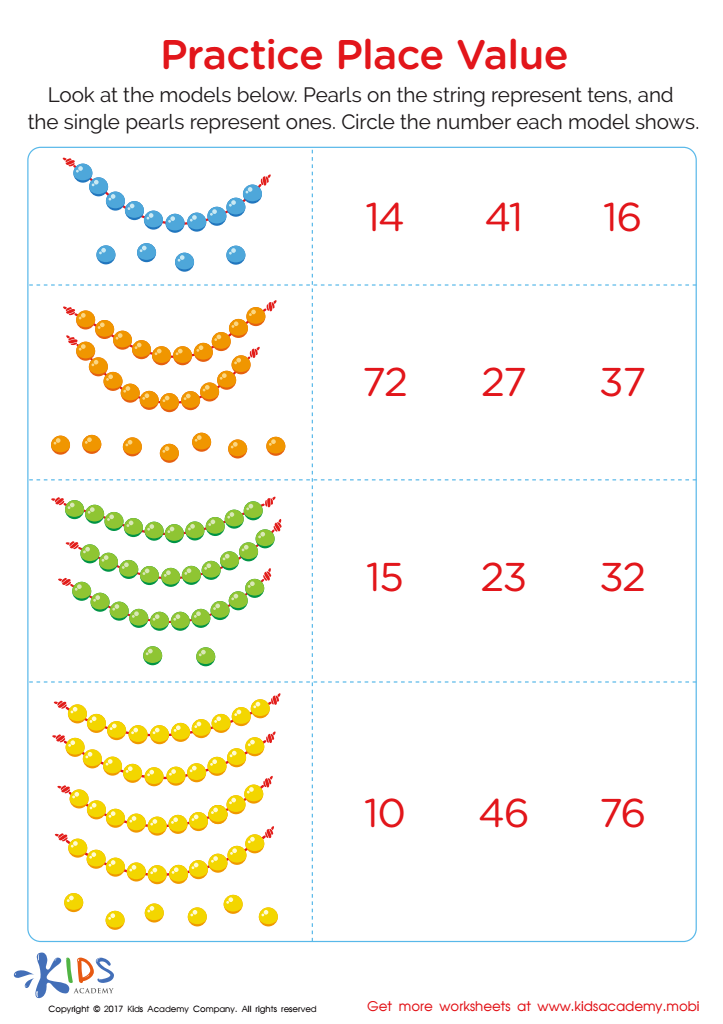
Practice Place Value Printable
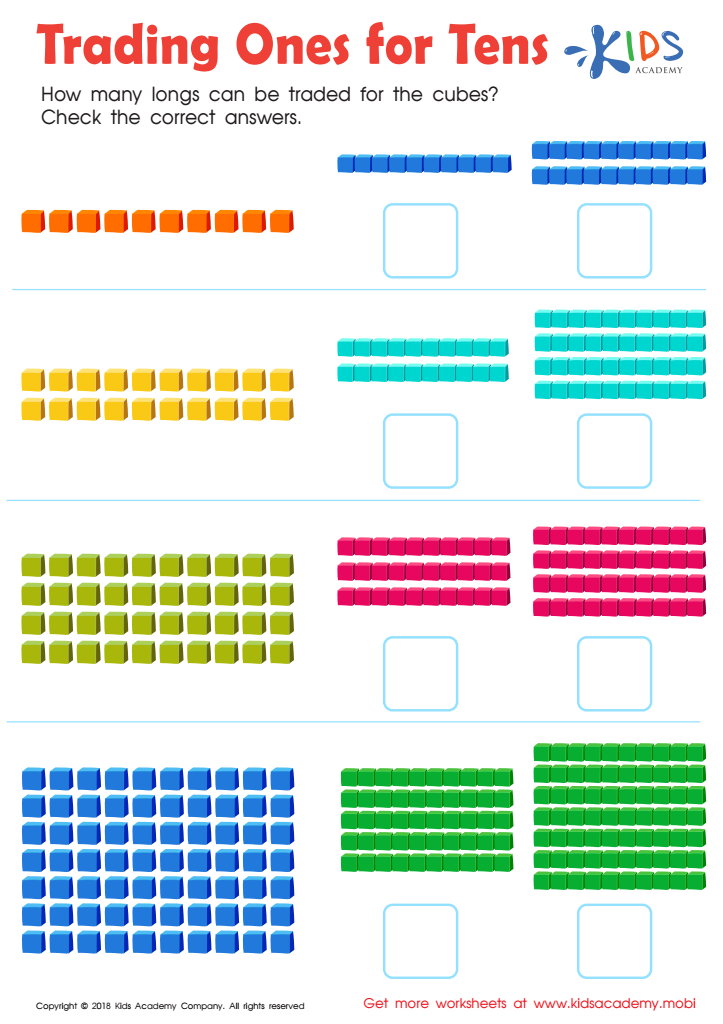
Trading Ones for Tens Worksheet: Part 2




%20(1).jpg)

Understanding place value is a foundational concept in mathematics that plays a crucial role in children's cognitive development and future math proficiency. For children aged 4 to 6, grasping the concept of place value—how numbers are constructed using digits in specific positions—enhances their numerical literacy and prepares them for more complex arithmetic.
Parents and teachers should care about this concept because it serves as the building block for other essential math skills. Early comprehension of place value enables young learners to not only recognize and compare numbers but also to perform basic addition and subtraction. When children understand that the digit “5” can represent five units in one context or fifty in another, they gain a stronger sense of quantity and can better solve mathematical problems.
Moreover, a firm grasp of place value fosters confidence in children, encouraging them to explore mathematical concepts without fear. This foundational knowledge also supports future learning in algebra and beyond. In essence, prioritizing place value education empowers children, ensuring they develop a solid mathematical framework that will benefit them in numerous academic and real-life situations. Engaging with math concepts early helps nurture their curiosity and sets the stage for long-term educational success.