Improving counting skills Normal Math Worksheets for Ages 4-6
3 filtered results
-
From - To
Enhance your child's counting skills with our specially-designed "Improving Counting Skills" math worksheets, perfect for ages 4-6. These engaging and educational worksheets from Kids Academy focus on building a solid foundation in early math skills. Your preschooler or kindergartener will enjoy tracing numbers, counting objects, and solving fun puzzles, all while developing critical thinking and problem-solving abilities. With vibrant illustrations and interactive activities, our printable worksheets make learning enjoyable and effective. Help your child gain confidence in their counting skills and lay a strong groundwork for future math success. Visit Kids Academy to start now!
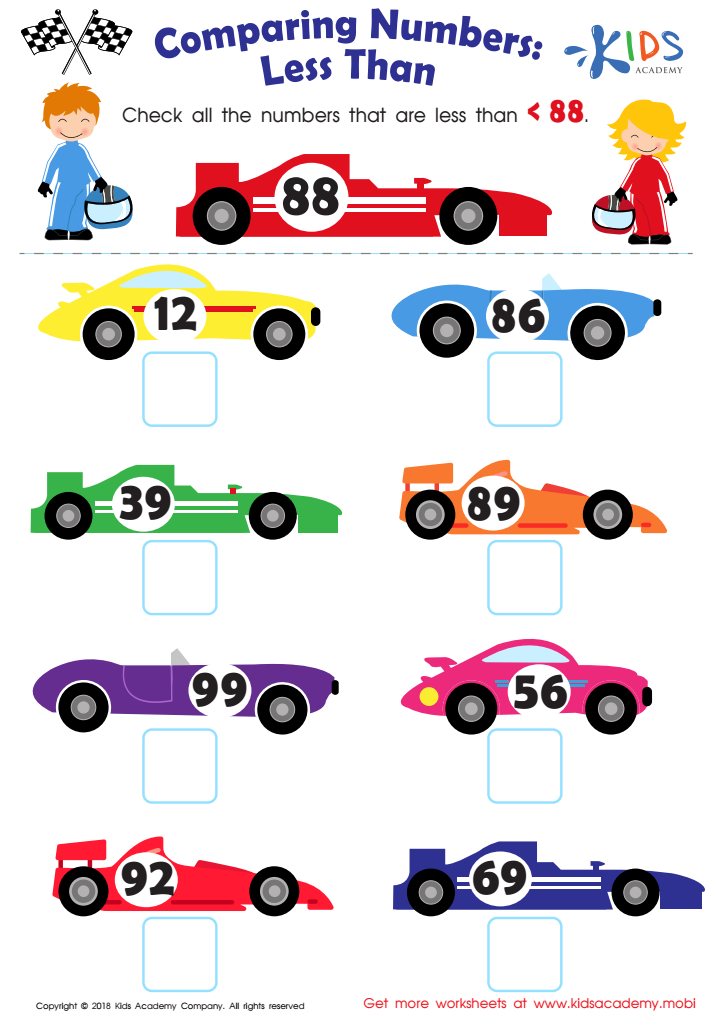
Less Than Worksheet
 Assign to My Students
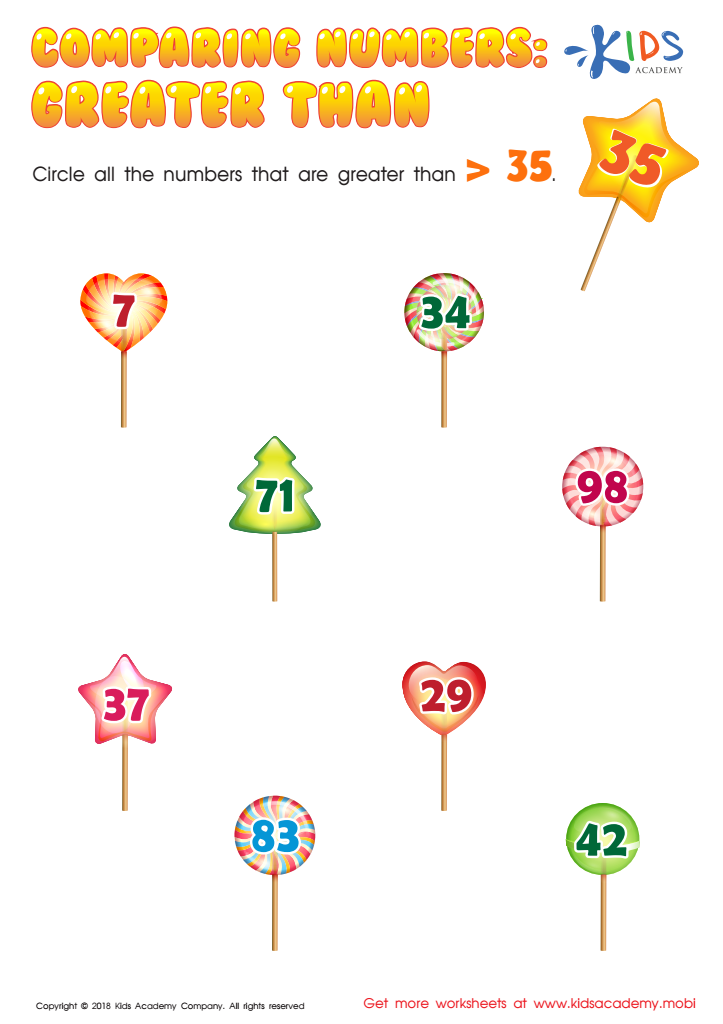
Greater Than Worksheet
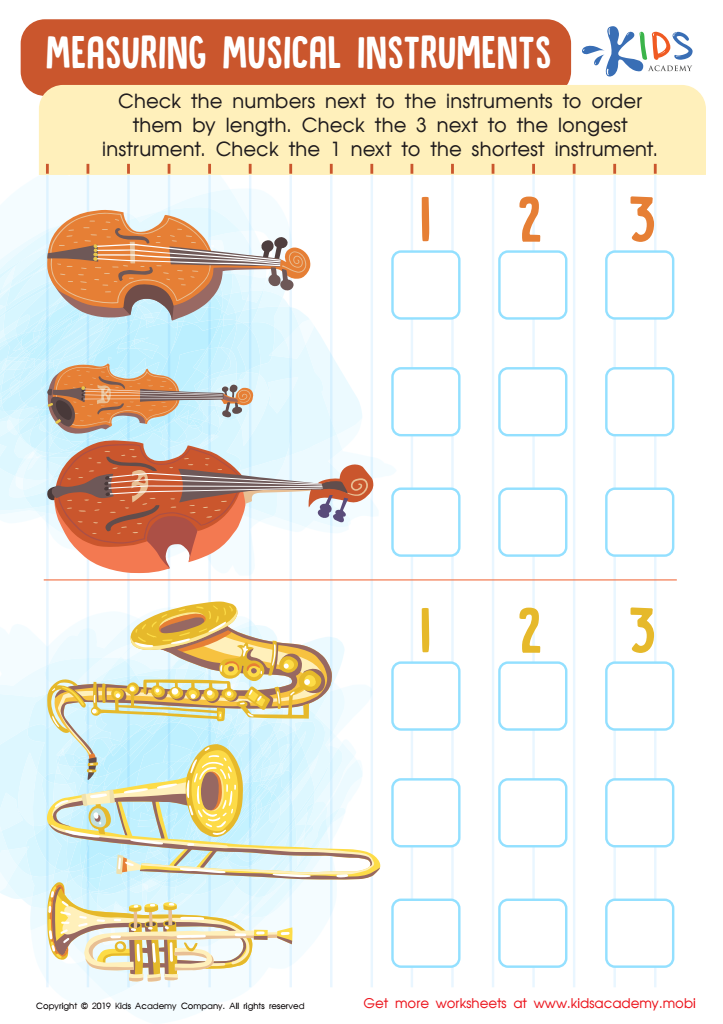
Measuring Musical Instruments Worksheet






.jpg)
Developing strong counting skills in children ages 4-6 is crucial, and both parents and teachers play an essential role in this process. During these formative years, children begin to build the foundation for all future mathematical understanding. Counting is more than just reciting numbers; it involves recognizing numerical order, understanding quantity, and beginning to grasp the principles of addition and subtraction.
Improving counting skills early offers numerous benefits. First, it enhances cognitive development. When kids count objects, they engage in problem-solving and critical thinking, which are key components of cognitive growth. Second, strong counting skills boost confidence. Children who feel comfortable with numbers are more likely to embrace new mathematical concepts as they progress in their education.
Furthermore, counting skills are integral to everyday life. From understanding time and handling money to evaluating portions and distances, numbers are everywhere. Early proficiency in counting ensures children navigate these daily tasks with ease.
Moreover, fostering a positive attitude towards math at an early age can help dismantle anxiety and negative perceptions about the subject. By making counting engaging and approachable, parents and teachers set the stage for a lifelong enjoyment of math.
Therefore, investing time and effort into improving counting skills not only sets up children for academic success but also prepares them for practical real-world scenarios and bolsters overall cognitive development.








