
Improving number sense Normal Math Worksheets for Ages 4-6
4 filtered results
Difficulty Level
Grade
Age
-
From - To
Subject
Activity
Standards
Enhance your child's mathematical journey with our "Improving Number Sense Normal Math Worksheets" designed for ages 4-6. These engaging and age-appropriate worksheets introduce foundational concepts such as counting, number recognition, and basic arithmetic in a fun, interactive way. Our resources aim to bolster confidence and foster a love for math through colorful illustrations and relatable themes. With hands-on activities and varied exercises, children will develop important number sense skills that pave the way for future success in mathematics. Perfect for at-home learning or enrichment in the classroom, our worksheets provide the tools needed for a strong mathematical foundation.
Favorites
With answer key
Interactive
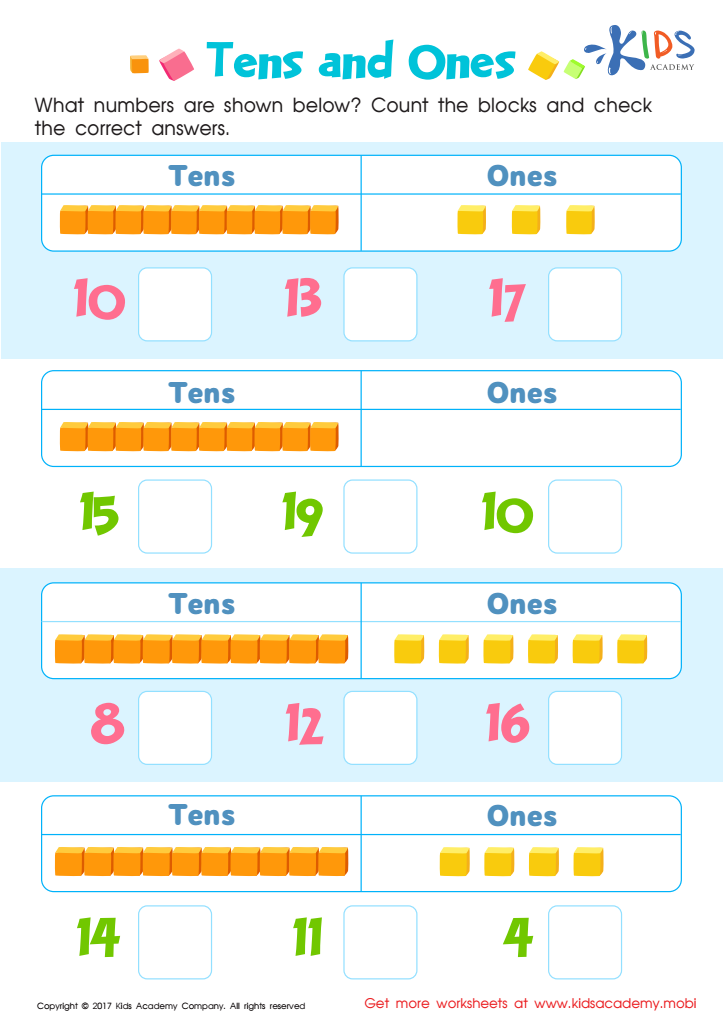
Tens and Ones Worksheet
Help your child make math fun with this worksheet! Count the blocks on both sides and enter the total in the box below the figures. This will help them overcome any math-related anxieties they might have and let them enjoy the learning process.
 Assign to My Students
Tens and Ones Worksheet
Worksheet
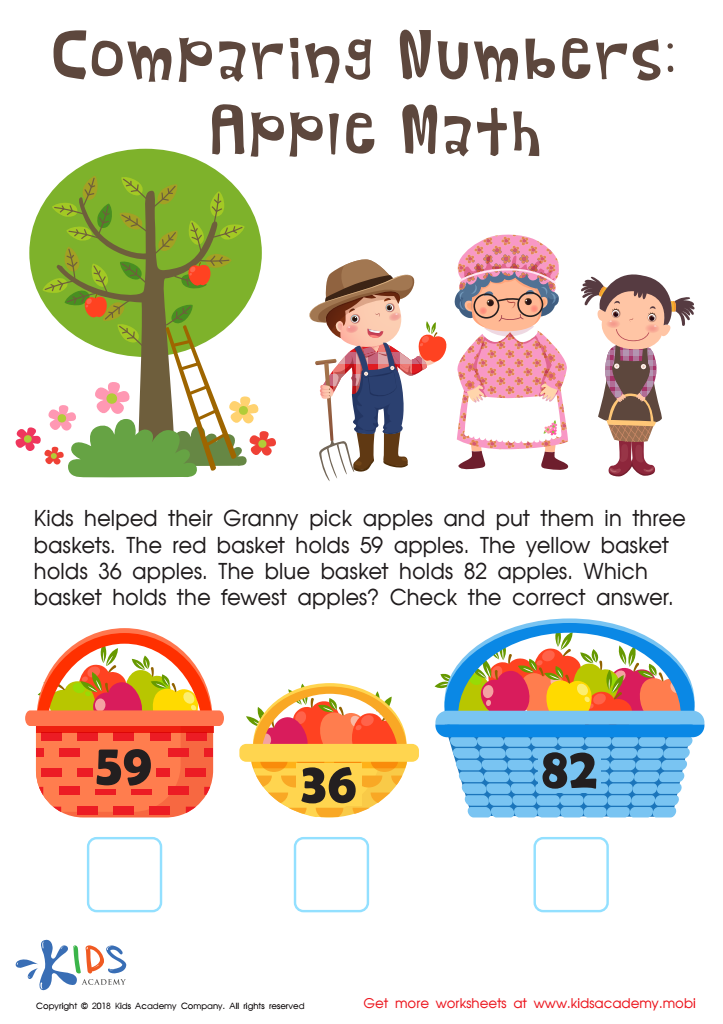
Apple Math Worksheet
Math is more than just counting, adding, subtracting, multiplying, and dividing. Your child may be feeling overwhelmed by all the complexities, like comparing numbers and their differences. But with this worksheet, you can make comparing numbers fun again!
Apple Math Worksheet
Worksheet
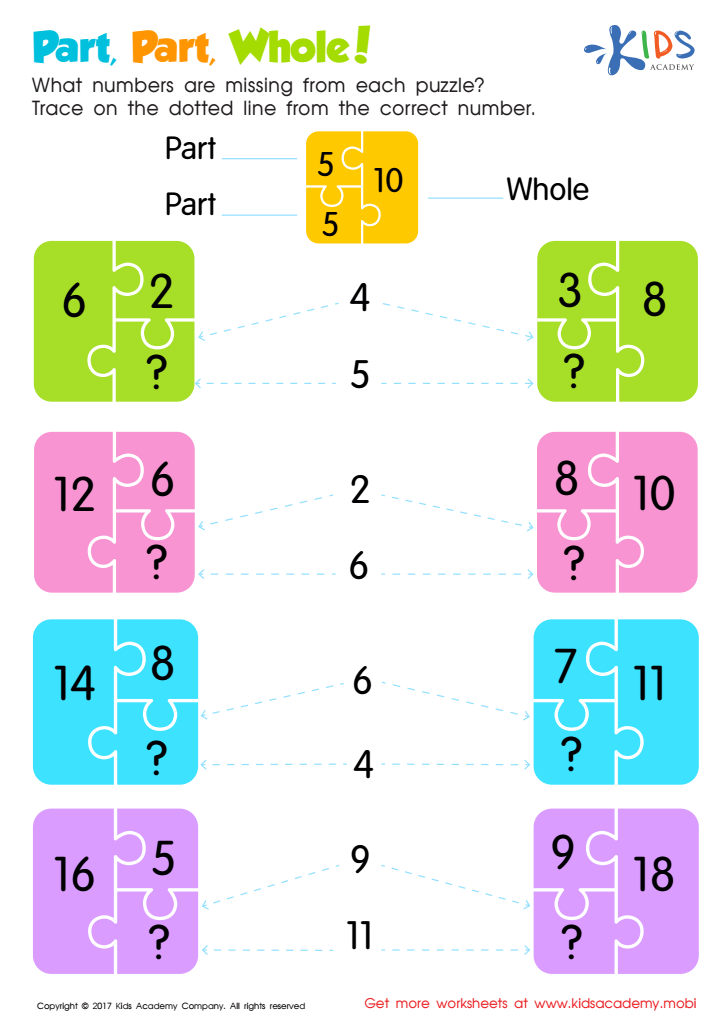
Part, Part, Whole Worksheet
Help your child find the missing numbers in the puzzles. The worksheet combines fun and maths - stimulating the brain while keeping them engaged. Colourful pages will keep the learning enjoyable. Simple addition and subtraction will ensure they stay entertained.
Part, Part, Whole Worksheet
Worksheet
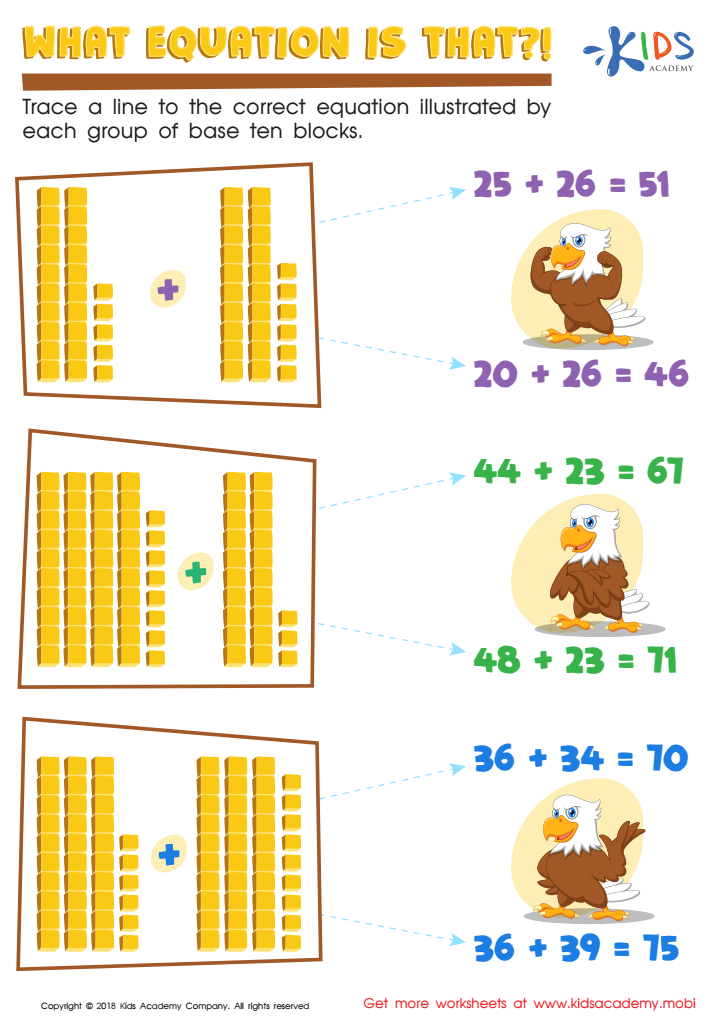
What Equation Is That? Worksheet
Have your students practice counting with base ten blocks. This will help them with math struggles. Homework and worksheets will help them improve; ask them to trace lines to the correct equation on a tracing sheet. Guide them as they count the blocks and trace the lines.
What Equation Is That? Worksheet
Worksheet
Join Kids Academy for Free
Who is primarily going to use this learning content?







Improving number sense in young children, especially those aged 4-6, is crucial for their overall mathematical development. Number sense encompasses the ability to understand, interpret, and manipulate numbers, which forms the foundation for more complex math skills later. For parents and teachers, fostering this skill is essential because it enhances children's confidence in math and encourages curiosity about numbers and their relationships.
Cognitive development research shows that early exposure to number concepts leads to better mathematical outcomes in the future. Children who develop strong number sense are better equipped to tackle addition, subtraction, and problem-solving as they progress in their education. Moreover, early math skills are linked to long-term academic success and critical thinking abilities.
Additionally, engaging children in fun activities that involve numbers helps to cultivate a positive attitude toward math, reducing anxiety and fears often associated with the subject. By emphasizing number sense through enjoyable learning experiences—from counting games to practical applications—parents and teachers can encourage a lifelong appreciation for mathematics. Ultimately, nurturing strong number sense contributes fundamentally to children's academic journeys, setting them up for success in school and beyond. Investing time in these early math experiences pays dividends in their future learning.








