
Matching numbers Normal Math Worksheets for Ages 4-6
5 filtered results
Difficulty Level
Grade
Age
-
From - To
Subject
Activity
Standards
Welcome to our Matching Numbers Normal Math Worksheets for Ages 4-6! These engaging and colorful worksheets are designed to help young learners develop essential number recognition and matching skills. Each activity encourages children to connect numbers with their corresponding quantities, fostering a strong foundation in early math concepts. With a variety of fun themes and interactive exercises, kids will enjoy practicing their counting abilities while enhancing their concentration and fine motor skills. Ideal for both classroom and home use, our worksheets provide a valuable resource for parents and teachers looking to support early mathematical development. Start your child's math journey today!
Favorites
With answer key
Interactive
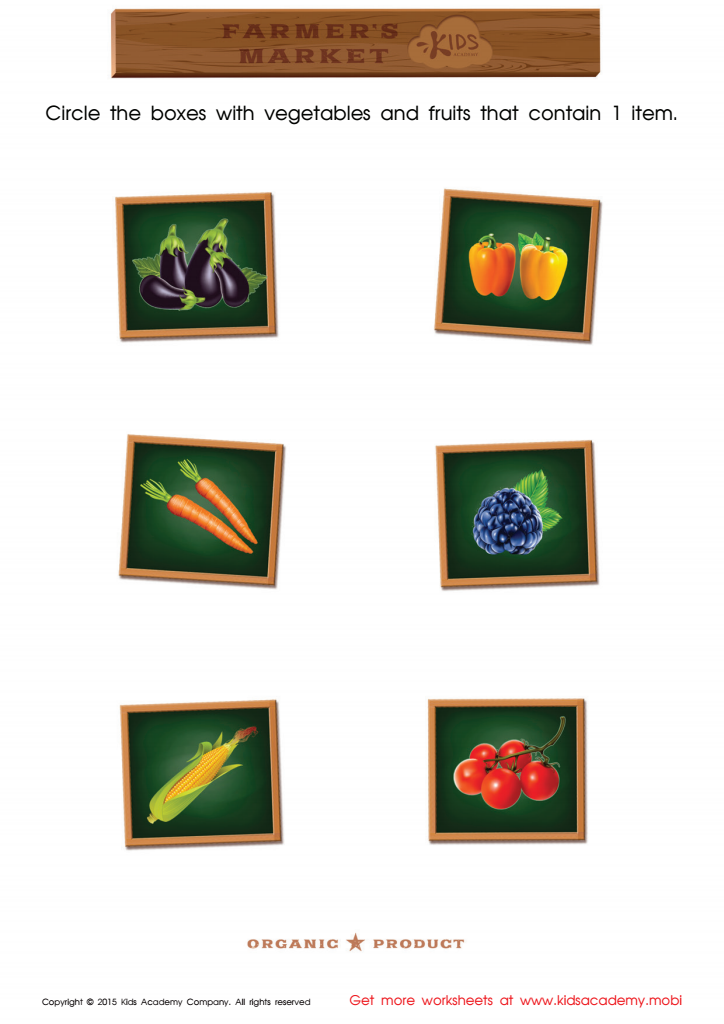
Count and Match Boxes with Vegetables
Print one and help your kid sharp his counting skills. With a variety of veggies to count, such as raspberries and eggplants, your little mathematician will have lots of fun.
 Assign to My Students
Count and Match Boxes with Vegetables
Worksheet
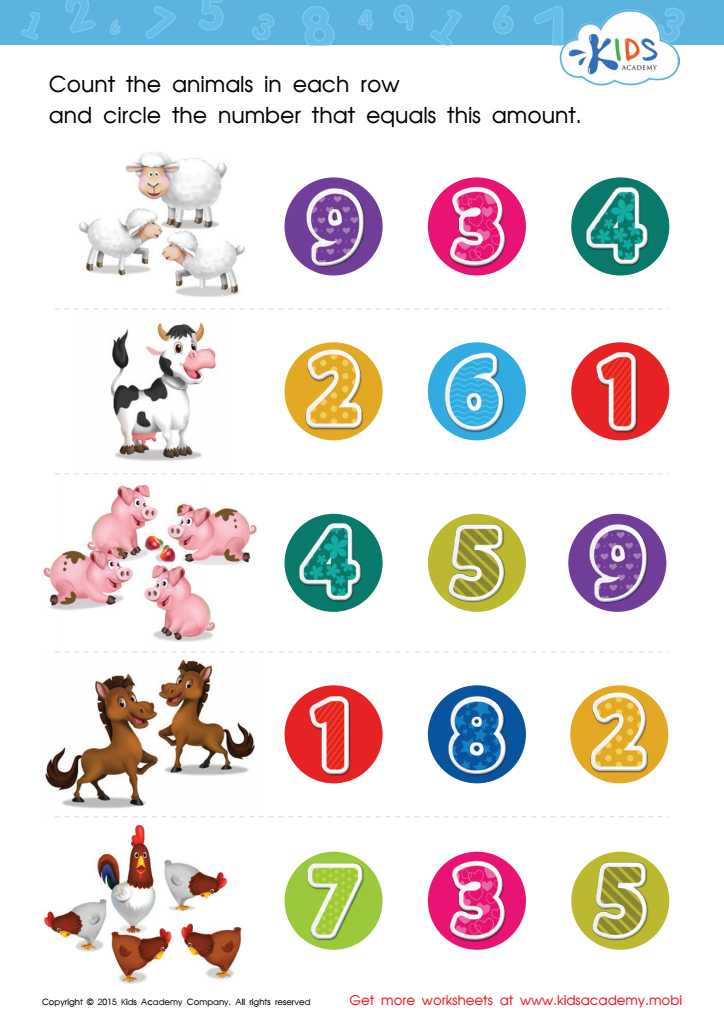
Count and Match 1 – 5 Math Worksheet
Find the colorful worksheet aimed to help your little learner develop their math skills. Count the cute animals and identify the correct numbers based on the Singapore Math method. This worksheet is a fantastic way to start your kid on their mathematical journey.
Count and Match 1 – 5 Math Worksheet
Worksheet
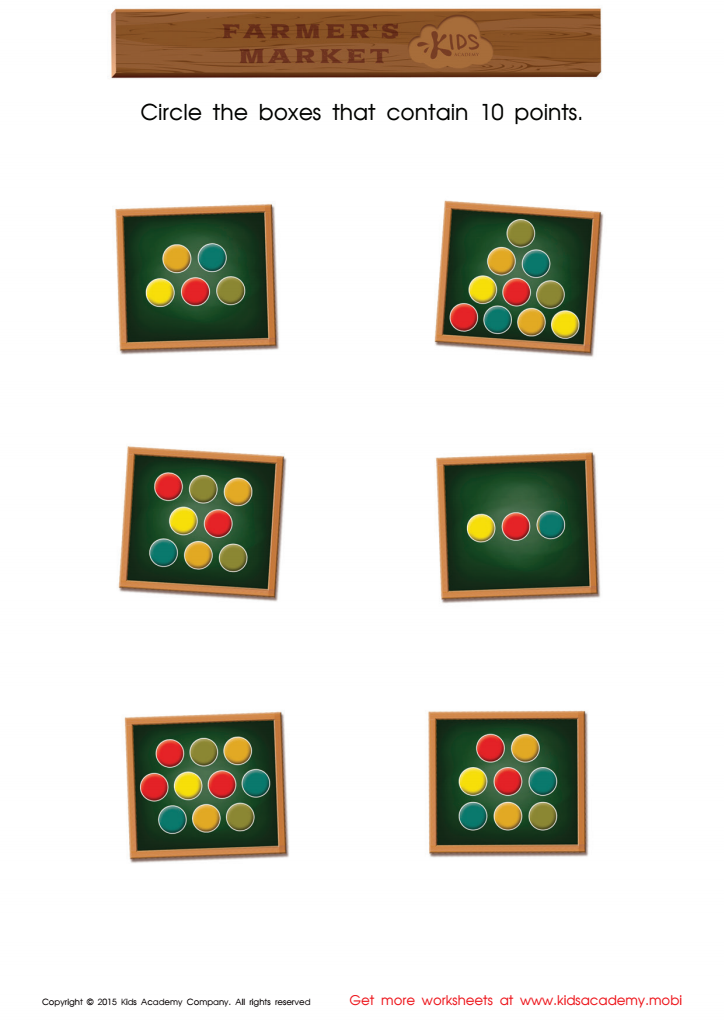
Count and Match Points 10 Math Worksheet
Help your youngster practice counting with this worksheet. Count the points in each box and circle any with up to 10 points. It will improve their counting and matching ability. Forget about addition and subtraction; it's time for a fun exercise for you both!
Count and Match Points 10 Math Worksheet
Worksheet
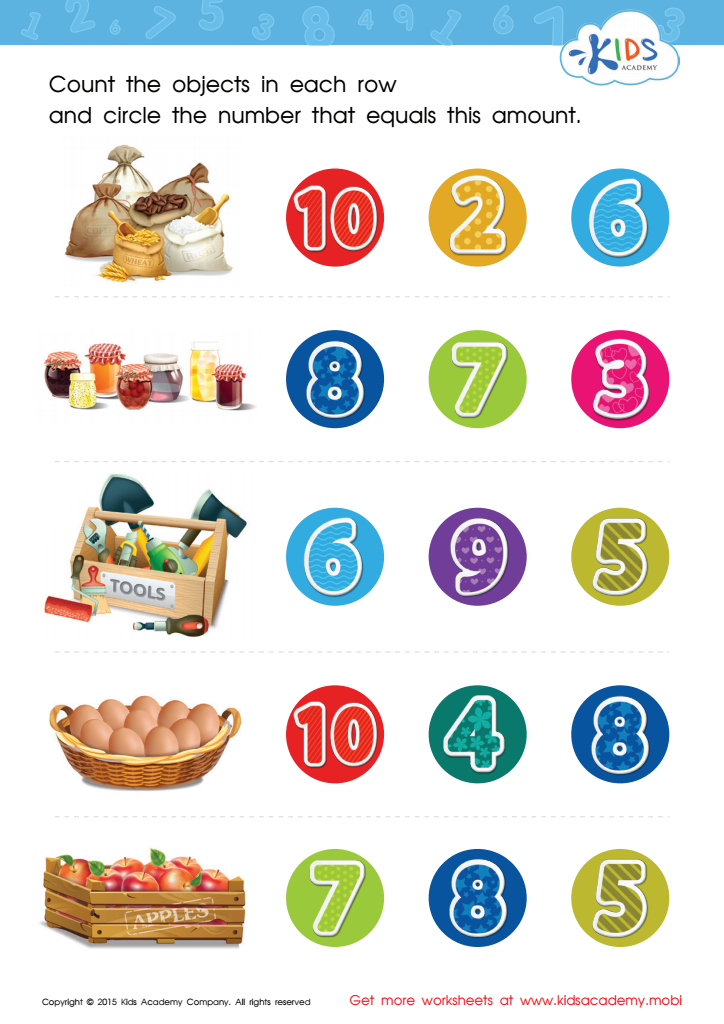
Count and Match 6 – 10 Math Worksheet
Print this fun math worksheet for your kindergartener and help them practice counting up to ten! They'll draw a line from the objects to the correct numbers, visualizing the problem and having fun at the same time. Kids Academy offers more free printable worksheets. Get them now!
Count and Match 6 – 10 Math Worksheet
Worksheet
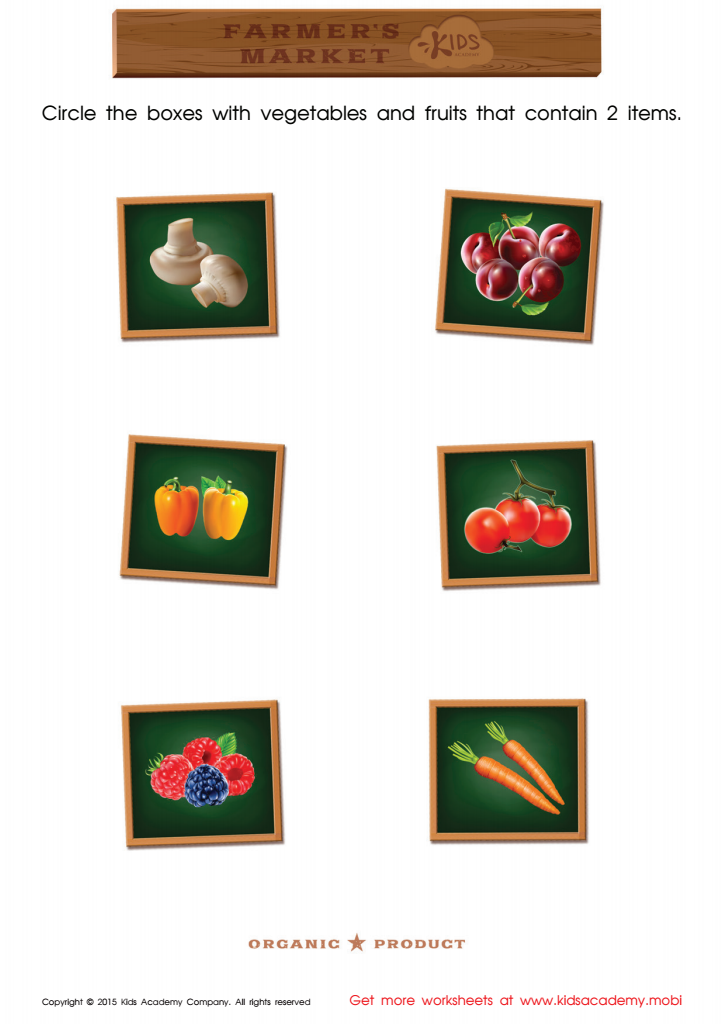
Count and Match Vegetables and Points Math Worksheet
Make your kids excited about math with this free printable kindergarten worksheet! Kids will count up to seven and match boxes with the same number of vegetables. Visualizing the task with this worksheet layout will entertain them while they practice math. Download additional worksheets by topic on Kids Academy.
Count and Match Vegetables and Points Math Worksheet
Worksheet
Join Kids Academy for Free
Who is primarily going to use this learning content?








Matching numbers is a fundamental skill in early math education for children aged 4-6. Parents and teachers should prioritize this activity as it serves as a crucial building block for young learners. By engaging in number matching, children begin to understand number recognition, which is essential for more advanced mathematical concepts. This skill lays the groundwork for their ability to count, compare quantities, and solve basic addition and subtraction problems.
Moreover, matching numbers fosters cognitive development. It encourages critical thinking, analysis, and problem-solving as children work to connect numbers with corresponding quantities or images. This process allows them to develop greater confidence in their math abilities.
Additionally, activities surrounding number matching can enhance fine motor skills as children manipulate cards or objects. These tactile experiences can improve hand-eye coordination, a key component of early childhood development.
Lastly, engaging in matching numbers can be a fun and interactive way to strengthen the parent-child or teacher-student bond. By creating a positive and supportive learning environment, adults can instill a love for math that lasts a lifetime. Overall, emphasizing matching numbers in early education ensures children are well-prepared for future academic challenges while nurturing their curiosity about the world around them.








