
Visual Learning Normal Math Worksheets for Ages 4-6
3 filtered results
Difficulty Level
Grade
Age
-
From - To
Subject
Activity
Standards
Discover engaging Visual Learning Normal Math Worksheets designed specifically for children ages 4-6. Our worksheets incorporate vibrant visuals and interactive activities, making math both fun and accessible for young learners. Perfect for early childhood education, these resources focus on essential math skills such as number recognition, counting, and simple addition and subtraction. The visually stimulating designs enhance understanding and retention, catering to different learning styles. Help your child build a solid mathematical foundation with our easy-to-follow worksheets, perfect for home or classroom use. Start their journey to math confidence today with Kids Academy’s interactive learning materials!
Favorites
With answer key
Interactive
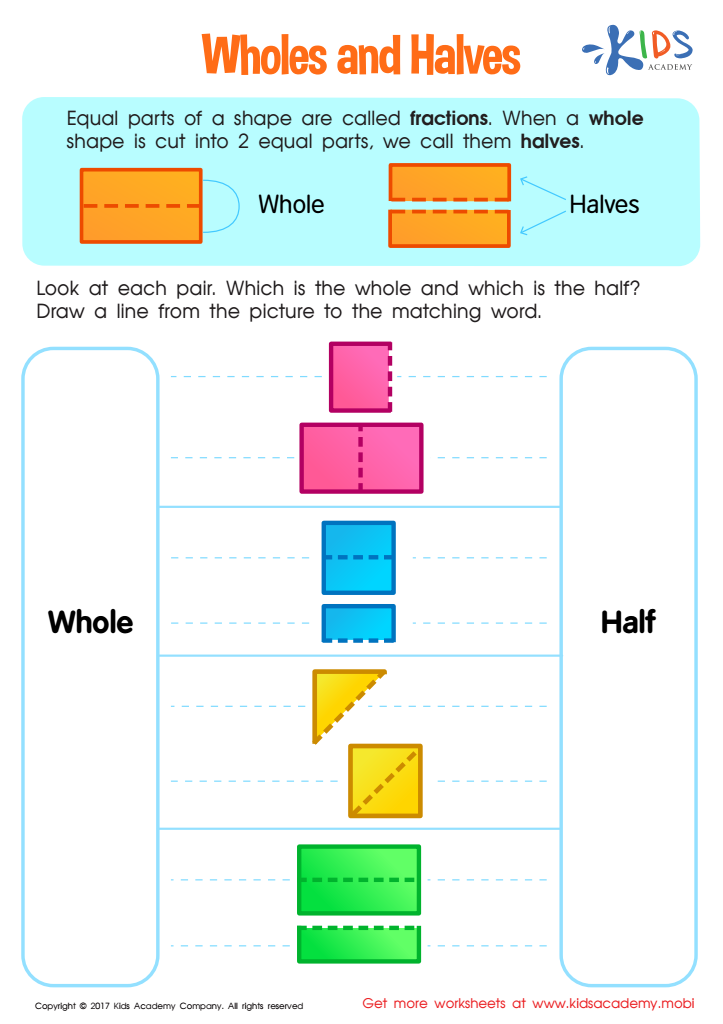
Wholes and Halves Worksheet
Students can feel overwhelmed with fractions. Help take the stress off by using a colorful worksheet to explain whole shapes and how to find halves. Ask them to identify the whole and point to the matching word for the half. A free printout can help guide them.
 Assign to My Students
Wholes and Halves Worksheet
Worksheet
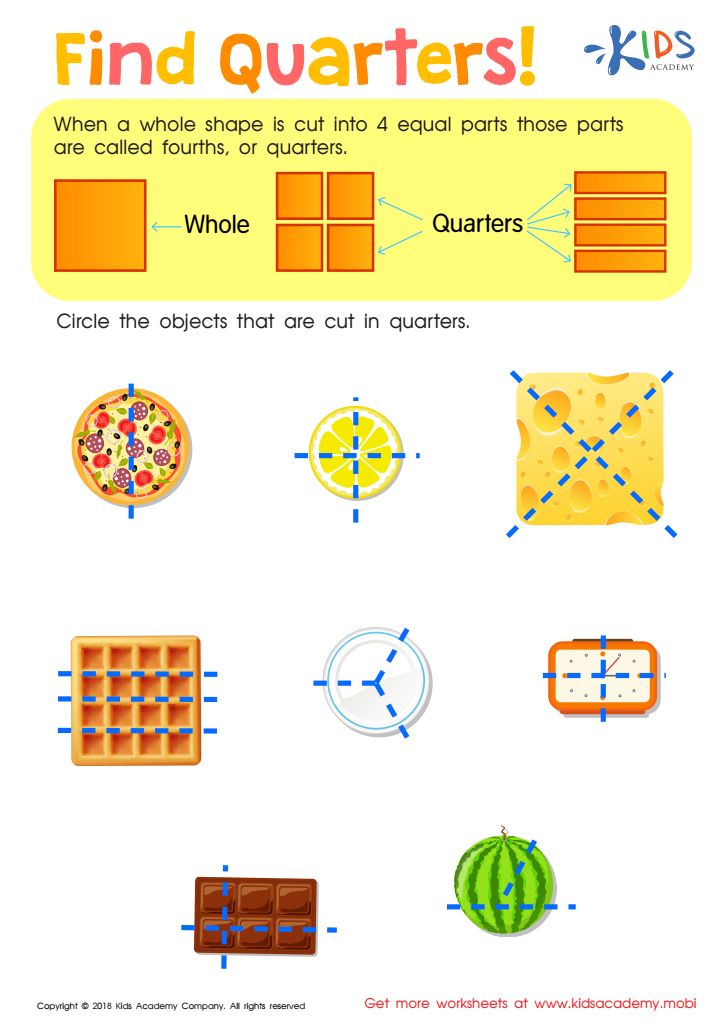
Find Quarters Worksheet
Ask your child if they know what it is called when a shape is cut into two equal parts. If yes, introduce them to quarters. Tell them that when a shape is cut into 4 equal parts, each part is called a quarter. Have them do this exercise by finding and circling objects split into quarters.
Find Quarters Worksheet
Worksheet
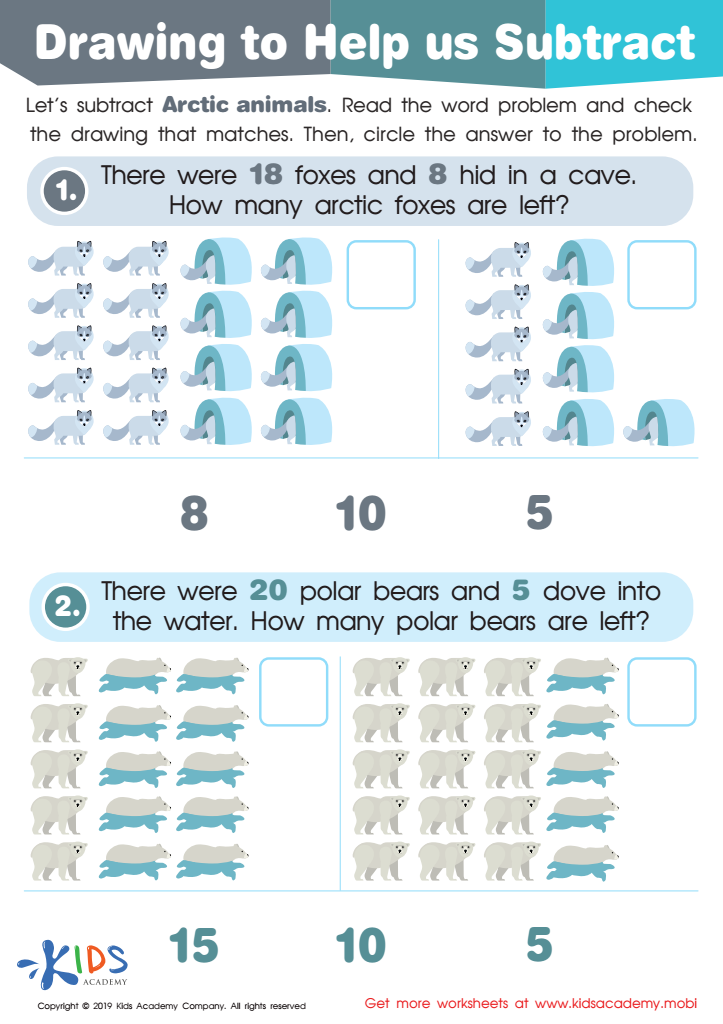
Drawing to Help Us Subtract Worksheet
Math is made fun with this free worksheet featuring Arctic animal pictures to solve basic subtraction word problems. Kids read the problem and choose the correct drawing of the animals to represent the solution. They'll have a blast with their cool animal friends while learning math!
Drawing to Help Us Subtract Worksheet
Worksheet
Join Kids Academy for Free
Who is primarily going to use this learning content?








Visual Learning Normal Math for ages 4-6 offers a critical foundation for young learners. During these formative years, children engage best with learning experiences that are interactive and visually stimulating. Visual learning approaches help make abstract concepts, such as numbers and basic operations, tangible and relatable. By using colorful visuals, diagrams, and manipulatives, children can better understand mathematical ideas, leading to enhanced comprehension.
Moreover, this method caters to diverse learning styles, ensuring that children who may struggle with traditional teaching methods can thrive. Visual learning fosters critical thinking and problem-solving skills, as children learn to interpret and analyze information rather than simply memorizing facts.
For parents and teachers, promoting an early love for math through visual learning can positively influence children’s attitudes toward the subject. It encourages curiosity and exploration, paving the way for future academic success. Additionally, math skills gained at this stage not only support later math learning but also build essential cognitive skills useful across all subjects. In essence, prioritizing visual learning in math education offers children a robust toolkit, preparing them for higher-level problem-solving and optimiizing their overall educational experience. Such a commitment can lead to confident, motivated learners who are excited about math.








