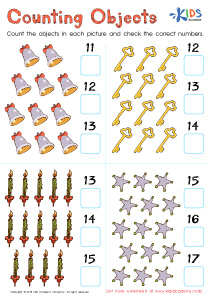
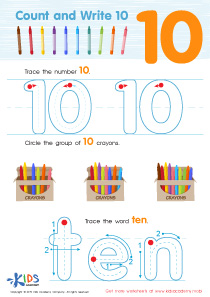
Counting practice Normal Numbers up to 100 Worksheets for Ages 4-6
3 filtered results
-
From - To
Welcome to our Counting Practice Normal Numbers up to 100 worksheets, specially designed for children aged 4-6! These engaging and interactive worksheets provide young learners with a fun way to practice counting skills essential for early math development. Each worksheet features vibrant illustrations and engaging activities that make learning enjoyable, helping kids grasp the concept of numbers up to 100 confidently. Ideal for both home and classroom use, these resources support foundational math skills through repetition and hands-on practice. Encourage your child's numerical journey with our thoughtfully crafted worksheets designed to spark curiosity and develop a strong understanding of counting!
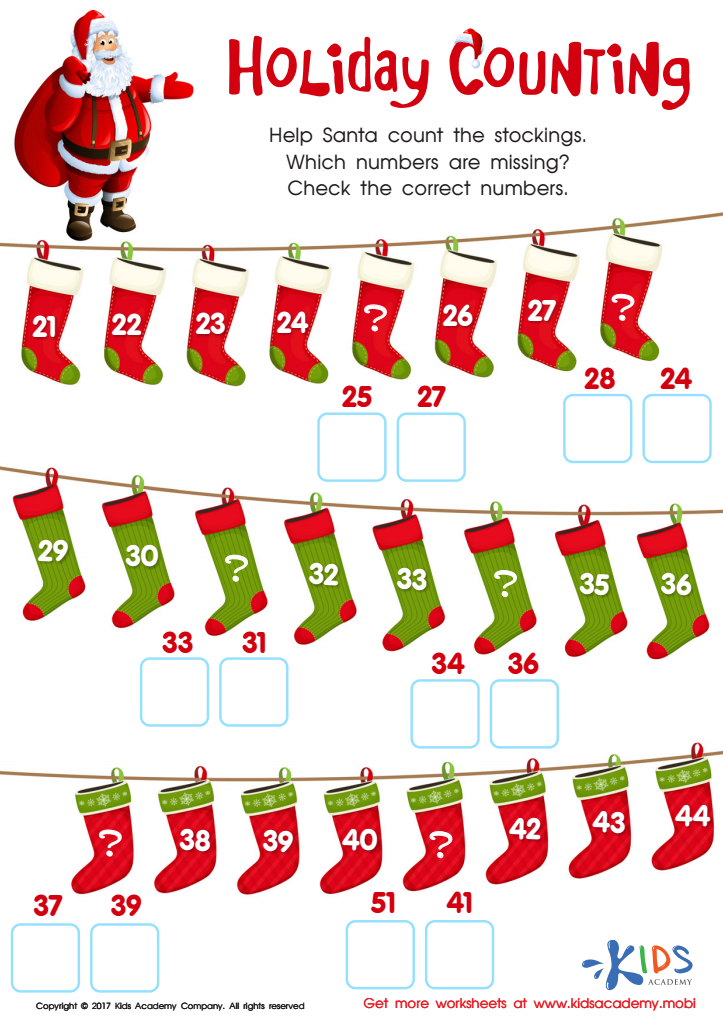
Holiday Counting Worksheet
 Assign to My Students
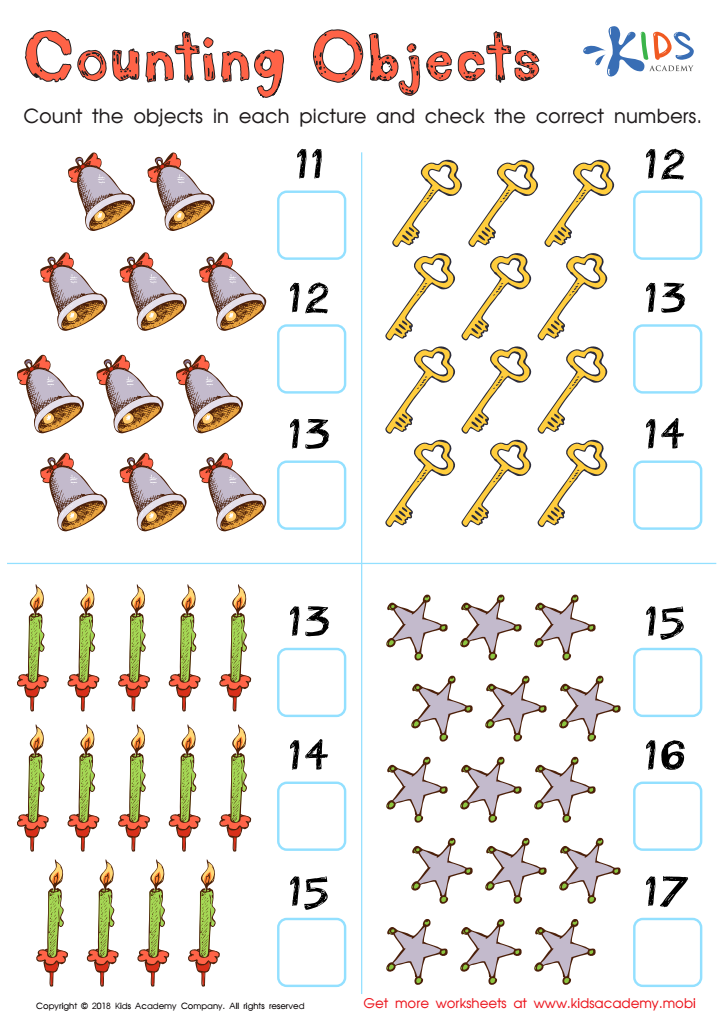
Counting Numbers Worksheet For Kindergarten
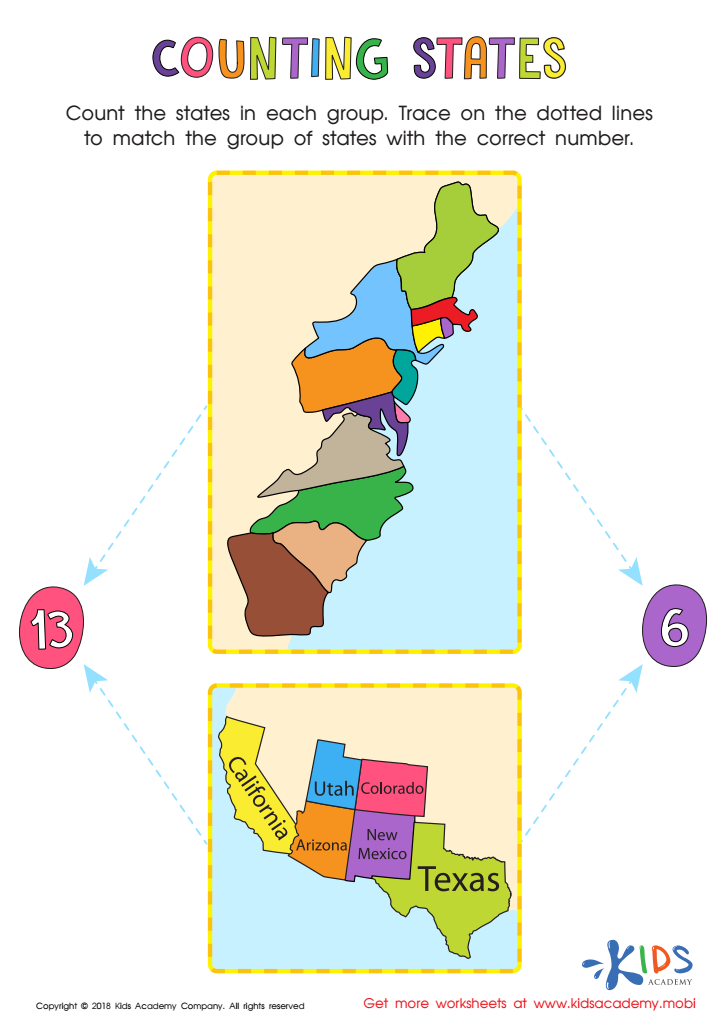
Counting States Worksheet








Counting practice with normal numbers up to 100 is fundamental for children aged 4-6, representing a pivotal stage in their cognitive development. This foundational math skill not only enhances numerical literacy but also boosts critical thinking and problem-solving abilities. As children master counting, they build confidence in their mathematical skills, which fosters a positive attitude towards learning in general.
For parents and teachers alike, encouraging counting practice sets the groundwork for more complex mathematical concepts, such as addition and subtraction, which they will encounter in later grades. Regular exposure to counting helps children recognize patterns and understand numerical relationships, crucial for future math success.
Moreover, counting activities can be engaging and fun, promoting interaction and bonding between caregivers and children. Simple games, songs, or counting everyday objects can turn learning into an enjoyable experience, igniting a lifelong love for learning.
Finally, proficiency in counting is linked to enhanced language skills, as children often vocalize and verbally express numbers. Thus, prioritizing counting practice not only contributes to mathematics readiness but also holistically supports social and cognitive development in early childhood. Investing time in these skills yields long-term benefits, ultimately shaping more capable and confident learners.