Categorization skills Normal Sorting Worksheets for Ages 4-6
5 filtered results
-
From - To
Boost your child's cognitive development with our Categorization Skills Normal Sorting Worksheets designed for ages 4-6. These engaging and educational worksheets help young learners hone their ability to sort and categorize objects based on various attributes such as shape, color, size, and type. Featuring colorful, kid-friendly illustrations, these activities not only enhance critical thinking and problem-solving skills but also prepare children for more complex math concepts. Perfect for use at home or in the classroom, our worksheets provide a fun and foundational skill-building experience for your child’s early learning journey. Download now and watch your child’s categorization skills flourish!
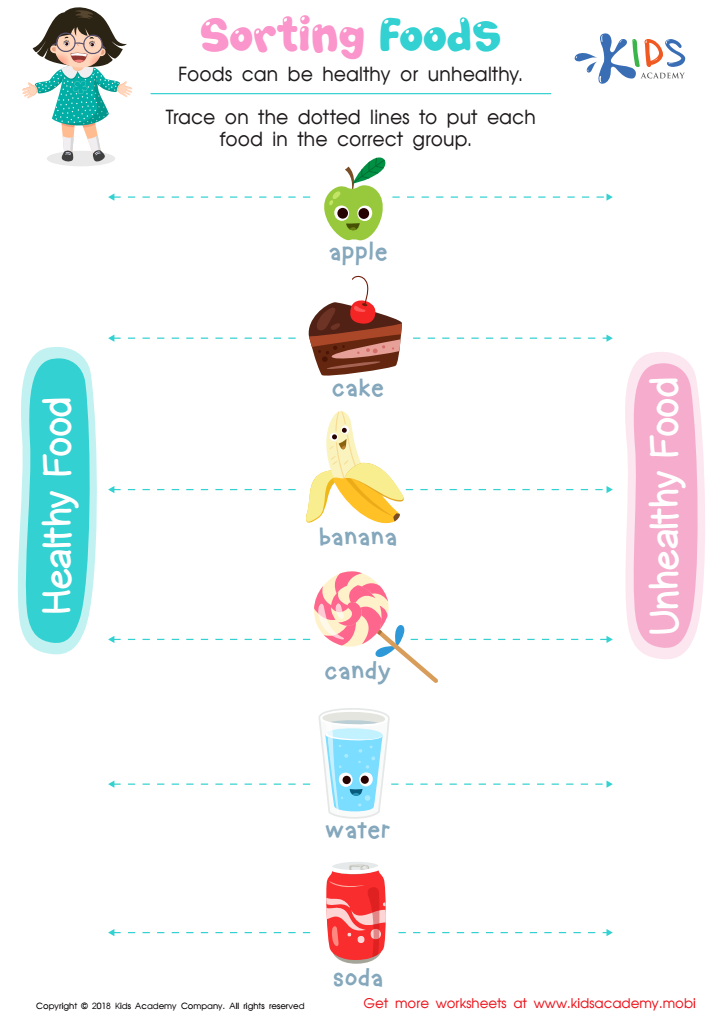
Sorting Food Worksheet
 Assign to My Students
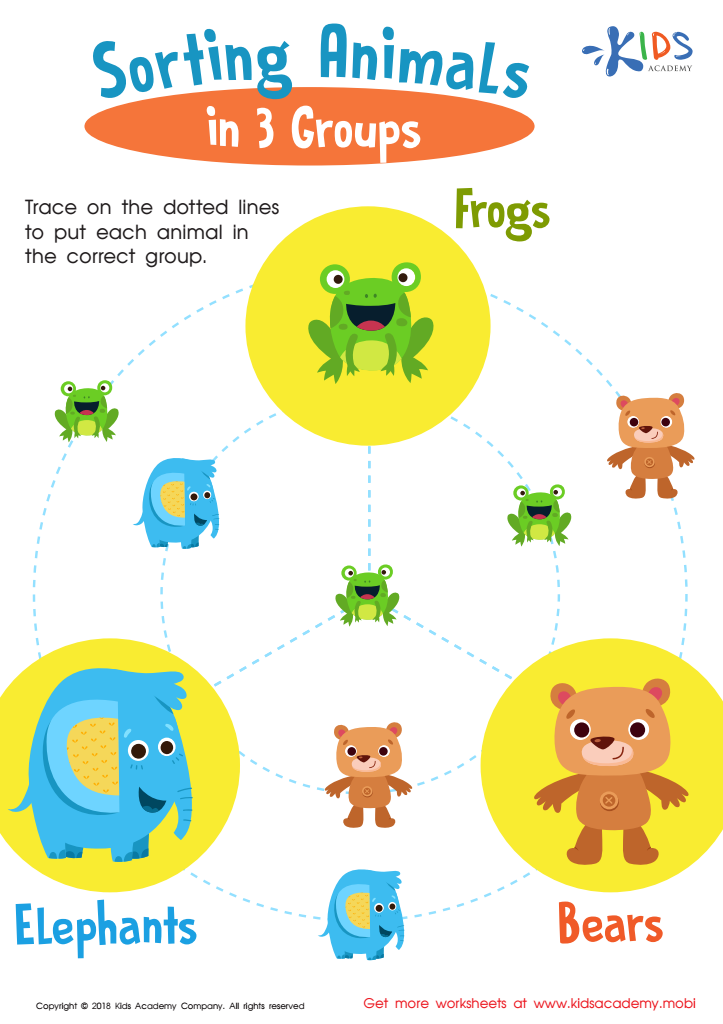
Sorting Animals in 3 Groups Worksheet
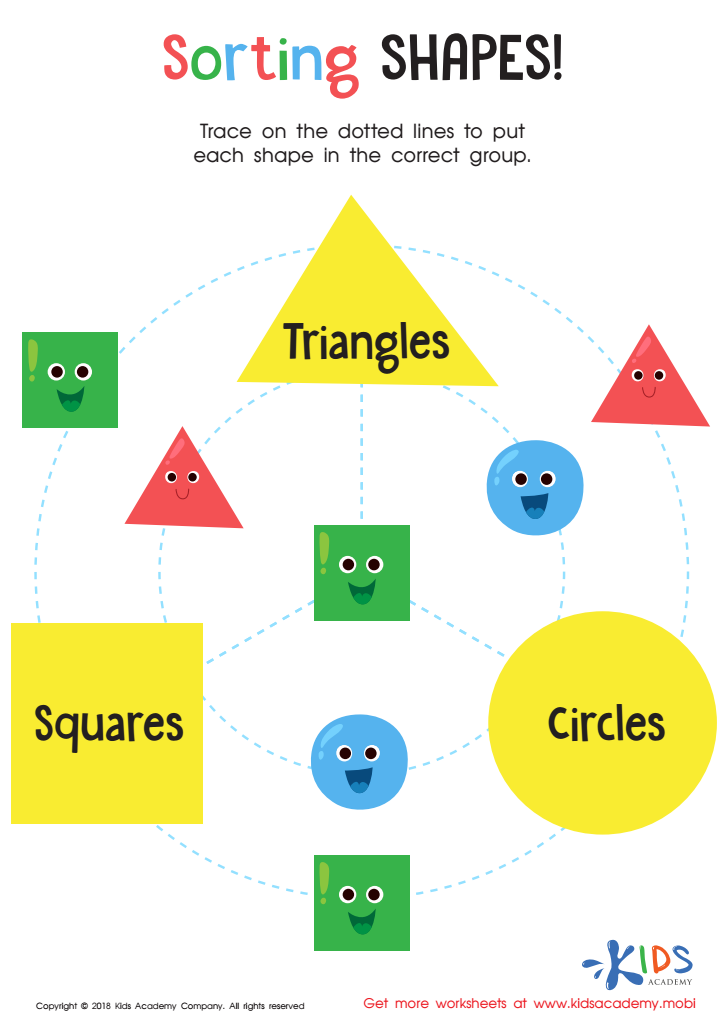
Sorting Shapes - Part 3 Worksheet
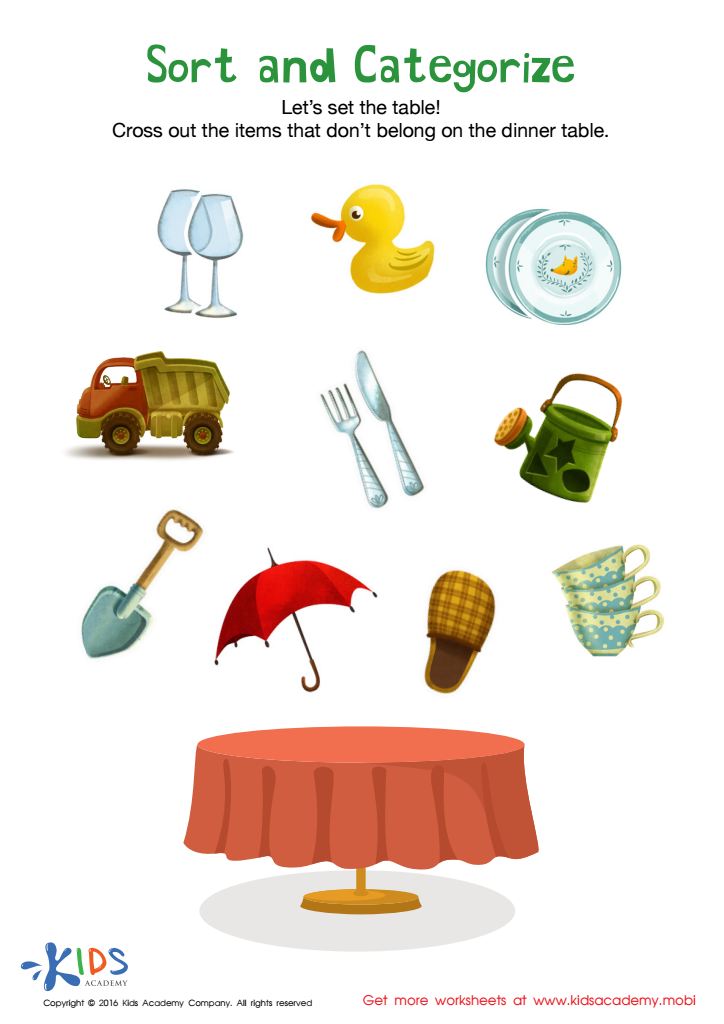
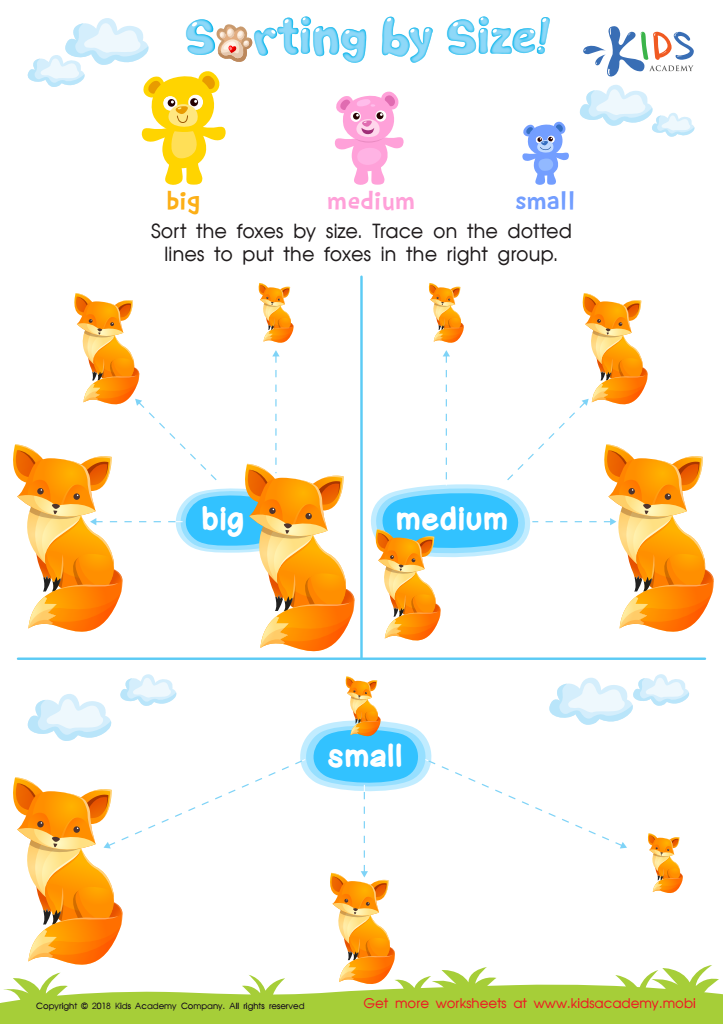
Sorting by Size Worksheet







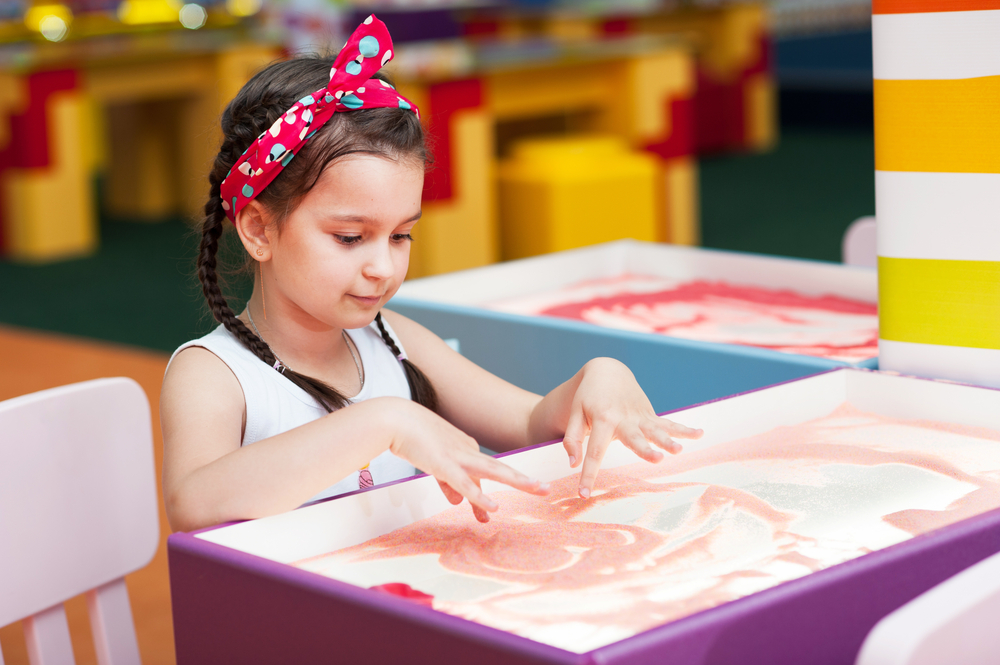
Categorization skills, or the ability to group objects based on common features, are essential for young children (ages 4-6) because they form the foundation of cognitive development, critical thinking, and problem-solving abilities. By categorizing objects, children learn to recognize relationships and patterns, which are crucial for understanding and interacting with the world around them.
For parents and teachers, prioritizing these skills aids in a child’s intellectual growth. Sorting activities, such as organizing objects by color, shape, or size, help enhance visual and spatial awareness. This is integral for future learning, including reading and mathematics, where children must discern different letters, numbers, and shapes.
Moreover, categorization fosters linguistic development as children learn to label and describe groups of objects, expanding their vocabulary and comprehension. For instance, understanding that an apple and an orange both belong to the category of ‘fruits’ helps with semantic learning.
These skills also nurture social and emotional development. When children categorize emotions or social scenarios, they better understand their own feelings and those of others, promoting empathy and social interactions.
In summary, honing categorization through normal sorting activities for ages 4-6 is fundamental in preparing children for more complex cognitive tasks, thereby supporting their overall developmental milestones.








