Counting skills Normal Word Problems Worksheets for Ages 4-6
4 filtered results
-
From - To
Introducing our "Counting Skills Normal Word Problems Worksheets" designed specifically for children ages 4-6. These engaging worksheets help young learners develop crucial counting skills through age-appropriate word problems. Each worksheet offers a fun and interactive way to practice counting, improve problem-solving abilities, and boost confidence. Perfect for both classroom and home use, these worksheets are an excellent tool for enhancing early math education. Download today and give your child the foundation they need for future math success! Dive into a world of numbers and watch your child's counting skills flourish with our expertly crafted resources.
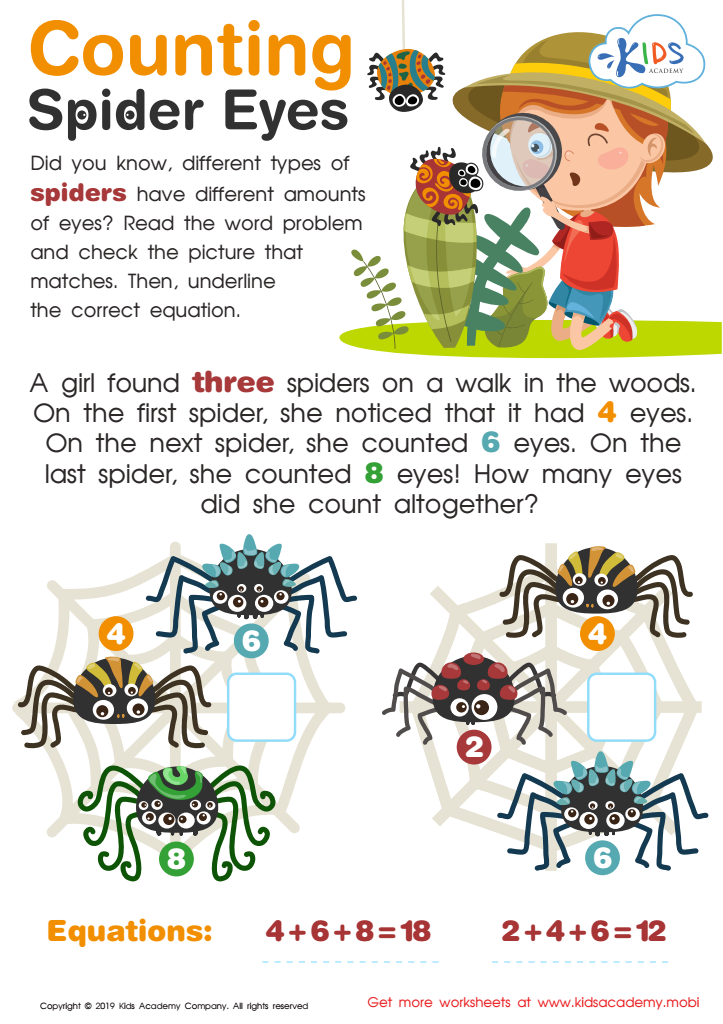
Counting Spider Eyes Worksheet
 Assign to My Students
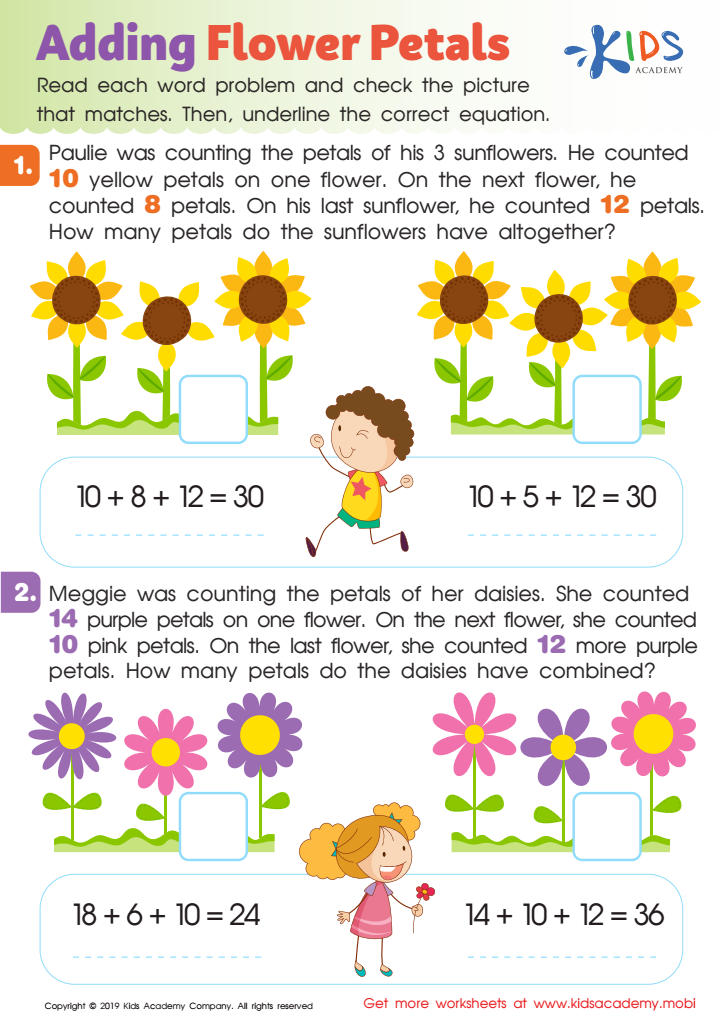
Adding Flower Petals Worksheet
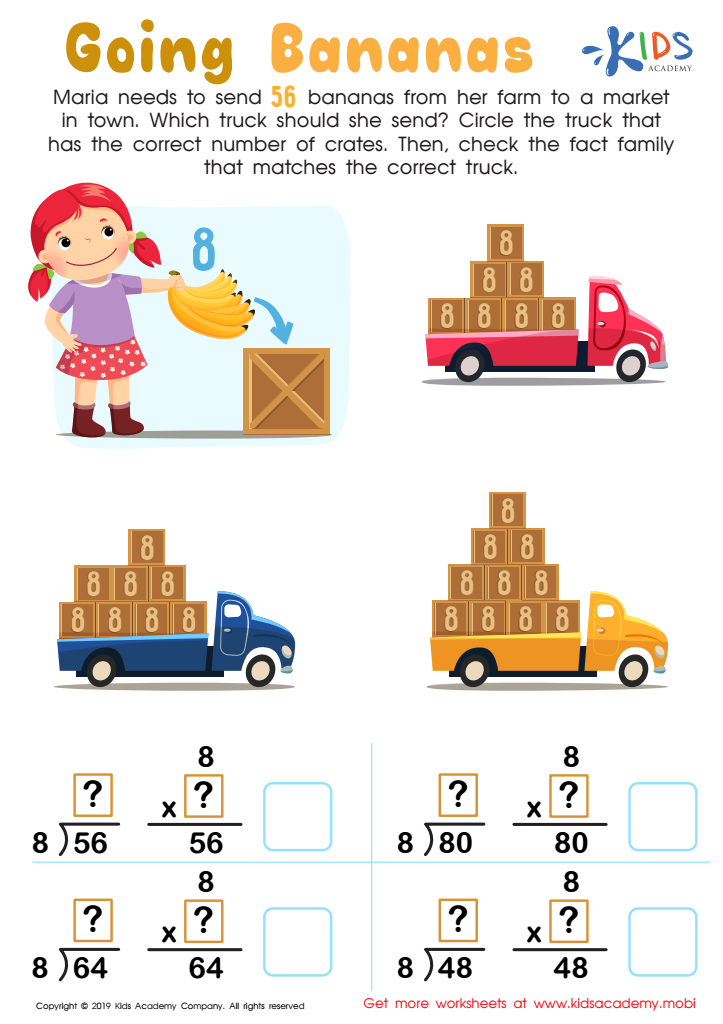
Going Bananas Worksheet
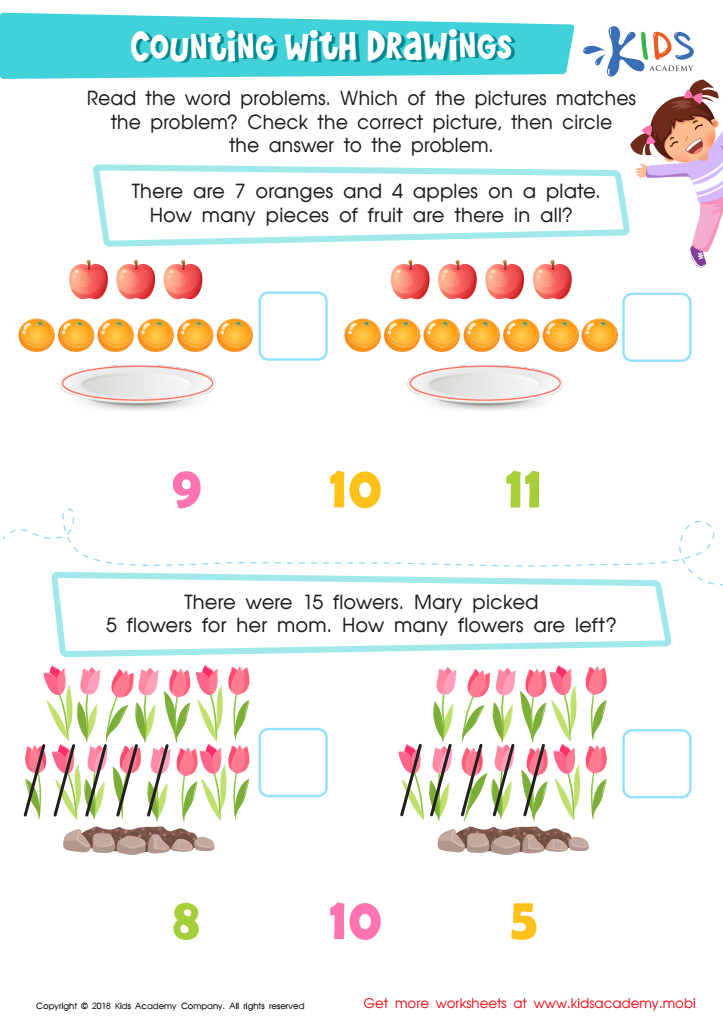
Counting with Drawings:Fruits & Flowers Worksheet





.jpg)


Counting skills and mastering normal word problems are critical building blocks in early childhood education, especially for children aged 4-6. Developing counting skills lays the foundation for mathematical understanding, helping children grasp concepts such as quantity, order, and number relationships. Mastery in counting helps children transition smoothly into more complex math topics, ensuring they are well-prepared as they progress through their academic journey.
Word problems, on the other hand, teach children how to apply counting skills in real-life scenarios, improving their analytical and problem-solving abilities. When children engage with word problems, they learn to translate spoken or written information into mathematical operations, a critical thinking skill applicable in everyday life.
For parents and teachers, fostering these skills can significantly boost a child’s confidence in math, making future learning experiences positive and enjoyable. Early success in math also correlates with improved performance in other subjects, as cognitive and analytical skills are universally beneficial.
Investing time and effort in teaching counting skills and tackling word problems early on provides children with a strong educational foundation. This empowers them to approach future academic challenges with assurance and aptitude, setting the stage for lifelong learning and achievement.








