Filters

9 filtered results

Clear all filters
Favorites
With answer key
Interactive

9 filtered results

Difficulty Level

Grade


Enhance your child's vocabulary skills with our specially designed Vocabulary Building Normal Reading Worksheets for ages 4-6. These engaging and educational worksheets are crafted to help young learners expand their word knowledge and language abilities through fun and interactive activities. Each worksheet focuses on key concepts, incorporating exciting themes and colorful illustrations to capture kids' interest. Perfect for developing fundamental reading and comprehension skills, our resources support early literacy in a dynamic and enjoyable way. Build a solid vocabulary foundation for your child with our expertly curated collection at Kids Academy. Visit our webpage and start your learning journey today!

Check out this FREE Trial Lesson on Reading for age 4-6!

Mystery and Fantasy Stories

Favorites
With answer key
Interactive
  • 4-6
  • Vocabulary Building
  • Reading
  • Normal
Poem: My New Kite Worksheet

Poem: My New Kite Worksheet

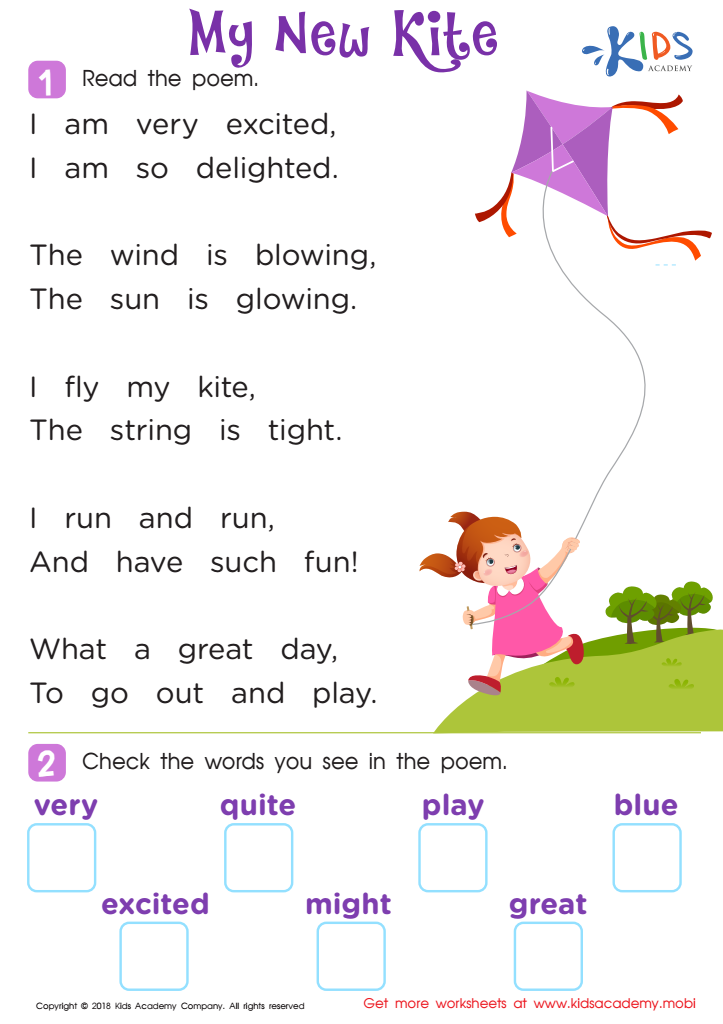
Read a cheerful poem with your child and have them check the boxes next to the words that appear. Then, ask them to identify rhyming words, noting that these won't appear at the bottom of the page. This is a delightful reading activity to help your child remember what they read.
Poem: My New Kite Worksheet
Worksheet
What Am I? Worksheet

What Am I? Worksheet

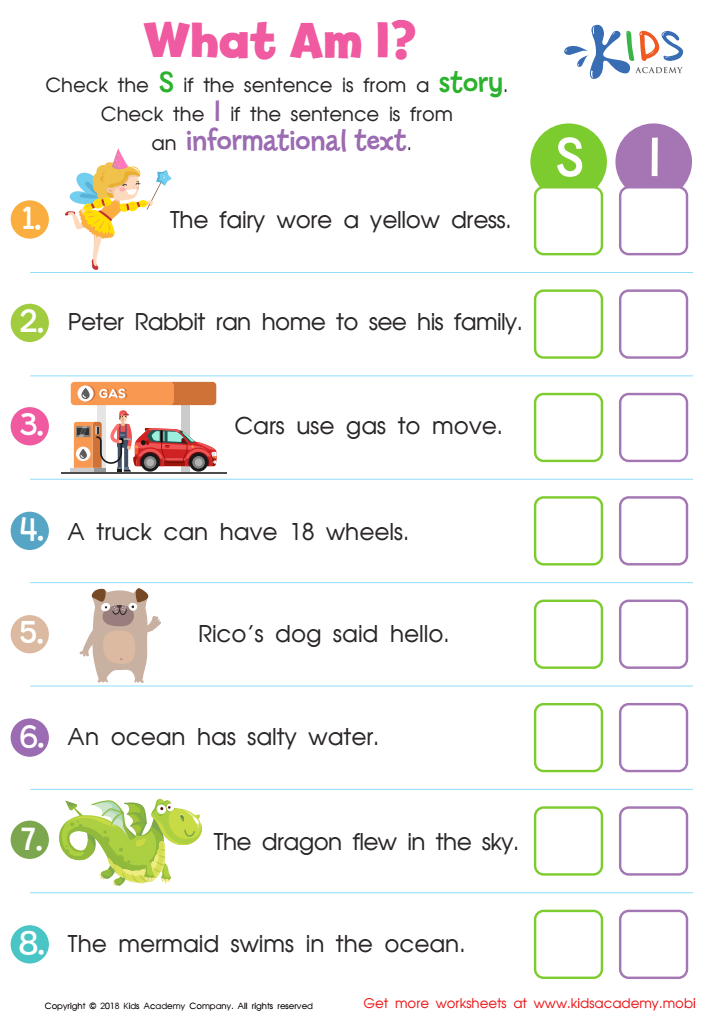
This worksheet assesses students' ability to differentiate between stories and texts they read for facts. Students learn to distinguish between reading for pleasure and reading for information. It includes statements from both a story and an informational text, and students must decide what type of text it is.
What Am I? Worksheet
Worksheet
Three Little Pigs Vocabulary Worksheet

Three Little Pigs Vocabulary Worksheet

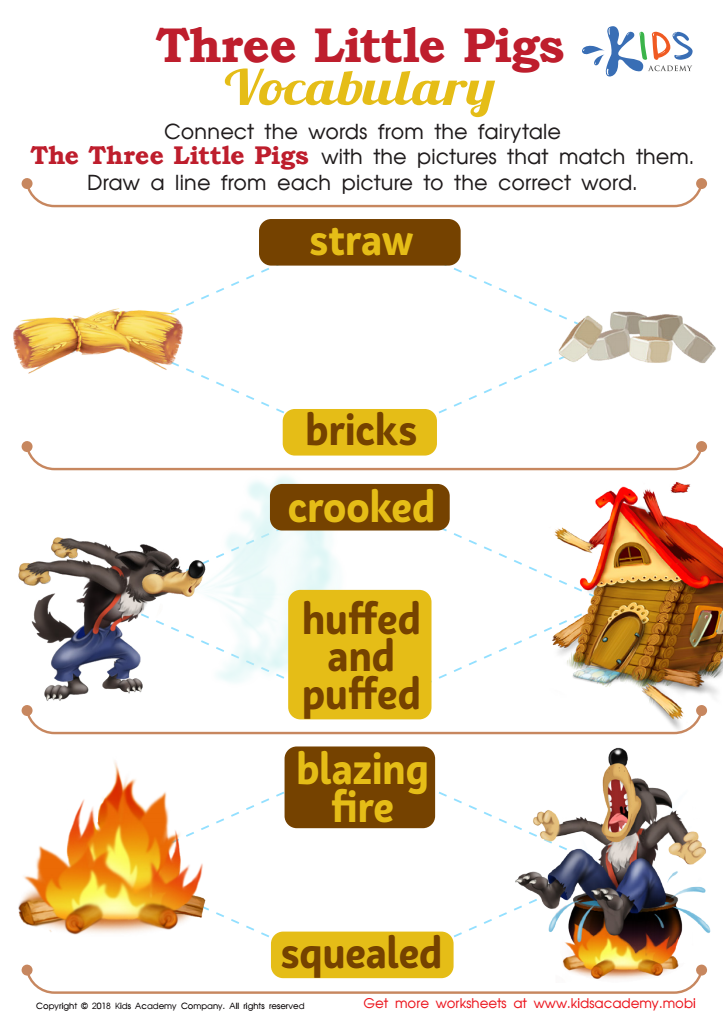
Read the Three Little Pigs to your children. Have them use the tracing sheet to connect the story words with the pictures. This is a fun and educational way to help them build their vocabulary.
Three Little Pigs Vocabulary Worksheet
Worksheet
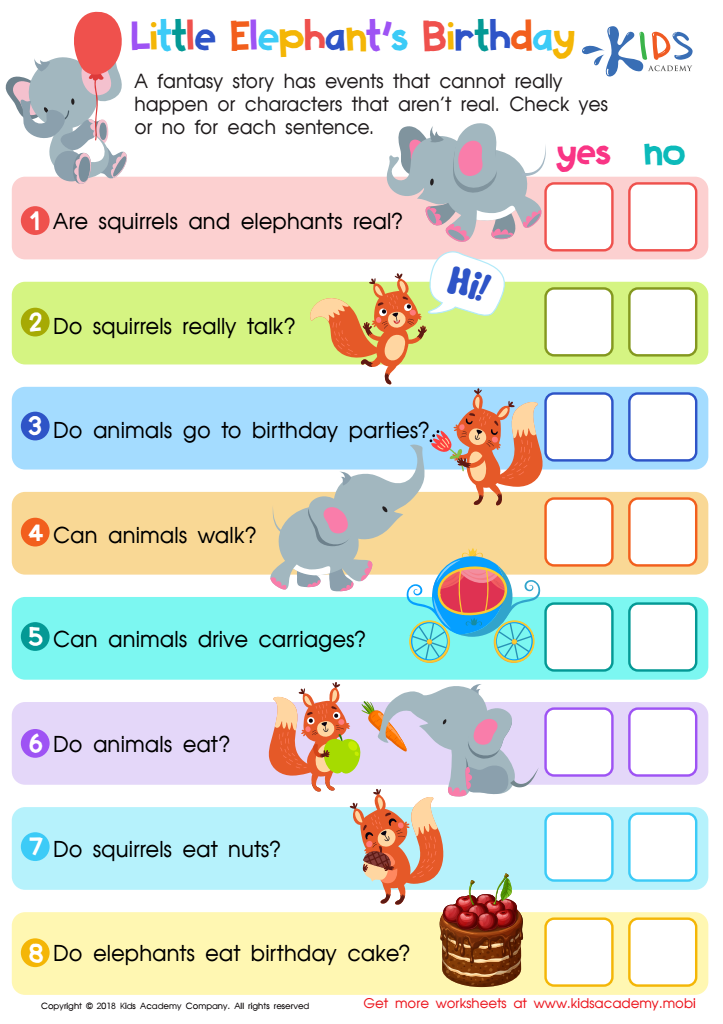
Little Elephant's Birthday Worksheet

Little Elephant's Birthday Worksheet

It's Little Elephant's birthday! Help your students celebrate with this fun worksheet full of colors and pictures. Deciding which questions are facts and which are fiction will help them differentiate between fantasy stories and reality. Let them have fun learning why certain elements of fantasy can't be true!
Little Elephant's Birthday Worksheet
Worksheet
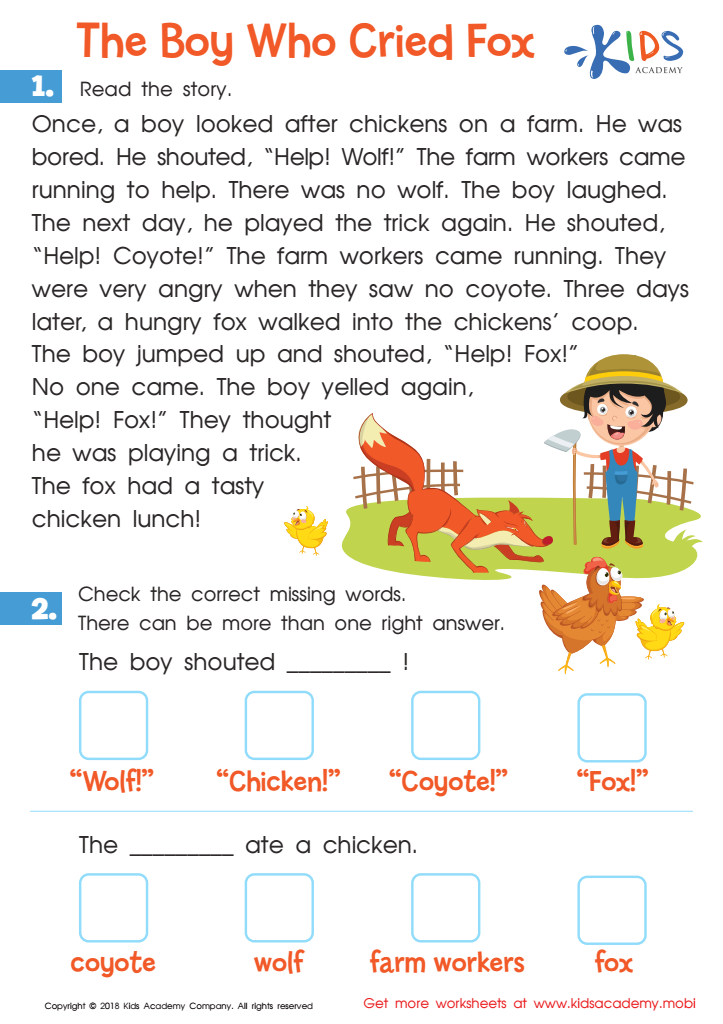
The Boy Who Cried Fox Worksheet

The Boy Who Cried Fox Worksheet

This worksheet encourages students to recall details from a story and answer questions to test their comprehension. Perfect for reading lessons, enrichment, or extra help.
The Boy Who Cried Fox Worksheet
Worksheet
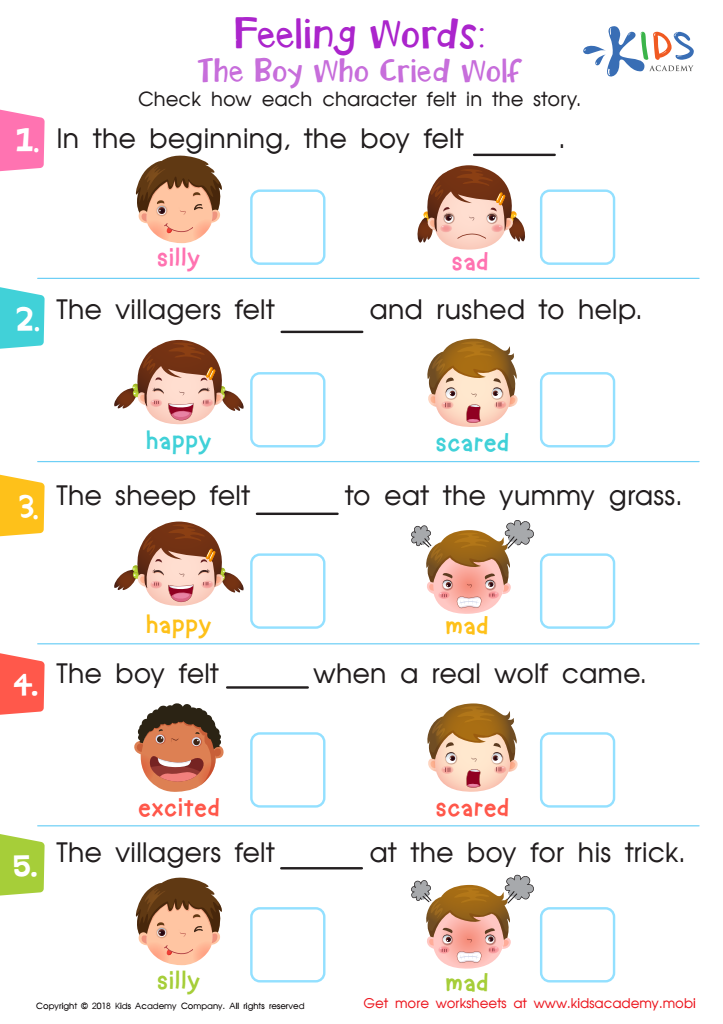
Feeling Words: The Boy Who Cried Wolf Worksheet

Feeling Words: The Boy Who Cried Wolf Worksheet

This worksheet helps students infer characters' traits and feelings by reading The Boy Who Cried Wolf. They choose the correct emotion for each character to improve their story comprehension. A great resource for the reading classroom, it teaches an essential comprehension skill.
Feeling Words: The Boy Who Cried Wolf Worksheet
Worksheet
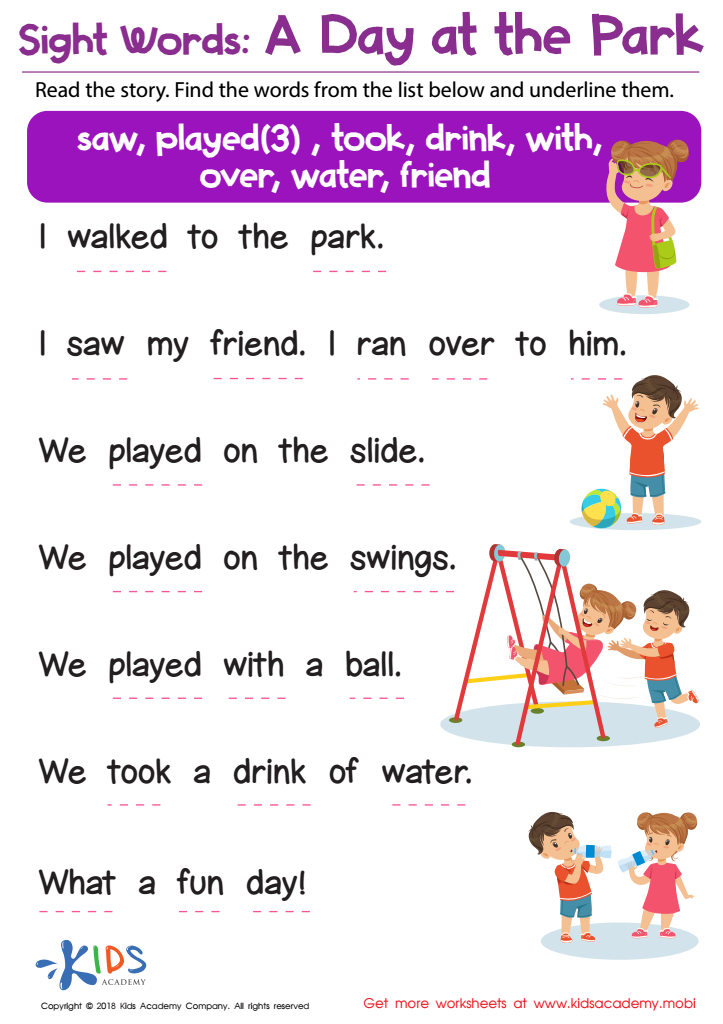
Sight Words: A Day at the Park Worksheet

Sight Words: A Day at the Park Worksheet

This worksheet offers kids practice reading sight words in a story. With picture clues and repetitive wording, they'll work with words that can't be sounded out to reinforce their learning. This is an important step in the reading process that helps kids become more confident readers.
Sight Words: A Day at the Park Worksheet
Worksheet
Worksheet: The Boy Who Cried Wolf

The Boy Who Cried Wolf Worksheet

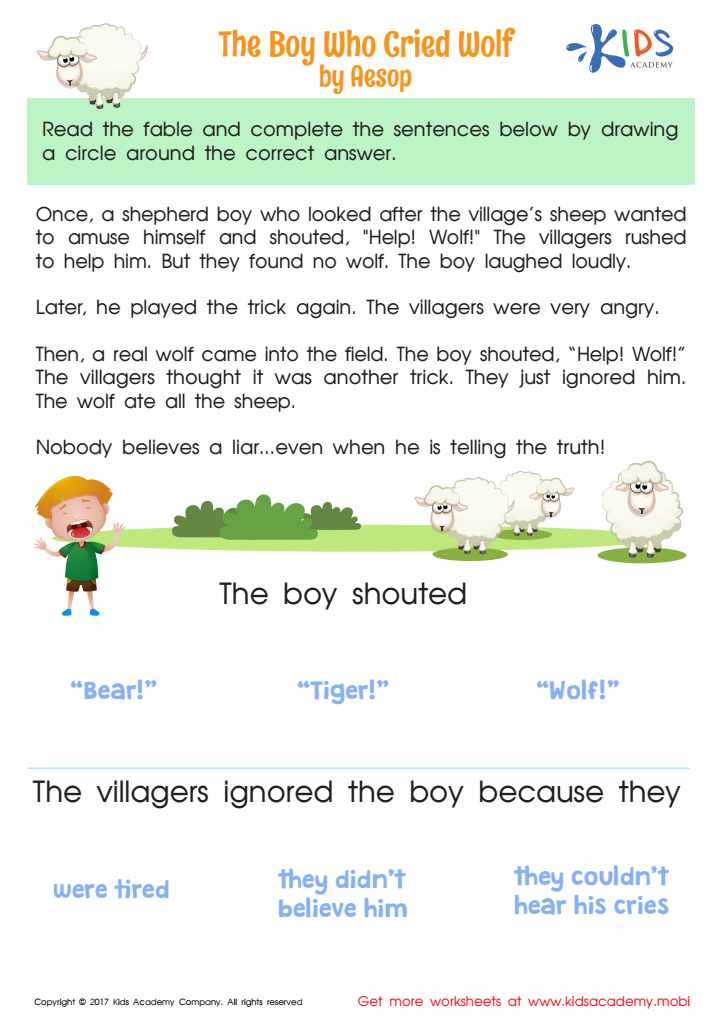
Test your child's reading comprehension with The Boy Who Cried Wolf worksheet. Read the fable, then answer the questions. Use the text to help your child check their answers are correct. Boost reading skills in a fun, interactive way!
The Boy Who Cried Wolf Worksheet
Worksheet
Animal Word Search Worksheet


Animal Word Search Worksheet

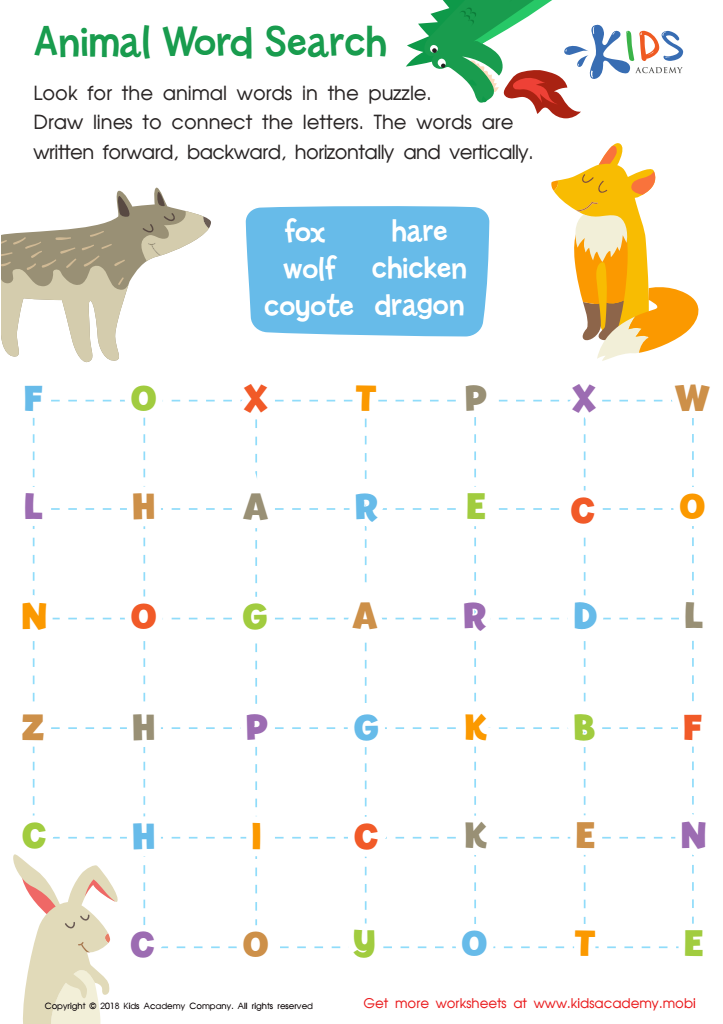
Students can have fun and strengthen spelling and vocabulary skills with this word search worksheet. Search for animal words and circle the letters in the puzzle. Words can be found forwards, backwards, horizontally or vertically, providing a great challenge to foster critical thinking skills. An enriching activity for all ages!
Animal Word Search Worksheet
Worksheet


Fostering vocabulary building and normal reading in children aged 4 to 6 is crucial for their overall development. During these formative years, children are highly receptive to language acquisition, which serves as the foundation for their academic success and intellectual growth. A strong vocabulary enhances their ability to understand and communicate ideas effectively, a crucial skill in all subject areas.

When children are exposed to a rich variety of words, they're better equipped to decode and comprehend texts, which encourages independent reading and learning. This foundational skill also boosts their confidence and enthusiasm for learning, paving the way for continuous academic achievement.

Moreover, vocabulary growth during early childhood has been linked to improved cognitive development. It aids in honing critical thinking skills and problem-solving abilities, which are essential for navigating complex social and educational environments later in life. Engaging children in storytime, daily conversations, and interactive reading sessions also strengthens the parent-child and teacher-student bond, offering emotional support and motivation.

In a rapidly evolving world, early vocabulary building ensures children are better prepared to understand global contexts, access a broader range of information, and communicate effectively. Therefore, investing time and effort in their early vocabulary and reading skills is invaluable for both short-term educational milestones and long-term personal and academic success.