Analytical skills Normal Reading Fiction Worksheets for Ages 4-6
5 filtered results
-
From - To
Discover our engaging "Analytical Skills Normal Reading Fiction Worksheets" designed specifically for children ages 4-6. These creative worksheets foster critical thinking and enhance comprehension by encouraging young readers to analyze stories in fun and interactive ways. Through vibrant illustrations and age-appropriate activities, children will learn to identify key elements of fiction, such as characters, settings, and plot development. Spark curiosity and imagination as your child develops essential analytical skills that serve as a foundation for lifelong learning. Perfect for use at home or in the classroom, these worksheets provide a wonderful opportunity to support early literacy in an enriching environment!
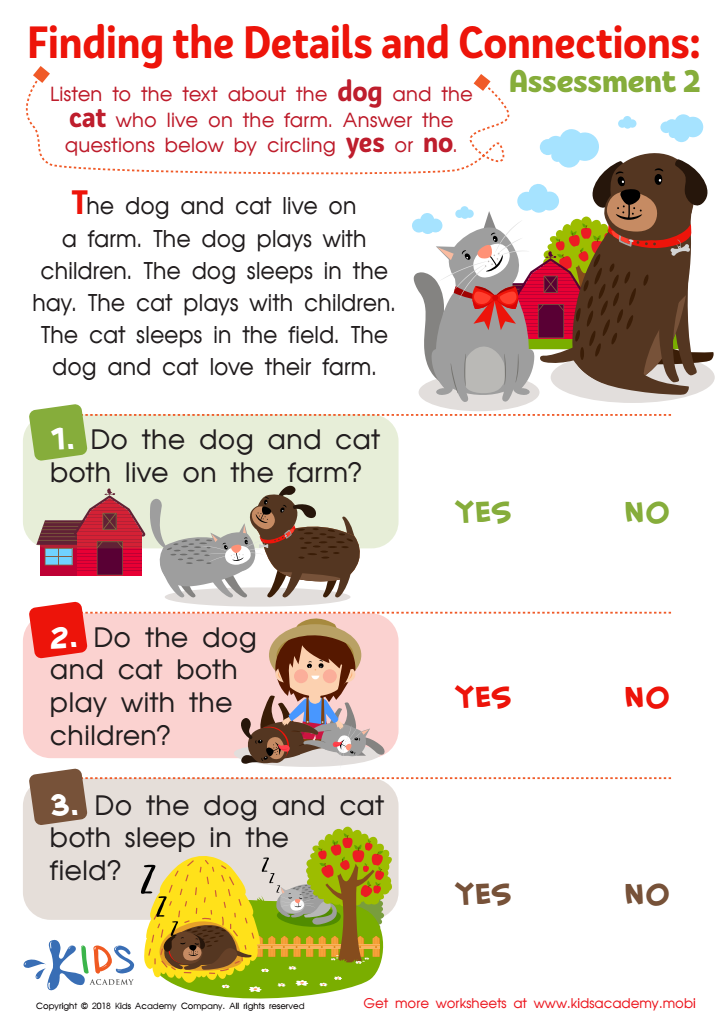
Finding the Details and Connections: Assessment 2 Worksheet
 Assign to My Students
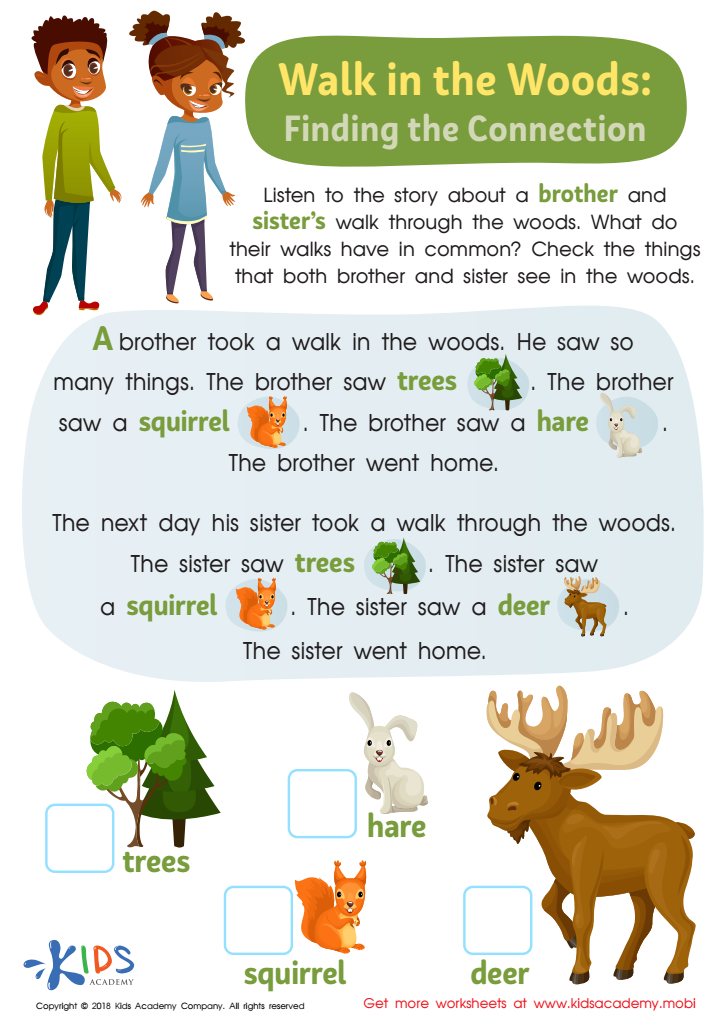
Walk In the Woods: Finding Connections Worksheet
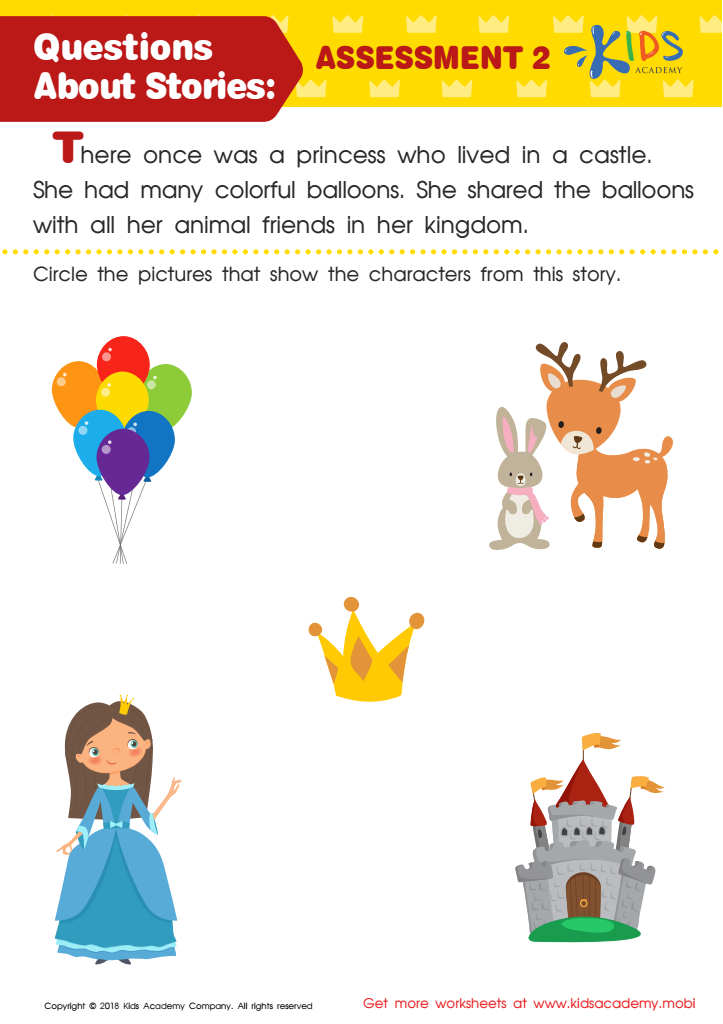
Questions About Stories: Assessment 2 Worksheet
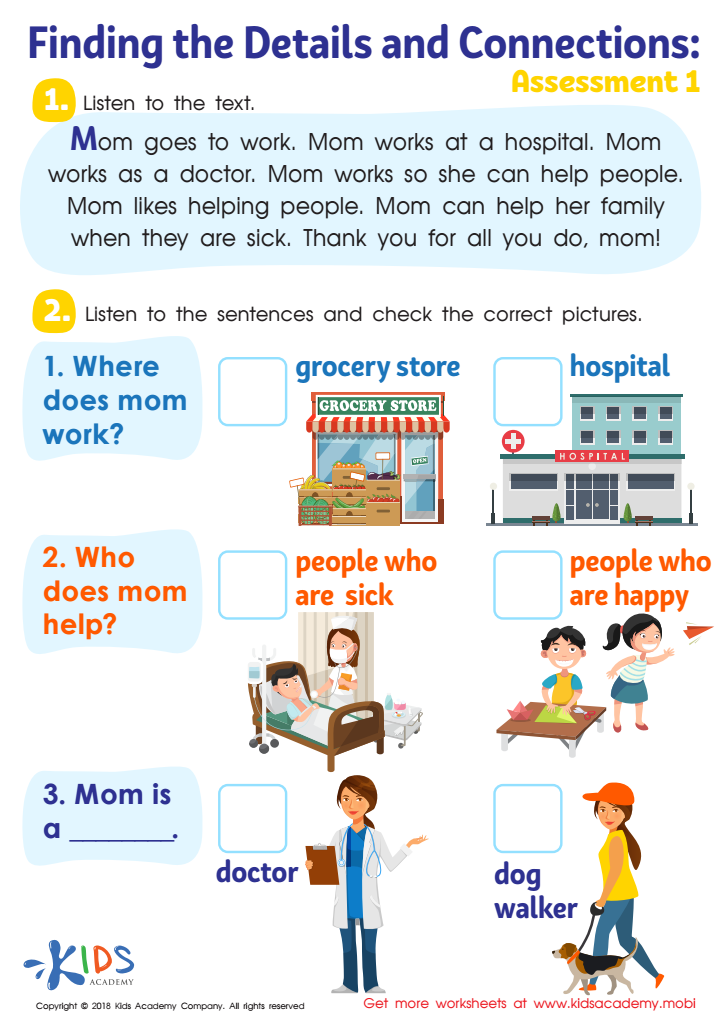
Finding the Details and Connections: Assessment 1 Worksheet
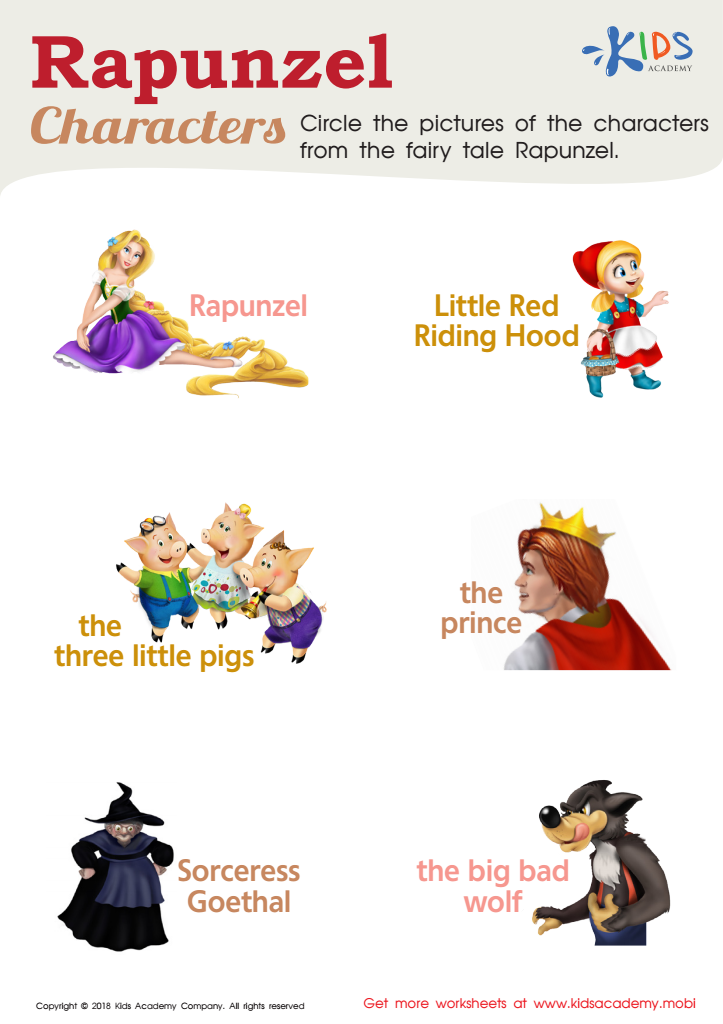
Rapunzel Characters Worksheet







Parents and teachers should care about developing analytical skills through normal reading fiction for ages 4-6 because these foundational abilities significantly influence a child's cognitive development and overall learning trajectory. At this age, children are naturally curious and are learning to make sense of the world around them. Fictional stories provide rich contexts for them to engage in critical thinking and problem solving.
When children encounter narratives, they start to analyze characters’ motives, predict outcomes, and comprehend themes. This engagement encourages them to ask questions, fostering a mindset of inquiry and exploration. Discussing stories encourages dialogue, which enhances verbal skills and helps children articulate their thoughts and ideas, contributing to language development.
Moreover, analytical skills are closely linked to emotional and social growth. As children relate to characters and understand different perspectives, they develop empathy and insight into their own feelings and those of others, which are vital for healthy interactions and relationships.
Encouraging analytical thinking through reading not only builds a love for books but also equips young learners with the skills necessary for academic success and lifelong learning, making it an essential focus for both parents and educators.







