Categorization skills Normal Science Worksheets for Ages 4-6
4 filtered results
-
From - To
Foster your child's curiosity and scientific thinking with our "Categorization Skills Normal Science Worksheets for Ages 4-6." These expertly designed, engaging worksheets help young learners enhance crucial categorization abilities fundamental to their cognitive development. Children will explore grouping objects, animals, and natural items by common attributes, promoting logical reasoning and observational skills. Perfect for early grade students, these activities not only make learning fun but also lay the foundation for future scientific understanding and analytical thought. Prepare your 4-6-year-old for academic success with our vibrant and intuitive science worksheets, tailored to build a strong educational foundation.
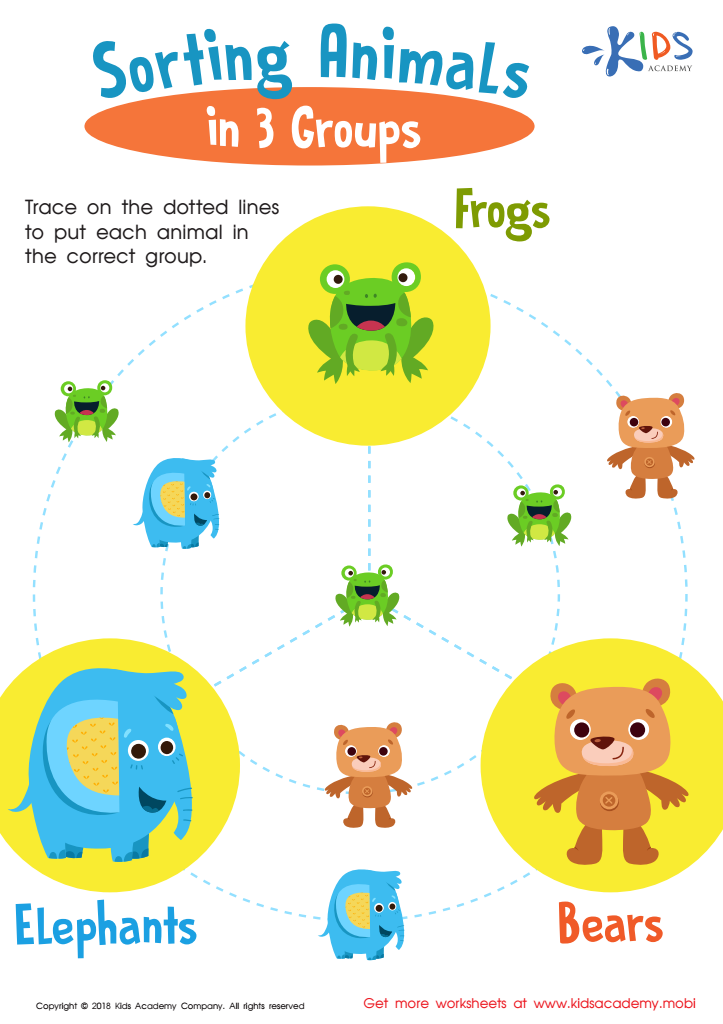
Sorting Animals in 3 Groups Worksheet
 Assign to My Students
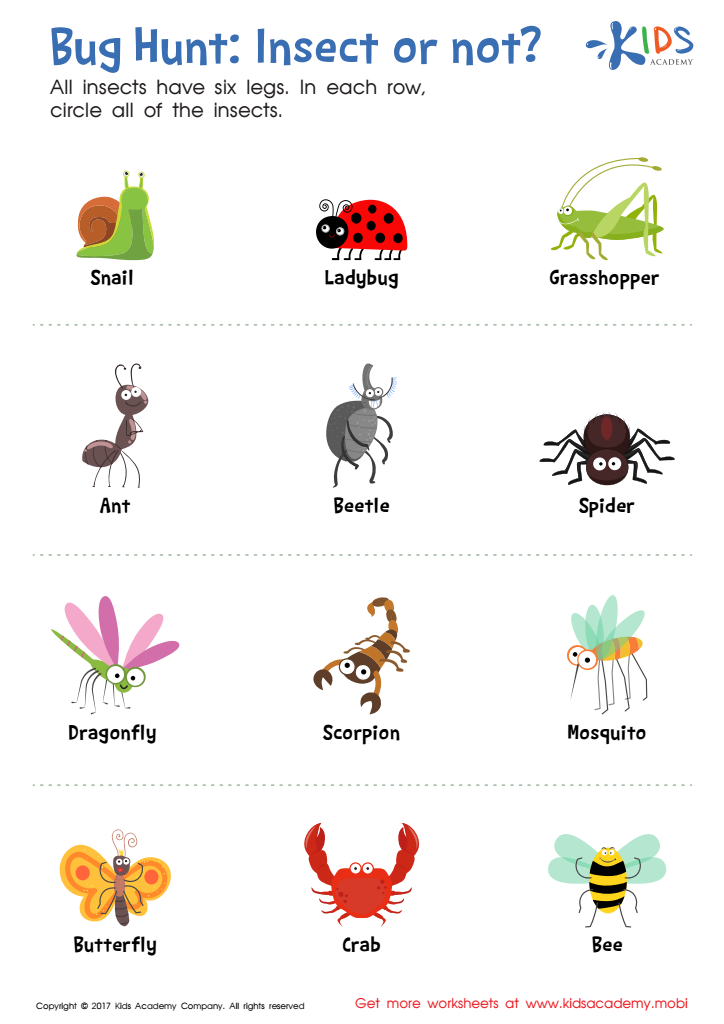
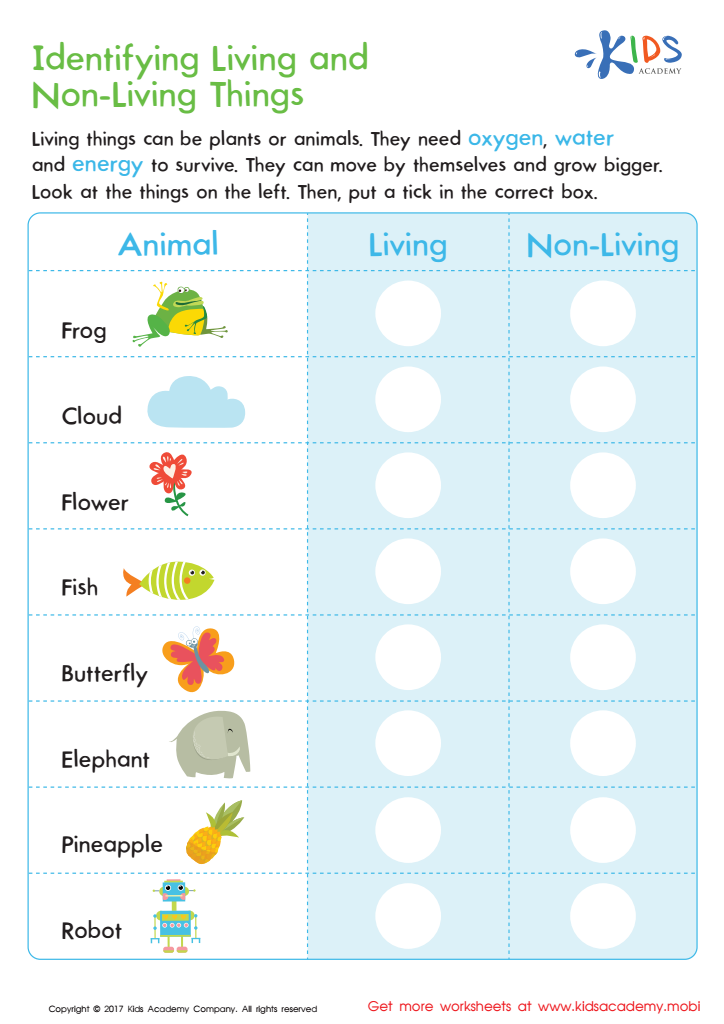
Identifying Living or Non–living Worksheet
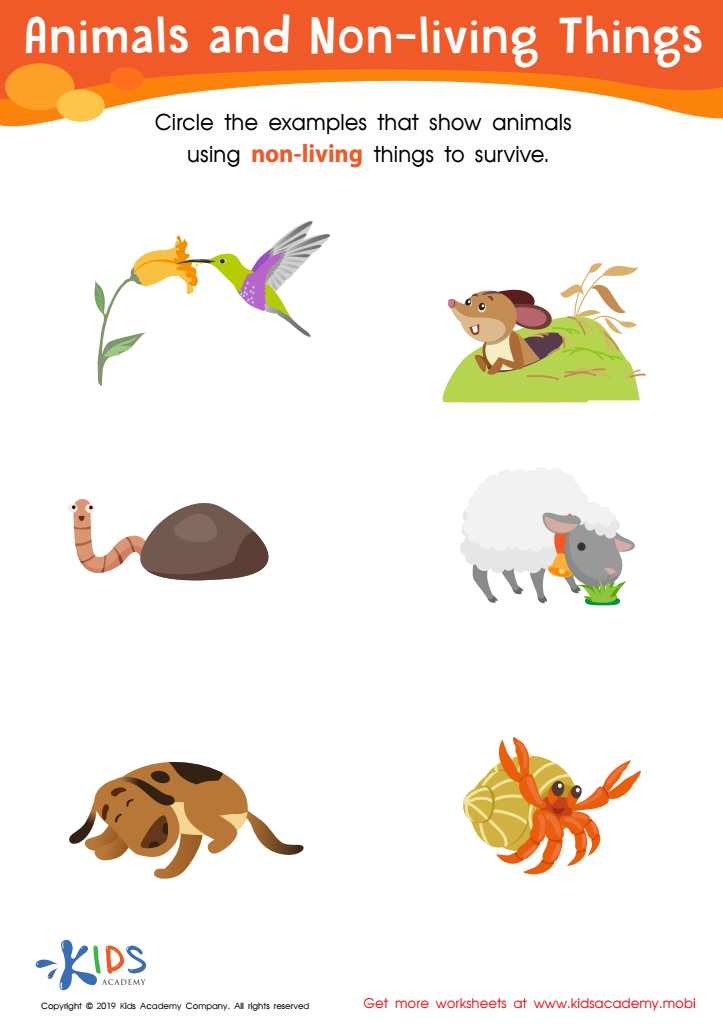
Animals and Non-Living Things Worksheet







Categorization skills are essential building blocks in a child's cognitive development, and these skills become particularly crucial in the early ages of 4-6. For parents and teachers, fostering these skills through normal science activities can have a profound impact on a child's ability to understand and navigate the world.
Firstly, categorization helps children make sense of their environment by enabling them to group similar items and distinguish between different ones. This ability is foundational for later learning in various subjects, particularly in science where understanding categories—like living vs. non-living things or plants vs. animals—is fundamental.
Secondly, categorization skills enhance cognitive functions such as memory and problem-solving. When a child practices grouping objects based on attributes like shape, size, or color, they strengthen their neural connections, making it easier for them to recall information and solve puzzles.
Thirdly, these skills aid in language development. As children learn to categorize, they need to label and describe the groups they've formed, thereby expanding their vocabulary and comprehension.
Lastly, early engagement in activities that promote categorization fosters curiosity and a love for learning. By understanding categories through playful and engaging science activities, children develop a positive association with education that can last a lifetime. Hence, parents and teachers should prioritize activities that build these skills to set a solid foundation for future academic and life success.







