
Environmental awareness Normal Science Worksheets for Ages 4-6
7 filtered results
Difficulty Level
Grade
Age
-
From - To
Subject
Activity
Standards
Introduce your little learners to the wonders of nature with our "Environmental Awareness Normal Science Worksheets" designed for ages 4-6. These engaging, fun, and creative worksheets help young children understand the importance of caring for the environment. Topics include recycling, pollution, plant and animal life, and more! Each worksheet is thoughtfully crafted to spark curiosity and foster a sense of responsibility towards our planet. Perfect for home or classroom use, these resources encourage critical thinking while promoting hands-on activities. Equip your students with the knowledge and skills to make a positive impact on the world around them. Join us in nurturing eco-conscious kids today!
Favorites
With answer key
Interactive
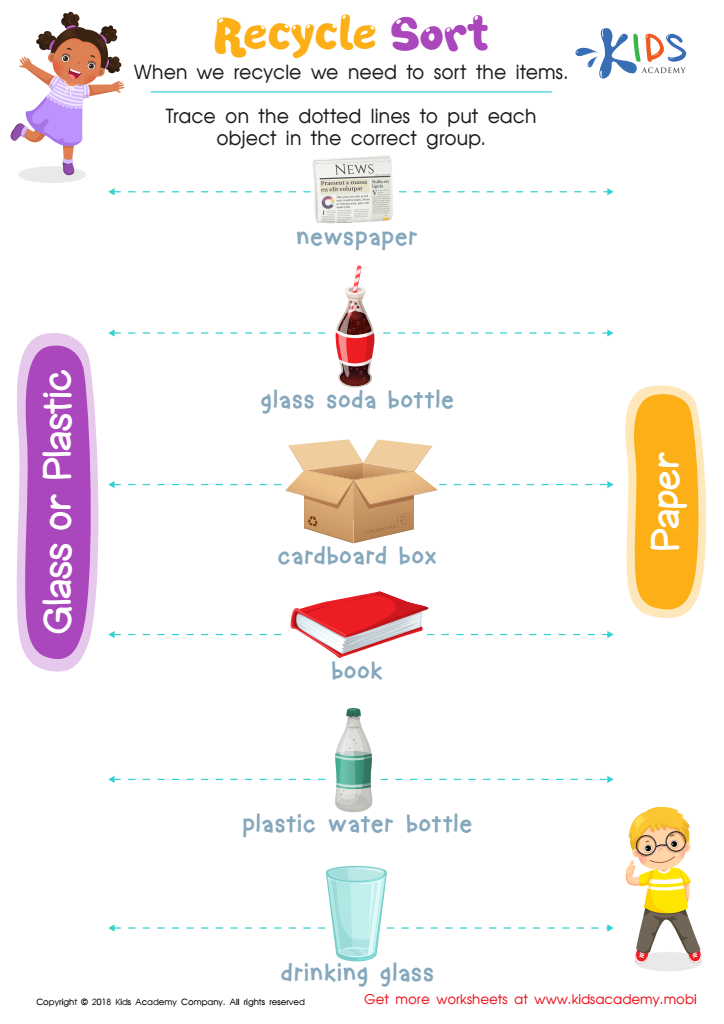
Recycle Sort Worksheet
Help your children become eco-warriors while they develop critical thinking and fine motor skills with this free downloadable worksheet! Engaging pictures and matching words, plus fun and bright colors, will have kids analyzing and sorting recyclables into paper or glass/plastic groups using traceable lines.
 Assign to My Students
Recycle Sort Worksheet
Worksheet
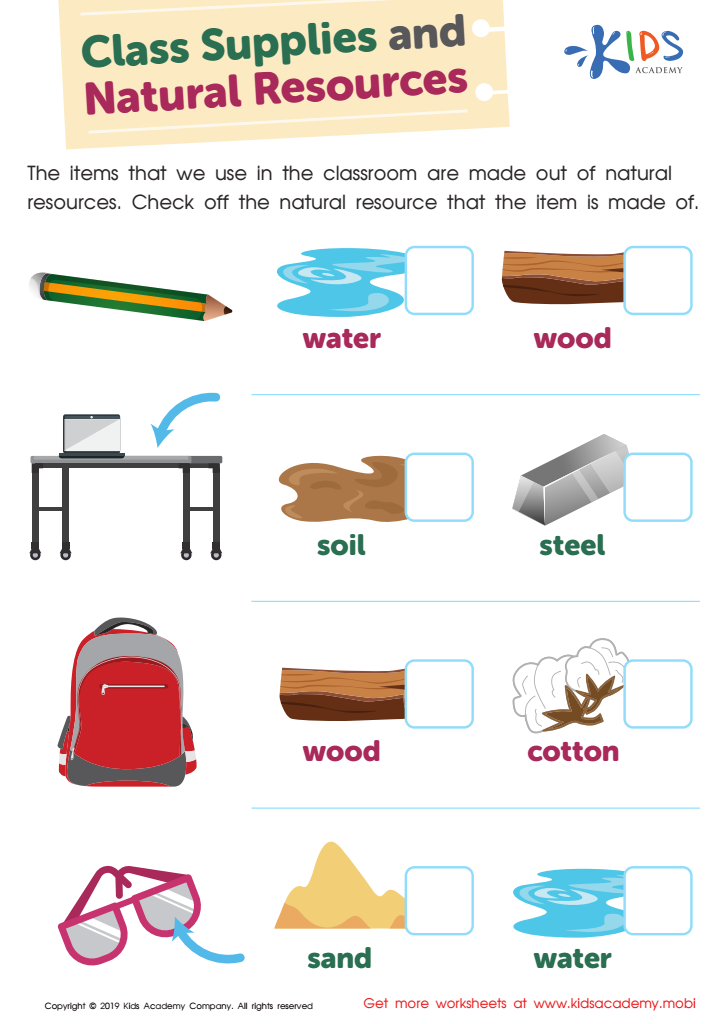
Class Supplies and Natural Resources Worksheet
Look around the classroom with your students. Can they identify objects and name their natural resources? E.g. wood, cotton, steel. Ask your child to find an object made from wood. Then, look at this worksheet together. Ask your students to identify each object and check off the natural resource it's made from.
Class Supplies and Natural Resources Worksheet
Worksheet
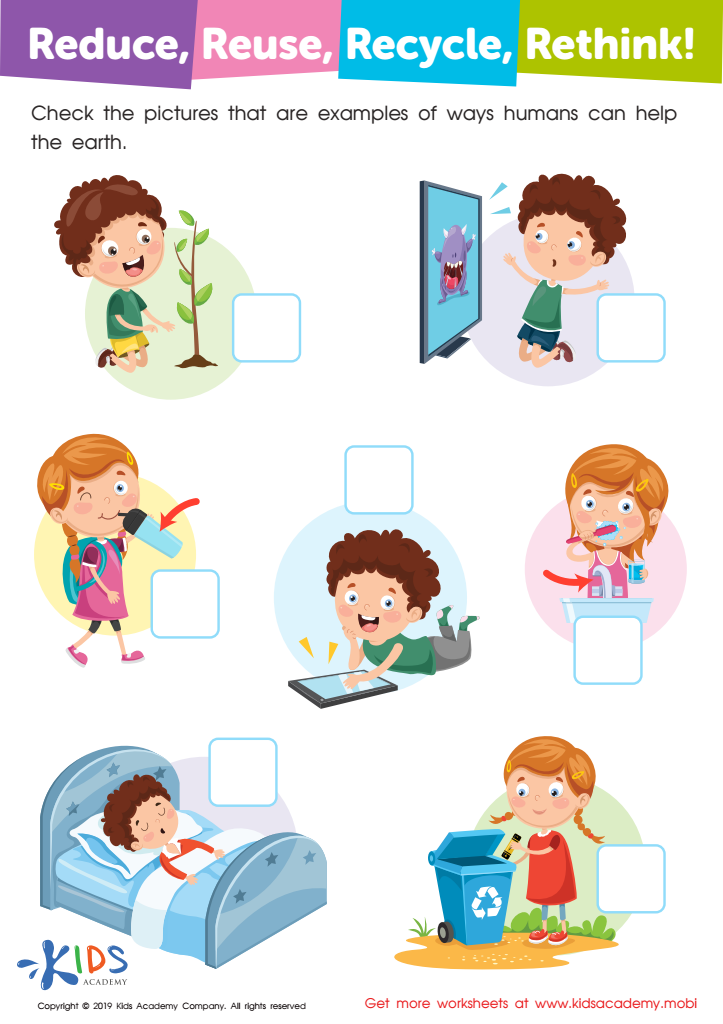
Reduce, Reuse, Recycle, Rethink Worksheet
Recycling is a great way to reduce waste and help our planet — instead of throwing away a can of soda, recycle it! Look at the pictures in the worksheet — what are the kids doing? They're learning about ways to help the environment. Check the pictures for examples of how to help the earth.
Reduce, Reuse, Recycle, Rethink Worksheet
Worksheet
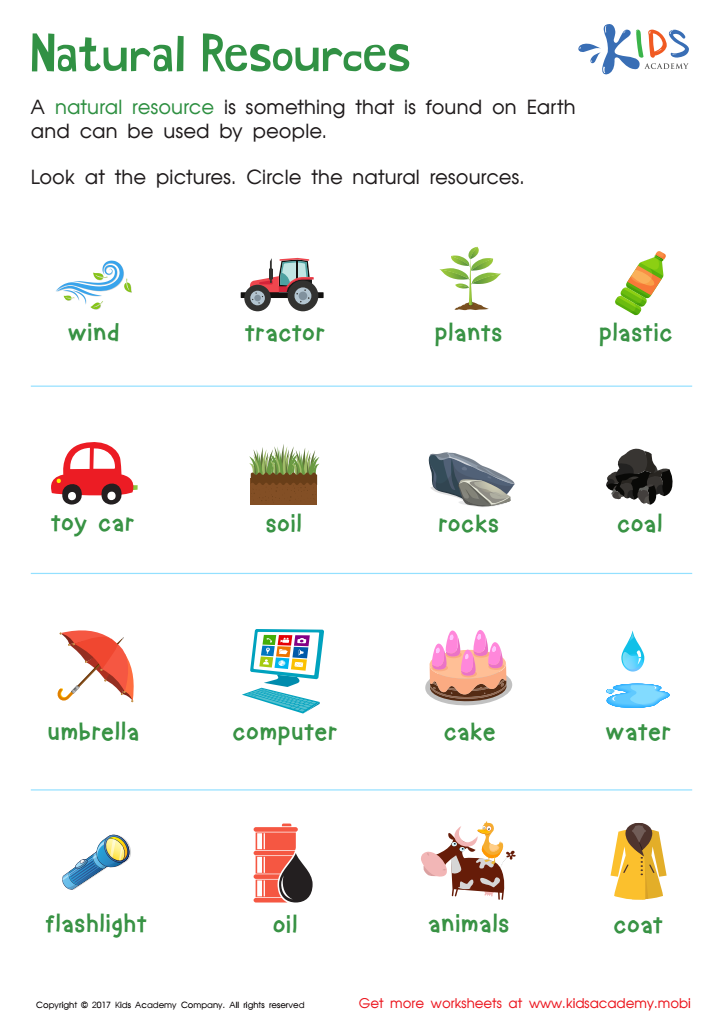
Natural Resources Worksheet
Use this engaging worksheet to explore nature’s resources and their importance. Teach your child about the importance of natural resources and how to conserve them with this fun worksheet!
Help your child explore and understand Earth's natural gifts! Use this challenging worksheet to identify natural resources and learn about their importance. Encourage your child to be mindful and conserve these precious resources. Enjoy teaching your child about nature's gifts with this fun worksheet!
Natural Resources Worksheet
Worksheet
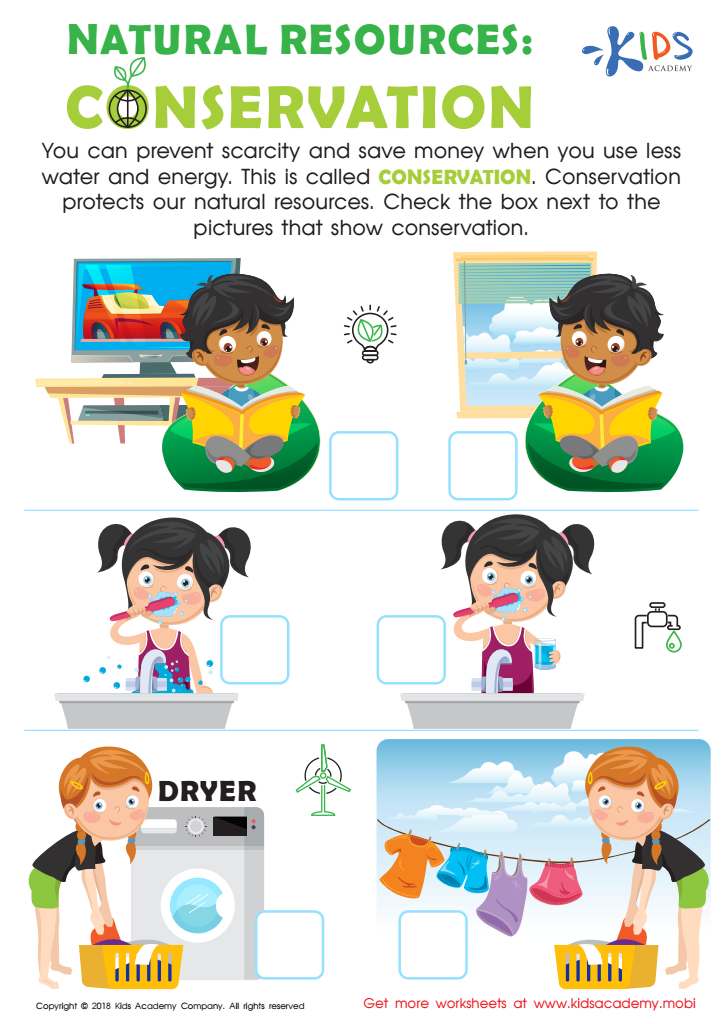
Natural Resources: Conservation Worksheet
Water scarcity is a challenge. When people don't have enough water, they can't do certain things. We can prevent this with conservation: using less energy and water. This helps protect our natural resources and saves money. Talk to your child about conservation and have them check the box next to the pictures that show it.
Natural Resources: Conservation Worksheet
Worksheet
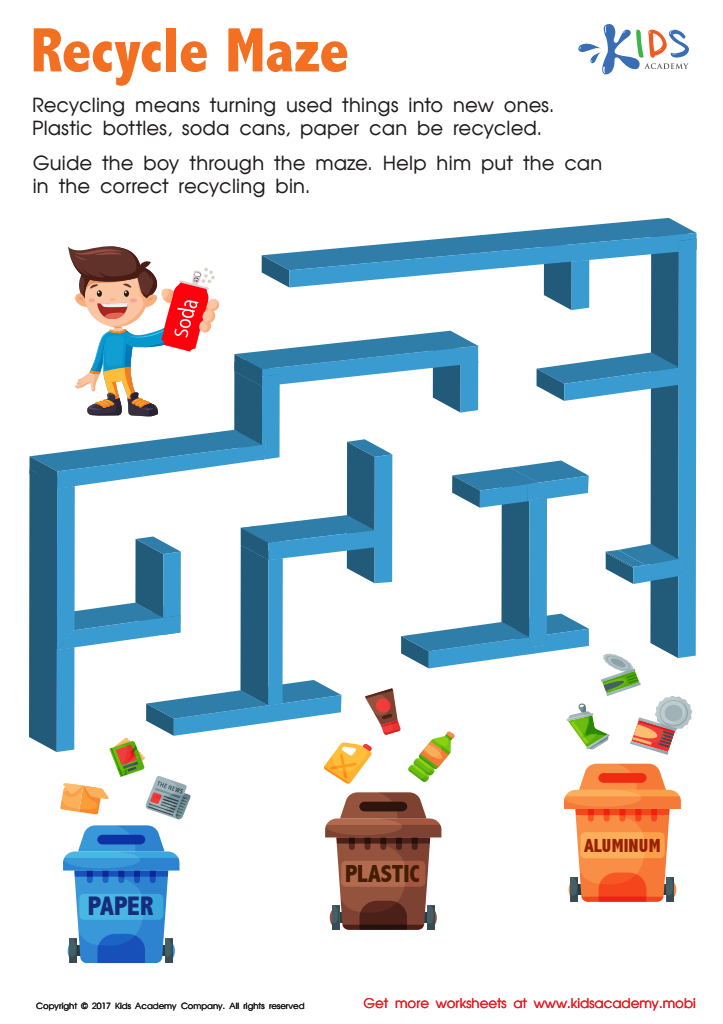
Recycle Maze Worksheet
Teach kids to recycle right with a fun recycling maze worksheet. It's an essential early environmental science lesson, showing kids how to protect our planet's health.
Recycle Maze Worksheet
Worksheet
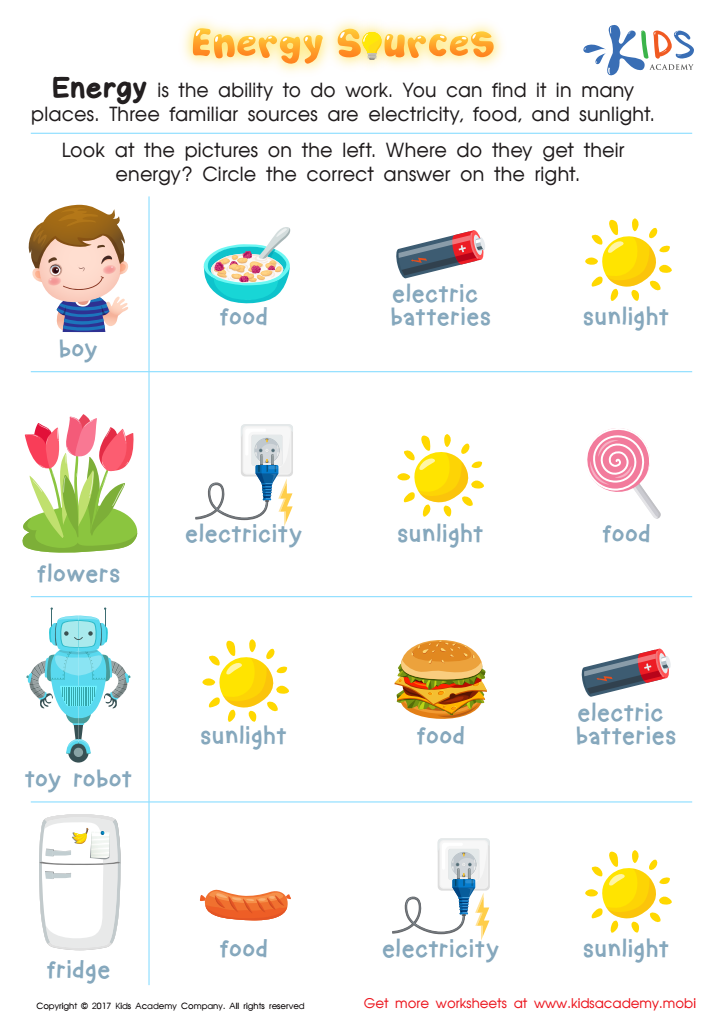
Energy Sources Printable
Introduce energy sources with this worksheet PDF — explore the sun, batteries, and more! Get your mini scientist excited about energy and power up their learning.
Energy Sources Printable
Worksheet
Join Kids Academy for Free
Who is primarily going to use this learning content?


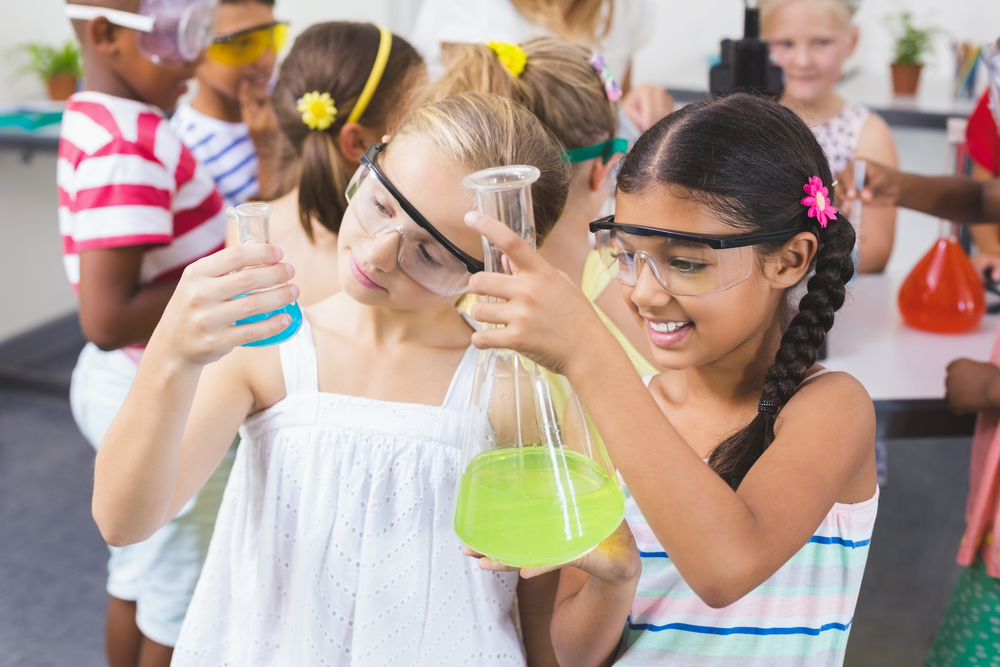



Environmental awareness is crucial for young children aged 4-6, as it lays the foundation for sustainable habits and attitudes. First, children at this age are naturally curious about the world around them. Engaging them in environmental education helps connect their curiosity to real-life concepts such as nature, wildlife, and ecosystems.
Second, fostering environmental awareness cultivates a sense of responsibility and empathy toward the planet and its inhabitants. By teaching young learners about the importance of caring for the environment, we encourage them to be caretakers of the earth, fostering a generation that values sustainability.
Additionally, introducing these concepts during early childhood enhances critical thinking and problem-solving skills. Children learn to identify issues like pollution or waste, analyze their causes, and think creatively about solutions. This foundational knowledge paves the way for informed decision-making in the future.
Moreover, parents and teachers play a vital role by modeling environmentally friendly behaviors. Simple activities like recycling, planting trees, or cleaning up local spaces allow children to participate actively, reinforcing their learning.
In summary, prioritizing environmental awareness in early education shapes responsible, engaged citizens who will continue to advocate for a healthy planet throughout their lives.







