Shape Recognition Normal Science Worksheets for Ages 4-6
3 filtered results
-
From - To
Discover our engaging Shape Recognition Normal Science Worksheets designed specifically for children aged 4-6! These interactive worksheets provide a fun and educational way for young learners to identify and understand various shapes in their environment. Each activity is carefully crafted to stimulate creativity, enhance fine motor skills, and promote cognitive development. With vibrant illustrations and encouraging prompts, these worksheets are perfect for home or classroom use. Help your little ones build essential math skills while fostering a love for learning through interactive exploration. Start your shape recognition journey today and watch your child's confidence grow as they master this fundamental concept!
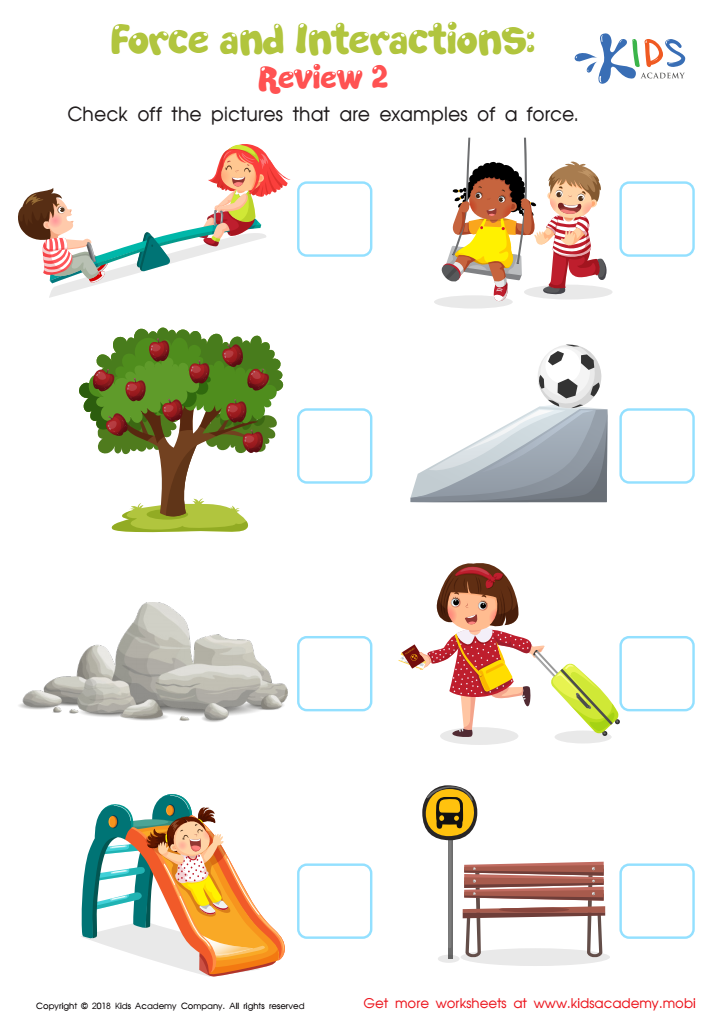
Force and Interactions: Review 2 Worksheet
 Assign to My Students
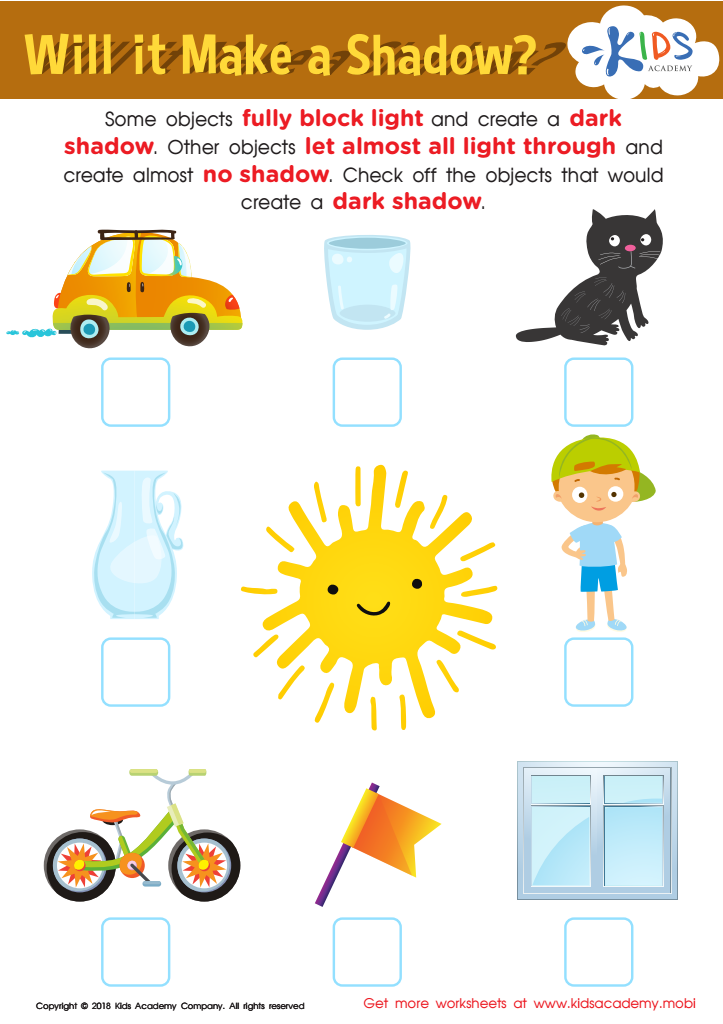
Will It Make a Shadow? Worksheet
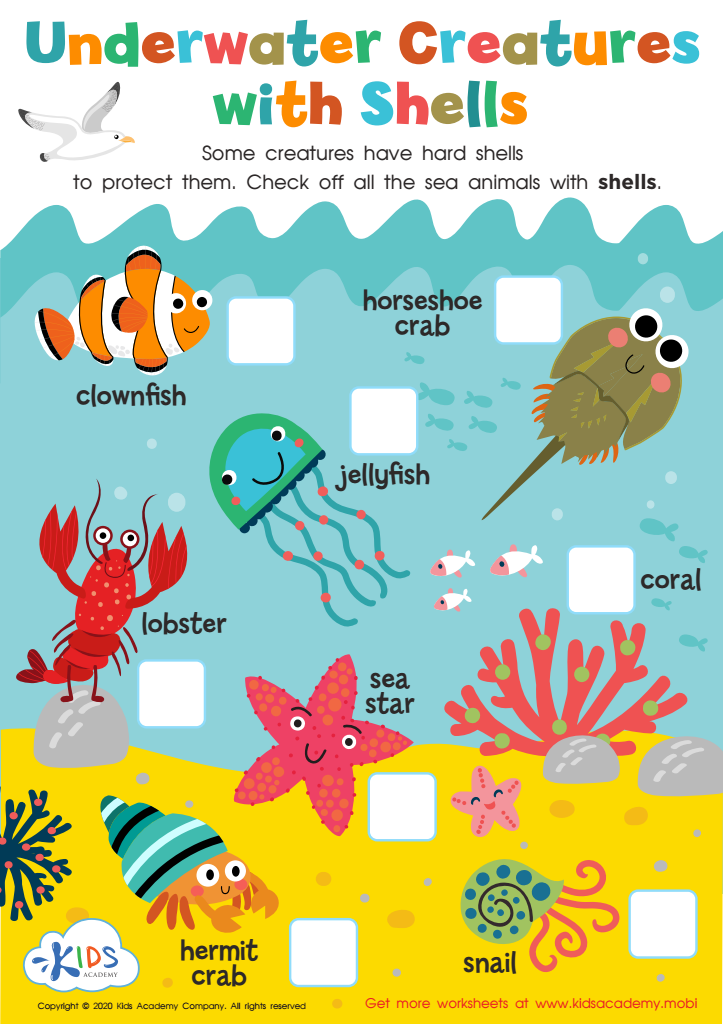
Underwater Creatures with Shells Worksheet








Shape recognition is a foundational aspect of early childhood education, particularly for children aged 4-6. It serves as a critical building block for various cognitive and life skills. Firstly, understanding shapes helps children develop their visual perception, which is essential for processing the world around them. This ability not only enhances their spatial awareness but also lays the groundwork for more complex mathematical concepts, such as geometry.
Moreover, engaging in shape recognition activities fosters fine motor skills as children manipulate shapes in different contexts, such as through drawing or using shape sorters. This combination of cognitive and physical development enables young learners to strengthen their problem-solving abilities.
Socially and emotionally, recognizing and categorizing shapes contributes to children's communication skills. They learn to discuss and describe objects, enhancing their vocabulary and confidence in expressing ideas.
For parents and teachers, prioritizing shape recognition is critical, as it supports holistic development. By incorporating shape-related activities into playful learning, caregivers can help children build essential skills that will benefit their future academic pursuits, thereby laying a solid foundation for lifelong learning. In essence, nurturing shape recognition at this tender age cultivates inquisitive, capable, and expressive individuals ready to tackle more complex challenges ahead.







