Understanding weather Normal Science Worksheets for Ages 4-6
3 filtered results
-
From - To
Discover the fundamentals of meteorology with our "Understanding Weather" science worksheets, tailored for children ages 4-6. These engaging activities utilize vibrant illustrations and simple explanations to teach young learners about various weather conditions, while enhancing their observational and critical thinking skills. From identifying sunny and rainy days to understanding seasonal changes, each worksheet fosters curiosity and a love for science. Ideal for early grade teachers and parents, these printable resources provide a fun and educational way to explore the wonders of weather. Equip your little meteorologists with the tools to understand and appreciate the world around them.
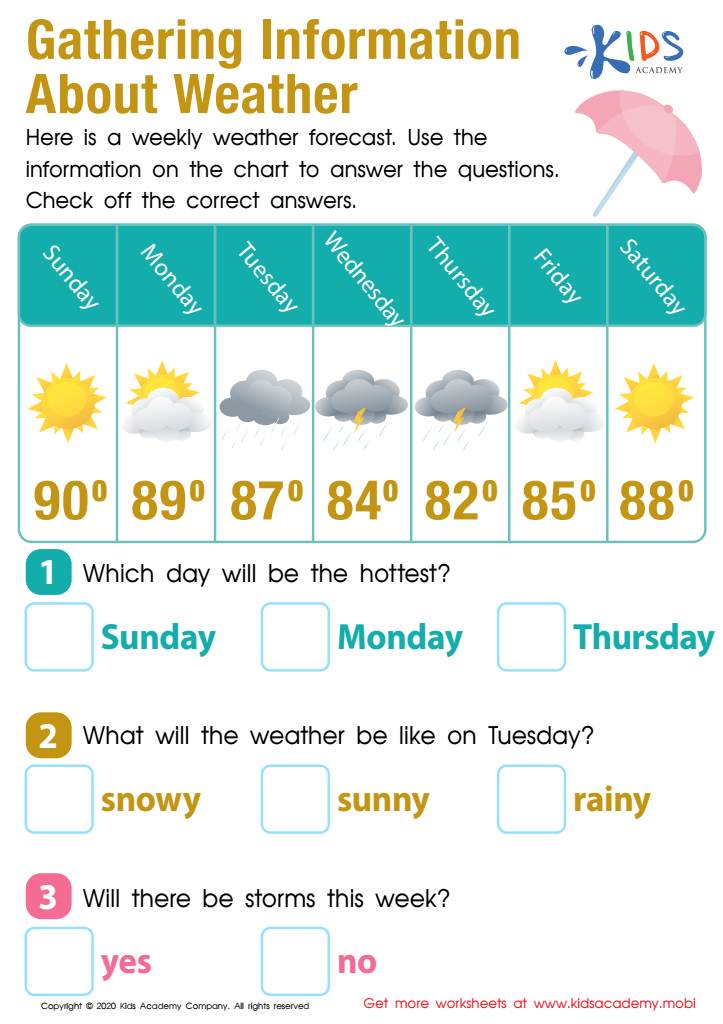
Gathering Information About the Weather Worksheet
 Assign to My Students
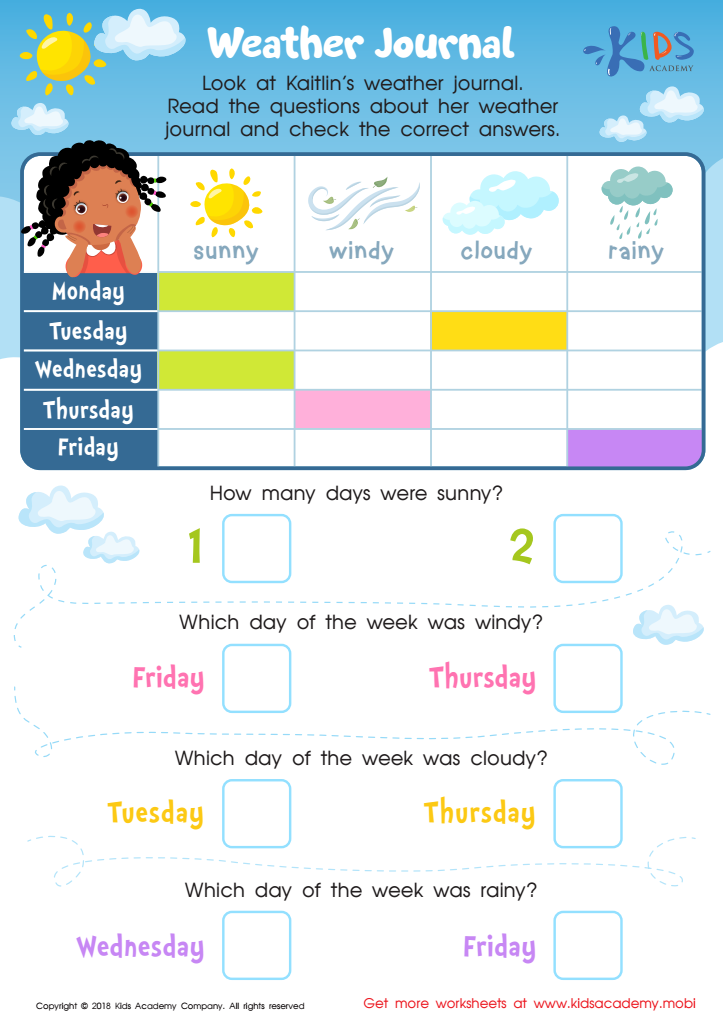
Weather Journal Worksheet
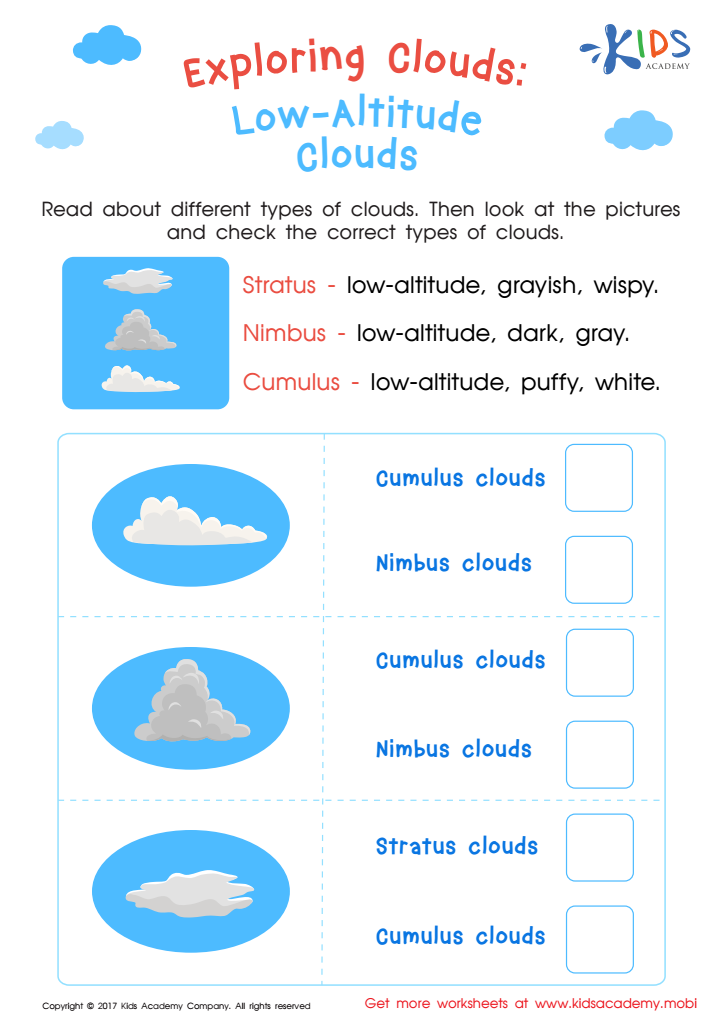
Exploring Clouds: Low Altitude Clouds Printable








Understanding weather and basic science principles related to it is essential for young children aged 4-6 because it fosters early curiosity and comprehension of the world around them. Parents and teachers should care about this foundational knowledge for several reasons:
Firstly, exploring weather concepts, like identifying sunny, rainy, or snowy days, encourages cognitive development. It helps children develop observational skills, enhance their vocabulary, and understand different environmental phenomena. For instance, learning why rain falls or the sun shines cultivates an early interest in science, promoting critical thinking and inquisitiveness.
Secondly, it aids in practical learning and safety. Kids learn to recognize various weather conditions and understand how to dress appropriately for them, such as wearing a coat when it's cold or using sunscreen on sunny days. This knowledge can be vital in ensuring their health and safety.
Additionally, discussing weather and natural changes supports emotional and social development. It provides opportunities for interactive, hands-on learning experiences, such as weather-themed art projects or storytelling, fostering creativity and collaboration among peers.
By nurturing an early understanding of weather, parents and teachers lay the groundwork for lifelong learning, helping children become more informed, prepared, and socially aware individuals. Thus, engaging young minds in these basic scientific concepts can have profound and lasting benefits.







