
Letter formation Normal Alphabet Worksheets for Ages 4-7
4 filtered results
Difficulty Level
Grade
Age
-
From - To
Subject
Activity
Standards
Enhance your child's handwriting skills with our "Letter Formation Normal Alphabet Worksheets for Ages 4-7." Designed to support early learners, these engaging worksheets focus on the proper formation of both uppercase and lowercase letters. With guided illustrations and traceable letters, children will build confidence and develop fine motor skills while mastering letter recognition and writing. Ideal for preschoolers and kindergarteners, our worksheets make learning fun and interactive, ensuring that young learners grasp the basics of writing in a playful way. Join us on this exciting journey of literacy as your child learns to write with precision and creativity!
Favorites
With answer key
Interactive
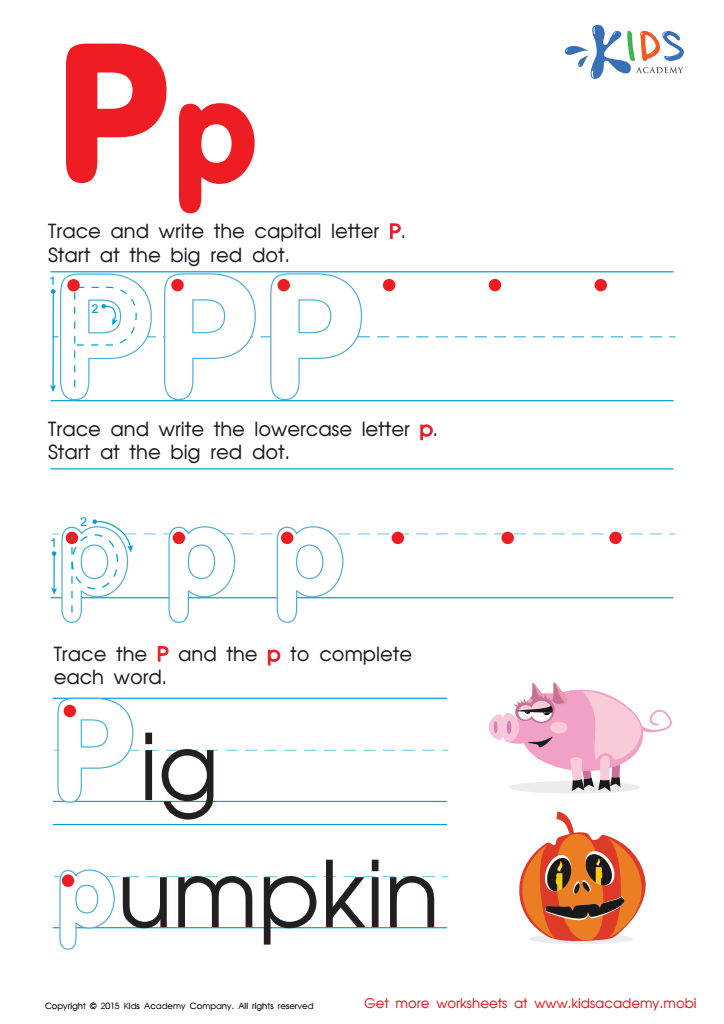
Letter P Tracing Page
Trace the lines from the red dot to learn to write "P"! Then practice this letter with the fun activities: complete the word "Pig" and "Pumpkin". Check out Kids Academy to get more free ABC worksheets.
 Assign to My Students
Letter P Tracing Page
Worksheet
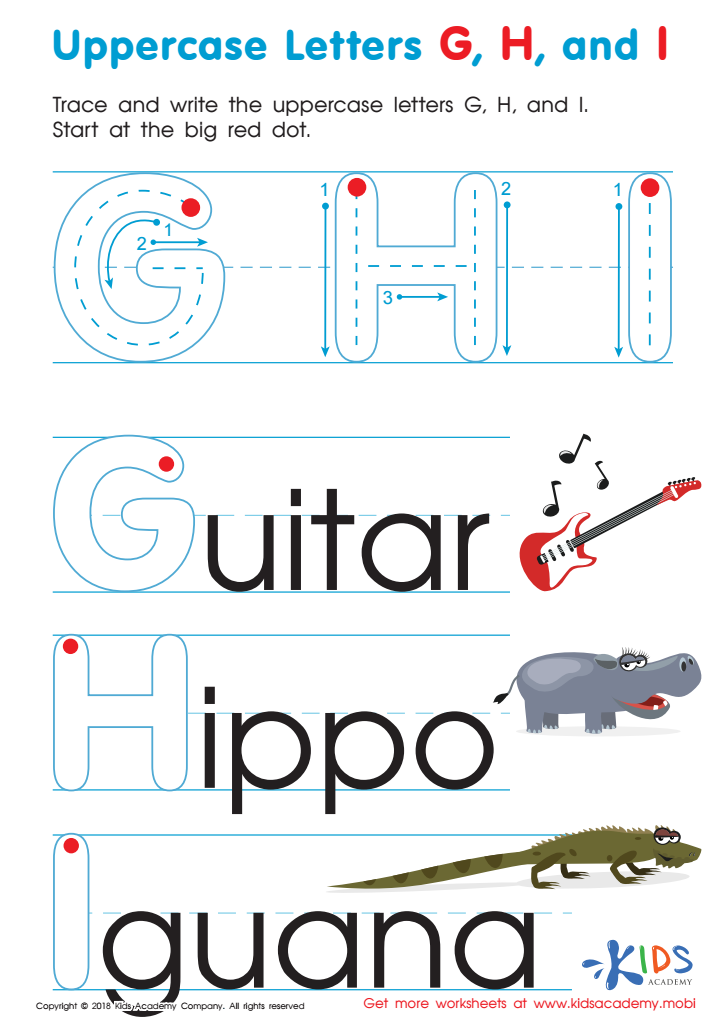
Uppercase Letters G, H, and I Worksheet
Trace each letter with the big red dot, connecting them to sounds as you go. Then write G to I. Congrats on a job well done! Rock on with a cute hippo and iguana while working on this delightful kindergarten worksheet!
Uppercase Letters G, H, and I Worksheet
Worksheet
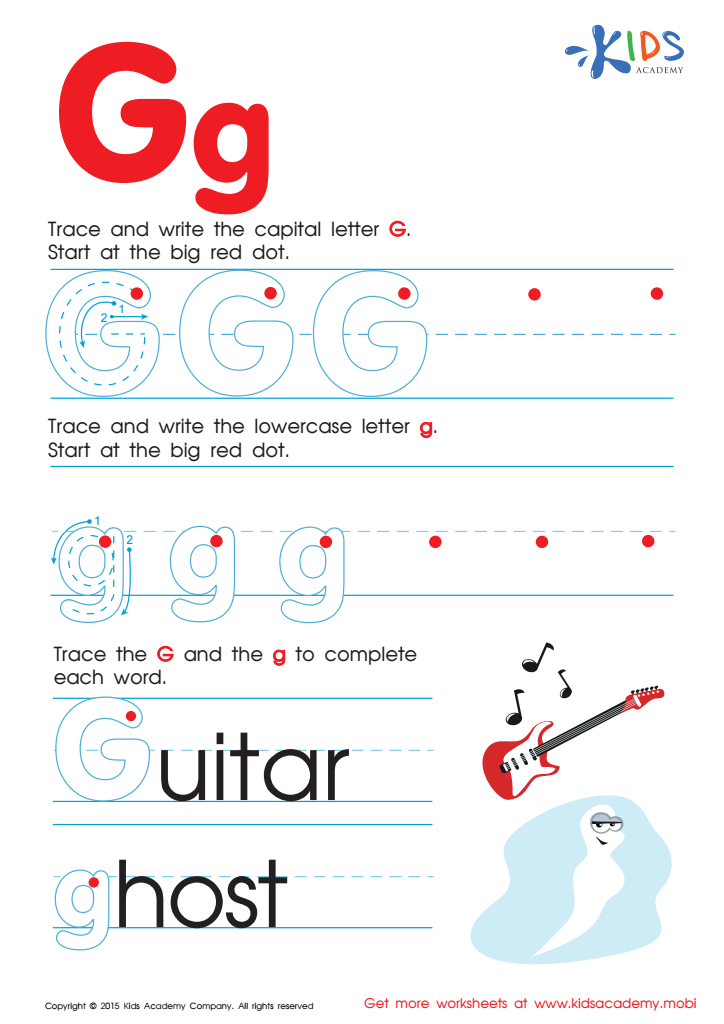
Letter G Tracing Page
Get ready to trace the letter "G" – with a big red spot as the starting point, trace the lines and watch the letter appear. Uppercase and lowercase letters are both easy and fun to write. Give it a go and finish the word "go". Play the guitar and say "hello" to a funny ghost!
Letter G Tracing Page
Worksheet
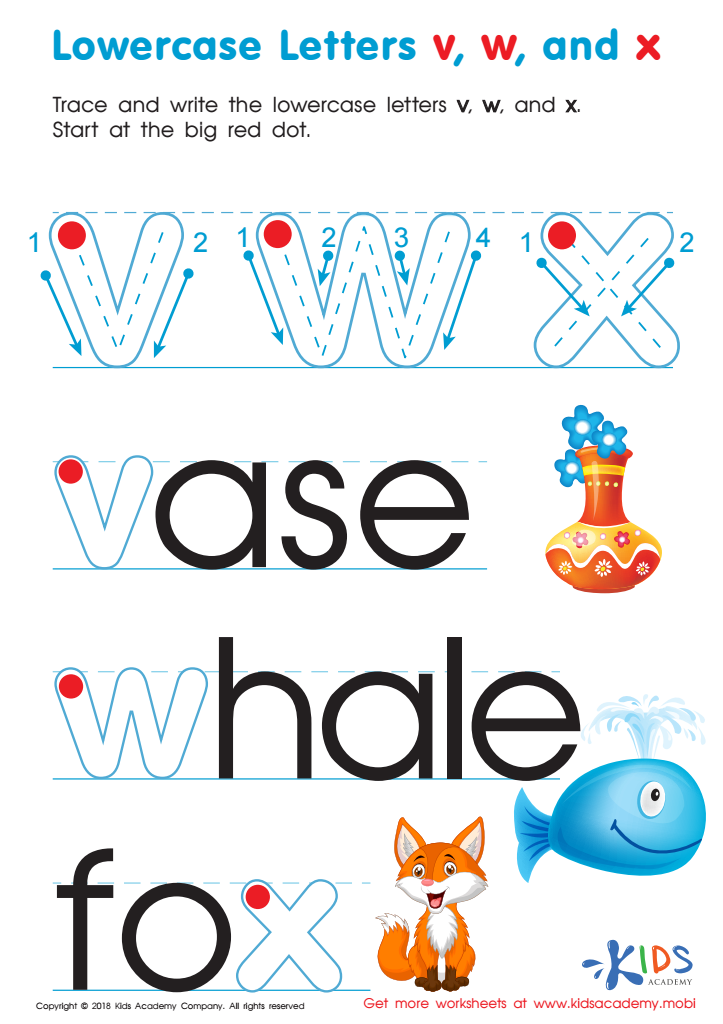
Lowercase Letters v w x Worksheet
Help your child learn to write lowercase letters v, w, and x, starting at the big red dot. This activity will help them develop writing skills and correctly identify the letters. Guide them as they trace the letters and enjoy watching them improve!
Lowercase Letters v w x Worksheet
Worksheet
Join Kids Academy for Free
Who is primarily going to use this learning content?







Letter formation is a critical skill for children aged 4-7, and it plays a foundational role in their overall literacy development. For parents and teachers, understanding its importance is paramount. First and foremost, proper letter formation aids in developing fine motor skills, which are crucial for writing and other academic tasks. Mastering the correct way to write letters fosters confidence and encourages children to express their thoughts through writing, a vital way to communicate.
Furthermore, consistent letter formation helps in creating clear and legible writing. When children learn to form letters correctly, they reduce frustrations associated with difficult writing tasks, enabling smoother transitions into reading and spelling. Clear letter formation also actively contributes to a child's ability to decode words, as the visual recognition of letters becomes easier when formed accurately.
Finally, early attention to letter formation can help identify and address potential difficulties like dysgraphia, ensuring timely intervention and support. By valuing letter formation in educational activities, parents and teachers set the stage for stronger literacy skills, future academic success, and a positive attitude toward learning. In essence, letter formation is more than just handwriting; it is a gateway to effective communication and cognitive development for young learners.







