Lowercase identification Normal Alphabet Worksheets for Ages 4-7
4 filtered results
-
From - To
Discover our engaging Lowercase Identification Normal Alphabet Worksheets designed specifically for children ages 4-7. These interactive worksheets help young learners recognize and distinguish lowercase letters through fun activities and exercises. Each worksheet features vibrant illustrations and a variety of tasks that promote letter recognition, enhancing fine motor skills as children trace, circle, and color. Perfect for both classroom and home use, our worksheets cater to diverse learning styles, making the alphabet exciting and accessible. Foster your child’s confidence in reading and writing with these essential resources, paving the way for strong literacy skills. Print and spark a love for learning today!
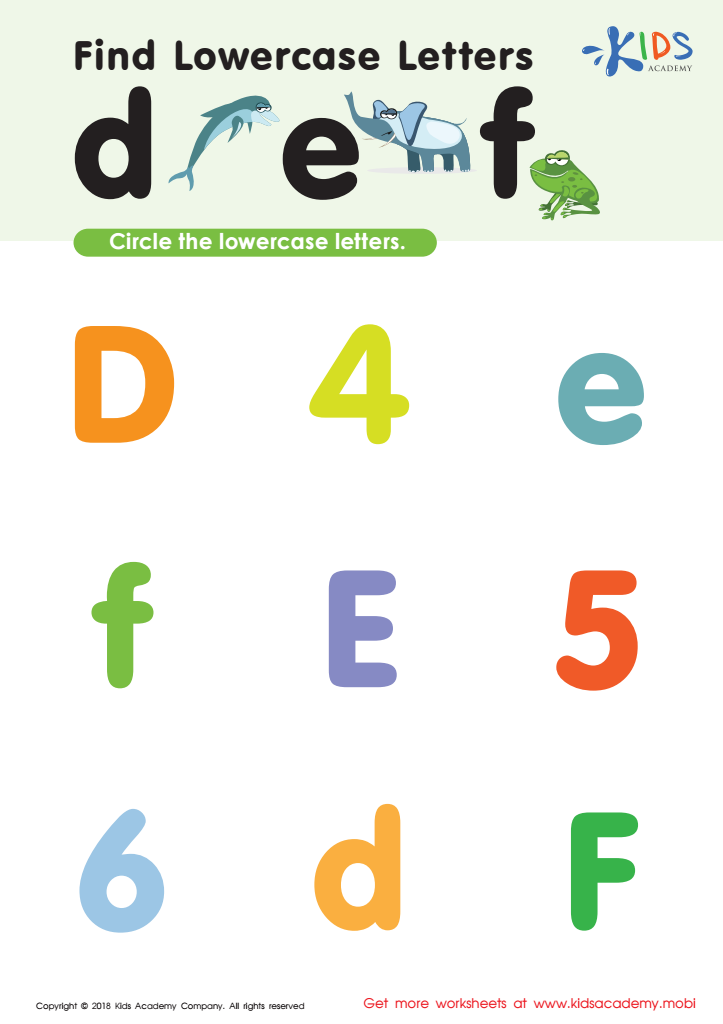
Find Lowercase Letters d e f Worksheet
 Assign to My Students
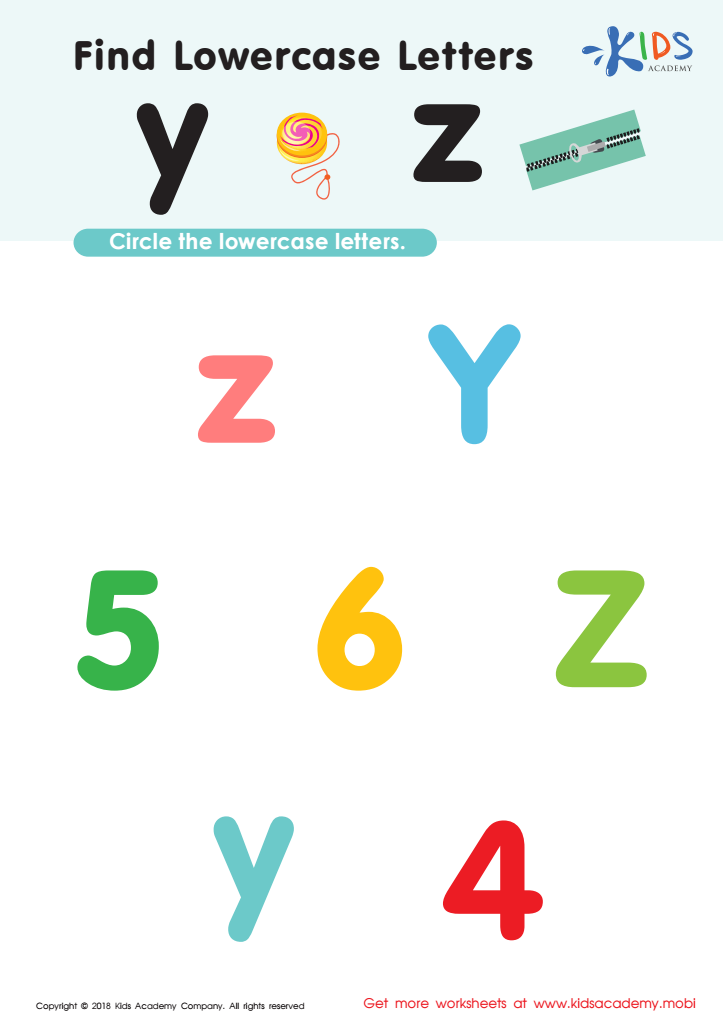
Find Lowercase Letters y z Worksheet
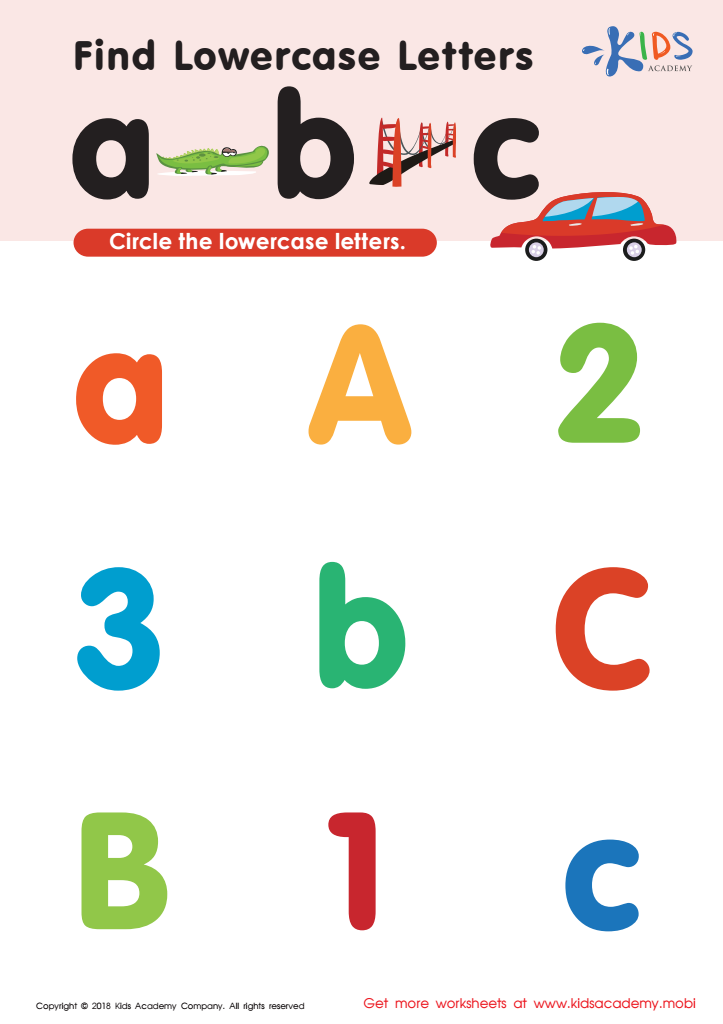
Find lowercase letters a b c Worksheet
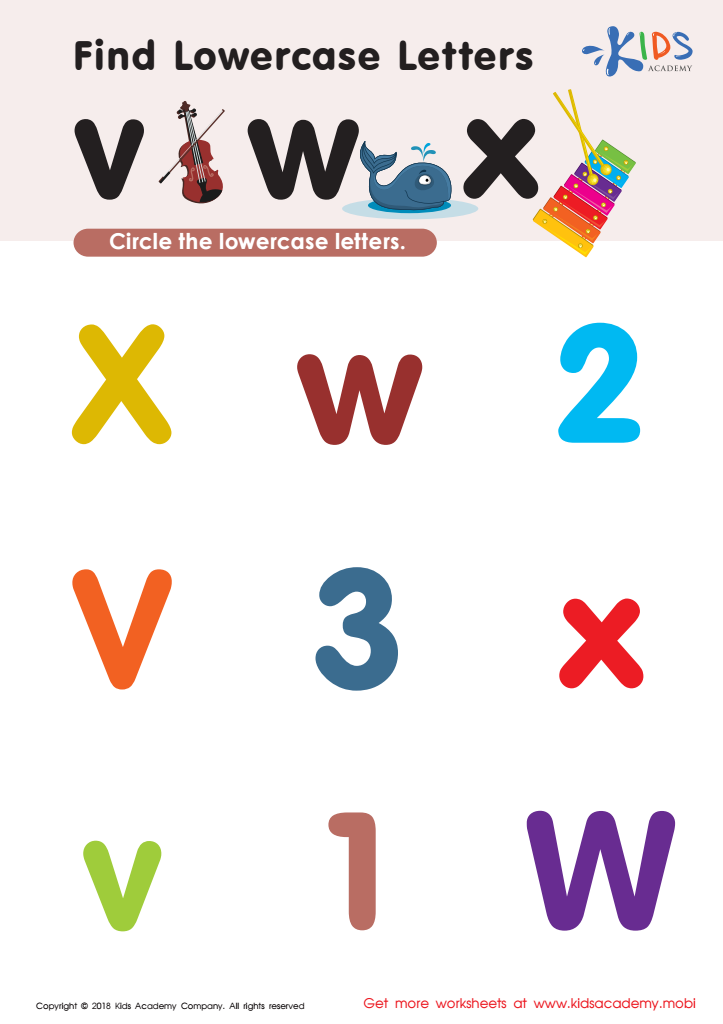
Find Lowercase Letters v w x Worksheet






Lowercase letter identification is a crucial foundational skill for children aged 4-7 as they start to learn reading and writing. At this early age, children are often introduced to the alphabet, and understanding lowercase letters is essential because most text they will encounter is written in this form. When children recognize and differentiate among lowercase letters, it enhances their ability to decode words, accelerating their reading proficiency.
Moreover, recognizing lowercase letters supports their writing skills. Children frequently use lowercase letters to form words, and recognizing these letters will help them express their thoughts clearly on paper. Mastery of lowercase letters also promotes confidence in their literacy abilities, encouraging further exploration of reading and writing.
Parents and teachers should be attentive to this skill development, as early intervention can mitigate future learning difficulties. Collaborative activities such as games, art projects, and storytime can make learning engaging and approachable. Ultimately, caring about lowercase letter identification lays the groundwork for overall literacy development, opening doors to academic success and lifelong learning.ব
Fostering this skill confirms a child's place in the world of communication, making it an essential focus for supportive educators and parents alike.







