Fine Motor Skills Normal Letter W Worksheets for Ages 4-7
3 filtered results
-
From - To
Our "Fine Motor Skills Normal Letter W Worksheets for Ages 4-7" are designed to enhance young learners' handwriting abilities while developing essential fine motor skills. These engaging and age-appropriate worksheets provide various tracing, writing, and coloring exercises focused on the letter W. By utilizing enjoyable activities, our worksheets help children improve their hand-eye coordination, pencil grip, and dexterity. Suitable for preschool and early elementary levels, these resources support foundational writing skills crucial for academic success. Perfect for parents and teachers, our worksheets offer a fun and educational experience to foster confident and capable young writers.
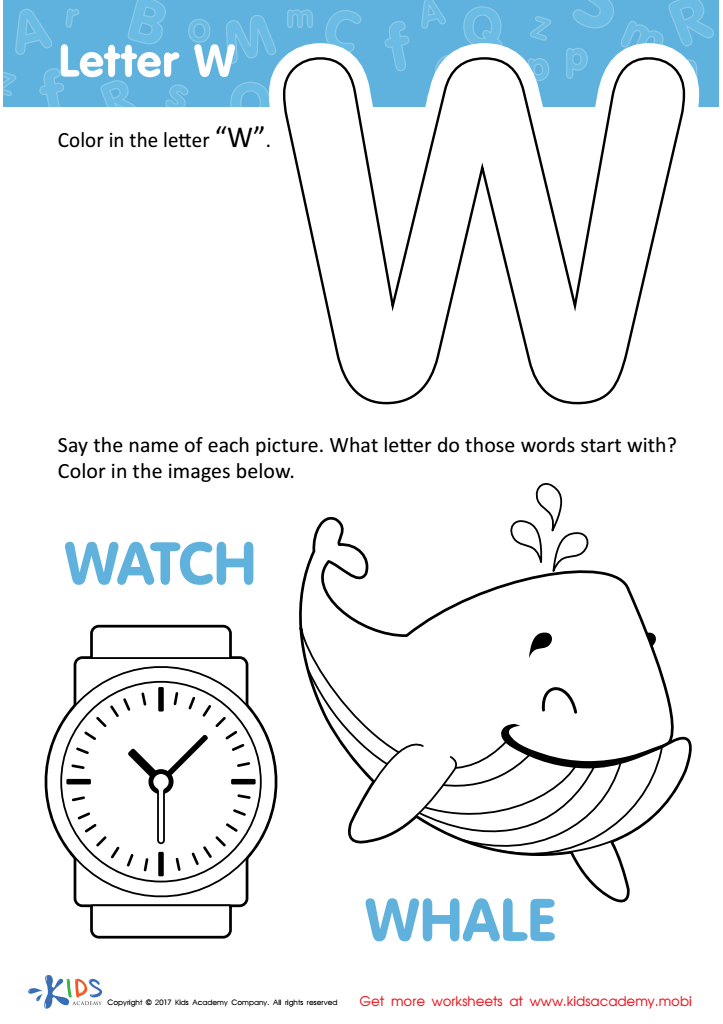
Letter W Coloring Sheet
 Assign to My Students

Find Uppercase Letters V, W, X Worksheet
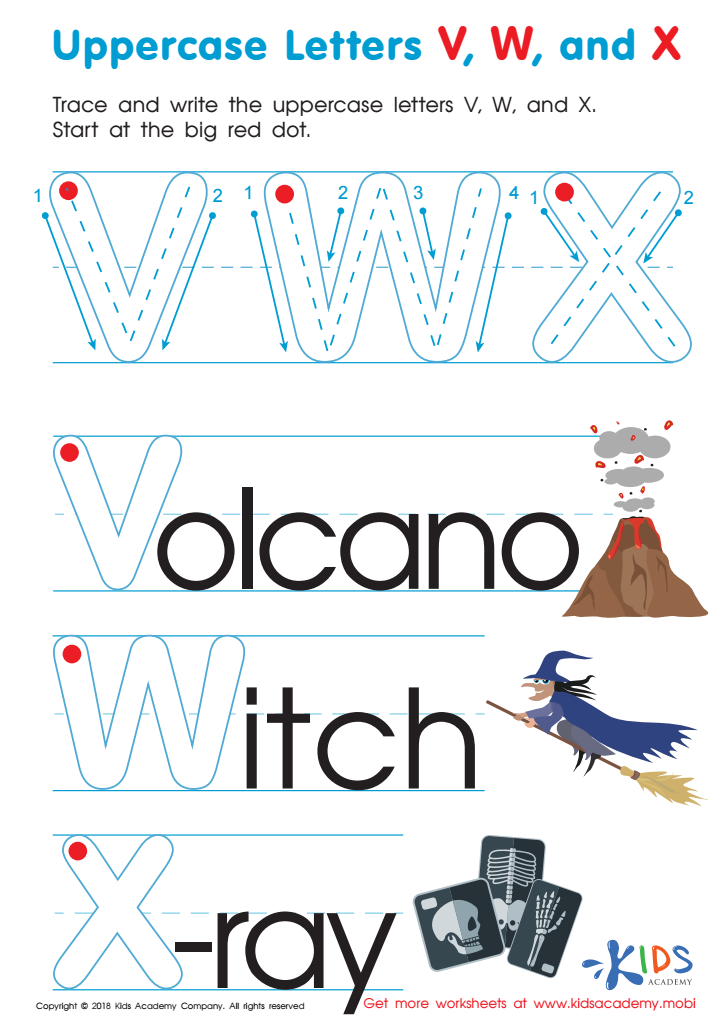
Uppercase Letters V, W, and X Worksheet




Fine motor skills refer to the coordination of small muscles in movements—usually involving the synchronization of hands and fingers with the eyes. These skills are crucial for early development in children aged 4-7, impacting their ability to perform essential daily tasks such as writing, buttoning clothes, or using utensils.
The importance of fine motor skills includes:
-
Academic Success: Developing fine motor skills, like forming the letter "W," is essential for handwriting proficiency. Handwriting is typically the primary way young learners express their knowledge and complete school tasks.
-
Confidence and Independence: Mastering fine motor tasks boosts children's confidence and promotes independence. Successfully tying their shoes or drawing a recognizable shape makes them feel capable and confident in their abilities.
-
Coordination and Dexterity: Activities that enhance fine motor skills contribute to better hand-eye coordination and dexterity. These abilities are the foundation for more complex skills they will need through life, such as typing or playing a musical instrument.
-
Cognitive Development: The development of fine motor skills supports overall cognitive development by improving attention, memory, and planning abilities. Tasks that seem simple, such as cutting paper or assembling puzzles, actually hone problem-solving skills and concentration.
Therefore, parents and teachers should actively support the development of fine motor skills to secure not only educational success but also overall growth and independence for children.