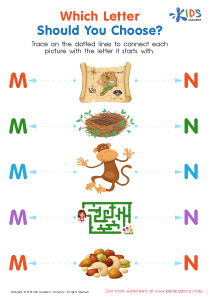
Lowercase identification Normal Lowercase/Small Letters Worksheets for Ages 4-7
4 filtered results
-
From - To
Our "Lowercase Identification Normal Lowercase/Small Letters Worksheets" are designed specifically for children ages 4-7. These educational resources are perfect for early learners to practice and master recognizing and naming lowercase letters. Featuring engaging activities, vibrant illustrations, and fun exercises, these worksheets make learning exciting and effective. Help your child build essential literacy skills, such as letter recognition, phonics, and early reading readiness. Ideal for use at home or in the classroom, these expertly crafted worksheets provide an enjoyable and interactive way for young learners to grow their alphabet knowledge and confidence. Empower your child’s educational journey today!
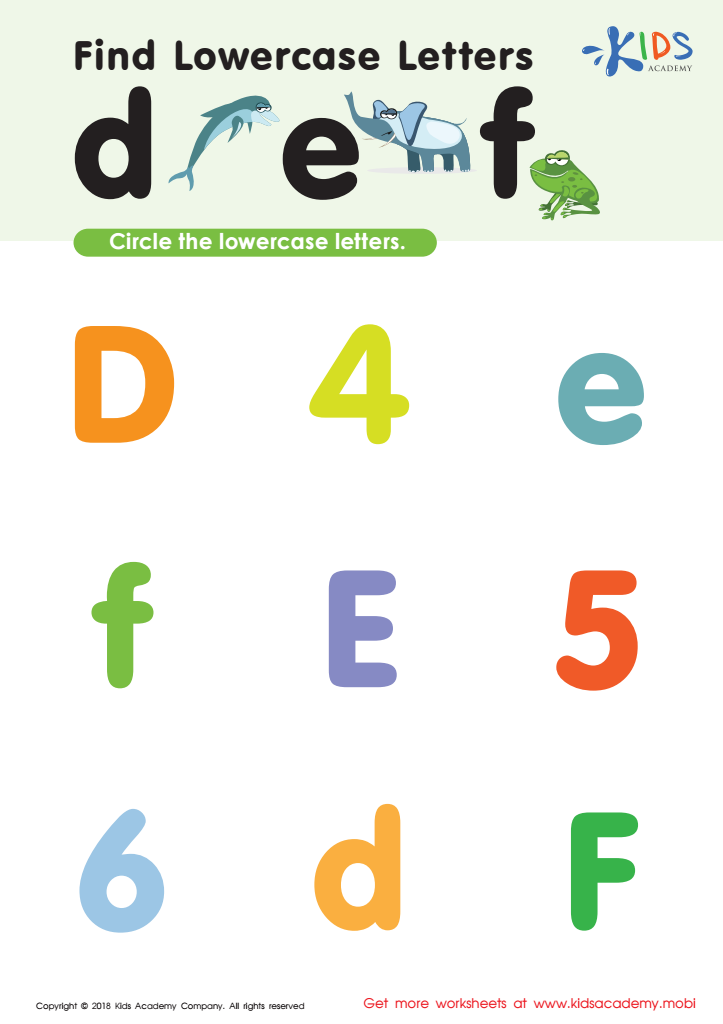
Find Lowercase Letters d e f Worksheet
 Assign to My Students
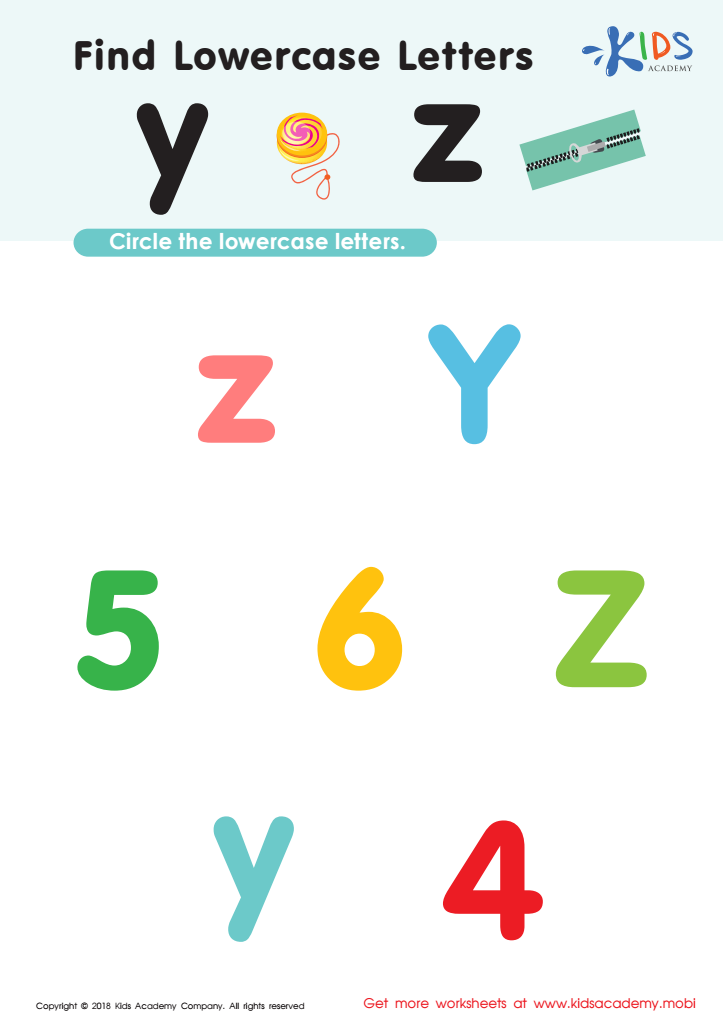
Find Lowercase Letters y z Worksheet

Find lowercase letters a b c Worksheet
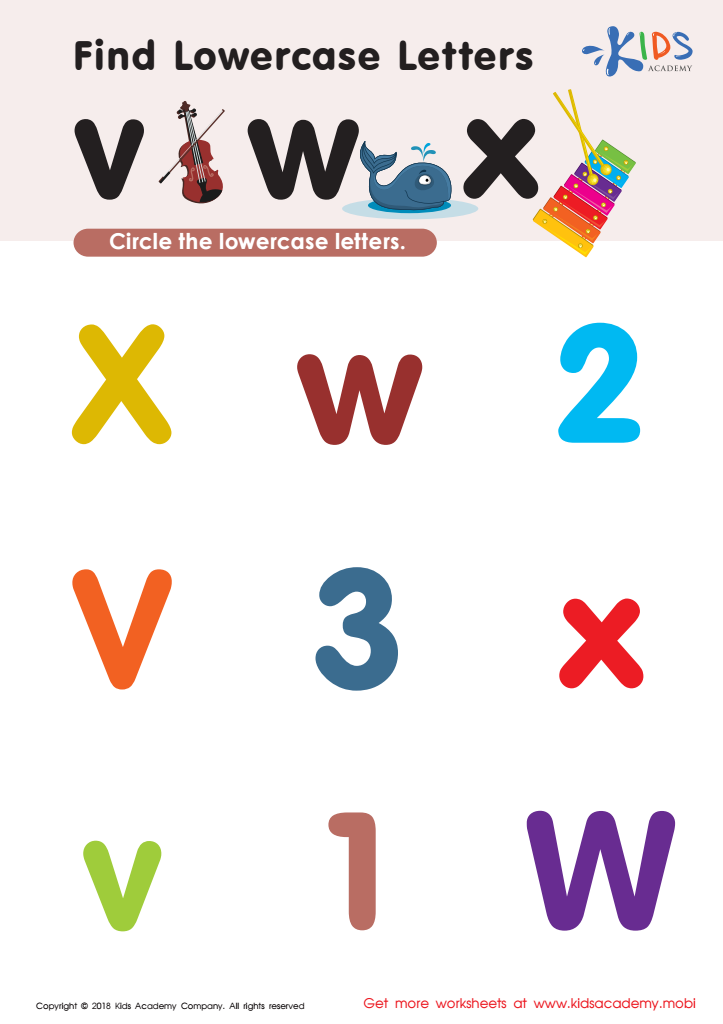
Find Lowercase Letters v w x Worksheet


Lowercase identification is crucial for young children aged 4-7 because it forms the foundation for reading and writing proficiency. During these formative years, literacy skills are rapidly developing, and recognizing lowercase letters is a key element in this process. Unlike uppercase letters, which children might encounter mostly in isolation (such as at the beginning of names), lowercase letters dominate the text in books and other reading materials. Ensuring that children can identify these letters well prepares them for effective reading comprehension.
Fluency in recognizing lowercase letters also supports writing skills. When children can readily identify and use lowercase letters, they can start forming words and sentences more easily. This fluency integrates into their writing practices, making them more confident in expressing their ideas on paper.
Moreover, early familiarity with lowercase letters enables better vocabulary building and phonics understanding, crucial for decoding new words. This competency arises from recognizing letter shapes and sounds consistently. Development in these areas isn't just about academic performance; it's instrumental in boosting a child's self-confidence and fostering a love for reading that will benefit them lifelong.
By acknowledging the value of lowercase letter identification, parents and teachers can provide targeted support and resources, incorporating engaging activities to make learning these fundamentals enjoyable and impactful.