
Phonics understanding Normal Phonics Worksheets for Ages 4-7
3 filtered results
Difficulty Level
Grade
Age
-
From - To
Subject
Activity
Standards
Discover the joy of learning with our Phonics Understanding Normal Phonics Worksheets, designed for children aged 4 to 7. These engaging resources are crafted to lay a strong foundation in reading through fun and interactive activities. Our worksheets help young minds grasp letter sounds, blends, and word formation, enhancing their phonics skills effectively. Each sheet is thoughtfully structured to build confidence and proficiency in a step-by-step approach, making learning accessible and exciting. Perfect for parents and educators looking to support early literacy, our phonics worksheets turn the journey of reading into an adventure. Unlock the power of phonics with us today!
Favorites
With answer key
Interactive
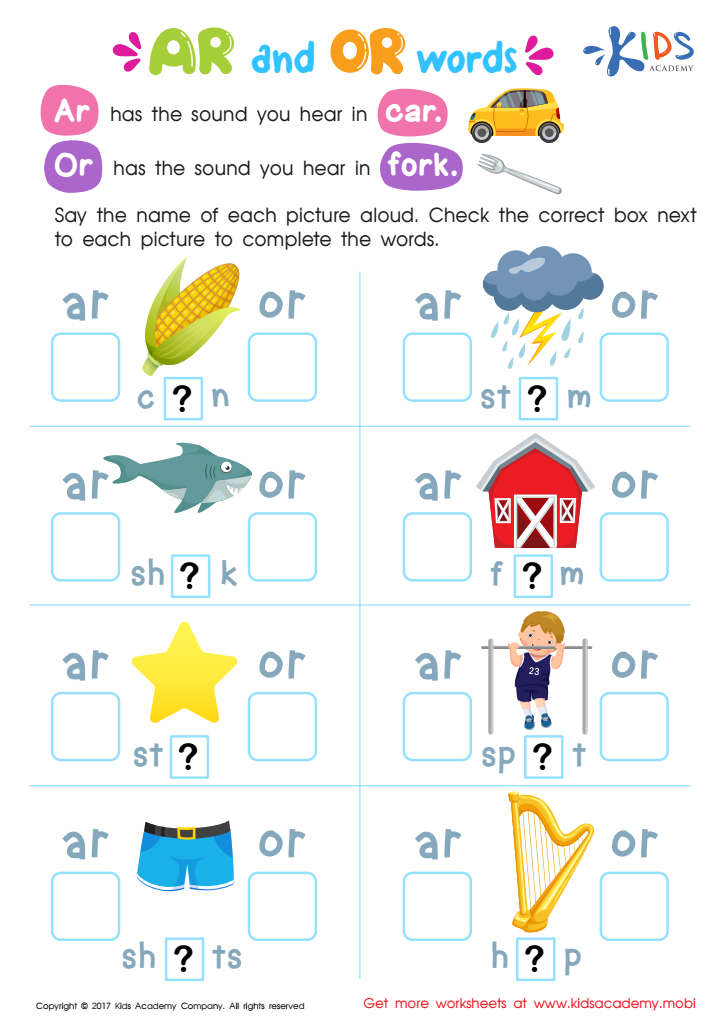
Ar and Or Words Phonics Worksheet
Master the distinct digraphs 'ar' and 'or' with this fun phonics worksheet from Kids Academy! With meaningful illustrations, it'll guide your child to choose the right one. Get ready for the great results!
 Assign to My Students
Ar and Or Words Phonics Worksheet
Worksheet
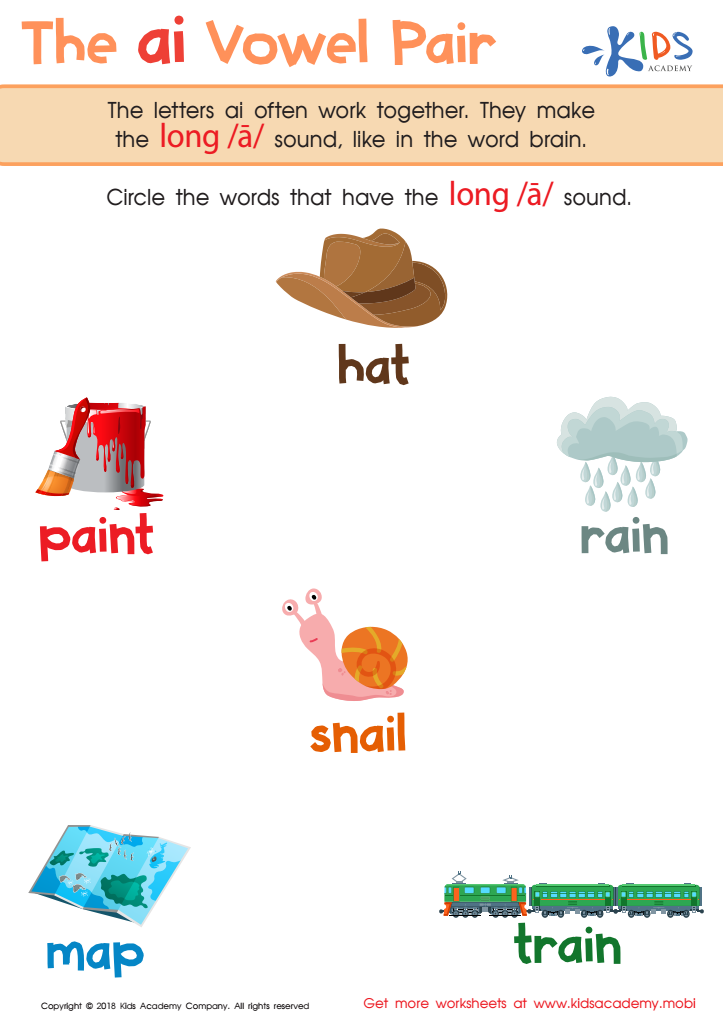
The AI Vowel Pair Worksheet
Vowel pairs make different sounds than individual letters. The 'ai' combination often forms the long /a/ sound, like in 'brain' and 'strain'. Get your kids to look at the pictures in the worksheet, identify each and say the name aloud. Help them circle the words with the long /a/ sound.
The AI Vowel Pair Worksheet
Worksheet
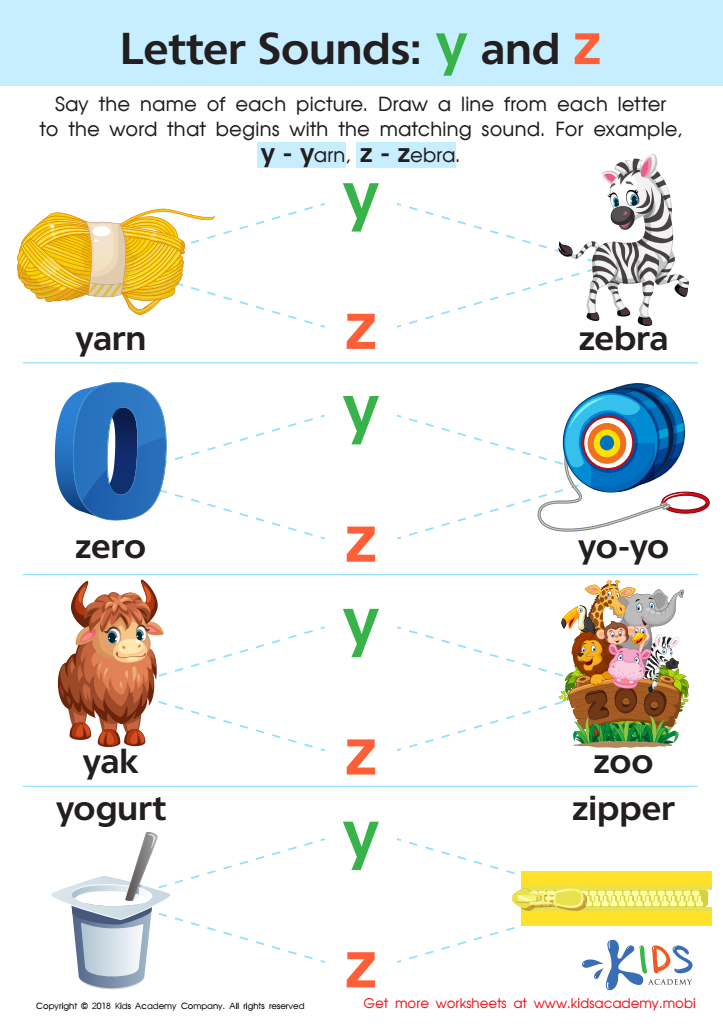
Letter Y and Z Sounds Worksheet
Y and Z can be tricky for kids to learn. Kids Academy has the answer with a great worksheet. "Yo-yo", "yak" and "zebra" help kids recognize, say and trace each letter. Plus, they can read the words and match them to images! Let your child try and help them master phonics at the end of the alphabet.
Letter Y and Z Sounds Worksheet
Worksheet
Join Kids Academy for Free
Who is primarily going to use this learning content?








Phonics understanding is crucial for young children, typically between the ages of 4-7, because it lays the foundation for successful reading and literacy skills. Phonics involves teaching the relationship between letters and their corresponding sounds, enabling children to decode words by sounds. This early introduction is essential for several reasons:
Firstly, a strong grasp of phonics enables children to read independently, fostering confidence and a love for reading. When kids can decode new words, they become more comfortable exploring books, thereby expanding their vocabulary and comprehension skills.
Secondly, phonics aids in spelling. By understanding the structure of words, children can improve their spelling accuracy, which is crucial for effective written communication.
Thirdly, phonics helps address potential reading challenges early on. Recognizing difficulties with phonics can lead to early interventions, preventing future struggles with more complex literacy skills.
Furthermore, phonics instruction is known to enhance cognitive skills by helping children understand patterns and making it easier for them to learn and remember new words.
Ultimately, phonics understanding sets the stage for academic success across all subjects, as reading is integral to learning. Teachers and parents should prioritize phonics because it's not just about reading; it’s about equipping children with the essential tools they need for lifelong learning and success.







