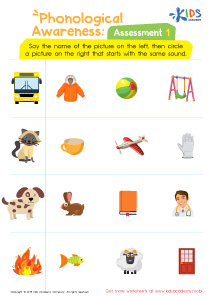
Reading proficiency Normal Vowels Worksheets for Ages 4-7
5 filtered results
-
From - To
Explore our engaging Reading Proficiency Worksheets designed for children aged 4-7, focusing on normal vowels to enhance literacy skills! These interactive resources help young learners identify and understand vowel sounds, crucial for building their reading foundation. Each worksheet offers fun activities that promote phonetic awareness and reading fluency, empowering children to recognize words and develop comprehension. The colorful illustrations and age-appropriate challenges keep kids motivated and excited about learning. Perfect for both classroom use and at-home practice, our worksheets are tailored to foster a love for reading while supporting essential language development. Start your child's reading journey today!
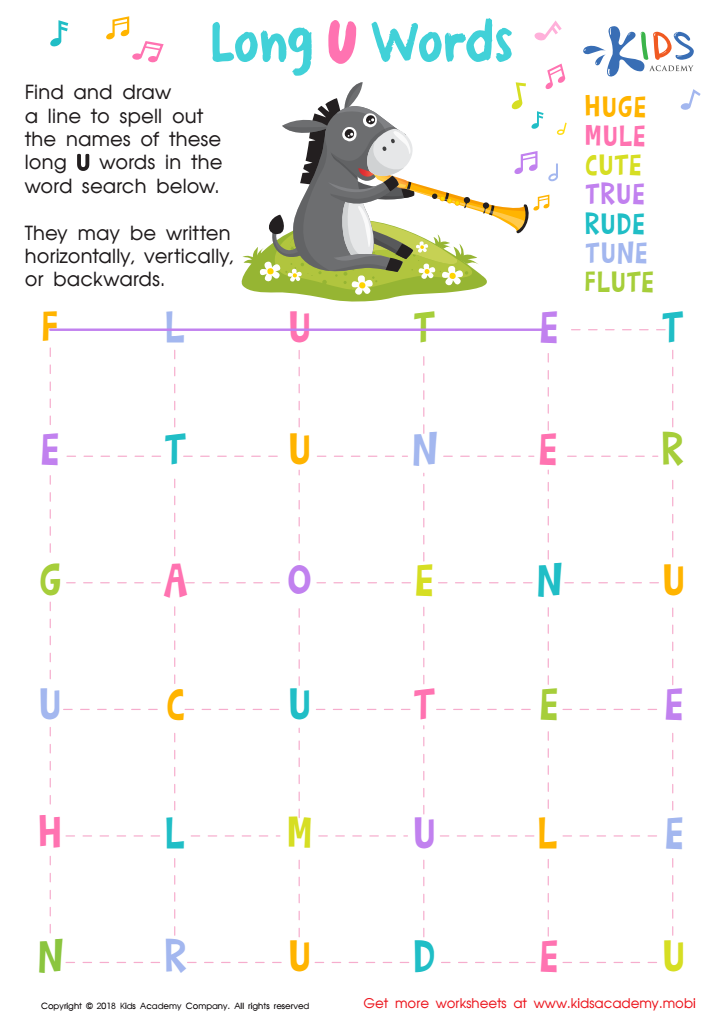
Long /u/ Words Worksheet
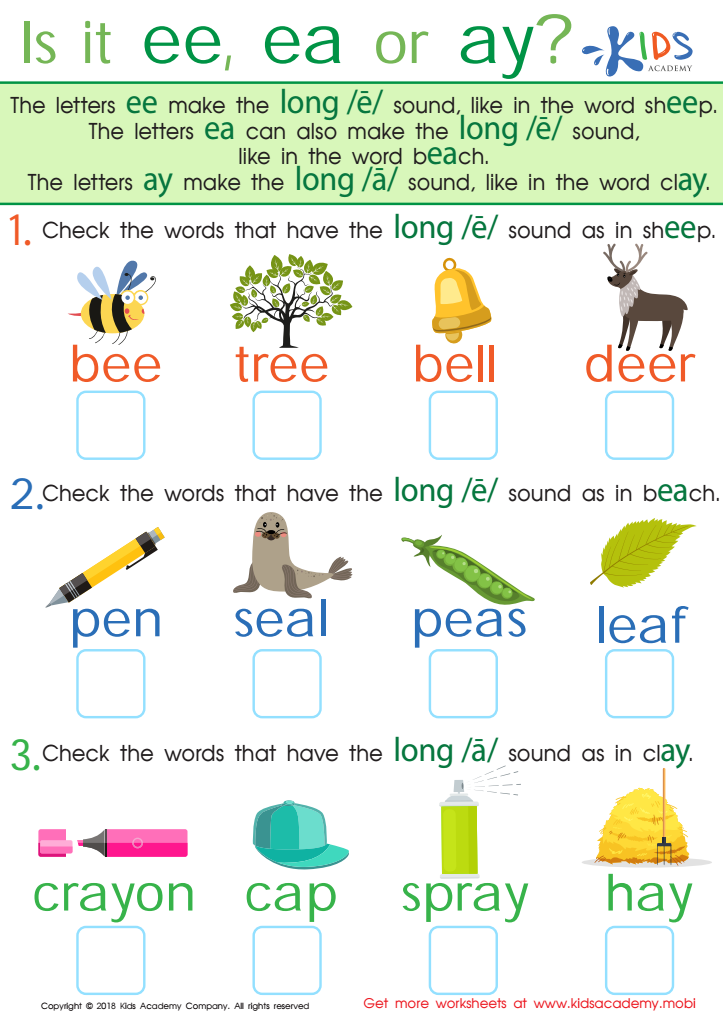
Is It EE, EA, or AY? Worksheet
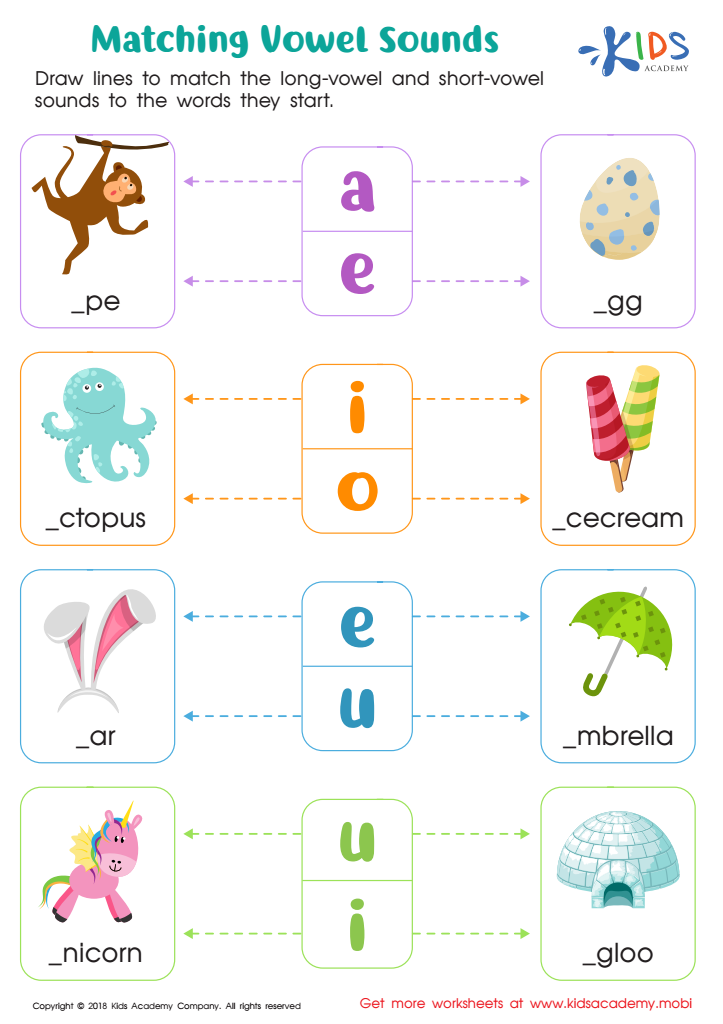
Matching Vowel Sounds Worksheet
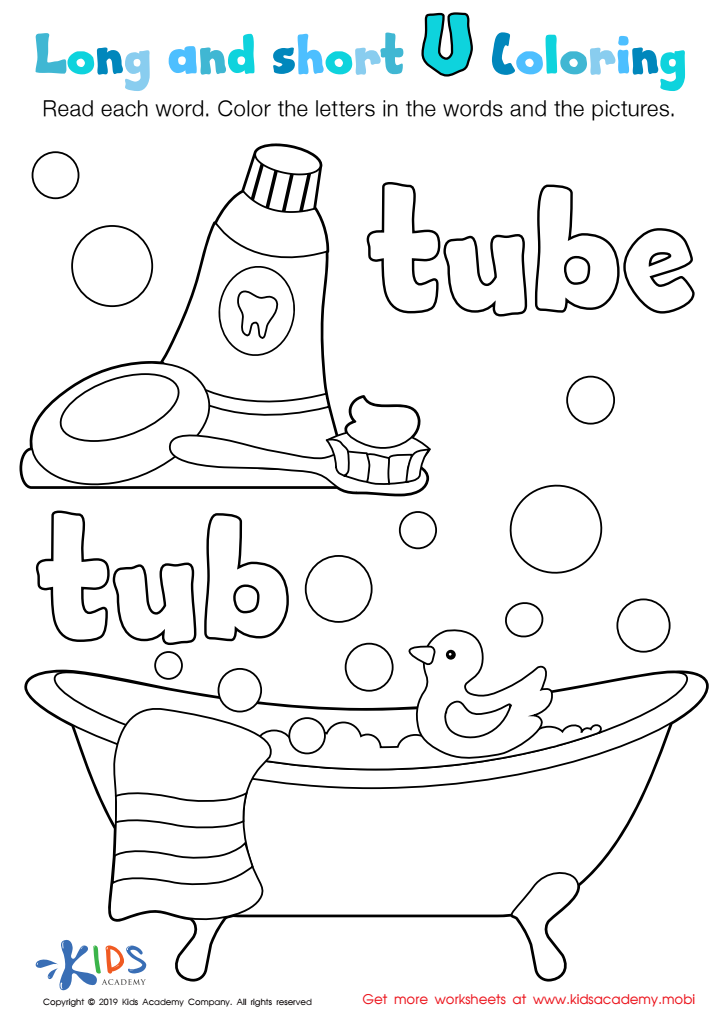
Long and Short U Worksheet
 Assign to My Students
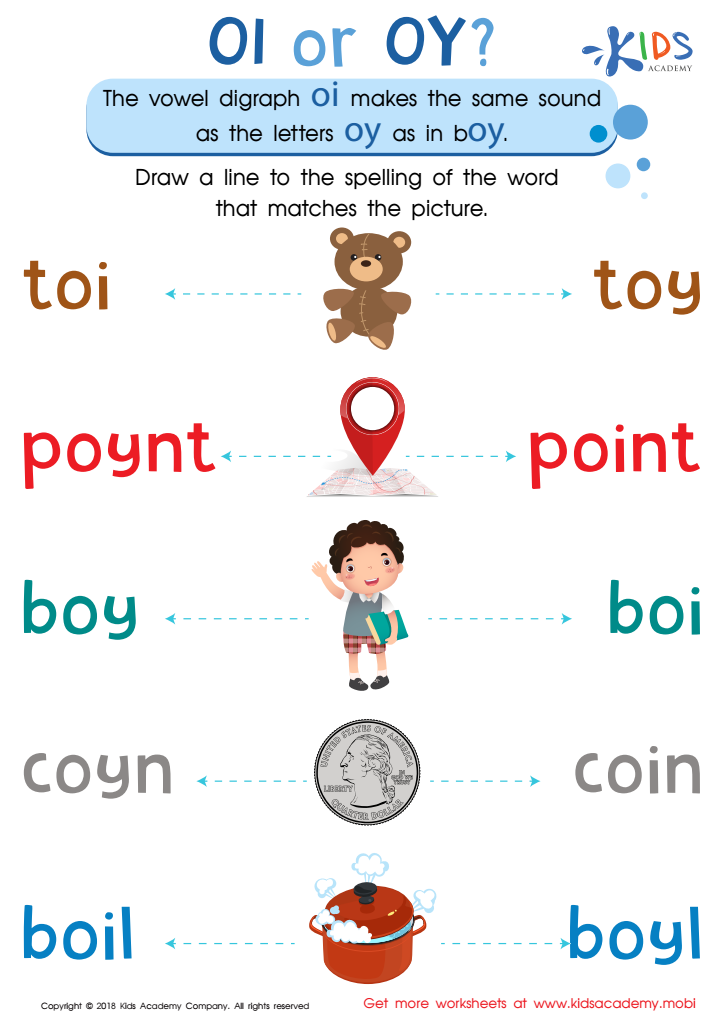
Reading: OI and OY Worksheet





Reading proficiency in young children, particularly focusing on normal vowels, is crucial for several reasons. First, mastering vowels is foundational to reading development. Vowels are the building blocks of words; understanding how they function helps children decode simple texts. This early skill directly influences phonemic awareness, which is the ability to hear and manipulate sounds, an essential component of literacy.
For children aged 4-7, this proficiency not only enhances their reading skills but also boosts their confidence. When children successfully read simple words, they feel empowered and are more likely to engage with books and other texts, promoting a lifelong love for reading. Furthermore, reading proficiency supports other areas of learning; it enhances vocabulary acquisition, improves writing skills, and lays the groundwork for effective communication.
Parents and teachers should prioritize regular practice with vowels through fun and engaging activities, like games, songs, and storybooks. By fostering a strong foundation in reading proficiency focusing on normal vowels, caregivers enable children to excel academically and navigate their world more confidently. Investing in this skill early ensures that children are fully prepared for the broader challenges of literacy as they progress through their education.