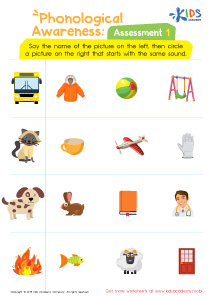
Spelling Skills Normal Vowels Worksheets for Ages 4-7
3 filtered results
Difficulty Level
Grade
Age
-
From - To
Subject
Activity
Standards
Discover our interactive "Spelling Skills Normal Vowels Worksheets" designed for children ages 4-7! These engaging resources seamlessly introduce young learners to the fundamental concepts of vowels and spelling. Each worksheet features colorful graphics and age-appropriate activities that captivate children's attention, fostering a love for learning. Through fun exercises, kids will practice identifying, spelling, and using normal vowels in words, paving the way for essential literacy skills. Perfect for homeschooling or classroom settings, our worksheets provide parents and educators with tools to support early language development. Encourage your child’s growth in reading and writing with our creatively crafted, easy-to-use worksheets today!
Favorites
With answer key
Interactive
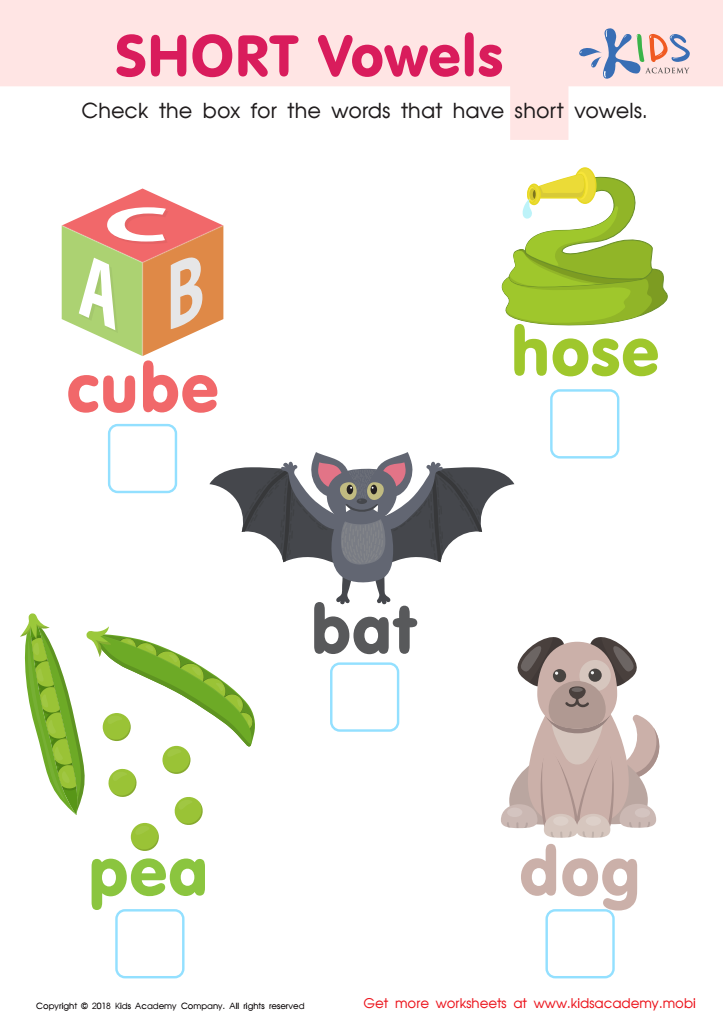
short vowels Worksheet
Say "dog" and notice how long it takes to pronounce the vowel. Is it short or long? Compare it to "pea" and use this worksheet to quickly assess your child's mastery. Have them name each picture and listen for the vowel sounds. Only check the boxes for words with short vowel sounds.
 Assign to My Students
short vowels Worksheet
Worksheet
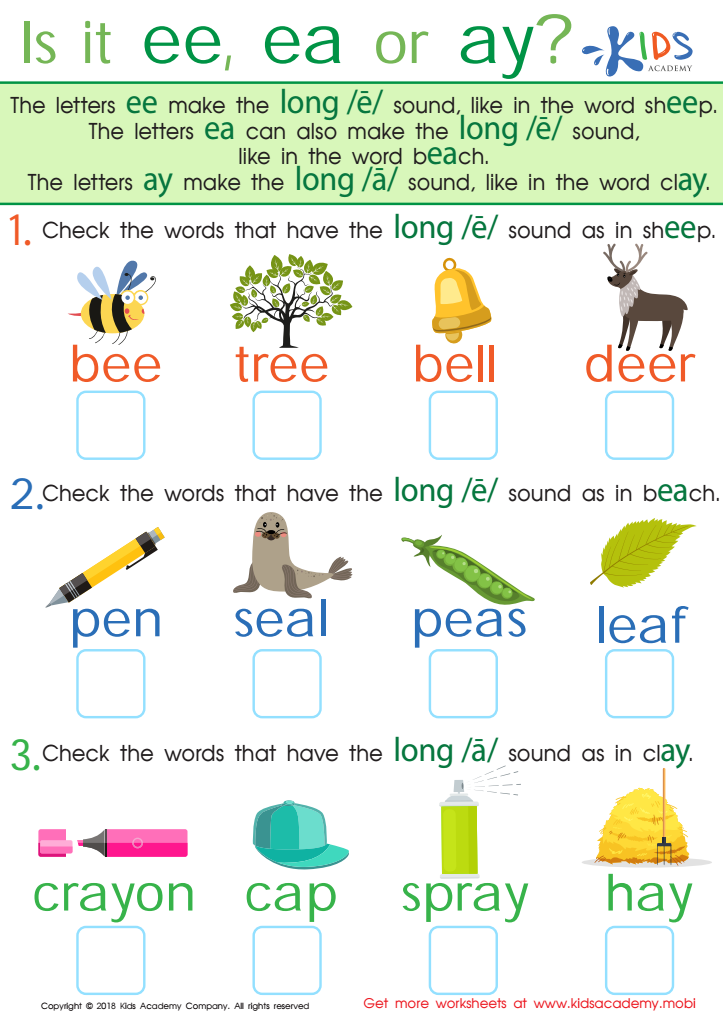
Is It EE, EA, or AY? Worksheet
When 'ee', 'ea' and 'ay' are in words, they usually make the long /e/ and /a/ sounds. Examples of words with 'ee' are "sheep", 'beach' and 'seat' with 'ea', and 'clay' and 'play' with 'ay'. Check this colourful worksheet with your kids; help them find the words that make the long /e/ sound like 'sheep'.
Is It EE, EA, or AY? Worksheet
Worksheet
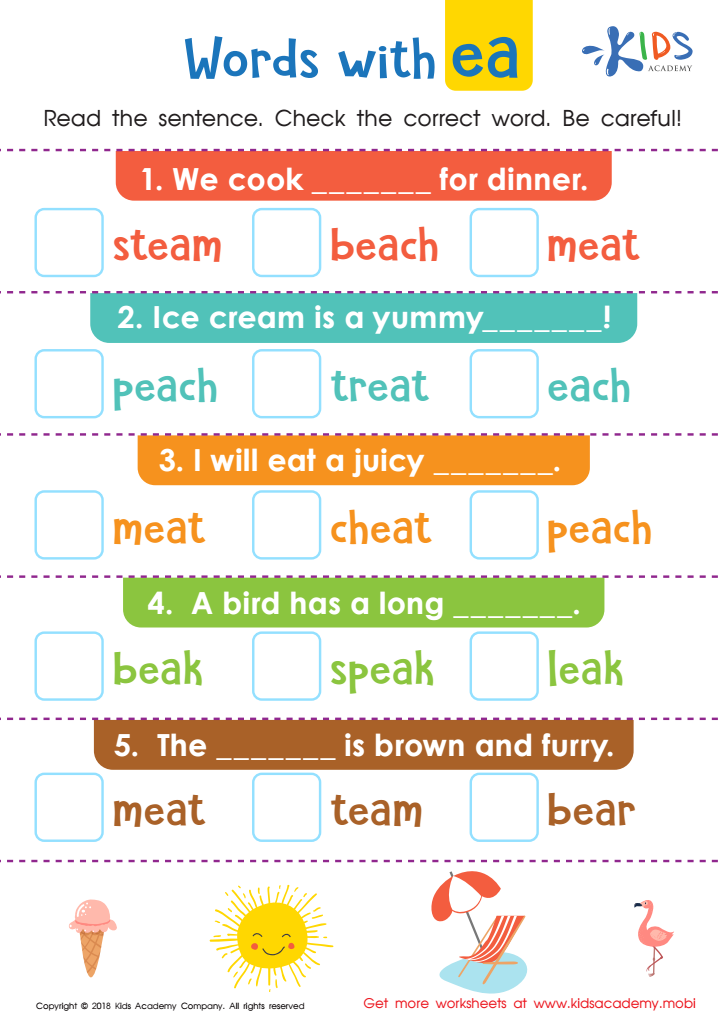
Words with ea Worksheet
Beginning readers may struggle with -ea vowel digraphs, which can have multiple sounds and be tricky to decode. This cheerful worksheet helps kids practice reading sentences with missing -ea words, using context clues to fill in the blanks. They'll also be exposed to various -ea sound examples, and build their sight word knowledge.
Words with ea Worksheet
Worksheet
Join Kids Academy for Free
Who is primarily going to use this learning content?





Spelling skills using normal vowels are essential for children ages 4-7 as they lay the foundation for effective reading and writing. At this developmental stage, children are beginning to recognize letters and their sounds, which are critical components of phonemic awareness. Learning proper spelling with normal vowels helps children understand the relationship between letters and sounds, enhancing their ability to decode (read) and encode (write) words.
Moreover, proficiency in spelling fosters confidence in young learners. When children can spell simple words correctly, they are more likely to engage in writing activities, express their thoughts, and participate in classroom discussions. It also supports vocabulary development, as knowing how to spell words encourages children to explore new language and better comprehend what they read.
Additionally, effective spelling reinforces important cognitive skills, such as memory and attentiveness. Spelling exercises encourage practice in focus and patience, which are valuable in all areas of learning. As issues such as literacy rates and language development take center stage in education discussions, parents and teachers should prioritize nurturing spelling skills in early education. Supporting spelling not only enhances communication skills but also equips children for future academic success.