Filters

6 filtered results

Clear all filters
Favorites
With answer key
Interactive

6 filtered results

Difficulty Level

Grade


Discover our engaging Word Recognition Normal Vowels Worksheets designed specifically for children aged 4-7! These worksheets provide young learners with a fun and interactive way to master vowel sounds and enhance their reading skills. Our carefully crafted activities help kids identify and recognize vowels within words, promoting early literacy development in an enjoyable manner. Each worksheet features colorful illustrations and age-appropriate challenges that cater to various learning styles. Perfect for home or classroom use, these resources are ideal for reinforcing phonics, improving word recognition, and building a strong foundation for future reading success. Start your child's literacy journey today!

Check out this FREE Trial Lesson on Vowels for age 4-7!

Digraphs

Favorites
With answer key
Interactive
  • 4-7
  • Word Recognition
  • Vowels
  • Normal
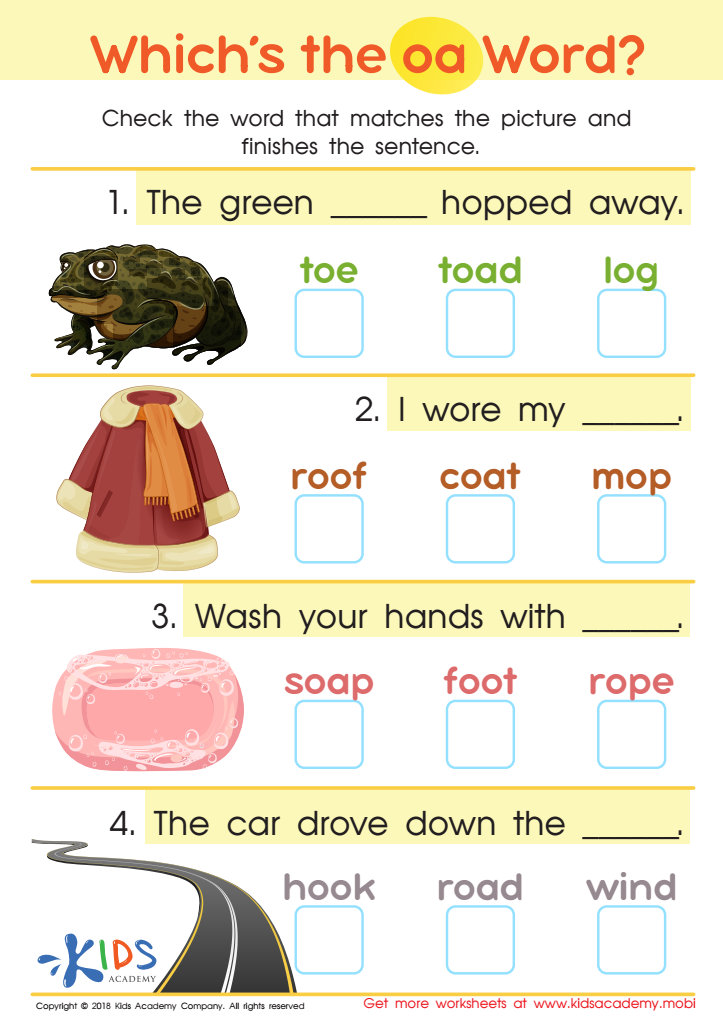
Which's the OA Word? Worksheet

Which's the OA Word? Worksheet

Encourage your kids to complete this fun worksheet. Ask them to identify the animals and objects in the pictures. Read the incomplete sentences aloud, and then find the correct word to finish the sentence. Check their work.
Which's the OA Word? Worksheet
Worksheet
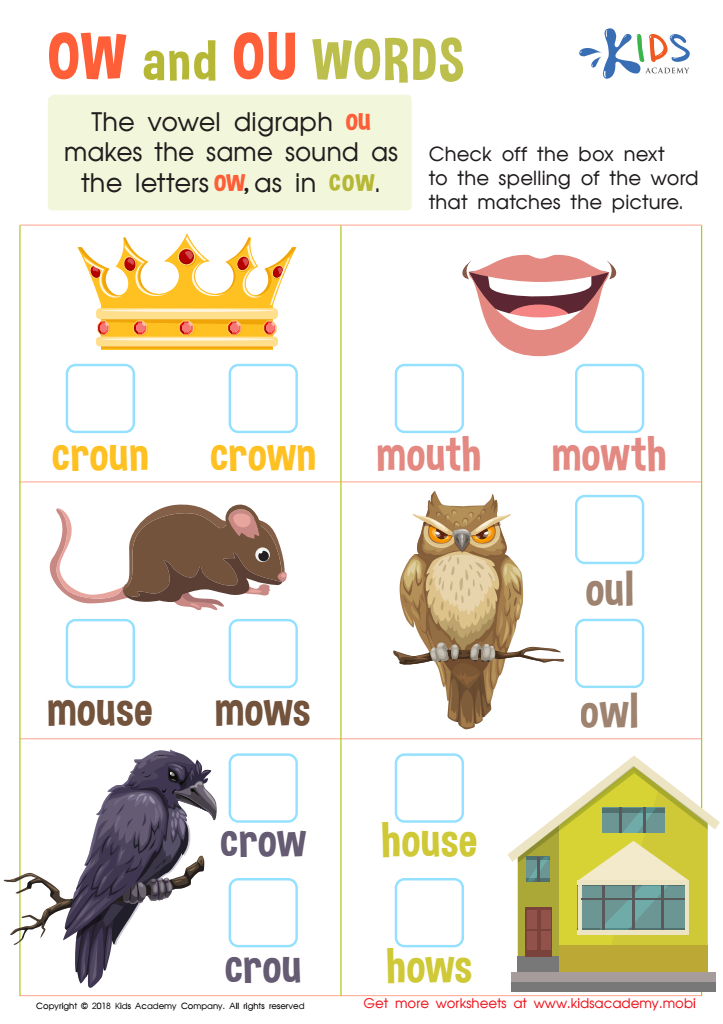
Reading: OW and OU Words Worksheet

Reading: OW and OU Words Worksheet

Help your kids learn phonetics! Explain the different sounds and long/short variations. Emphasize that some vowel sounds are the same, e.g. ou = ow in cow. For practice, have them read aloud the words in the worksheet and check the box next to the spelling that matches the picture.
Reading: OW and OU Words Worksheet
Worksheet
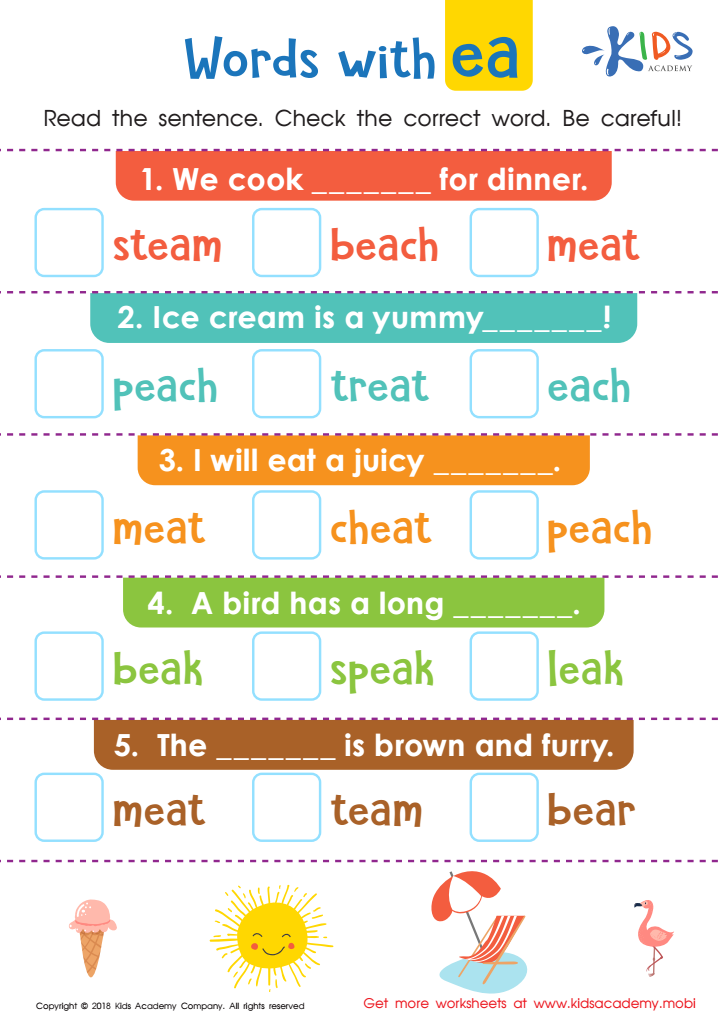
Words with ea Worksheet

Words with ea Worksheet

Beginning readers may struggle with -ea vowel digraphs, which can have multiple sounds and be tricky to decode. This cheerful worksheet helps kids practice reading sentences with missing -ea words, using context clues to fill in the blanks. They'll also be exposed to various -ea sound examples, and build their sight word knowledge.
Words with ea Worksheet
Worksheet
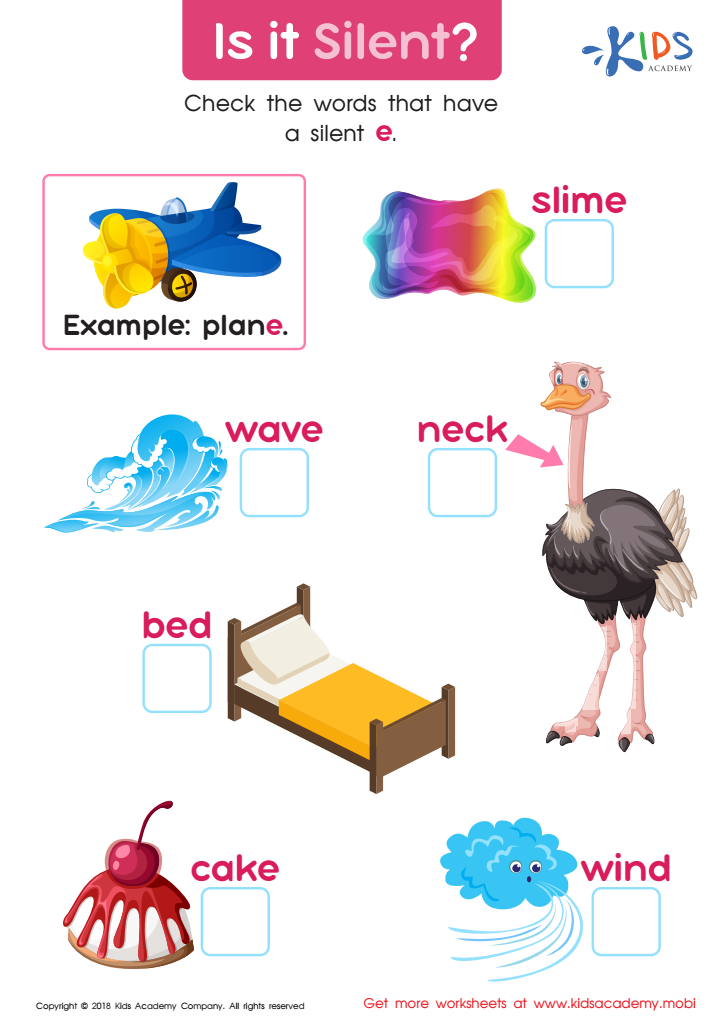
Is It Silent? Worksheet

Is It Silent? Worksheet

Phonetics can be tricky, like the sound of /e/ in 'egg' vs. the silent /e/ at the end of 'slime'. Ask your students to give more examples. Read out the words in this worksheet with your kids and ask them to identify the silent /e/ ones.
Is It Silent? Worksheet
Worksheet
Phonics for Kids | Long Vowel Sound E | PDF Worksheet 1

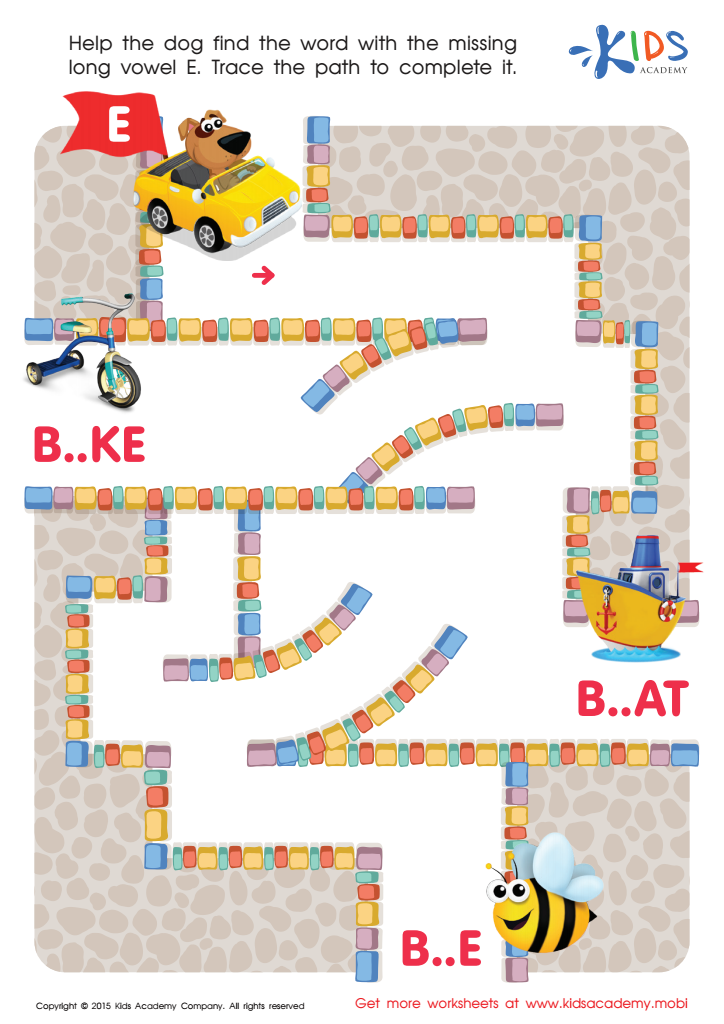
Long Vowel Sound E Worksheet

Practice distinguishing long and short vowel sound E with this free printable! Kids must complete the word “bee” by tracing the maze and adding the missing letter E. Remind them to say the word aloud to help sharpen their phonics ear. Get more phonics fun with the vowel sound E here.
Long Vowel Sound E Worksheet
Worksheet
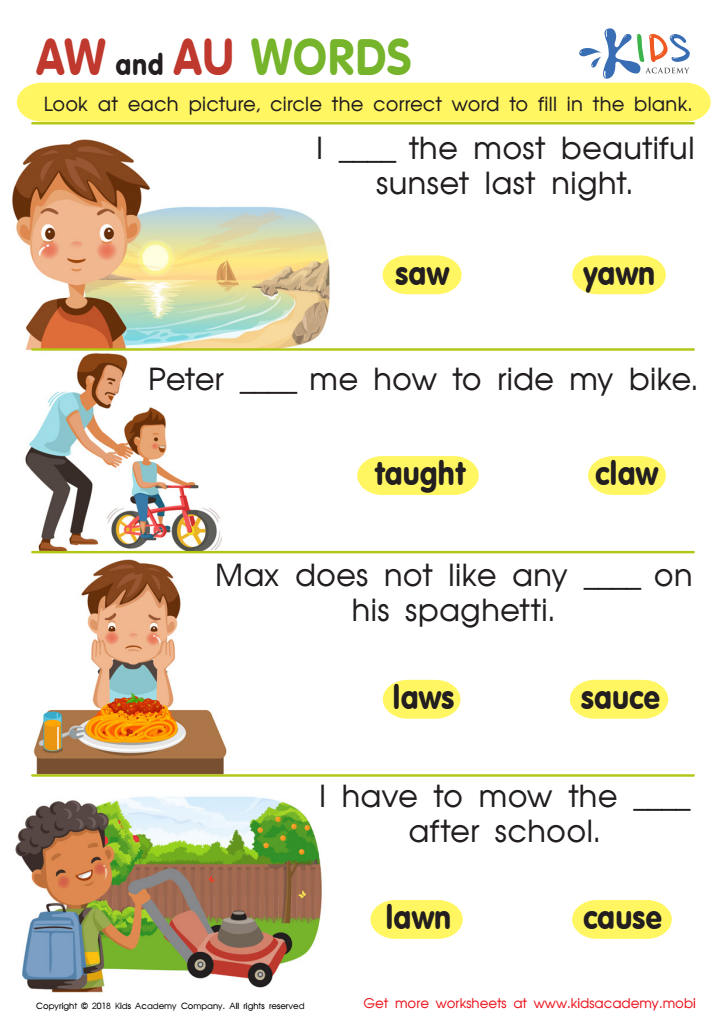
Reading: AW and AU Words Worksheet


Reading: AW and AU Words Worksheet

This worksheet helps kids recognize that /au/ and /aw/ can make the same sound. Students read sentences and pick the correct word with one of the digraphs. Understanding digraphs improves decoding and reading fluency. Perfect for reading and phonics classes.
Reading: AW and AU Words Worksheet
Worksheet


Word recognition and understanding normal vowels is crucial for children aged 4-7 because it lays the foundation for reading fluency and comprehension. During these formative years, children are not only learning to read but also starting to connect sounds with letters. Understanding normal vowels—A, E, I, O, U—helps them decode and recognize common words they encounter in their environment.

This skill aids in developing phonemic awareness, which is essential for spelling and vocabulary growth. When children can effectively recognize words and utilize vowels appropriately, they gain confidence and motivation to read independently. Furthermore, strong word recognition can positively influence overall academic performance and literacy progress, as reading proficiency impacts every subject in school.

Parents and teachers play a vital role in fostering a rich language environment. By emphasizing normal vowels through playful activities, engaging stories, and interactive games, they can spark enthusiasm in children for reading. This early focus on word recognition not only facilitates easier transitions to more complex texts later but also nurtures lifelong readers. Investing time in this area ultimately cultivates a strong, literate foundation that benefits children throughout their educational journey and beyond.