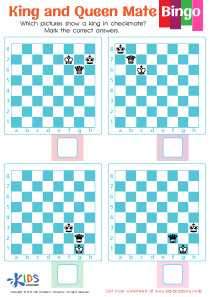
Memory enhancement Normal Chess Worksheets for Ages 4-7
3 filtered results
-
From - To
Enhance your child's memory and cognitive skills with our "Memory Enhancement Normal Chess Worksheets" designed for ages 4 to 7. These engaging worksheets combine the strategic world of chess with fun activities that stimulate memory retention and recall. Children will explore various chess concepts while completing puzzles, coloring activities, and matching games, all aimed at sharpening their memory skills in an entertaining way. Perfect for classrooms or home learning, these age-appropriate resources promote critical thinking and problem-solving abilities in young learners. Download our worksheets today and watch your child develop a love for chess while boosting their mental agility!
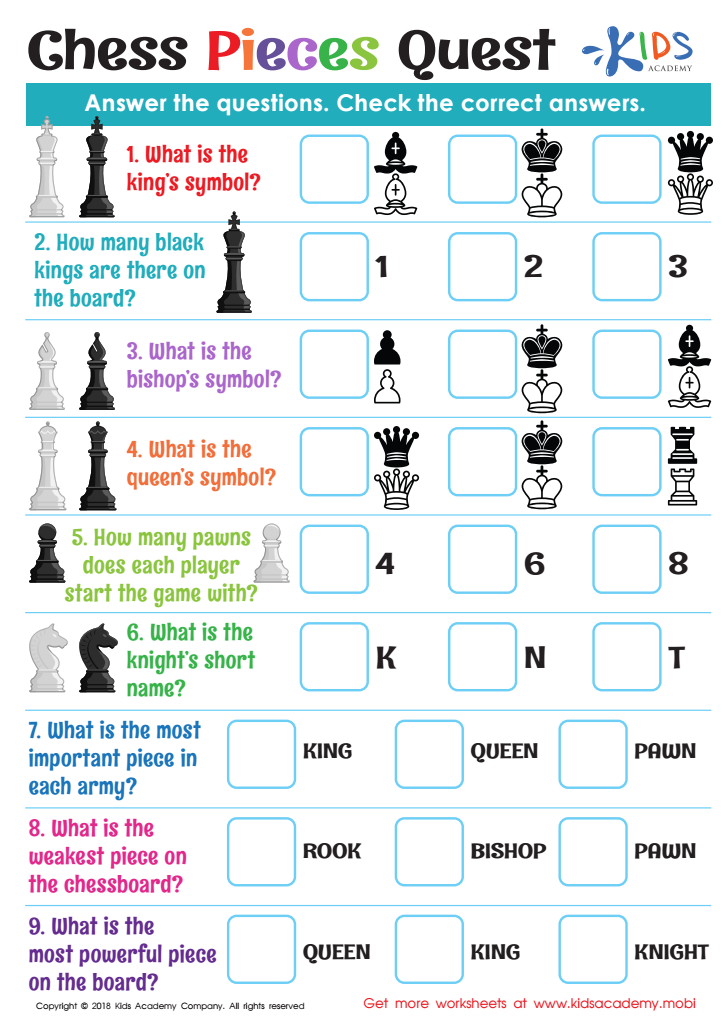
Chess Pieces Quest Worksheet
 Assign to My Students
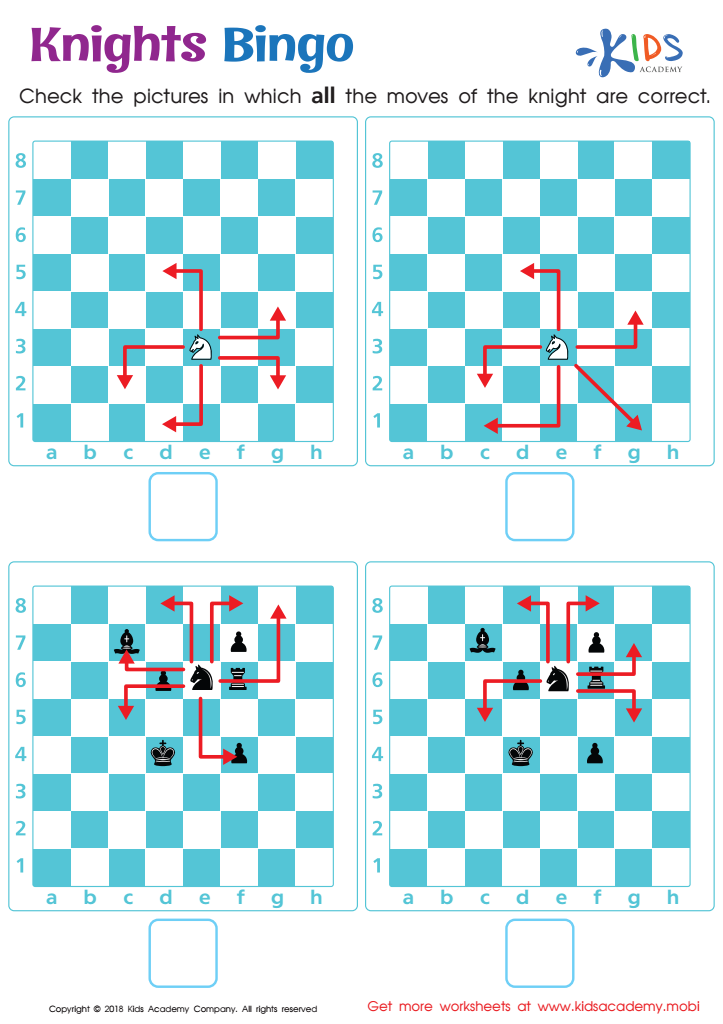
Knights Bingo Worksheet
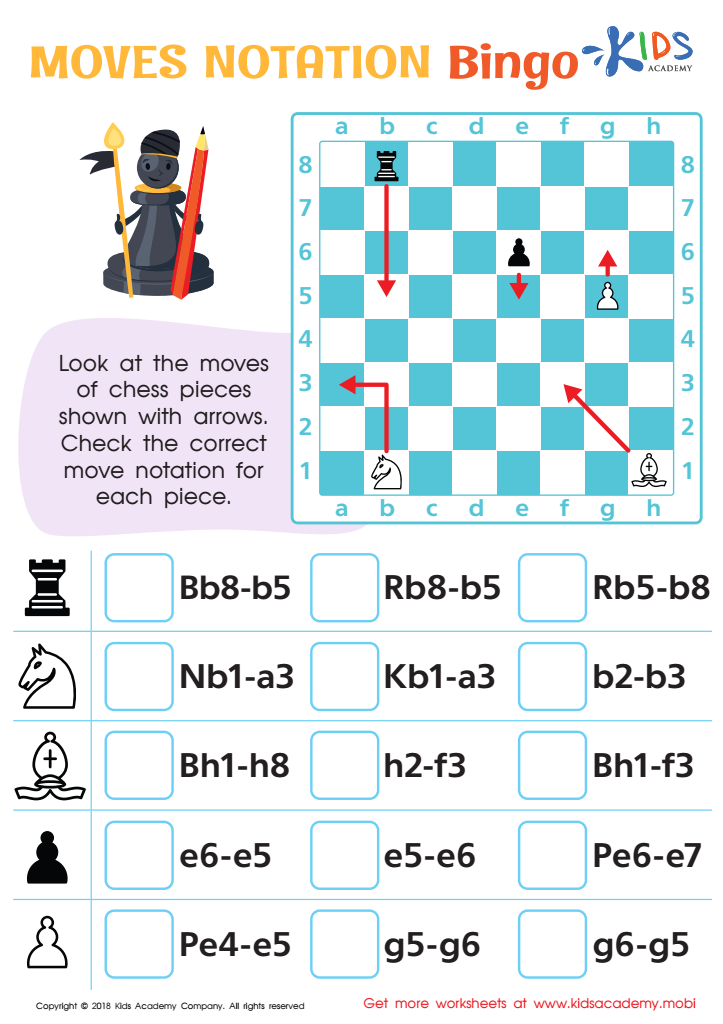
Moves Notation Bingo Worksheet








Memory enhancement through activities like Normal Chess is crucial for children aged 4-7 for several reasons. Firstly, chess introduces strategic thinking early, encouraging children to plan, remember moves, and anticipate opponents’ strategies. This enhances not only their memory but also their critical thinking and problem-solving skills.
Furthermore, memorizing chess pieces, their movements, and possible game scenarios develops cognitive skills essential for overall academic success. Engaging in chess requires focus and attention, helping children hone these abilities—skills that benefit them in classrooms where concentration is vital.
Additionally, chess fosters patience and perseverance. Kids learn to deal with losses and setbacks, building resilience and character. As they progress, their increased memory retention allows them to excel in other memory-based activities, such as reading and math.
Finally, involving children in chess can strengthen parent-child or teacher-student bonds through collaborative play, creating an enjoyable atmosphere for learning and discovery. The social aspect also promotes interaction with peers, enhancing their communication skills. Overall, introducing Normal Chess can serve as an engaging, multifaceted educational tool that supports memory and cognitive development in young children.