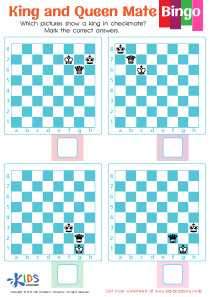
Number Recognition Normal Chess Worksheets for Ages 4-7
3 filtered results
-
From - To
Boost your child's number recognition skills with our engaging Normal Chess Worksheets designed specifically for ages 4 to 7. These fun, interactive worksheets combine the strategic elements of chess with foundational math concepts, helping young learners identify and understand numbers in a playful context. Each worksheet offers a unique activity that promotes critical thinking, hand-eye coordination, and strategic reasoning while familiarizing children with chess-related themes. Ideal for both classroom and home use, these resources encourage essential skill development through play and creativity. Download now to join your little ones on this educational adventure and transform learning into a captivating chess experience!
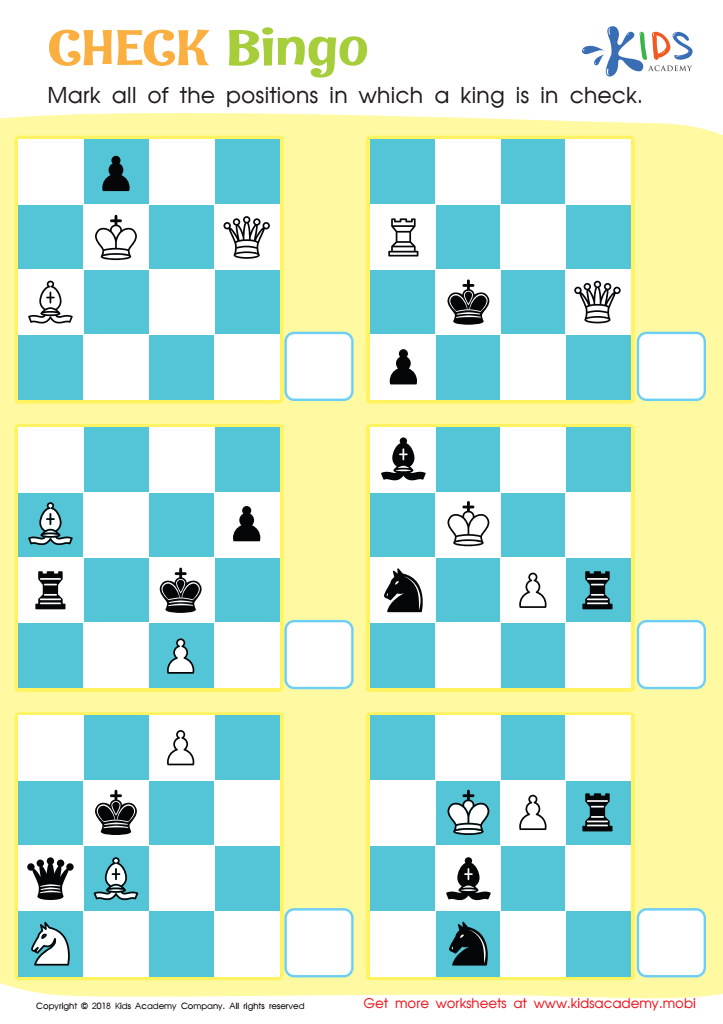
Check Bingo Worksheet
 Assign to My Students
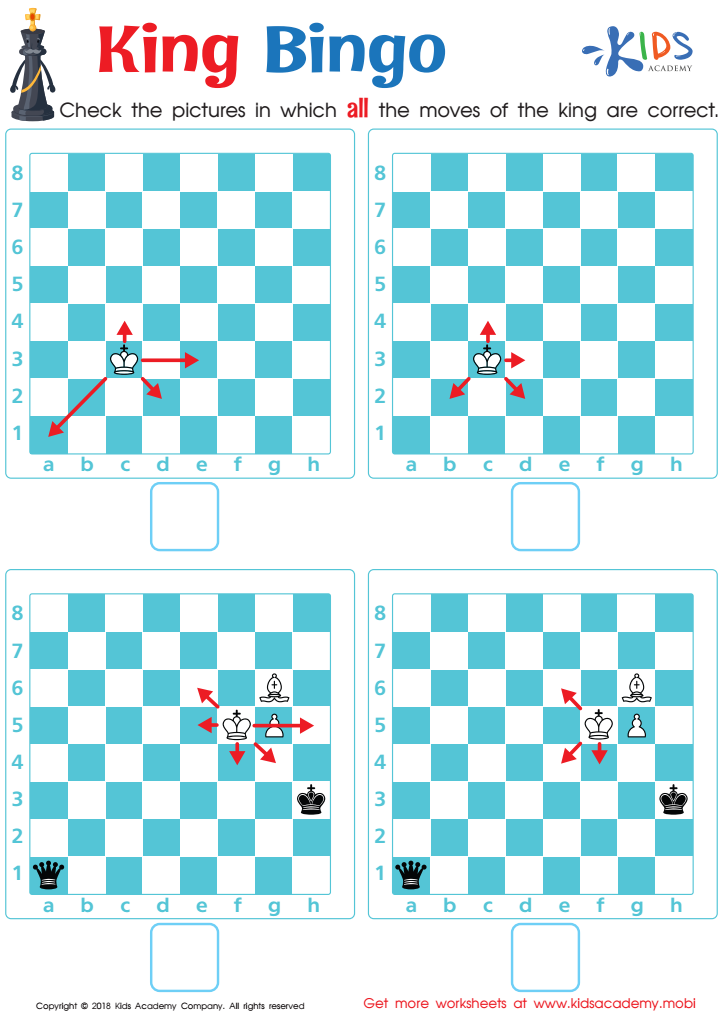
King Bingo Worksheet
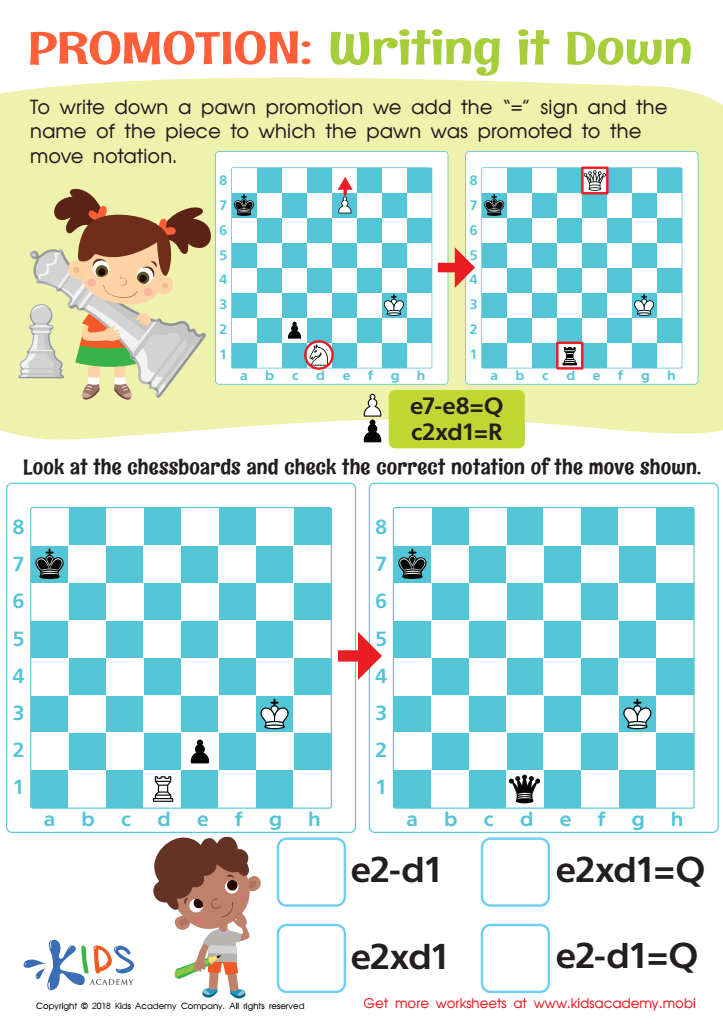
Writing it Down Worksheet







Number Recognition is a foundational skill crucial for young children, particularly those aged 4-7, as it acts as a gateway to understanding mathematics and developing critical cognitive abilities. In the early years, fostering number recognition helps children to identify numerals and associate them with quantities, which is essential for future learning in math.
Normal Chess, despite being a game primarily associated with strategic thinking and problem-solving, can incorporate number recognition through its movements and scoring systems. When children play chess, they can encounter numbered moves or even drag pieces labeled with numbers. This can promote number recognition in an engaging way, making learning feel less like a chore and more like a game.
Teachers and parents should care about number recognition because it facilitates a child’s ability to solve problems independently, think critically, and develop a positive attitude towards math. When children master number recognition early, they build higher self-esteem and less anxiety around numbers in later academic settings. All these factors contribute not just to mathematical skill development but to overall cognitive growth, enhancing children's learning experiences and preparing them for future challenges in mathematics and beyond. This holistic approach is vital for laying the groundwork for lifelong learning and success.