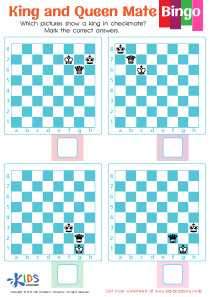
Understanding chess rules Normal Chess Worksheets for Ages 4-7
5 filtered results
-
From - To
Welcome to our "Understanding Chess Rules" worksheets designed specifically for children ages 4-7! These engaging resources introduce young learners to the fundamental rules of chess in a fun and interactive way. Our worksheets incorporate colorful visuals and simple explanations, helping children grasp essential concepts such as how each piece moves, the objective of the game, and basic chess etiquette. Through playful activities and exercises, kids will not only enhance their cognitive skills but also develop critical thinking and strategic planning abilities. Perfect for early-grade teachers and parents, these worksheets make learning chess enjoyable and accessible for your little ones. Start their chess journey today!
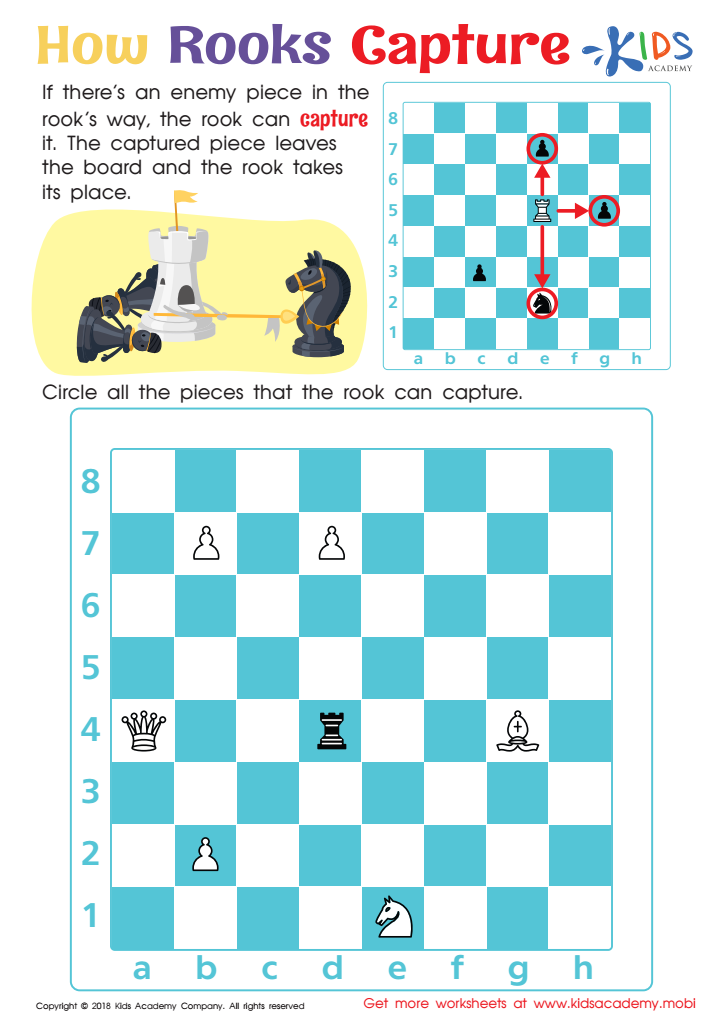
How Rooks Capture Worksheet
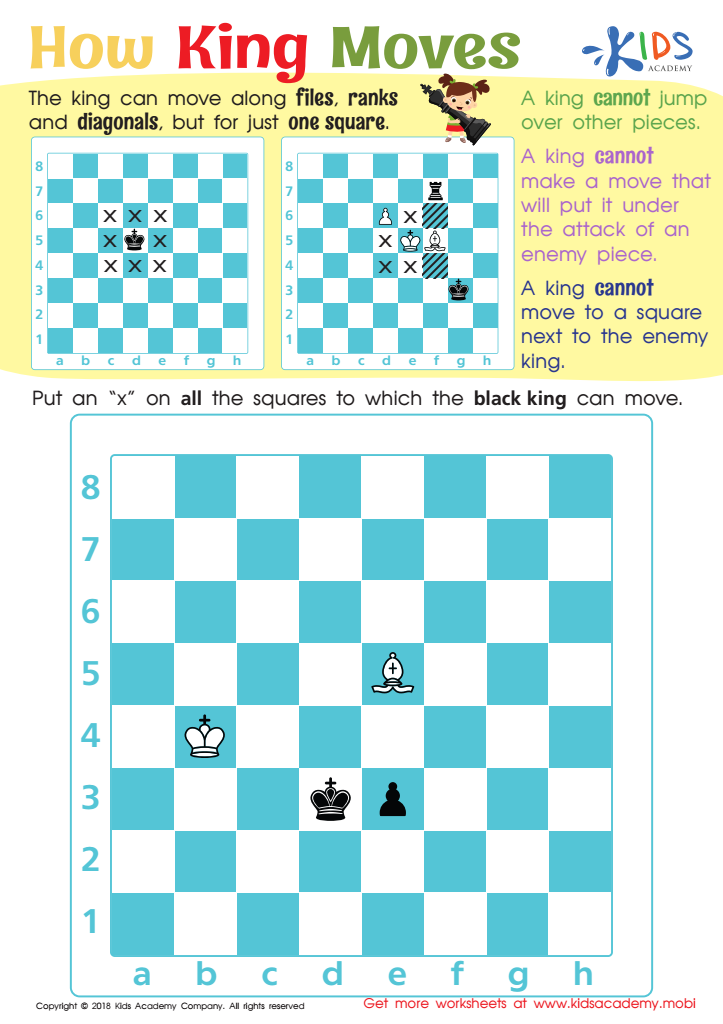
How King Moves Worksheet
 Assign to My Students
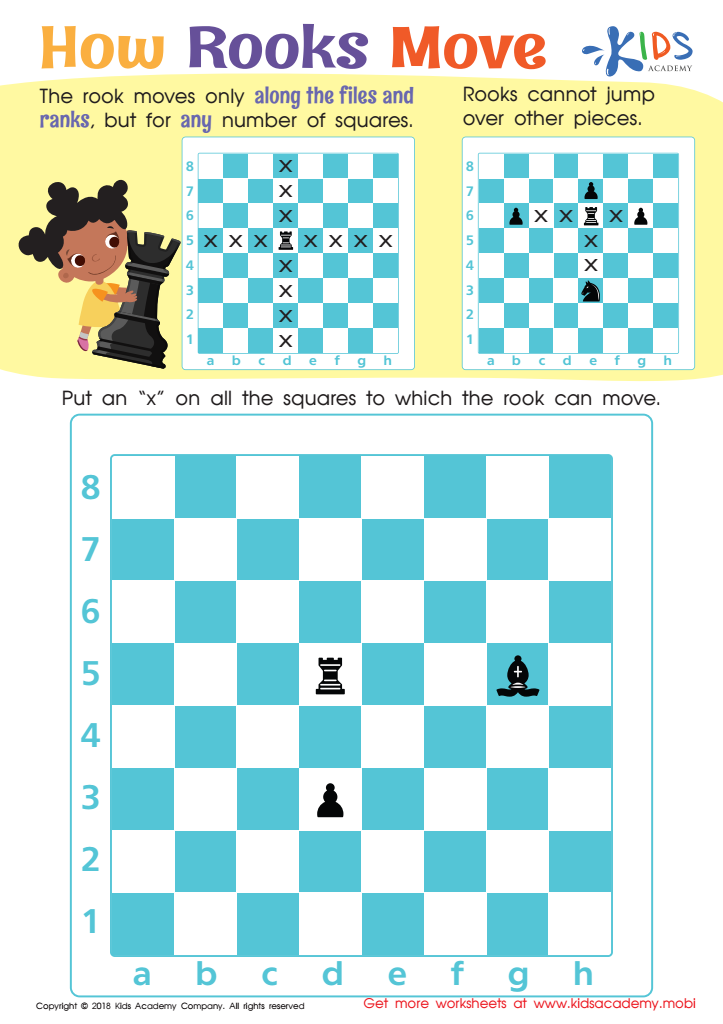
How Rooks Move Worksheet
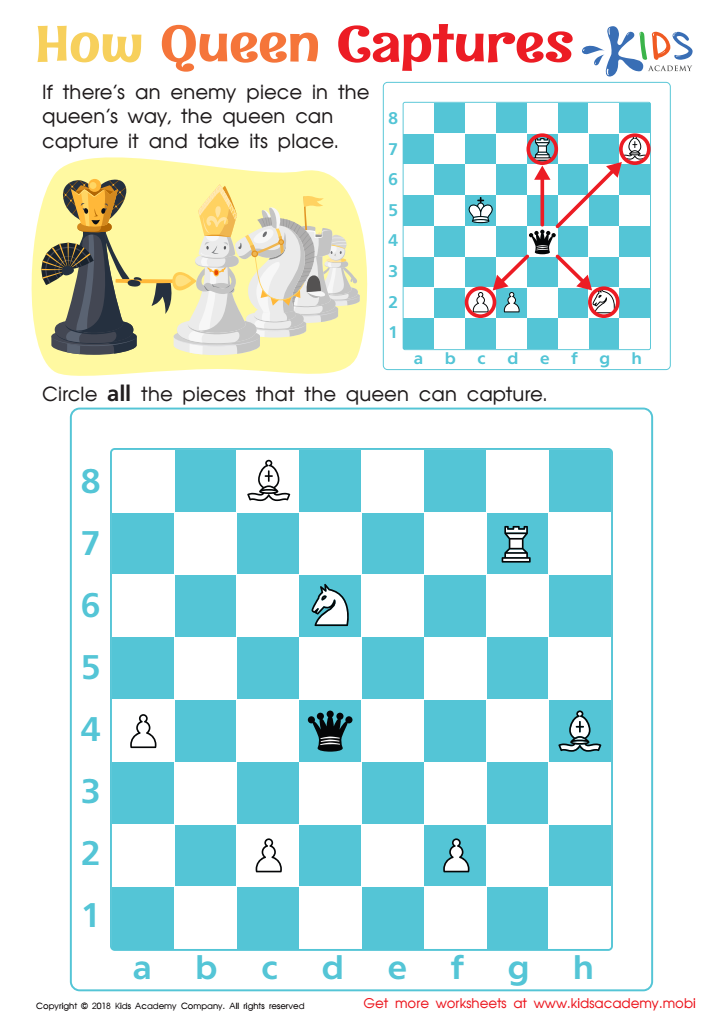
How Queen Captures Worksheet
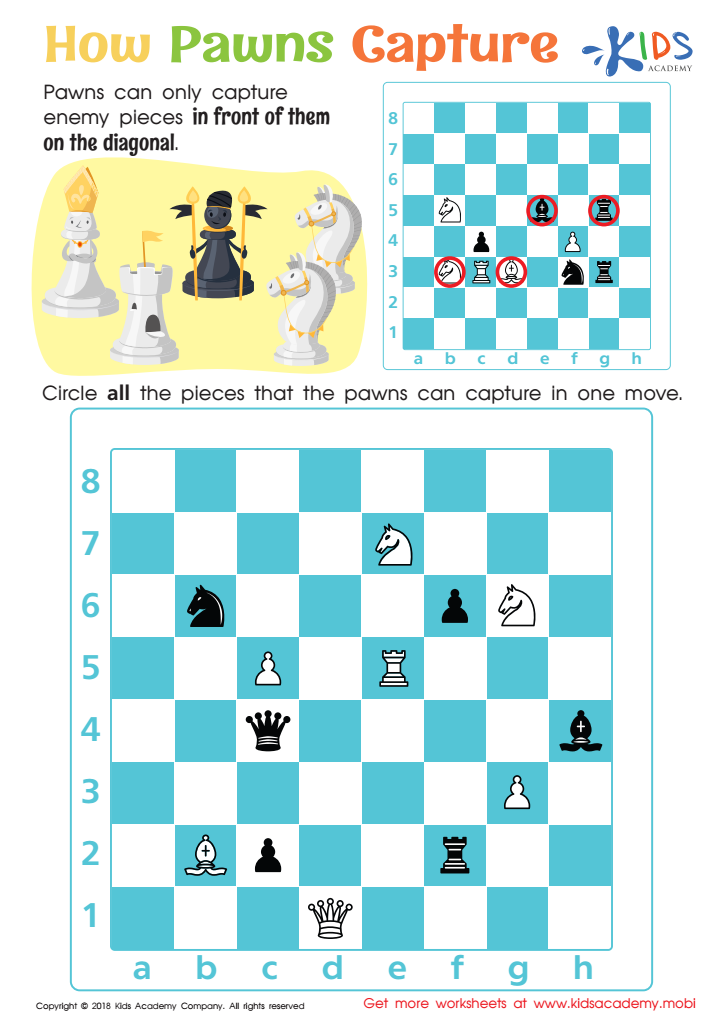
How Pawns Capture Worksheet






Understanding chess rules for young children between the ages of 4-7 is essential for several reasons. First, chess fosters critical thinking and problem-solving skills, encouraging cognitive development in young learners. By comprehensively grasping the rules, children learn to strategize, analyze different moves, and anticipate opponents' actions, which enhances their decision-making capabilities.
Additionally, learning chess helps cultivate patience and focus. The game’s structured nature encourages children to think before acting, instilling self-discipline and the importance of careful consideration. This can translate into better concentration in other areas of academic and personal growth.
Furthermore, chess promotes social skills. It provides an interactive platform for children to engage with peers or family members, strengthening bonds over a shared activity. Understanding the rules also fosters sportsmanship, as players learn to respect others and handle both wins and losses graciously.
For parents and teachers, promoting chess not only supports intellectual development but also equips children with vital life skills applicable beyond the game. Embracing chess in early education can boost confidence, encourage teamwork, and ignite a lifelong passion for learning and strategic thinking.