
Comparison Skills Normal Worksheets for Ages 4-7
4 filtered results
Difficulty Level
Grade
Age
-
From - To
Subject
Activity
Standards
Enhance your child's learning journey with our "Comparison Skills Normal Worksheets" designed specifically for ages 4-7. These engaging worksheets focus on helping young learners develop critical comparison skills through fun activities, including identifying similarities and differences, sorting objects, and comparing sizes. Our resources are tailored to be age-appropriate, fostering essential cognitive abilities while keeping kids entertained. With colorful illustrations and interactive tasks, your child will enjoy exploring relationships between various items. Perfect for both classroom use and home learning, these worksheets provide a foundation for logical thinking and problem-solving. Download now and watch your child's skills flourish!
Favorites
With answer key
Interactive
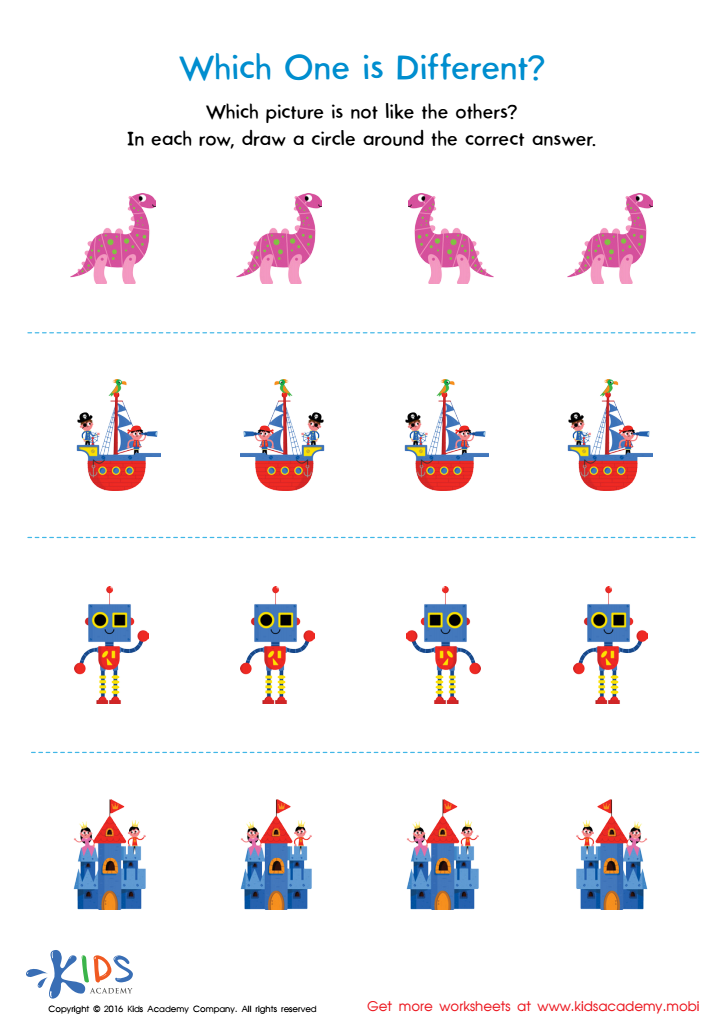
Which One Is Different Worksheet
Preschoolers can hone logical reasoning and critical analysis skills with this "Which one is Different?" worksheet. Kids must look closely and pick out unique attributes of objects and images. It's a skill that can serve them throughout their lifetime.
 Assign to My Students
Which One Is Different Worksheet
Worksheet
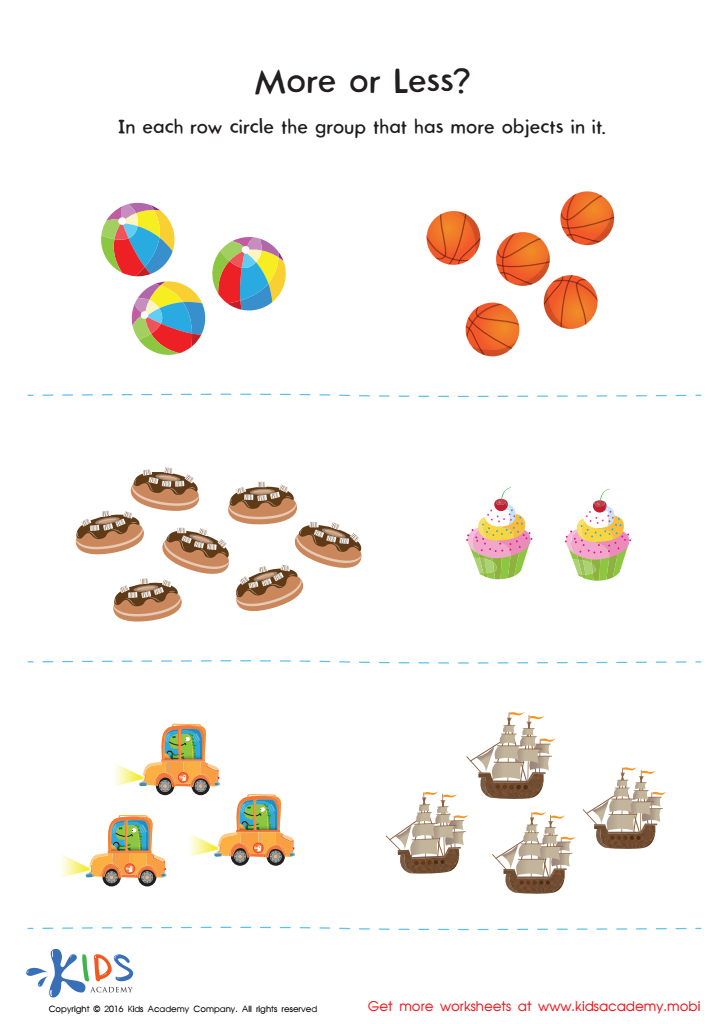
More or Less Size Worksheet
Worksheet
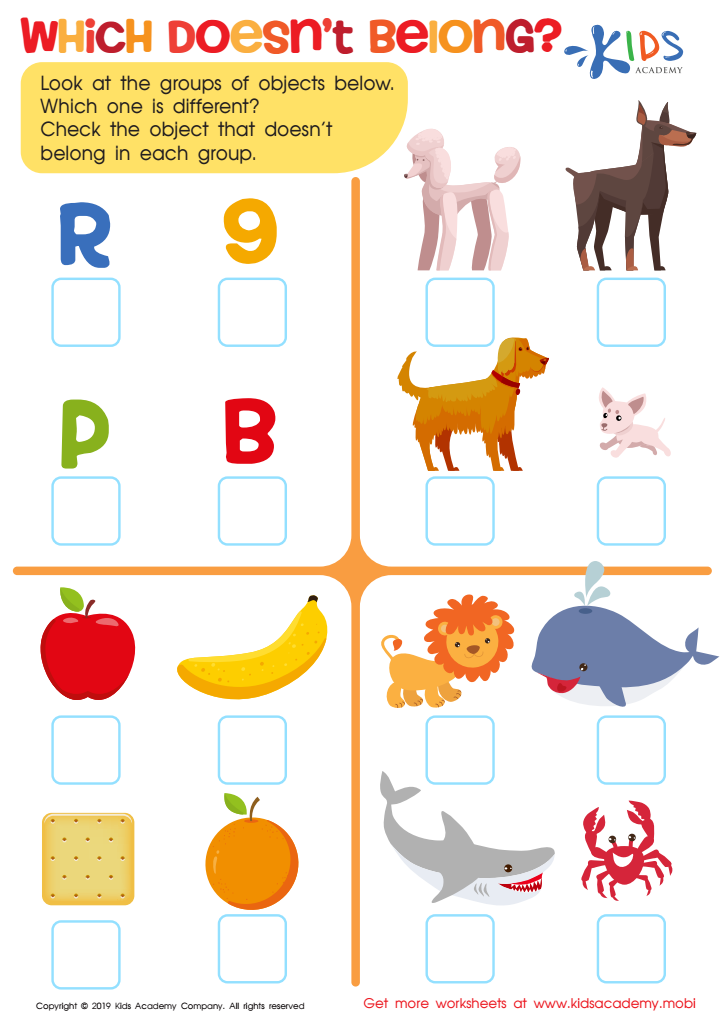
Which Doesn't Belong? Worksheet
This engaging worksheet helps preschoolers recognize similar and different attributes of common words, using brightly-colored pictures. They analyze the items in each category and check off what is different. For extra practice, have them explain their reasoning verbally! Sorting and classifying are important skills to learn.
Which Doesn't Belong? Worksheet
Worksheet
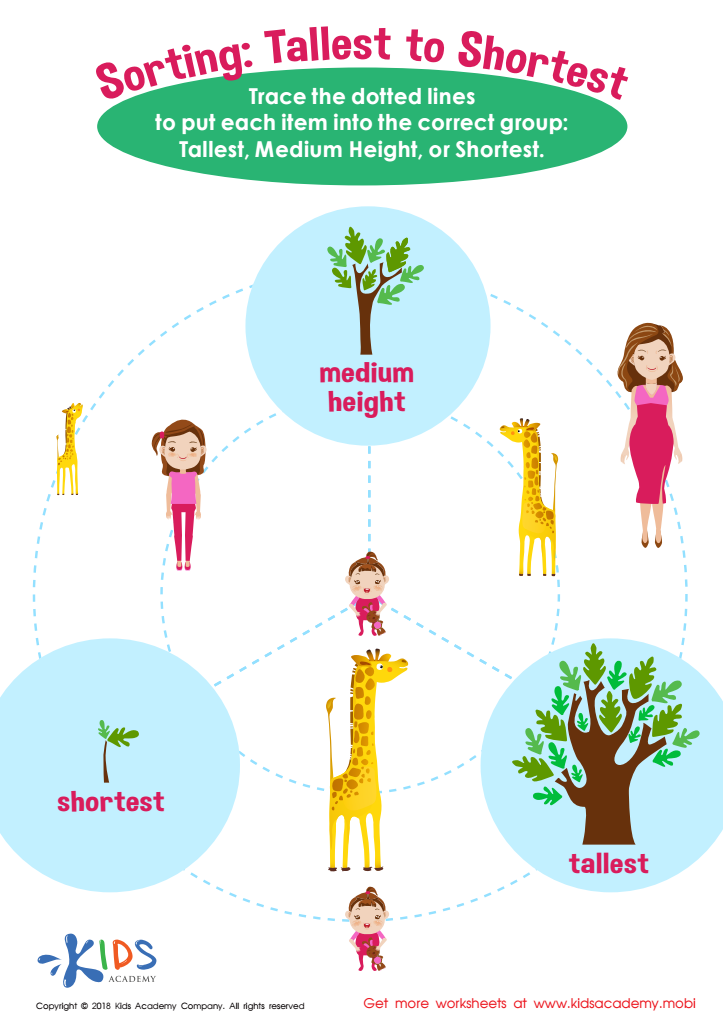
Sorting: Tallest to Shortest Worksheet
This worksheet is great for preschoolers to practice foundational measurement skills. Traceable lines help them sort pictures into Tallest, Shortest and Medium categories, giving them concrete examples to compare. Fine motor skills and understanding of relationships between sizes are also developed - perfect for preparing them for larger measurement concepts.
Sorting: Tallest to Shortest Worksheet
Worksheet
Join Kids Academy for Free
Who is primarily going to use this learning content?





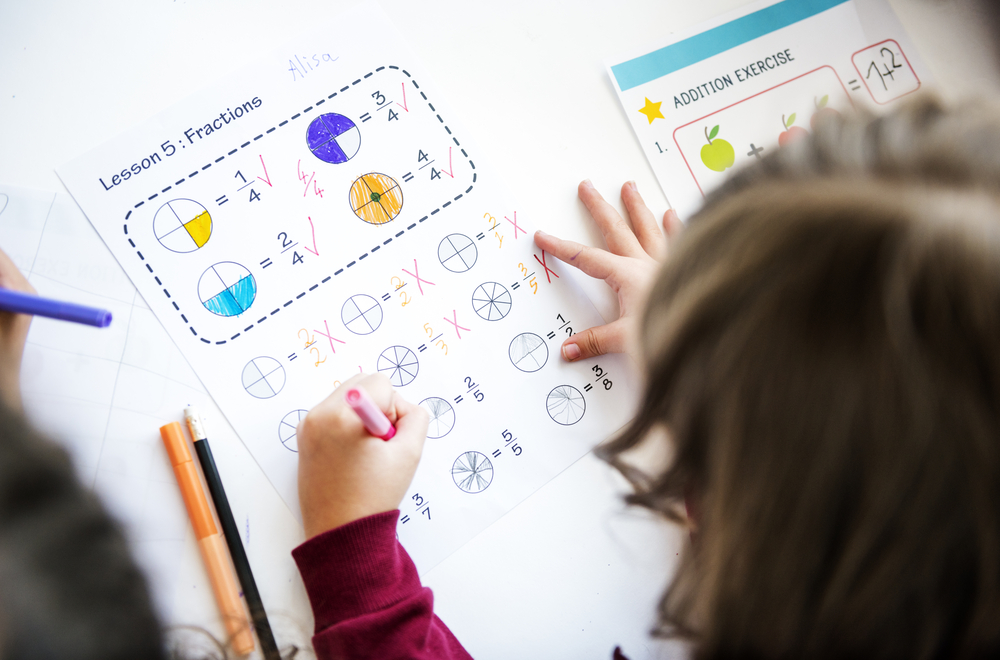
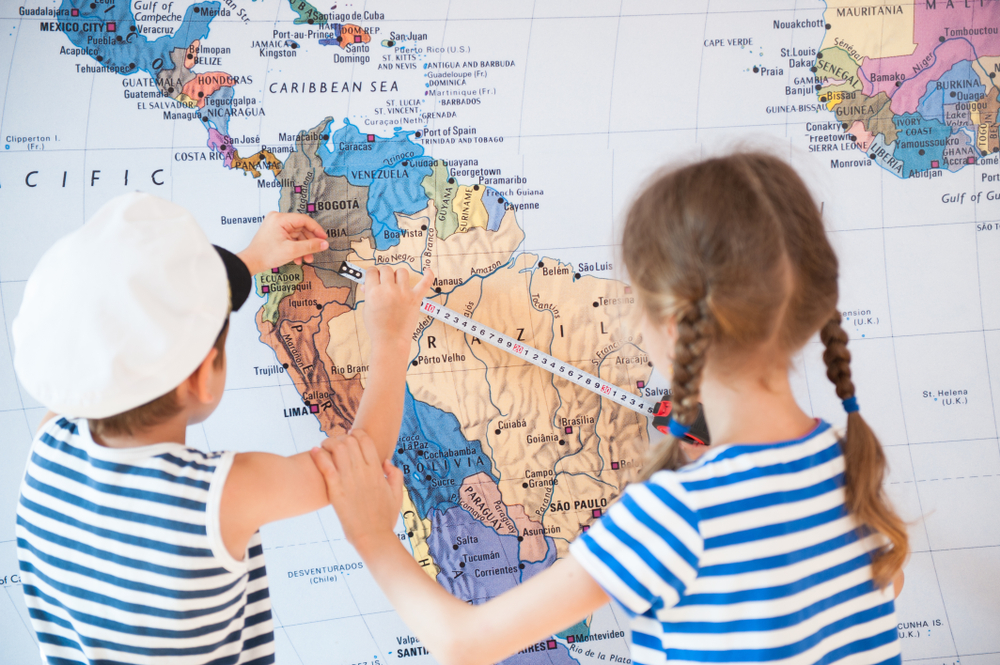

Comparison skills are a vital aspect of early childhood development, especially for children aged 4 to 7. During these formative years, children begin to develop their cognitive abilities, including critical thinking and problem-solving skills. Comparison skills help children categorize objects, identify similarities and differences, and make distinctions between sizes, quantities, and qualities. These skills lay the groundwork for more complex mathematical concepts, such as measurement, data analysis, and arithmetic.
For parents and teachers, nurturing these skills promotes not only academic growth but also social and emotional development. By engaging children in comparison activities—such as sorting toys by size or comparing favorite snacks—adults can foster collaboration, communication, and decision-making. These experiences encourage curiosity and boost confidence as children articulate their thoughts and opinions.
Moreover, teaching comparison skills can pave the way for higher-order thinking. As children learn to differentiate and evaluate, they develop a basis for reasoning and judgment that is essential for future learning environments. Encouraging comparison skills can lead to a more interactive and inclusive classroom, with enhanced engagement and participation. Ultimately, parents and teachers who prioritize these skills contribute invaluable tools to children’s lifelong learning journey.








