Unlock your child's potential with our "Critical Thinking Development Normal Worksheets" designed for ages 4-7. Our engaging and educational worksheets are crafted to enhance your child's analytical abilities, problem-solving skills, and logical reasoning. Through fun and interactive activities, children will learn to observe, infer, categorize, and make decisions, preparing them for future academic challenges. Whether used at home or in the classroom, these worksheets will stimulate young minds, promote curiosity, and build a strong foundation for lifelong learning. Give your child the tools they need to think critically and excel in all areas of their education.

Check out this FREE "Critical thinking development" Trial Lesson for age 4-7!

Reduce, Reuse, Recycle, Rethink

Favorites
With answer key
Interactive
  • 4-7
  • Critical thinking development
  • Normal
Reduce, Reuse, Recycle, Rethink Worksheet

Reduce, Reuse, Recycle, Rethink Worksheet

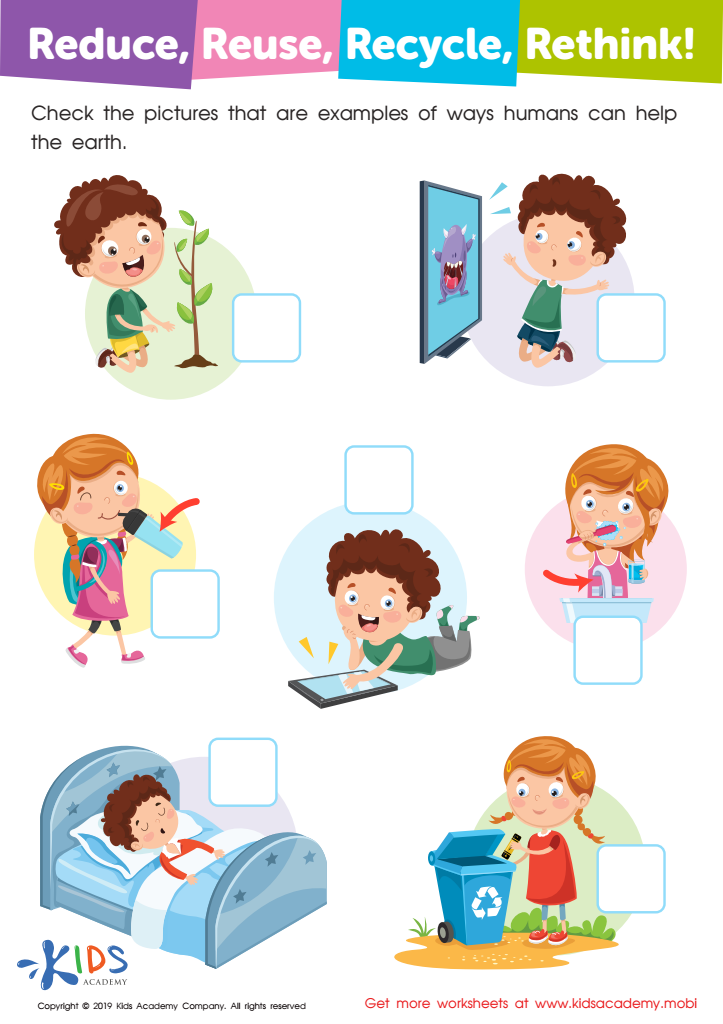
Recycling is a great way to reduce waste and help our planet — instead of throwing away a can of soda, recycle it! Look at the pictures in the worksheet — what are the kids doing? They're learning about ways to help the environment. Check the pictures for examples of how to help the earth.
Reduce, Reuse, Recycle, Rethink Worksheet
Worksheet
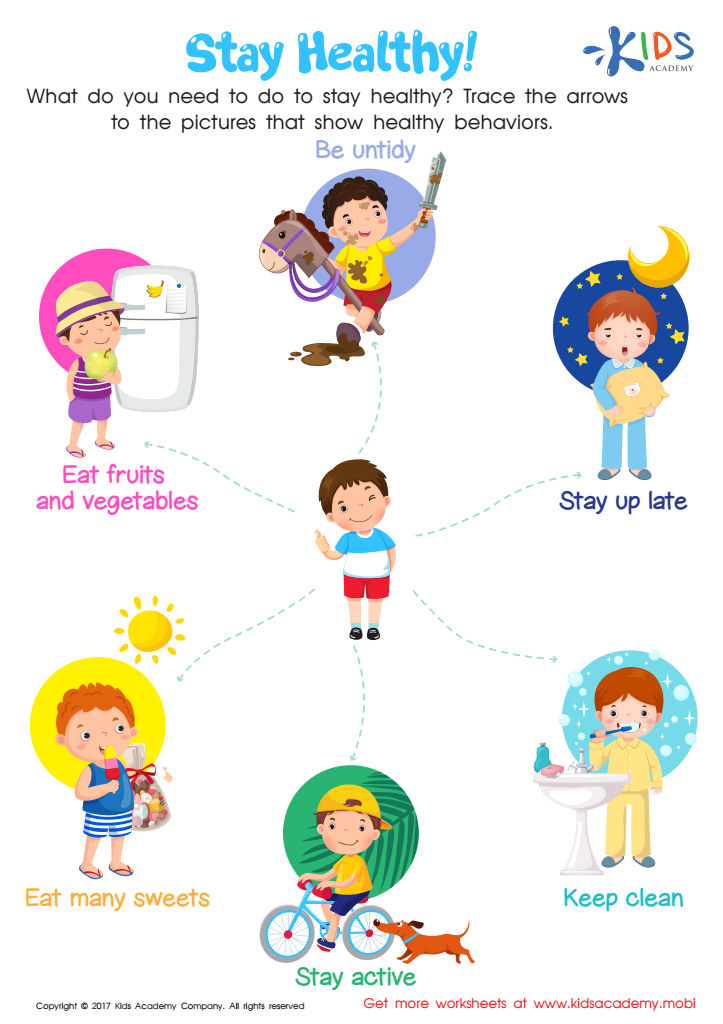
Healthy and unhealthy behaviors worksheet

Healthy and Unhealthy Behaviors Worksheet
Assist your youngster to recognize beneficial habits for a joyful, healthy life with this healthy/unhealthy behaviors worksheet! After they finish, motivate them to follow the tips on the worksheet to show healthy habits.
Healthy and Unhealthy Behaviors Worksheet
Worksheet
The Ant and The Grasshopper Version 2 Worksheet

The Ant and The Grasshopper Version 2 Worksheet

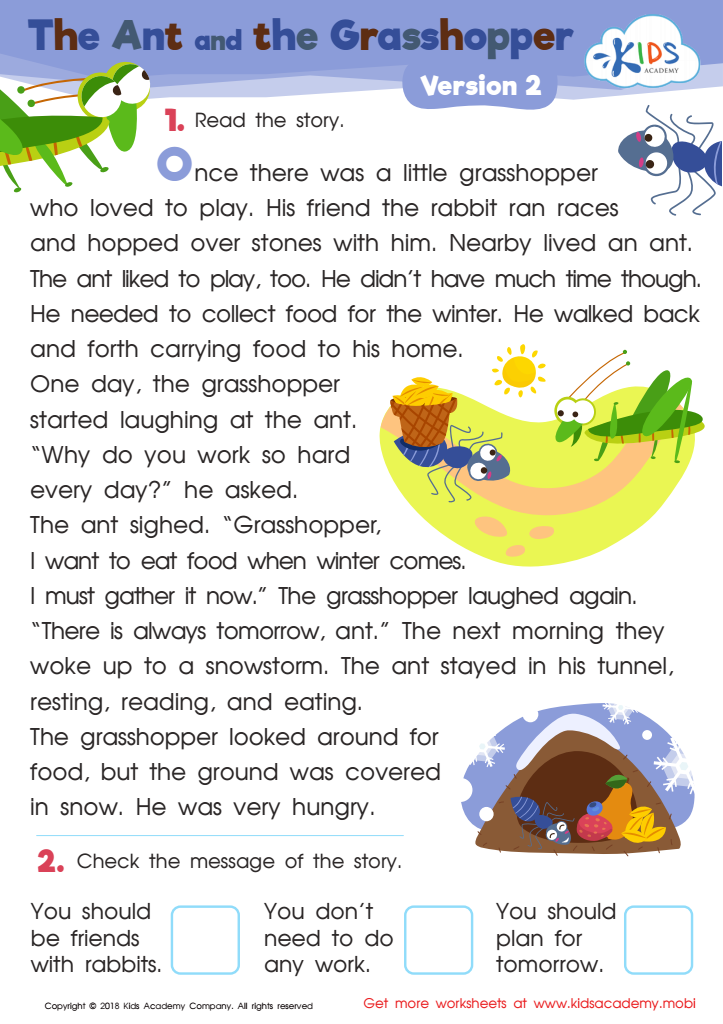
Story time is a great way to bond with kids and share a fun story. The Ant and the Grasshopper is a classic with a lesson for everyone. Listen together and then ask your students what the message of the story was. Prompt them with choices from the worksheet and see which one they select. It's a great way to increase their vocabulary and help them learn important lessons.
The Ant and The Grasshopper Version 2 Worksheet
Worksheet
Cause and effect worksheet PDF

Cause and Effect Worksheet

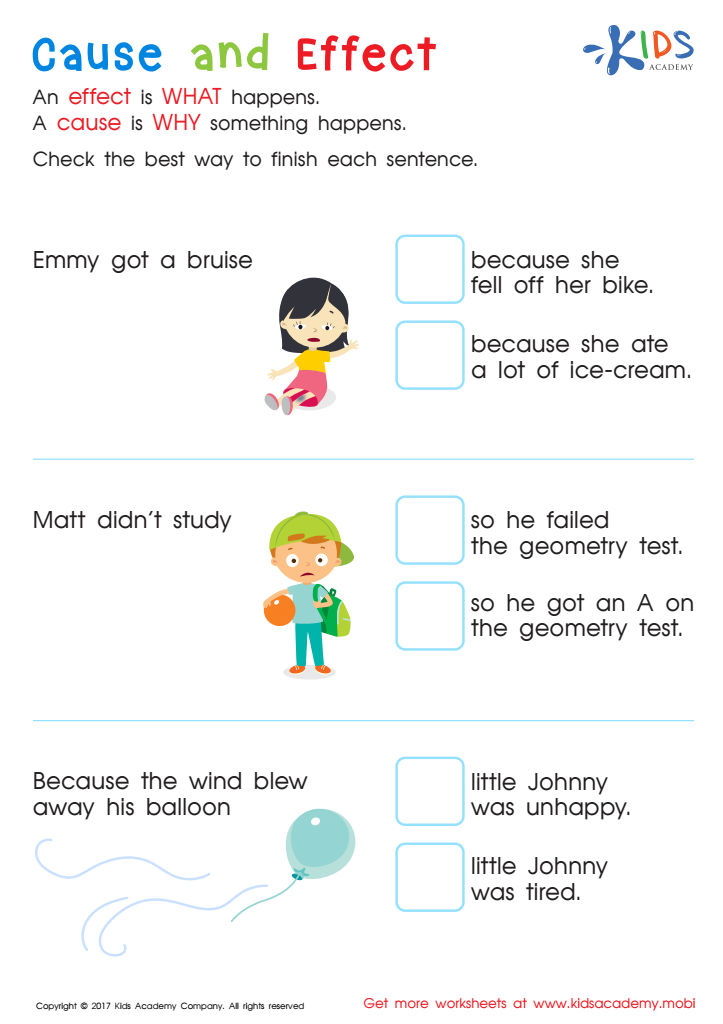
Improve your child's reading comprehension and critical analysis skills with this cause and effect worksheet PDF! Have your child use the examples to create their own story, strengthening their understanding of the concept.
Cause and Effect Worksheet
Worksheet
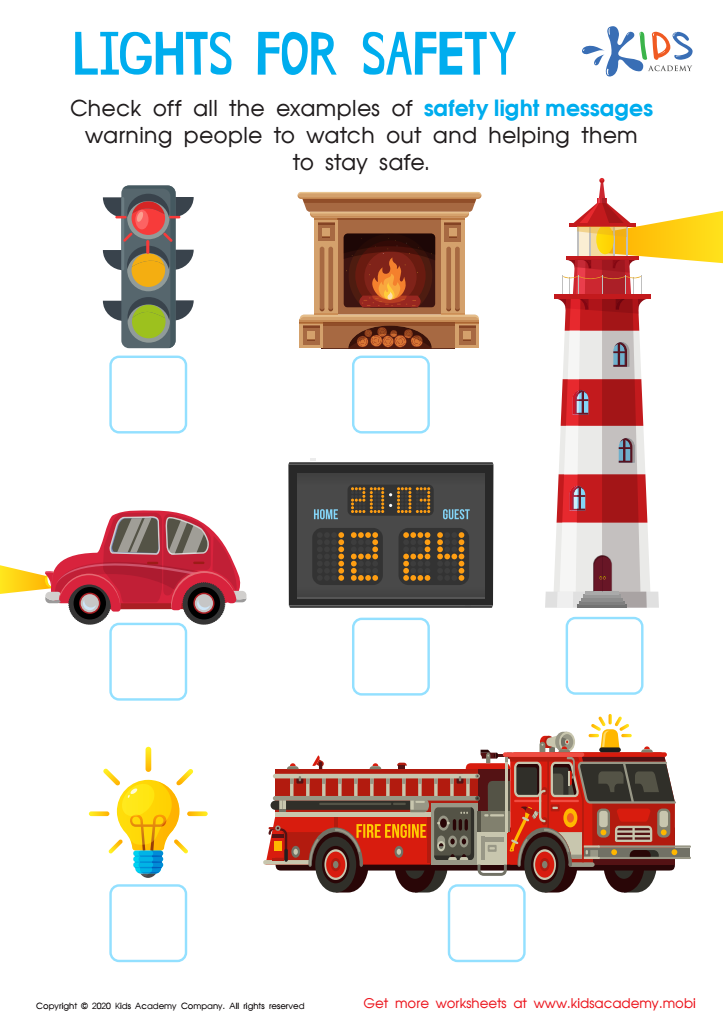
Lights for Safety Worksheet

Lights for Safety Worksheet

Teach kids safety light messages to stay safe. Print this worksheet and ask students to identify the objects in the pictures. Then, ask them to check off the safety light messages which warn people to watch out. This helps keep kids safe at all times.
Lights for Safety Worksheet
Worksheet
Living and Non-living Worksheet

Identifying Living or Non–living Worksheet
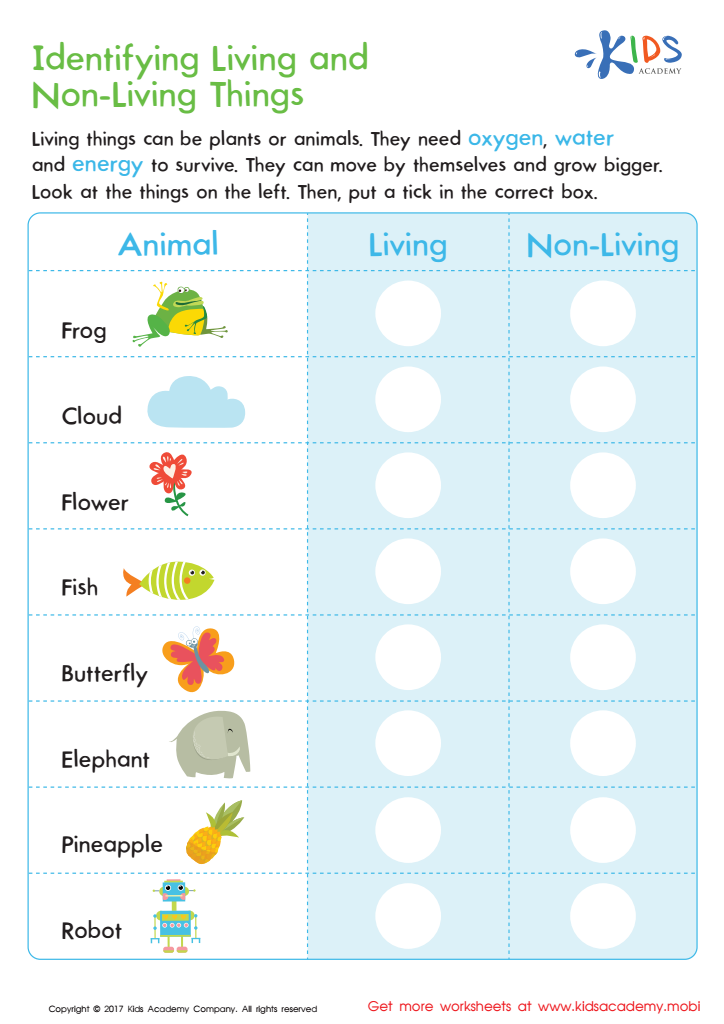
Help your child learn to sort and categorize in a new way! Teach them to classify things as living or non-living using this worksheet. It's the perfect way to build their scientific understanding, and to have some learning fun! Print this worksheet and watch them discover the world of science!
Identifying Living or Non–living Worksheet
Worksheet
Time to Catch the Train Part 1 Worksheet


Time to Catch the Train Part 1 Worksheet

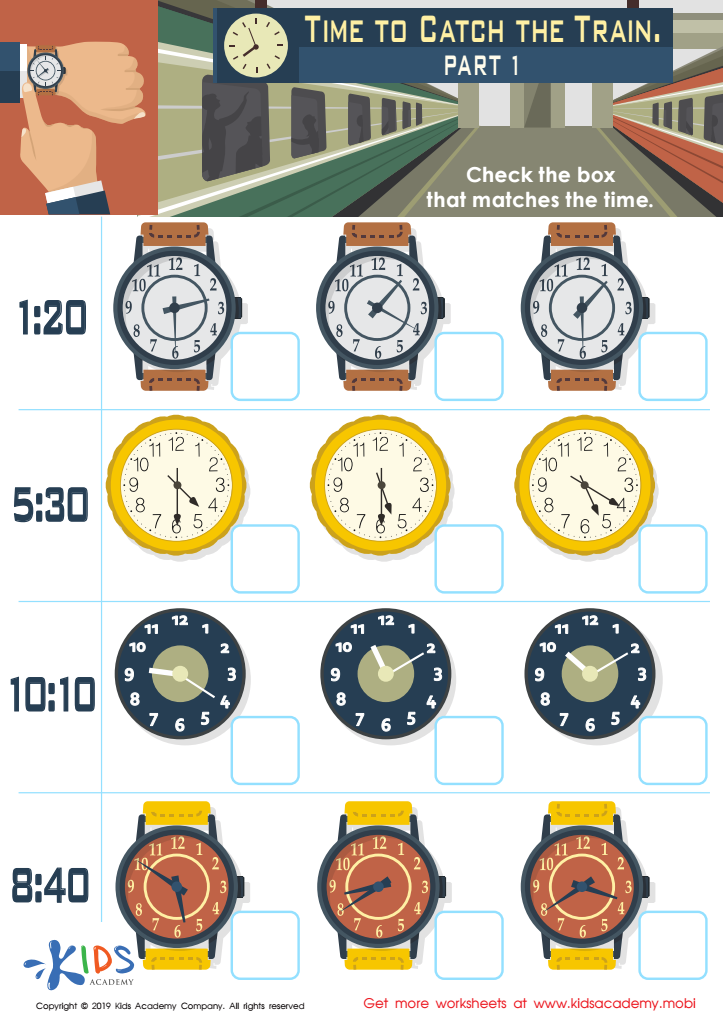
Time is essential for us; it lets us know when to do various things. Your kids likely wake up at a specified hour and prepare for the school bus. Demonstrate to them that time-telling is vital, and show them there are multiple ways to show time. Point to the time written on the left and the watches in the picture. Assist your children to check the box that corresponds to the time.
Time to Catch the Train Part 1 Worksheet
Worksheet


Critical thinking is a vital skill that influences a child’s ability to analyze, problem-solve, and make decisions. For children aged 4 to 7, engaging in activities that promote critical thinking can lay a strong foundation for future academic and life success.

At this developmental stage, children are naturally curious and begin to explore the world actively. Promoting critical thinking allows them to question, reason, and understand different perspectives, enhancing their cognitive development. Teachers and parents who foster this skill help kids develop the ability to think independently, draw conclusions based on evidence, and understand the cause-and-effect relationship.

Encouraging critical thinking in everyday situations, such as story time, play, and simple experiments, builds confidence and resilience in young learners. They become more adept at tackling challenging tasks and become more creative in their problem-solving approaches. Moreover, early development of critical thinking skills transcends academia; it supports social and emotional growth as children learn to negotiate, empathize, and articulate their thoughts clearly.

Investing time and effort in developing critical thinking in children between 4 and 7 will not only facilitate their learning journey but also prepare them for complex life situations, fostering mature, well-rounded, and insightful individuals. Thus, nurturing critical thinking in early years is essential for a child’s holistic development.