Developing math skills Normal Worksheets for Ages 4-7
6 filtered results
-
From - To
Unlock essential math skills for young learners with our "Developing Math Skills Normal Worksheets" tailored for ages 4-7. Designed to engage and inspire, these worksheets provide a variety of fun activities that cover foundational concepts such as counting, addition, subtraction, and number recognition. Each worksheet promotes critical thinking and problem-solving, making learning interactive and enjoyable. Perfect for home or preschool settings, our resources help children build confidence and mastery in math while following an age-appropriate curriculum. Download today and watch your child's math skills flourish with engaging, easy-to-follow worksheets that make learning a delightful adventure!
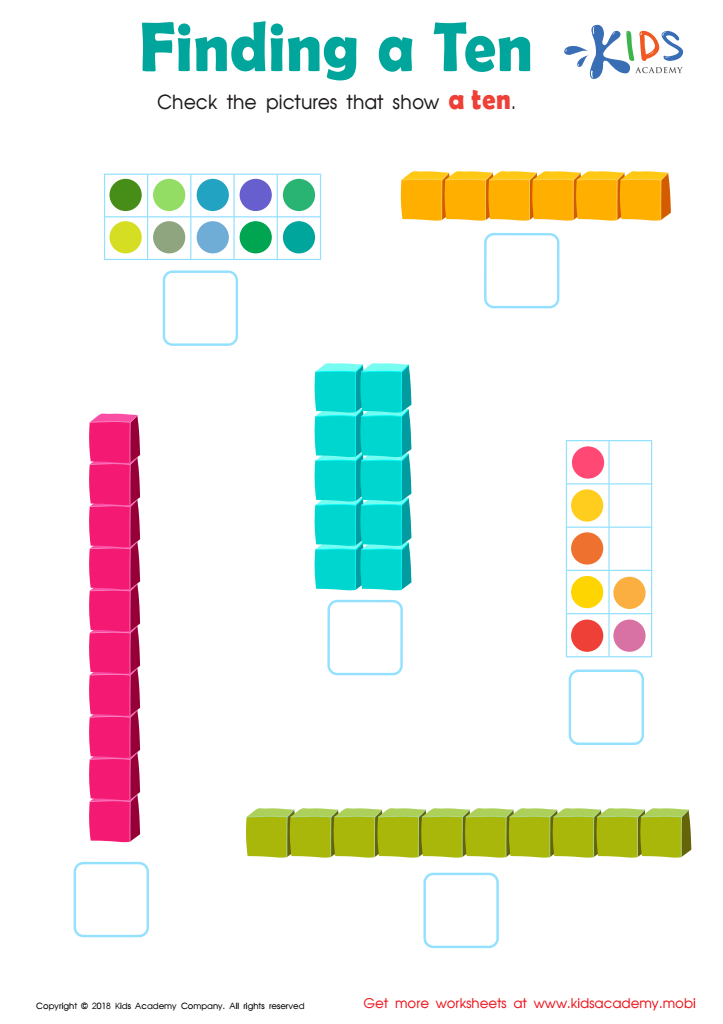
Finding a Ten Worksheet
 Assign to My Students
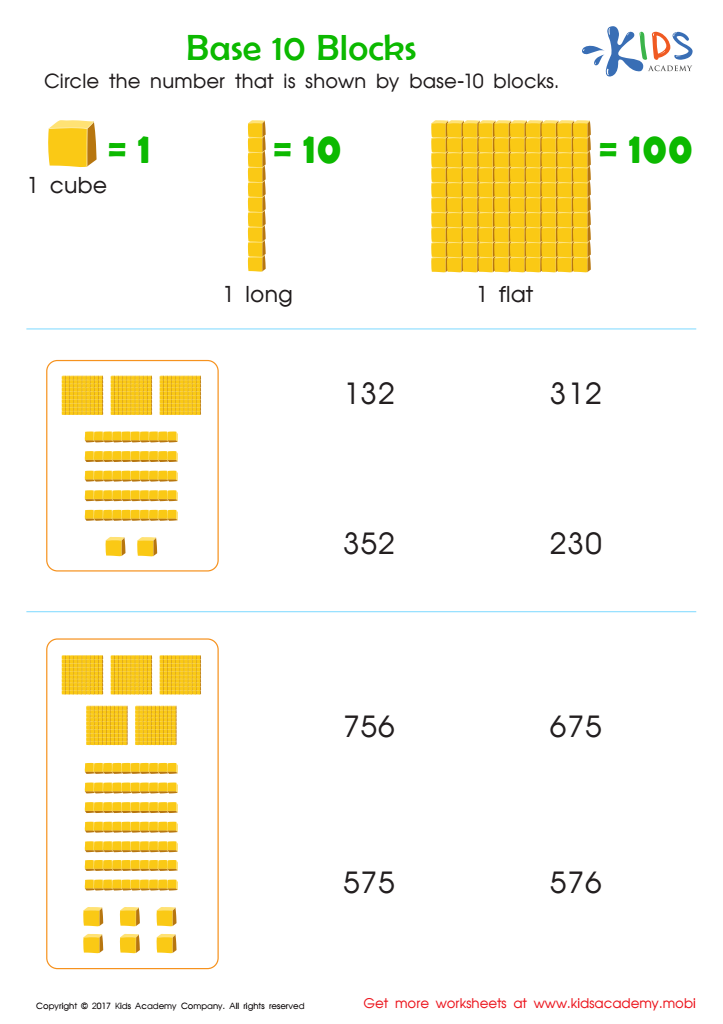
Base Ten Blocks Worksheet
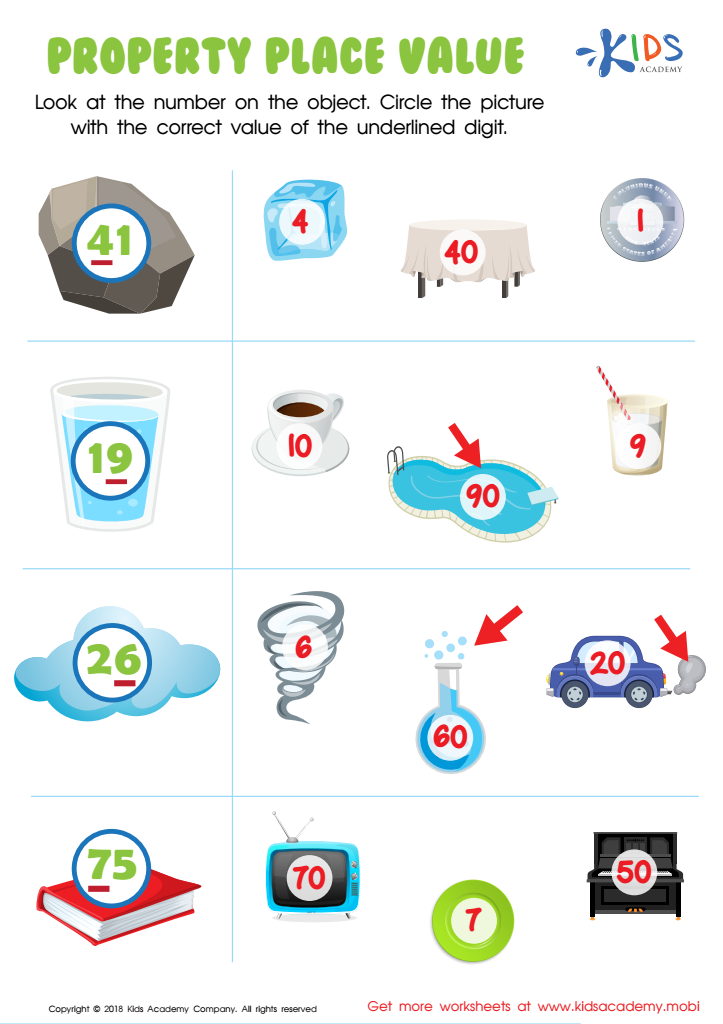
Property Place Value Worksheet
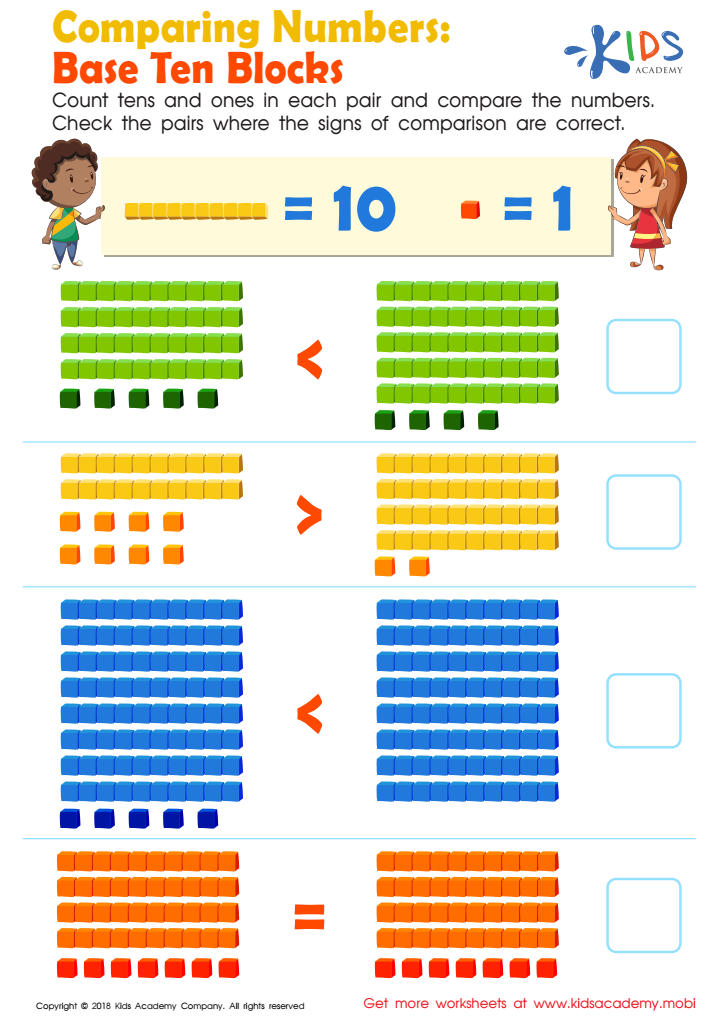
Comparing Numbers: Base Ten Blocks Worksheet
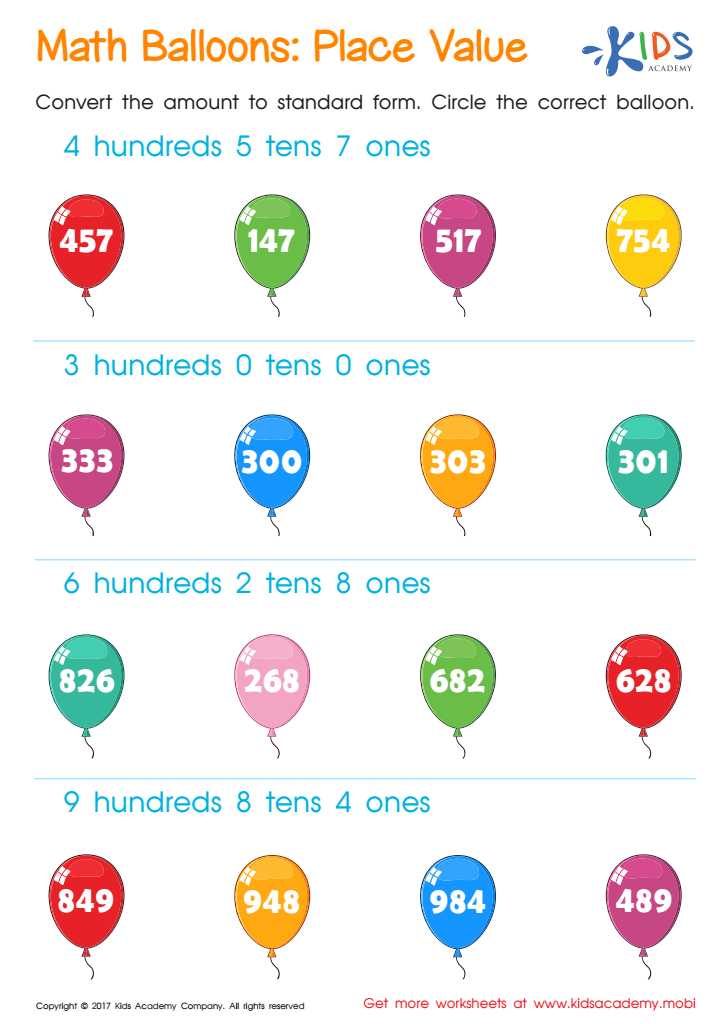
Place Value Printable Worksheet
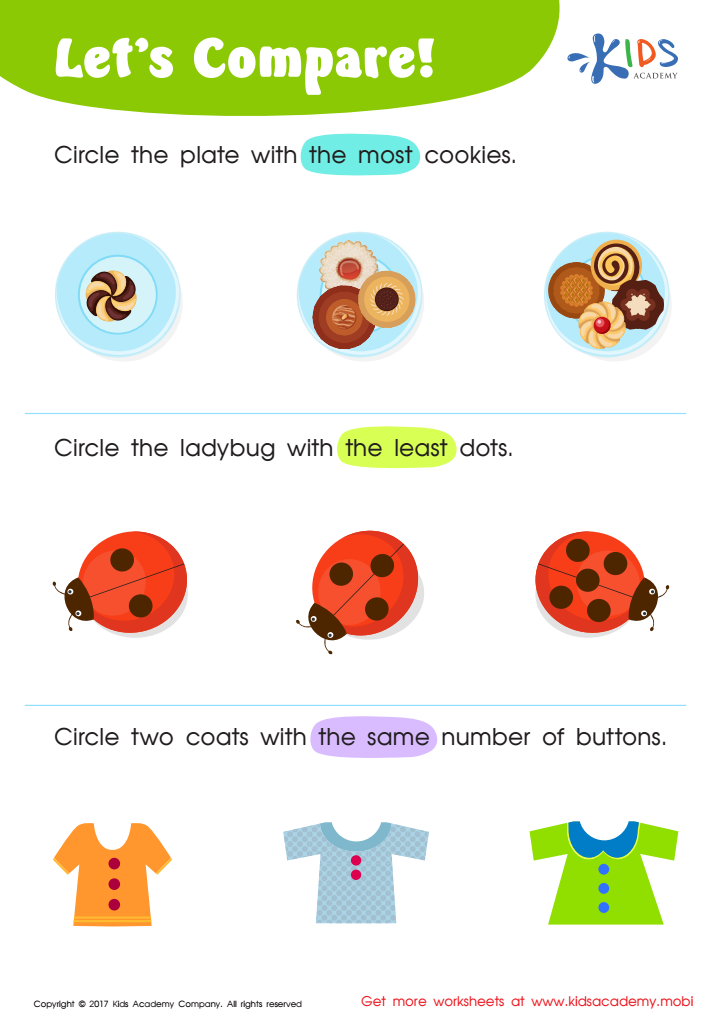
Matching: Classifying Toys by Size Worksheet








Developing math skills in children ages 4-7 is crucial for several reasons. First, this period marks a foundational stage for cognitive development, where children begin to grasp concepts of numbers, sorting, measurement, and patterns. Nurturing these skills early on builds a strong mathematical foundation that supports more complex learning in later years.
Furthermore, engaging with math enhances problem-solving abilities and critical thinking, fostering creativity and innovation. As children learn to understand mathematical concepts, they also develop reasoning skills that apply beyond just numbers, benefiting their overall academic performance.
Moreover, math skills play a significant role in everyday life. Early exposure teaches children practical applications, such as counting items, understanding time, and managing money, empowering them with essential life skills.
Additionally, developing a positive attitude toward math at a young age helps combat lifelong math anxiety, promoting a growth mindset. Teachers and parents play a key role in creating an encouraging environment where children feel safe to explore and make mistakes. By prioritizing math skill development during this crucial time, they set children on a path to academic success, confidence, and lifelong love for learning.








