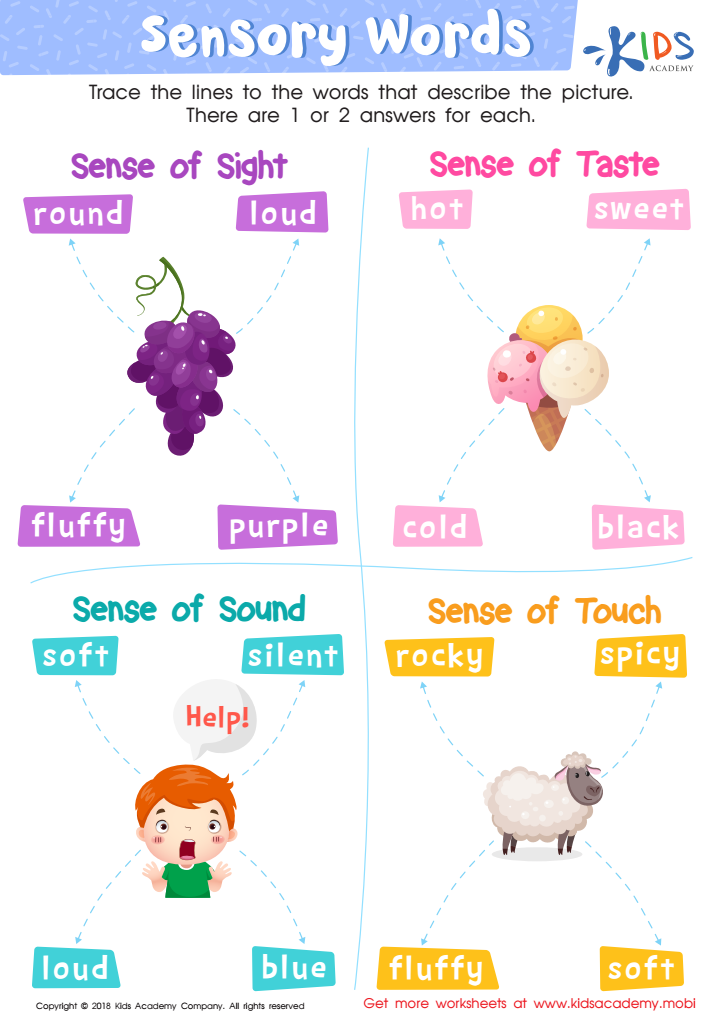
Unlock your child's potential with our "Enhancing Vocabulary" worksheets for ages 4-7. Tailored for young minds, these engaging activities combine fun and learning to expand your child's word knowledge and language skills. Our expertly designed worksheets cover a range of themes and exercises to boost comprehension, spelling, and usage. Through colorful illustrations and interactive tasks, children can build confidence while enjoying the learning process. Perfect for both home and classroom settings, these worksheets support early reading development and pave the way for academic success. Explore our collection today and make learning vocabulary an exciting adventure!

Check out this FREE "Enhancing vocabulary" Trial Lesson for age 4-7!

Selecting the Right Measuring Tool

Favorites
With answer key
Interactive
  • 4-7
  • Enhancing vocabulary
  • Normal
How the Moon Became Beautiful Worksheet

How the Moon Became Beautiful Worksheet

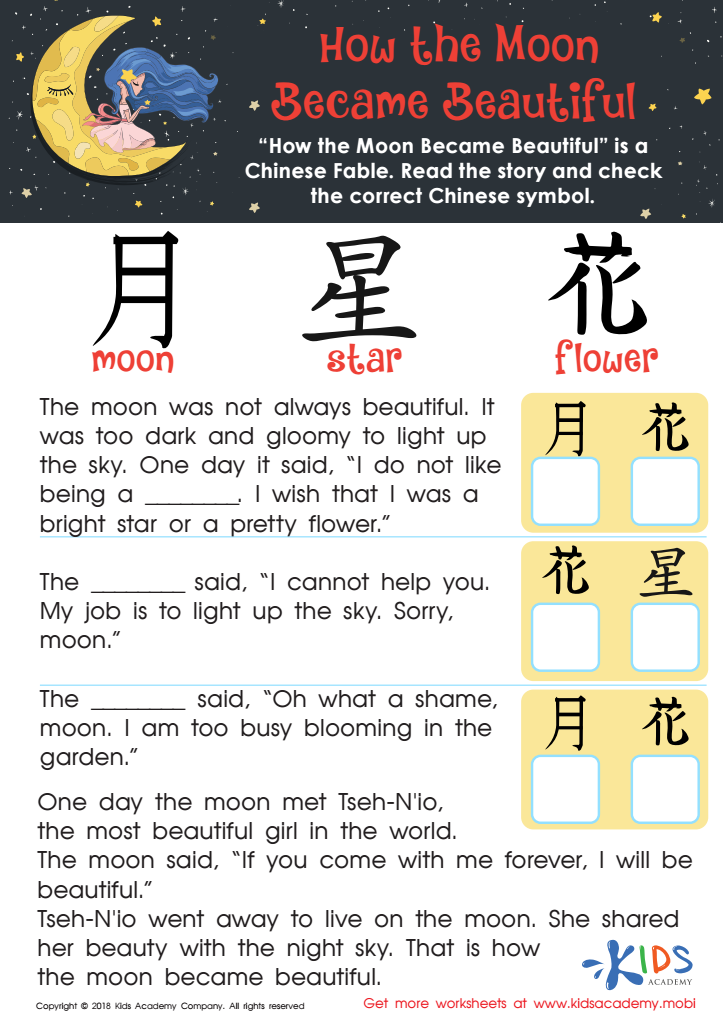
Fables are a great way for kids to learn! This Chinese fable about the moon's beauty is educational and entertaining. The PDF worksheet provides the English translations and symbols associated with the story. Kids can fill in the blanks with the correct symbols and have fun learning a new language!
How the Moon Became Beautiful Worksheet
Worksheet
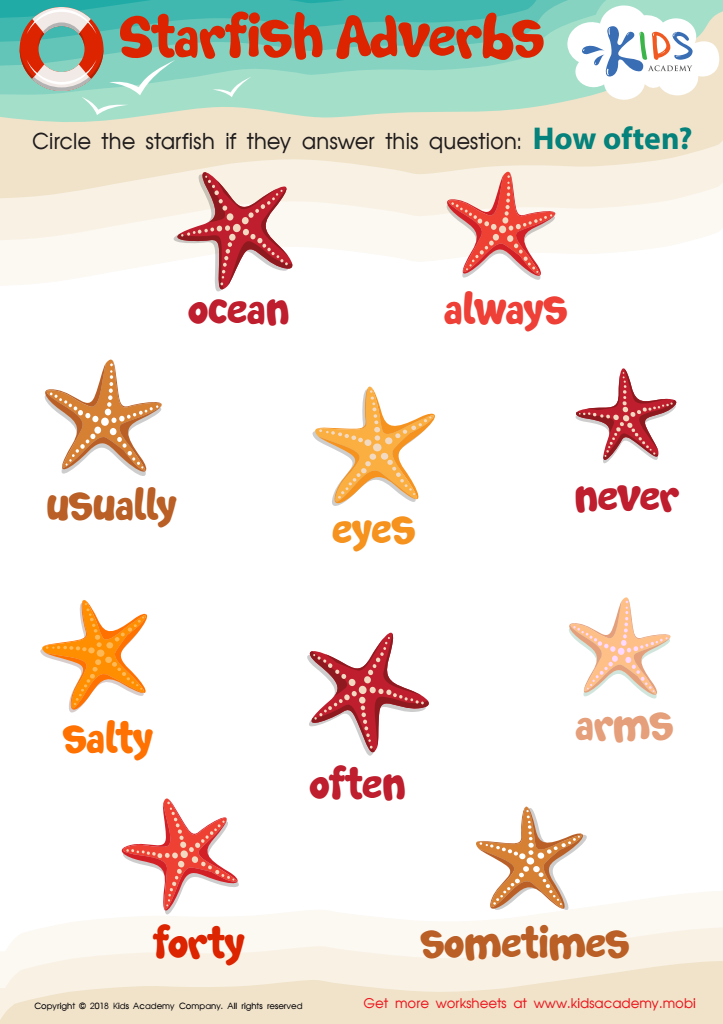
Starfish Adverbs Worksheet

Starfish Adverbs Worksheet

Students will gain exposure to new words and parts of speech as they learn more. After nouns and verbs, adverbs are next. Ask students to give examples, like ‘quickly’ and ‘heavily’. Finally, help them circle the starfish that answer the question 'how often?' on the worksheet.
Starfish Adverbs Worksheet
Worksheet
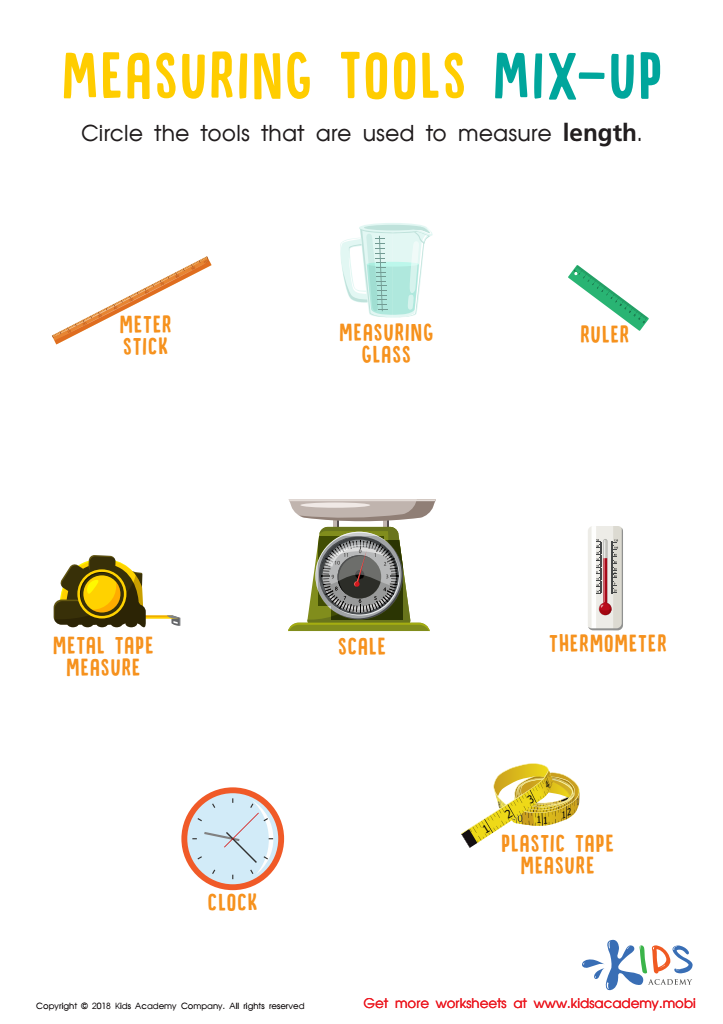
Measuring Tools Mix–up Worksheet

Measuring Tools Mix–up Worksheet

Test your child's knowledge of measuring instruments! In this worksheet, have them identify which items are used for measuring length. Talk through the items with them, then ask them to circle the right answer. Use this PDF to challenge your child and learn more about measuring tools.
Measuring Tools Mix–up Worksheet
Worksheet
Manners at School Worksheet

Manners at School Worksheet

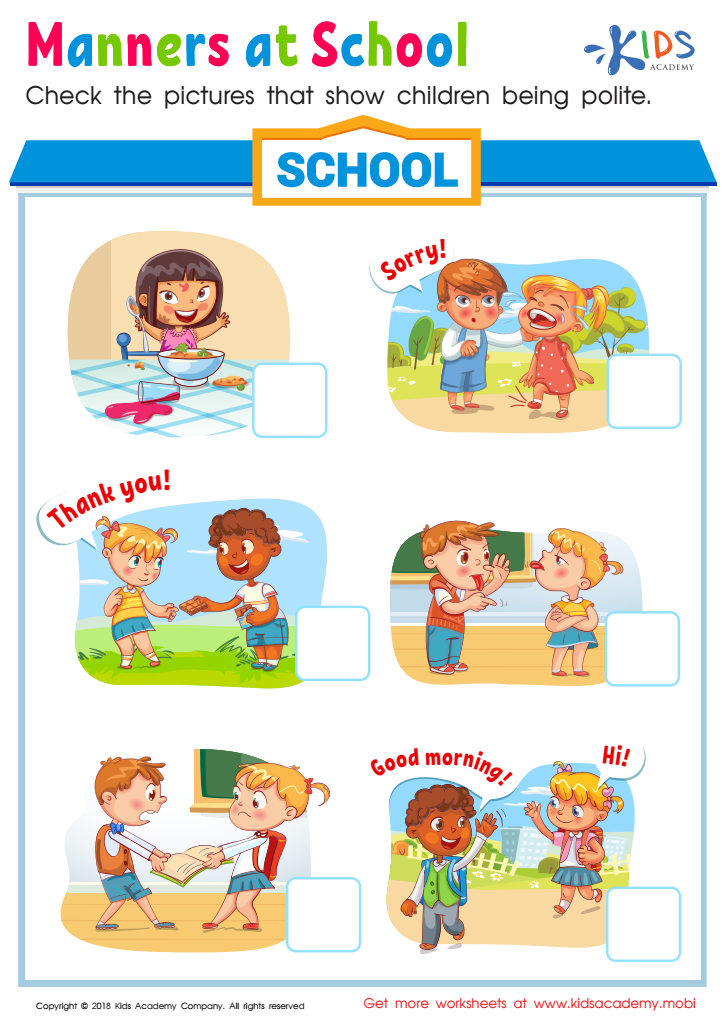
Go through the worksheet with your child and ask which children are being rude or polite. Check the boxes for the polite children. Explain how to be well-behaved in school by following the examples of polite children. Help your child better their behaviour in school and the community.
Manners at School Worksheet
Worksheet
Identifying Poems Worksheet

Identifying Poems Worksheet

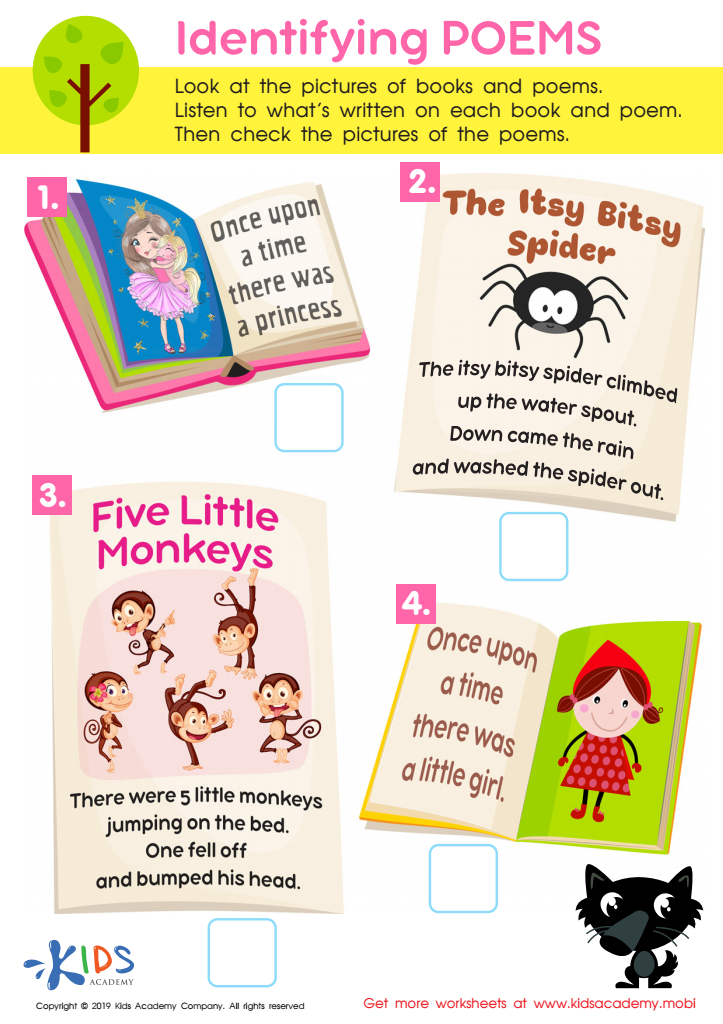
Read to your kids often and look at the pictures of books and poems in this worksheet. Guide them by reading aloud each book and poem. Make sure they are paying attention and help them check the pictures. This is a great way for your kids to learn to read properly.
Identifying Poems Worksheet
Worksheet
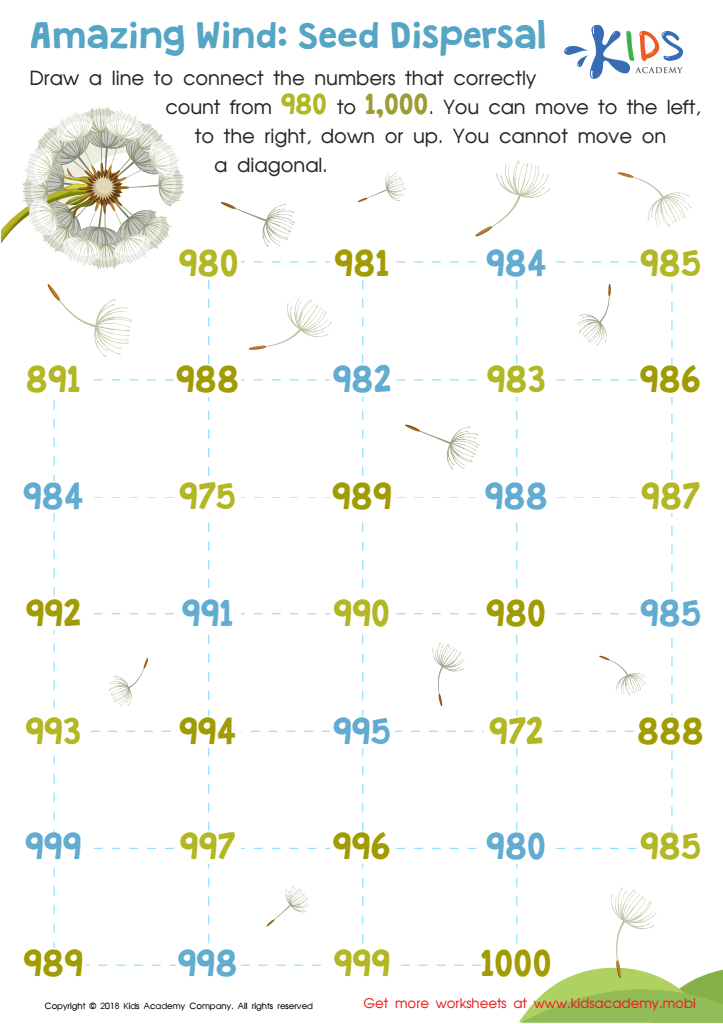
Amazing Wind: Seed Dispersal Worksheet

Amazing Wind: Seed Dispersal Worksheet

Let your child have fun and practice math skills with this worksheet! They'll use traceable lines to disperse a dandelion's seeds, building number sense, sequencing, fine motor, and hand-eye coordination. Discern between similar numbers and strengthen reasoning skills as they enjoy the familiar activity of blowing the seeds away.
Amazing Wind: Seed Dispersal Worksheet
Worksheet
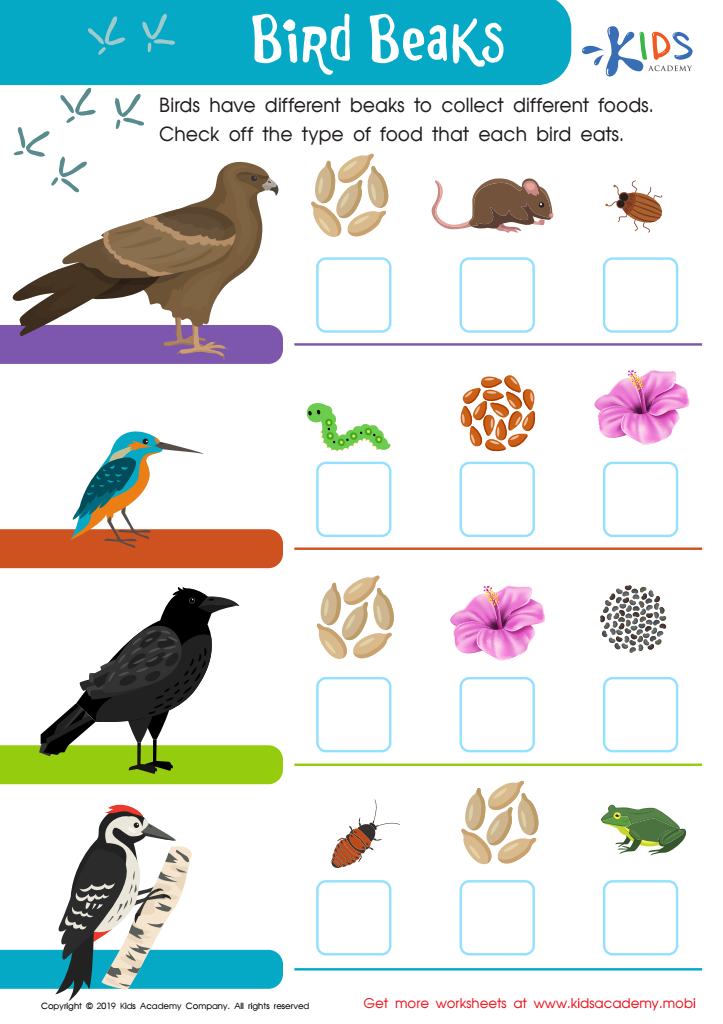
Bird Beaks Worksheet

Bird Beaks Worksheet

Birds have beaks to eat different types of food. Let your little nature lover explore why with this free worksheet! They'll learn about different beak shapes and match them to the food that's best for them. Be an adorable bird watcher together!
Bird Beaks Worksheet
Worksheet
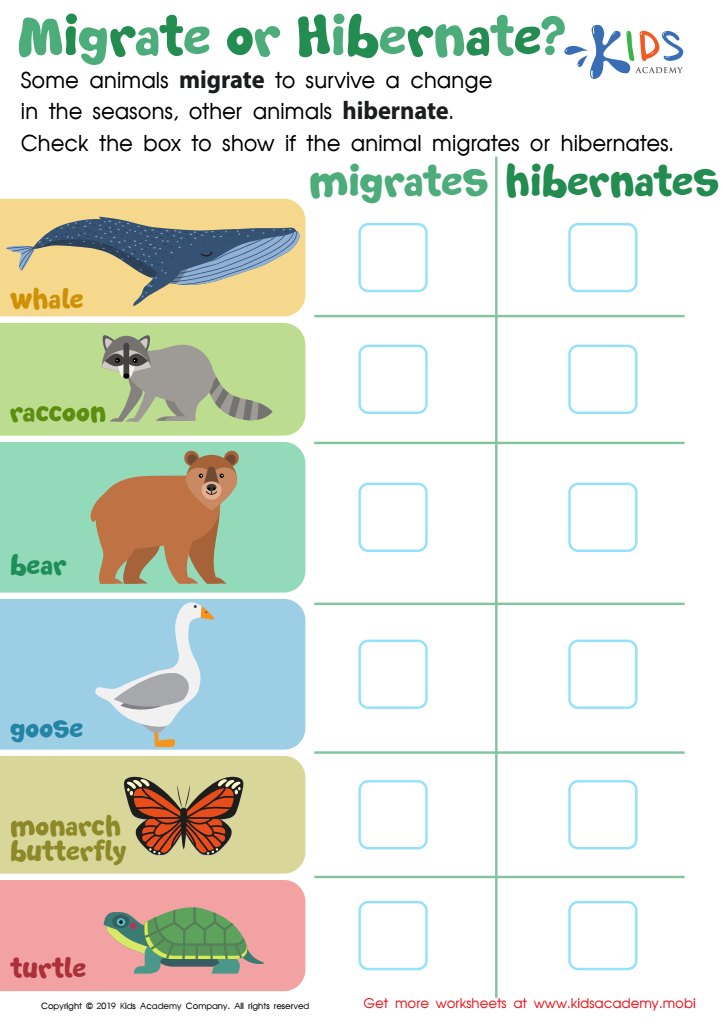
Migrate or Hibernate? Worksheet

Migrate or Hibernate? Worksheet

Many animals survive by either migrating or hibernating when the weather changes. Migration involves traveling in flocks or herds to a more temperate climate, while hibernation is when animals stay in their homes and eat and sleep for a long period of time. Show your kids this worksheet and help them decide which strategy animals use to cope with the changing weather.
Migrate or Hibernate? Worksheet
Worksheet
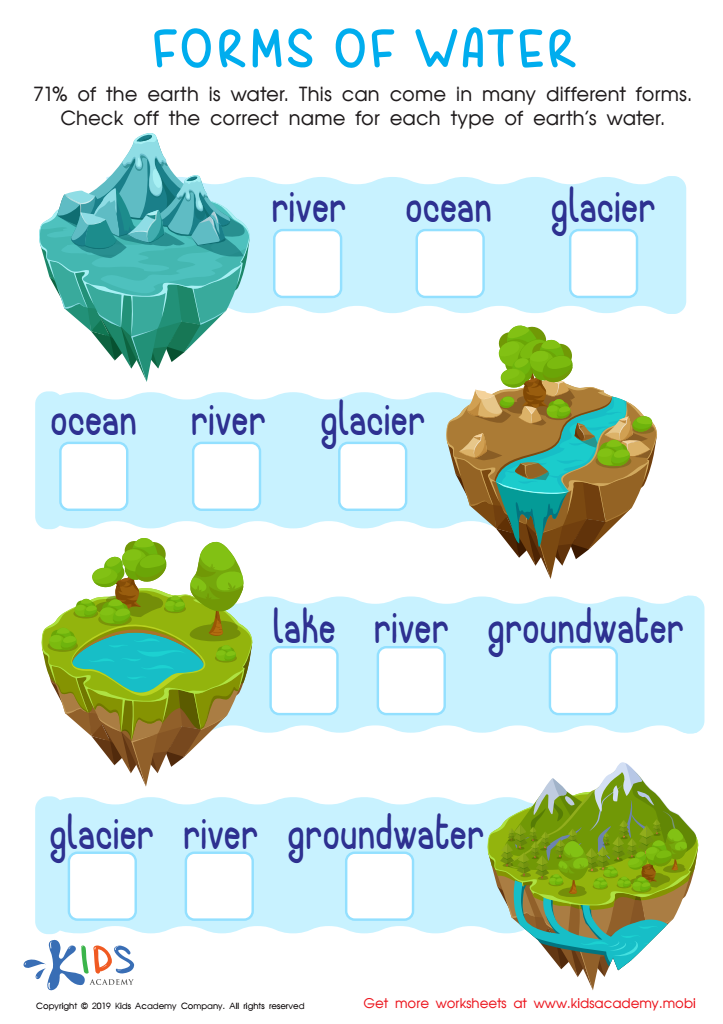
Forms of Water Worksheet

Forms of Water Worksheet

Life on Earth needs water to survive. Luckily, water makes up 75% of the Earth's surface and comes in various forms such as rivers, oceans and lakes. Ask your kids to name other forms and use this worksheet to help them identify each type.
Forms of Water Worksheet
Worksheet
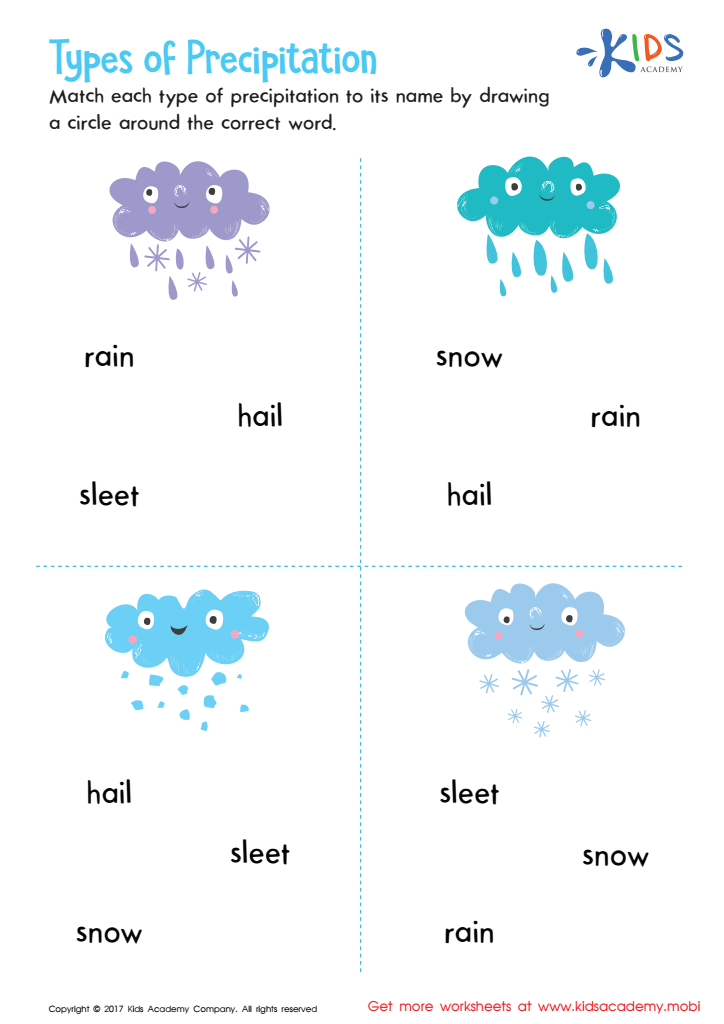
Types of Precipitation Worksheet

Types of Precipitation Printable
Science has a big impact on our world, and teaching kids about weather helps them understand how their learning applies to their lives. Our worksheet reviews different types of weather, so kids can look out the window and know what's happening. It covers familiar types of precipitation and more challenging ones like sleet or hail. Kids can use this to build a mental library of scientific knowledge for the future, even from places that don't get much snow.
Types of Precipitation Printable
Worksheet
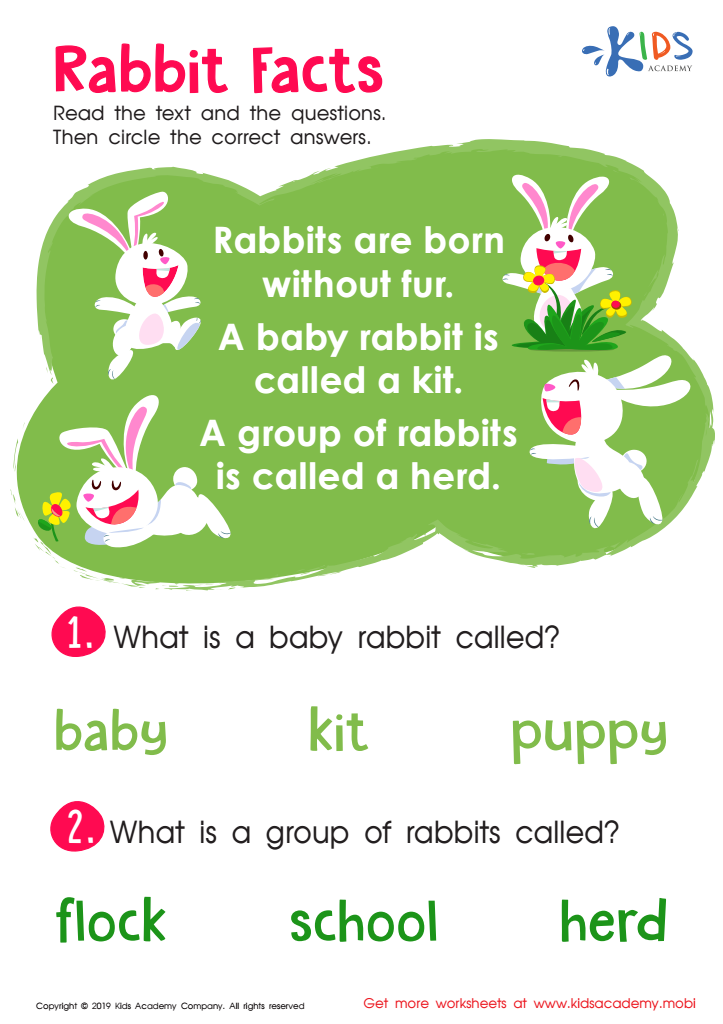
Rabbit Facts Worksheet

Rabbit Facts Worksheet

Reading comprehension skills can be strengthened with this fun PDF about fluffy rabbits. It helps kids recall and retell details from the text while engaging them in the topic. This encourages success in reading comprehension.
Rabbit Facts Worksheet
Worksheet
Sensory Words Worksheet
Sensory Words Worksheet

This worksheet helps students explore sensory words by looking at pictures and selecting one or two words to describe how it looks, feels, tastes, smells or sounds. Adding sensory words to texts makes them more interesting and helps students comprehend stories and articles better.
Sensory Words Worksheet
Worksheet


Enhancing vocabulary for children ages 4-7 is crucial for several key reasons. First, vocabulary development is intrinsically tied to overall language skills, which are fundamental for communication, comprehension, and cognitive development. During these formative years, children rapidly absorb new words, and a rich vocabulary enables them to express their thoughts and emotions more clearly.

A robust vocabulary forms the foundation for reading proficiency, a critical skill that learners carry throughout their academic journey. By knowing more words, children find it easier to grasp storylines, instructions, and new concepts. This not only makes learning more enjoyable but also builds confidence and a positive attitude towards education.

Moreover, a well-developed vocabulary aids in social interactions. Children with better vocabulary skills can engage more effectively with peers and adults, articulate their needs and ideas, and build relationships. This social aspect is essential for emotional and social development.

Lastly, strong early vocabulary has been linked to long-term academic success and cognitive performance. Early interventions and a focus on vocabulary can close gaps and provide a more equitable foundation, particularly for children from diverse linguistic or socio-economic backgrounds. Therefore, parents and teachers should prioritize vocabulary instruction to support the holistic development of young learners.