Geographic knowledge Normal Worksheets for Ages 4-7
3 filtered results
-
From - To
Discover our engaging "Geographic Knowledge Normal Worksheets" designed specifically for children ages 4-7! These interactive worksheets help young learners explore maps, identify continents, and understand basic geography concepts in a fun and bright way. Our carefully crafted activities nurture curiosity and enhance spatial awareness while promoting essential skills like critical thinking and problem-solving. Each worksheet features vibrant illustrations and straightforward instructions, making learning enjoyable and approachable for early learners. Ideal for both classroom settings and at-home practice, these resources support your child's educational journey and lay the foundation for a lifetime of geographical awareness and understanding. Start exploring today!
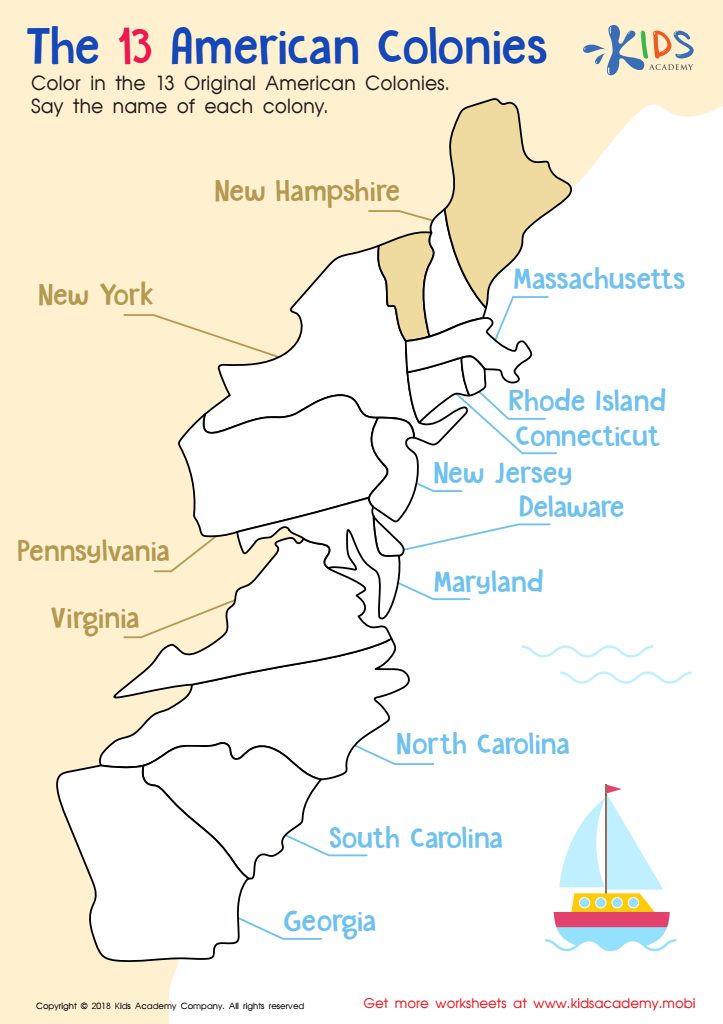
The 13 American Colonies Worksheet
 Assign to My Students
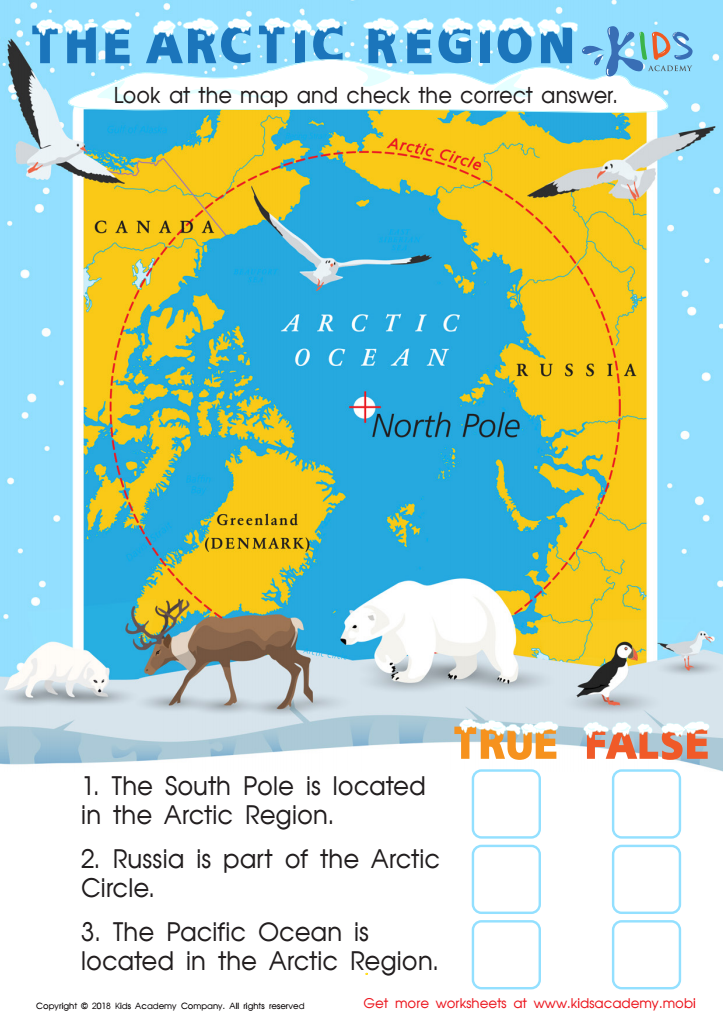
The Arctic Region Worksheet
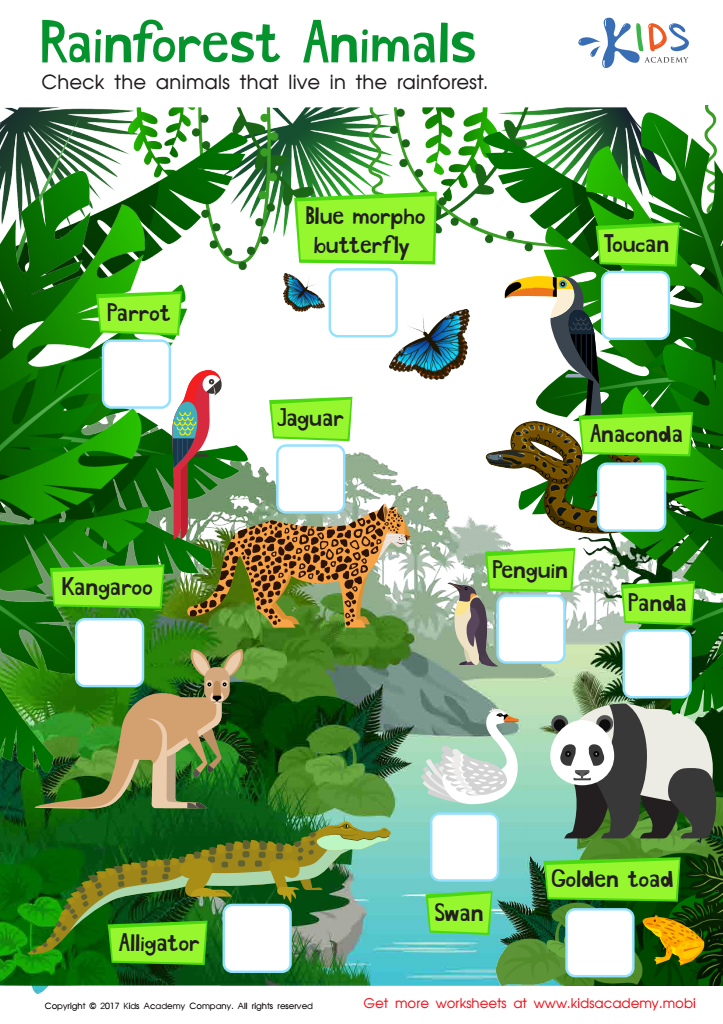
Rainforest Animals Worksheet







Parents and teachers should prioritize geographic knowledge for children aged 4-7 because it lays a foundation for critical thinking and understanding of the world. At this age, children are naturally curious and eager to learn about their surroundings. Introducing basic geography helps them make sense of where they come from and the larger world beyond.
Understanding geographic concepts, such as continents, countries, and local communities, fosters a sense of identity and belonging. It also cultivates awareness of diverse cultures, promoting empathy and respect for differences. Young learners benefit from engaging activities—like maps, globes, and cultural stories—that spark their imagination while developing spatial skills.
Moreover, geography enhances problem-solving abilities. When children grasp concepts like neighborhoods and directions, they become more capable of navigating their environment, both physically and socially. This knowledge aids in developing essential life skills, such as planning and organizing.
In today's globalized world, geographic literacy is even more critical for fostering informed citizens. Encouraging geographic knowledge can instill a sense of global responsibility and environmental stewardship, empowering young learners to be active participants in their communities and the world at large. Thus, nurturing geographic curiosity at an early age is invaluable for holistic development.








