Knowledge application Normal Worksheets for Ages 4-7
3 filtered results
-
From - To
Stimulate your child's development with our "Knowledge Application Normal Worksheets for Ages 4-7". Designed to enhance critical thinking and comprehension, these engaging worksheets cover a range of subjects from math to reading and science. Perfectly tailored for young learners, they offer varied activities that foster problem-solving skills and practical knowledge application. Each worksheet is crafted to be both educational and enjoyable, helping children build a solid learning foundation. Parents and educators will find them a fantastic resource for supplementing early education at home or in the classroom. Discover a fun way to support your child's academic growth today!
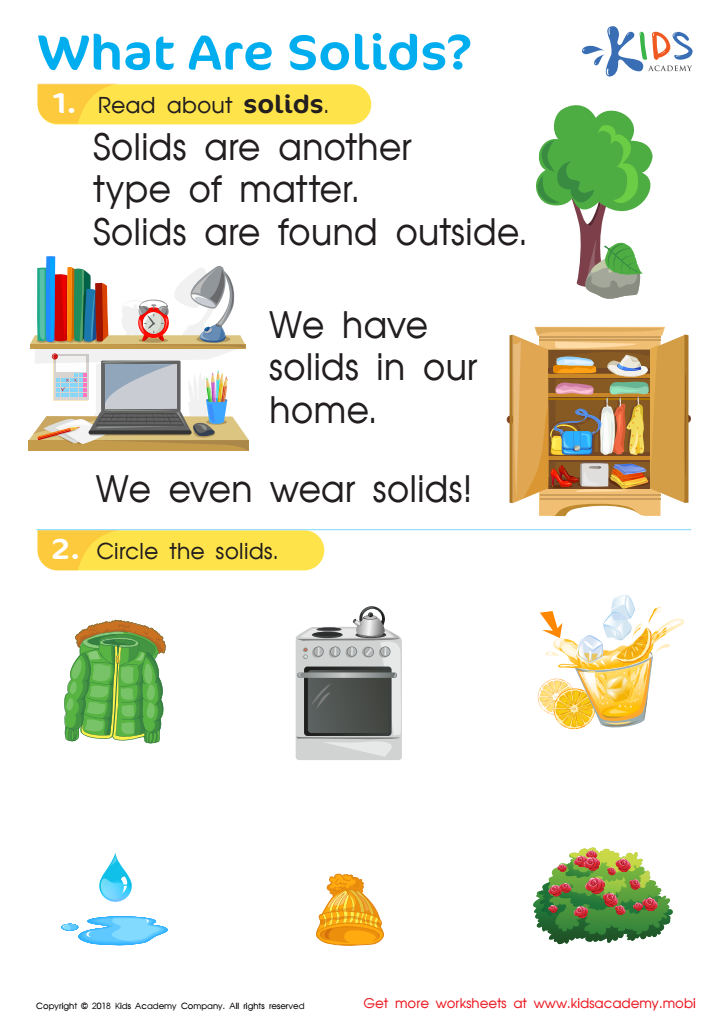
What Are Solids? Worksheet
 Assign to My Students
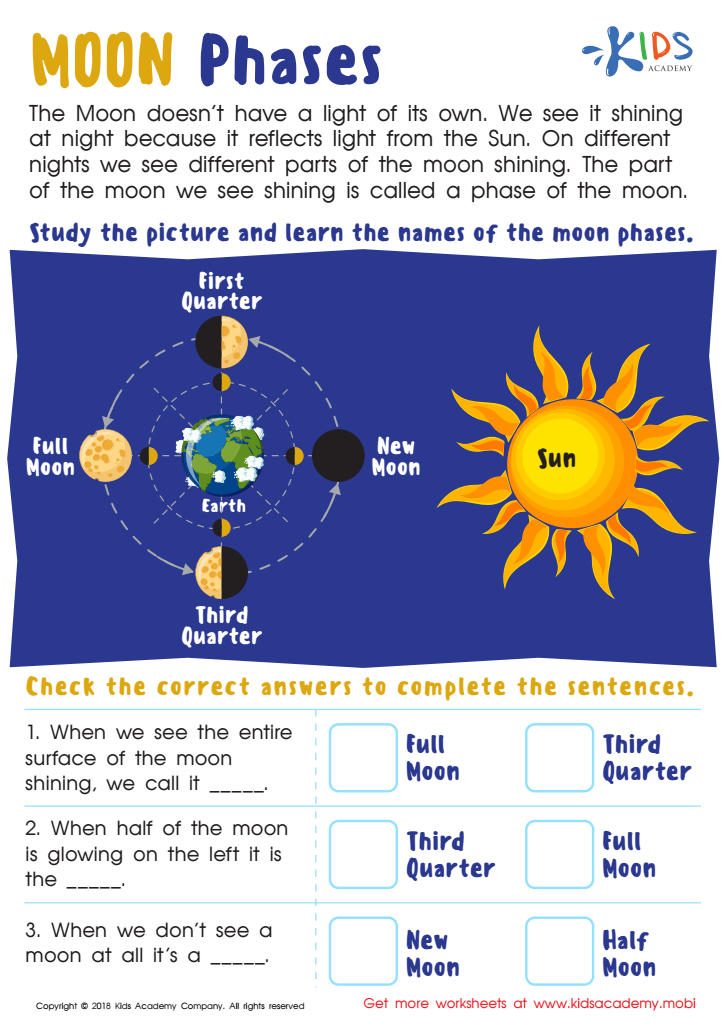
Moon Phases Worksheet
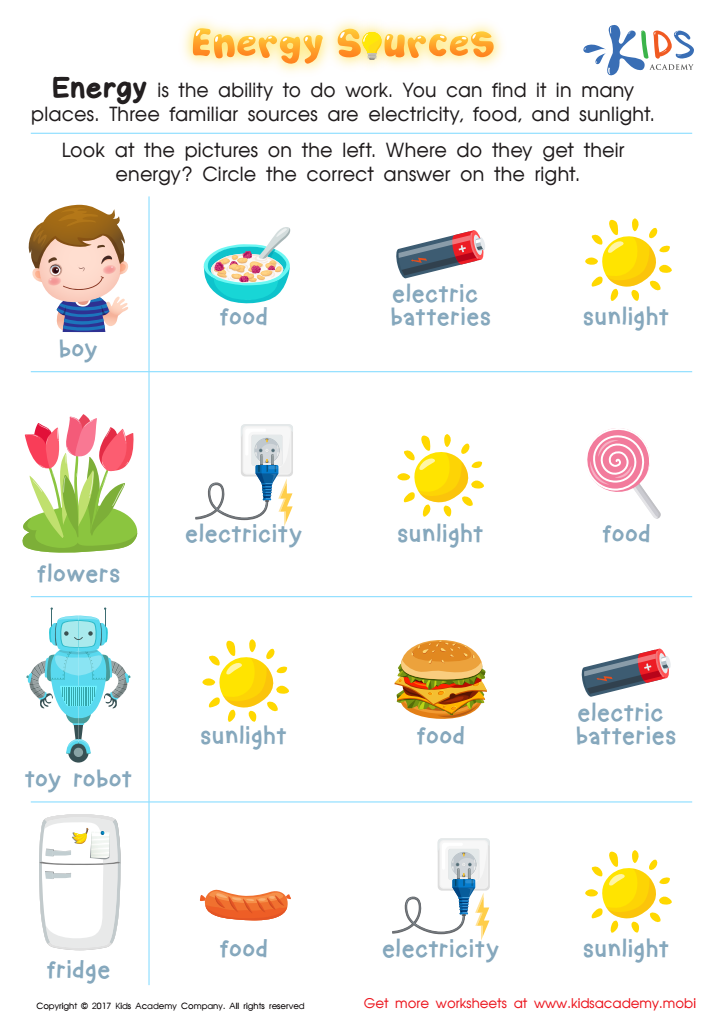
Energy Sources Printable







Parents and teachers should realize the immense importance of nurturing knowledge application in children aged 4-7. During these formative years, young minds are incredibly receptive and curious, making it the perfect time to instill foundational skills that will benefit them throughout their lives. Engaging children in applying knowledge learned helps to solidify concepts far beyond rote memorization, aiding in higher cognitive development.
When children actively use what they learn in meaningful ways, they understand concepts more deeply and can relate them to the real world. For instance, practical, hands-on activities such as counting objects, storytelling, and simple experiments can make abstract ideas more tangible. This approach also fosters critical thinking, problem-solving, and creativity, essential skills for their academic journey and future life experiences.
Moreover, applying knowledge builds children’s confidence and motivation. When they see the real-world relevance of their skills, they gain a sense of accomplishment and are more inclined to engage in future learning. It also prepares them to handle unstructured and complex scenarios by improving their adaptability and resourcefulness.
Incorporating applications at this young age lays a robust foundation for lifelong learning, making kids more self-sufficient, inquisitive, and enthusiastic about their education journey. Therefore, both parents and teachers play pivotal roles in creating enriching, application-focused learning environments.








