
Listening skills Normal Worksheets for Ages 4-7
4 filtered results
Difficulty Level
Grade
Age
-
From - To
Subject
Activity
Standards
Enhance your child's listening abilities with our fun and engaging Listening Skills Normal Worksheets, designed specifically for ages 4-7. These worksheets offer age-appropriate activities that help children improve their auditory processing, comprehension, and attention skills. Featuring colorful illustrations and interactive tasks, these resources make learning enjoyable while promoting essential listening skills. Perfect for home or classroom use, our worksheets cater to a range of learning styles, ensuring every child can grasp key concepts. As your child practices, they’ll gain confidence and readiness for future learning. Explore our collection today and empower your little one to become a proficient listener!
Favorites
With answer key
Interactive
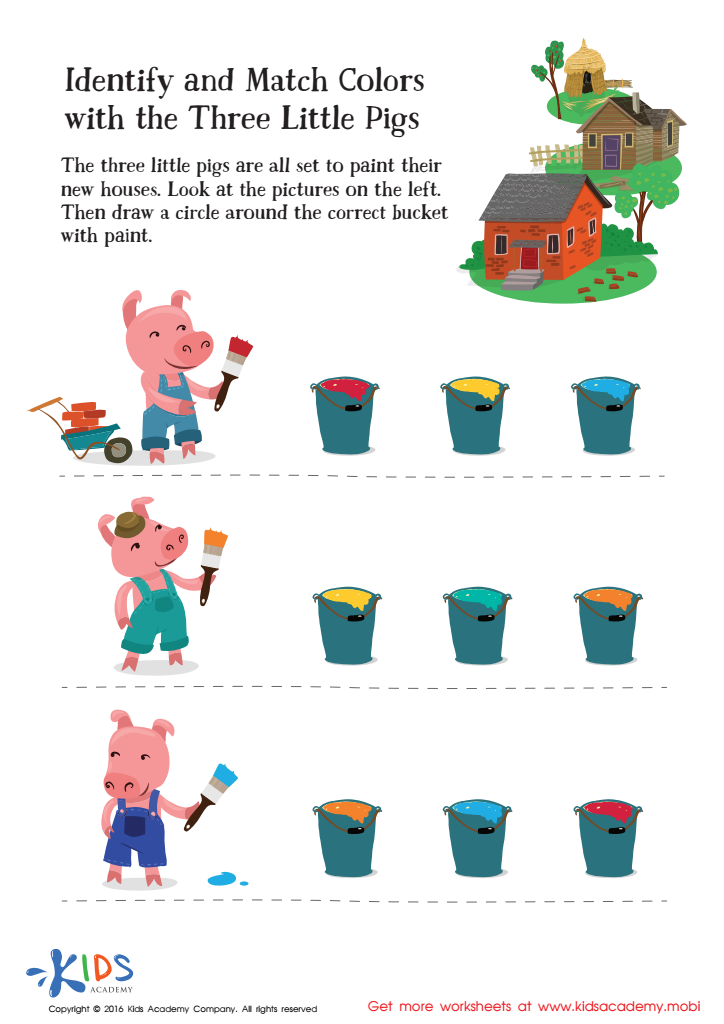
Fairy Tale Worksheet: Identify and Match Colors with Three Little Pigs
Help the 3 Little Pigs find the right color for their houses! This fun worksheet will have your child developing their problem solving and color recognition skills. It's a great way to start building the foundation for advanced logic skills. Plus, they'll love the Three Little Pigs coloring pages.
 Assign to My Students
Fairy Tale Worksheet: Identify and Match Colors with Three Little Pigs
Worksheet
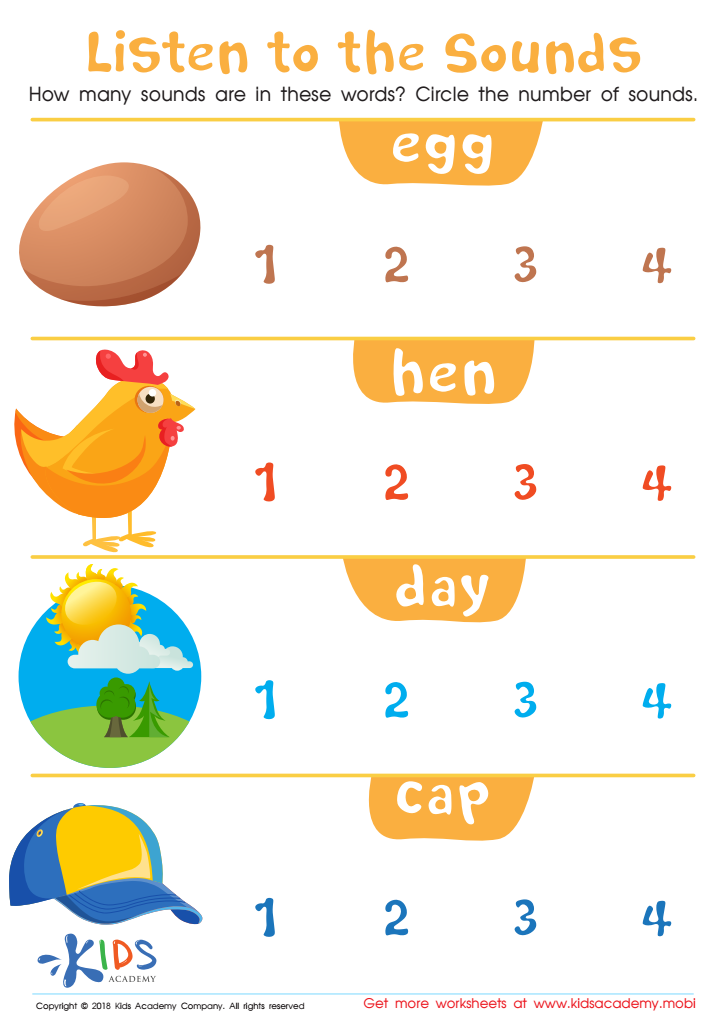
Listen to the Sounds Worksheet
This worksheet builds emerging readers' skills in using sounds for reading and spelling. It helps strengthen auditory processing by having them count the sounds in each word, then trace the corresponding number. Fun and cheerful!
Listen to the Sounds Worksheet
Worksheet
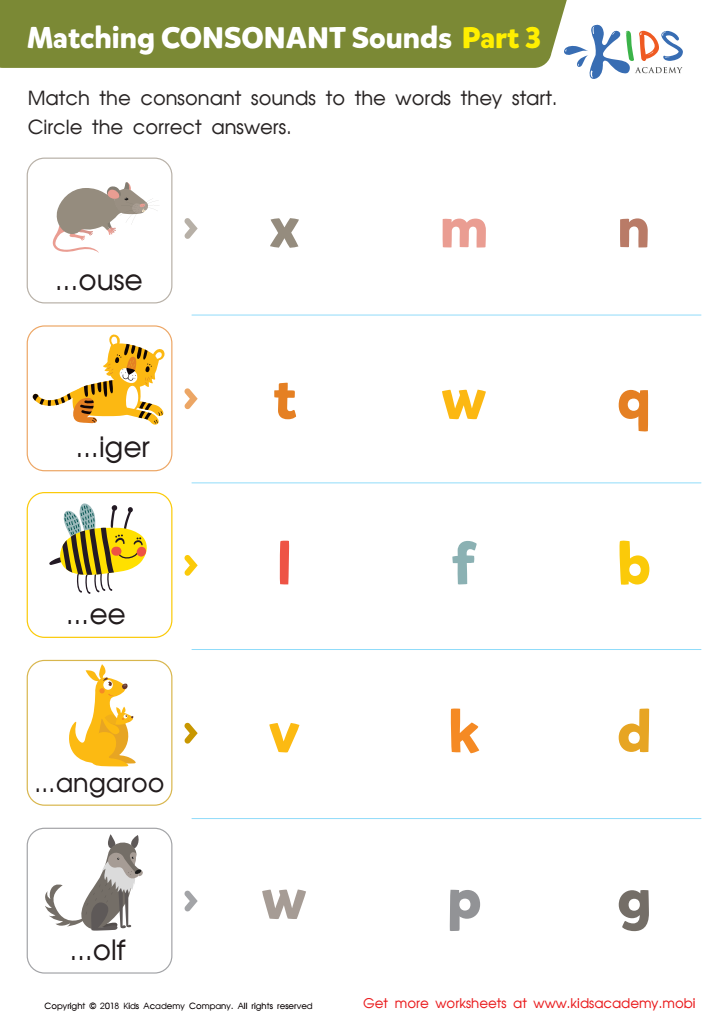
Matching Consonant Sounds: Part 3 Worksheet
Help your early learner match consonant sounds to words with this fun worksheet! Have them name the pictures and try out each letter in the corresponding column. When they hear the sound that matches, circle it. Have them write the letter in the box to complete the word. Work their way down the page until the critters' names all match with consonants!
Matching Consonant Sounds: Part 3 Worksheet
Worksheet
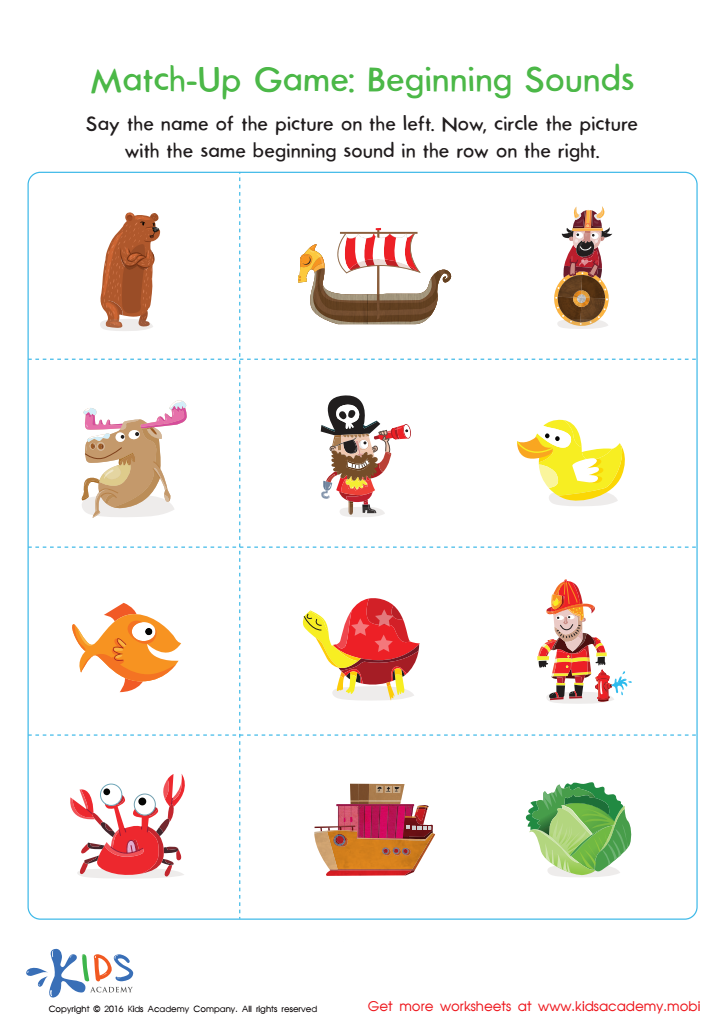
Match–Up Game: Beginning Sounds Worksheet
Start today with this beginning sounds match-up printable!
Teach your child to solve problems mentally with this beginning sounds match-up printable. They'll learn to categorize pictures based on phonics rules, developing mental stamina and focus. It's an important step for recognizing sounds and letters in print, building a foundation for reading and spelling. Start today and take your child's skills to the next level!
Match–Up Game: Beginning Sounds Worksheet
Worksheet
Join Kids Academy for Free
Who is primarily going to use this learning content?








Listening skills are foundational for children aged 4 to 7 as they significantly impact their overall development and academic success. At this age, children are in critical stages of language acquisition and social interaction. Good listening skills help them process and understand verbal communications, which enhances their vocabulary and language skills.
Moreover, the ability to listen attentively helps children follow instructions and participate more effectively in group activities, promoting cooperation and teamwork. Listening fosters empathy, allowing children to tune into the emotions and perspectives of others, which is essential for building social relationships.
When parents and teachers prioritize the development of listening skills, they set the groundwork for effective communication, critical thinking, and problem-solving abilities. Children who listen well are better equipped to ask questions, seek help, and engage in meaningful discussions, all of which are vital for their learning experiences.
In essence, strong listening skills not only enhance academic performance but also support emotional and social growth, preparing children for future challenges in both school and life. By nurturing these skills early on, adults can help foster a generation of effective communicators and empathetic individuals.








