Mental math practice Normal Worksheets for Ages 4-7
6 filtered results
-
From - To
Unlock your child's math potential with our engaging Mental Math Practice Normal Worksheets for ages 4-7. Designed to foster foundational math skills, these worksheets include fun and interactive exercises that help young learners develop their ability to solve problems quickly and confidently. Children will practice addition, subtraction, and simple math concepts through colorful activities that make learning enjoyable. Ideal for parents and educators looking to reinforce mental math skills in a structured yet playful manner, our worksheets capture the curiosity of young minds while nurturing their numerical abilities. Start your child's math journey today with our thoughtfully crafted practice sheets!
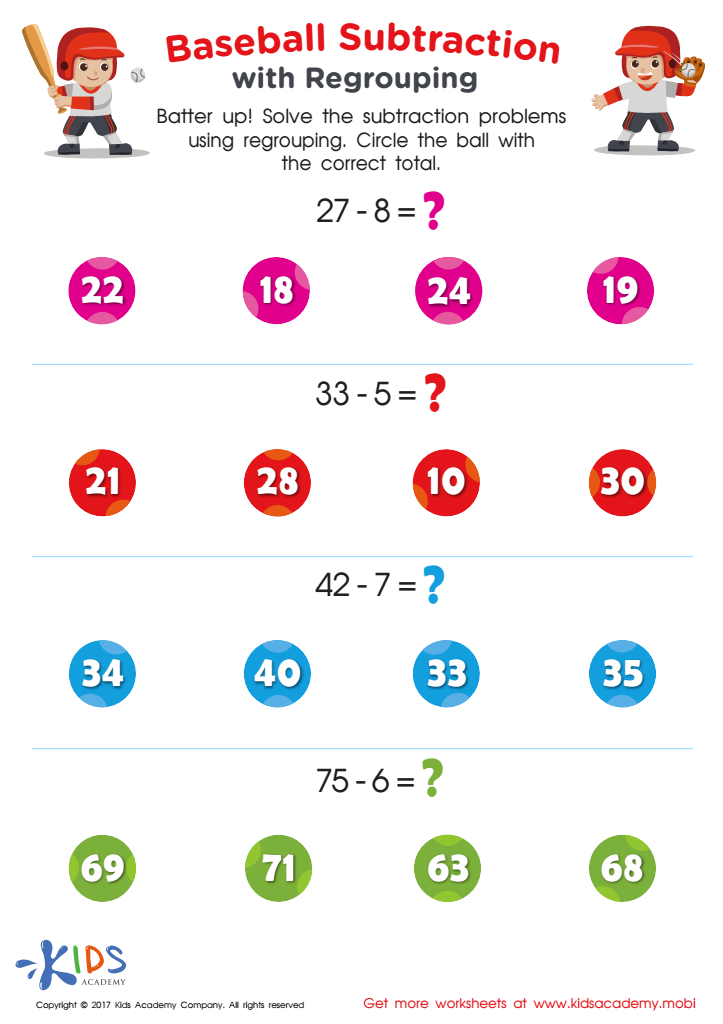
Subtraction With Regrouping for 2nd Grade Worksheet
 Assign to My Students
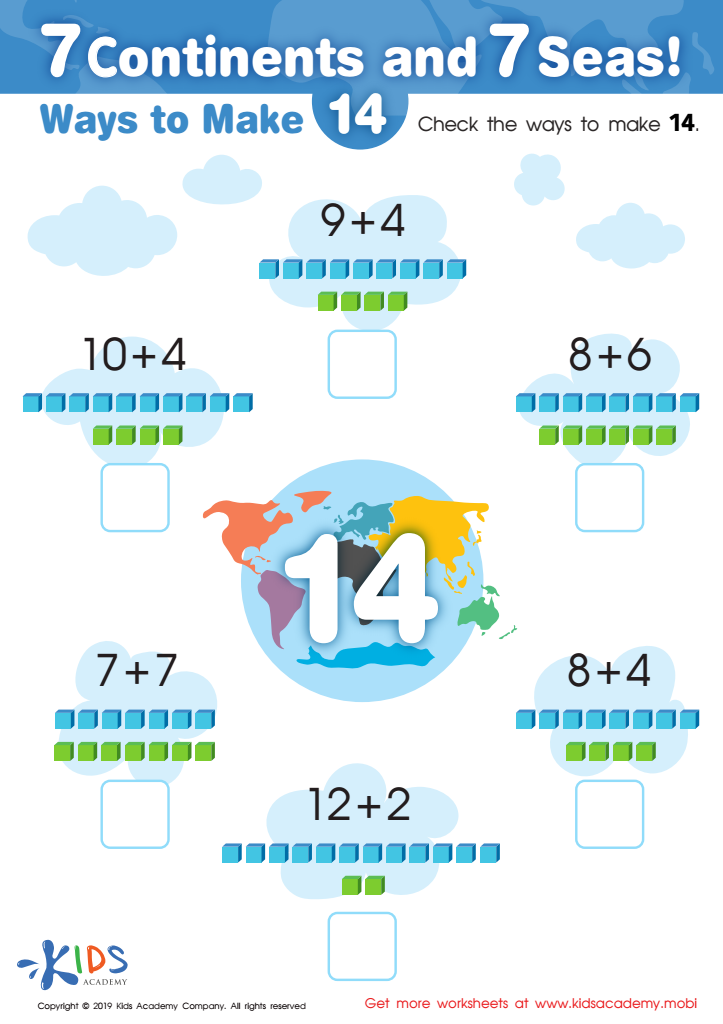
7 Continents and 7 Seas Worksheet

Adding at the Hospital Worksheet
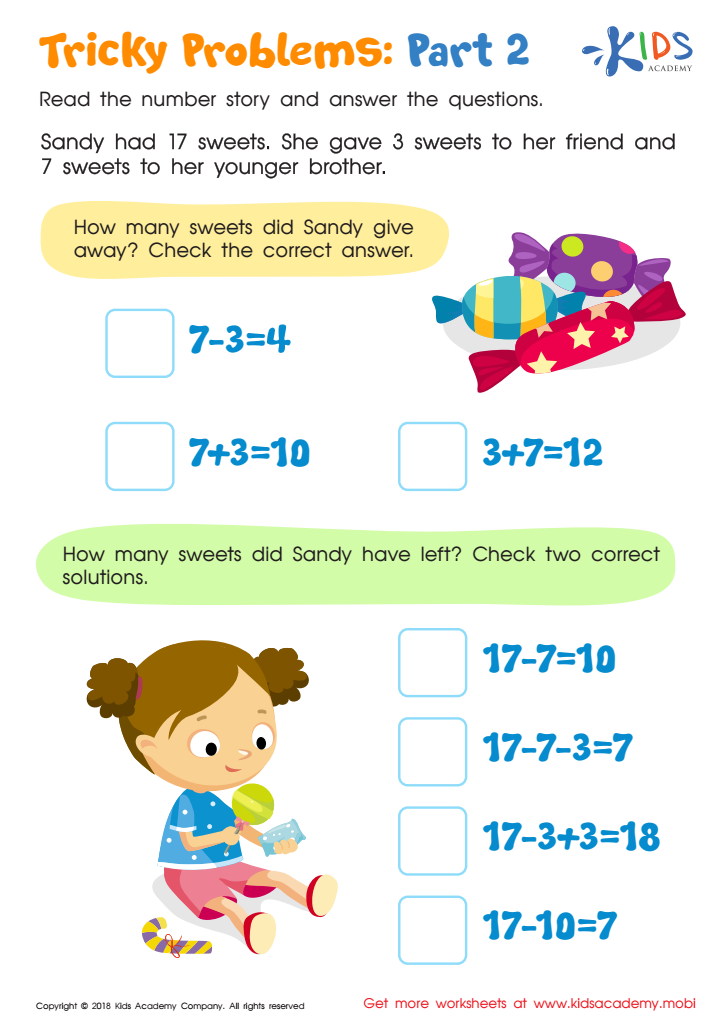
Tricky Problems Worksheet: Part 2
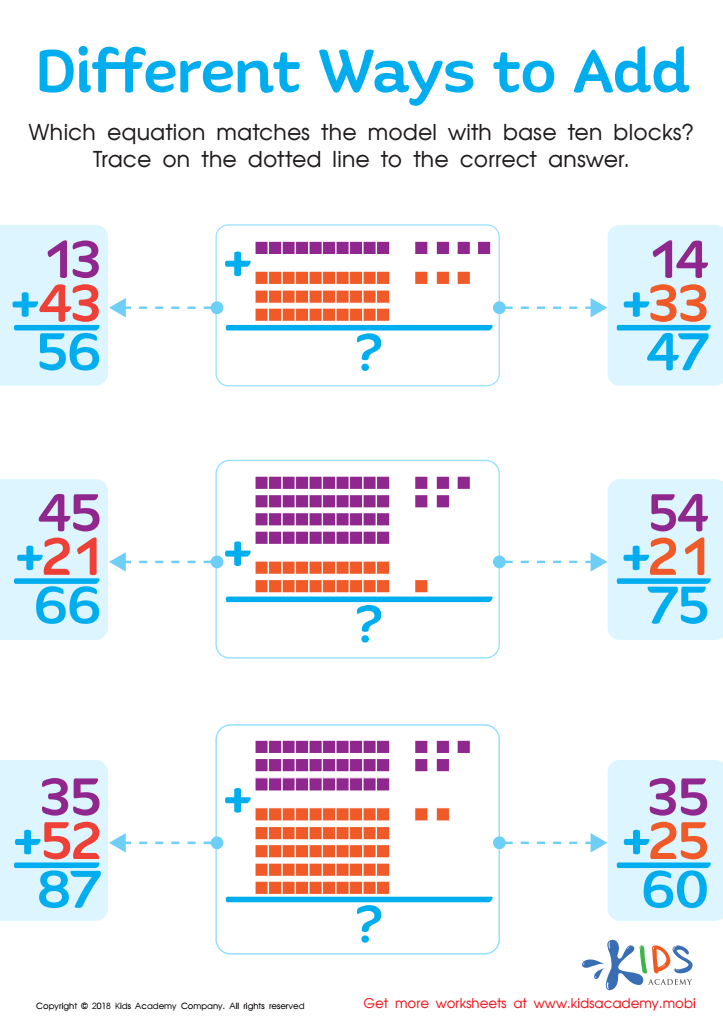
Different Ways to Add Worksheet
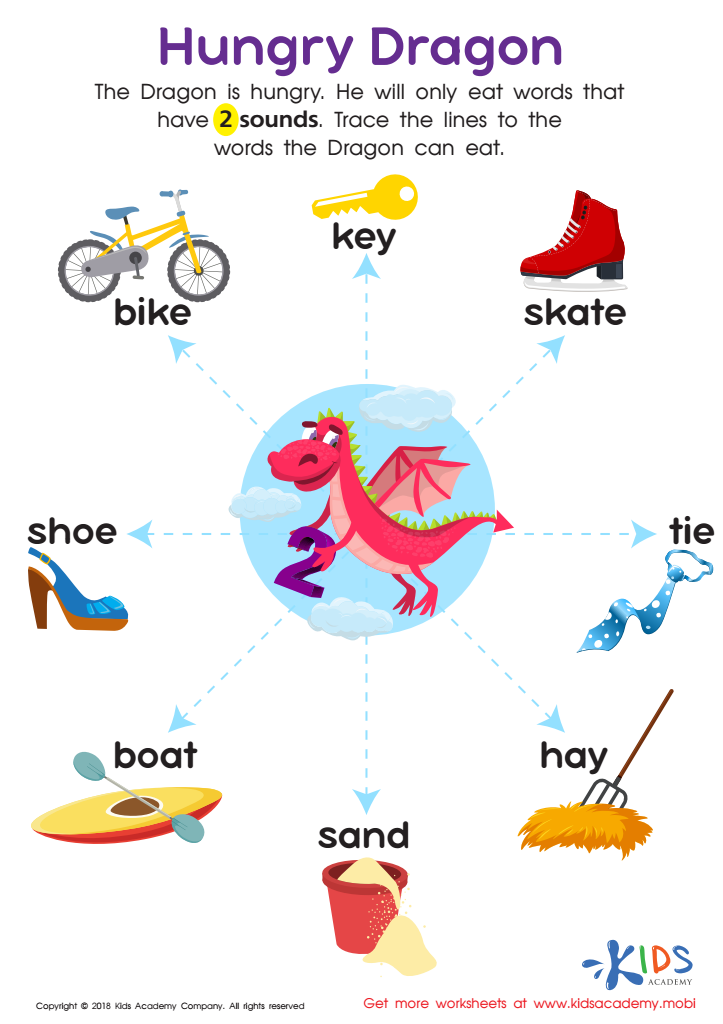
Hungry Dragon Worksheet


.jpg)



Mental math practice is crucial for children aged 4 to 7 as it lays the foundation for their mathematical understanding and confidence. During these formative years, children are honing their cognitive skills and developing their ability to think critically. Engaging in mental math helps enhance their reasoning abilities and problem-solving skills, stimulating various areas of the brain important for learning.
Moreover, mental math helps children develop number sense, which involves an intuitive understanding of numbers and their relationships. This skill enables them to grasp more complex mathematical concepts in the future, such as addition, subtraction, and even multiplication. Regular practice can make math a more enjoyable and less intimidating subject, countering common anxieties around mathematics in later years.
Additionally, mental math encourages perseverance and concentration. It teaches children to concentrate while also developing their ability to approach challenges independently. Parents and teachers can foster a loving and supportive learning environment by incorporating engaging mental math activities, making math fun and rewarding.
In a world increasingly reliant on quantitative reasoning, those early mental math skills can empower children not only in their academic lives but also in their day-to-day decision-making as they grow. Therefore, investing time in mental math practice at an early age is pivotal for a child's development.








