Number comparison Normal Worksheets for Ages 4-7
5 filtered results
-
From - To
Enhance your child’s math skills with our Number Comparison Worksheets, specially designed for ages 4-7! These engaging exercises provide young learners with fun and interactive ways to practice comparing numbers, promoting early numeracy and critical thinking. Worksheets feature colorful illustrations and easy-to-understand instructions that keep kids motivated while they learn. Suitable for home or classroom use, these resources aim to build a solid foundation in number sense, enabling children to confidently compare quantities. Explore our array of printable worksheets and watch your little one master the essential skill of number comparison with joy! Start their math journey today!
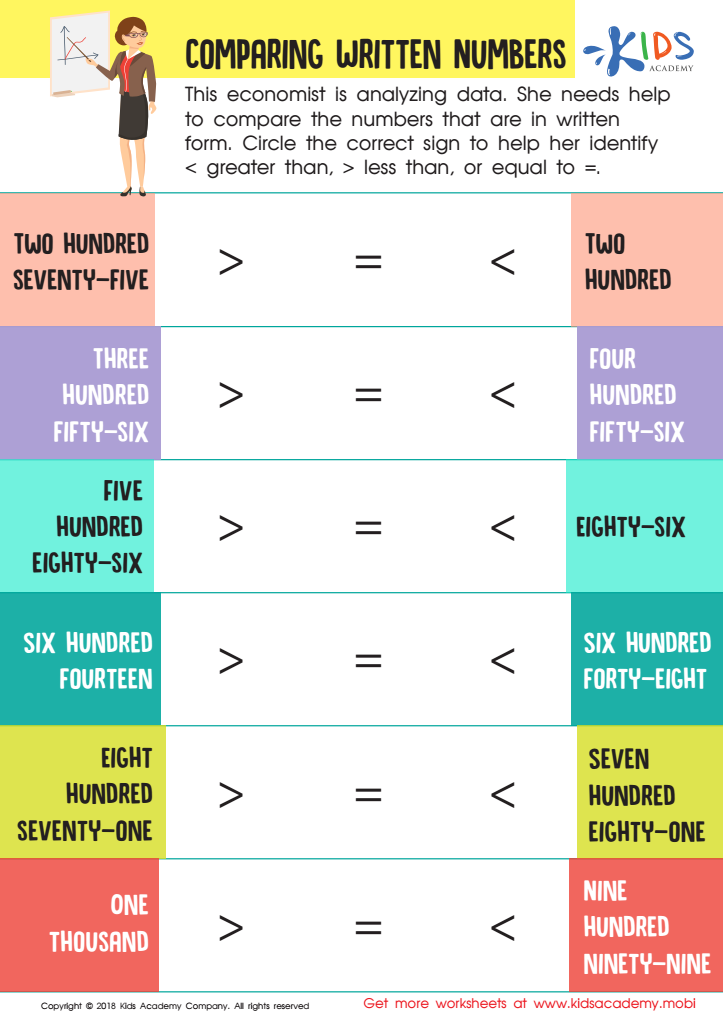
Comparing Written Numbers Worksheet
 Assign to My Students
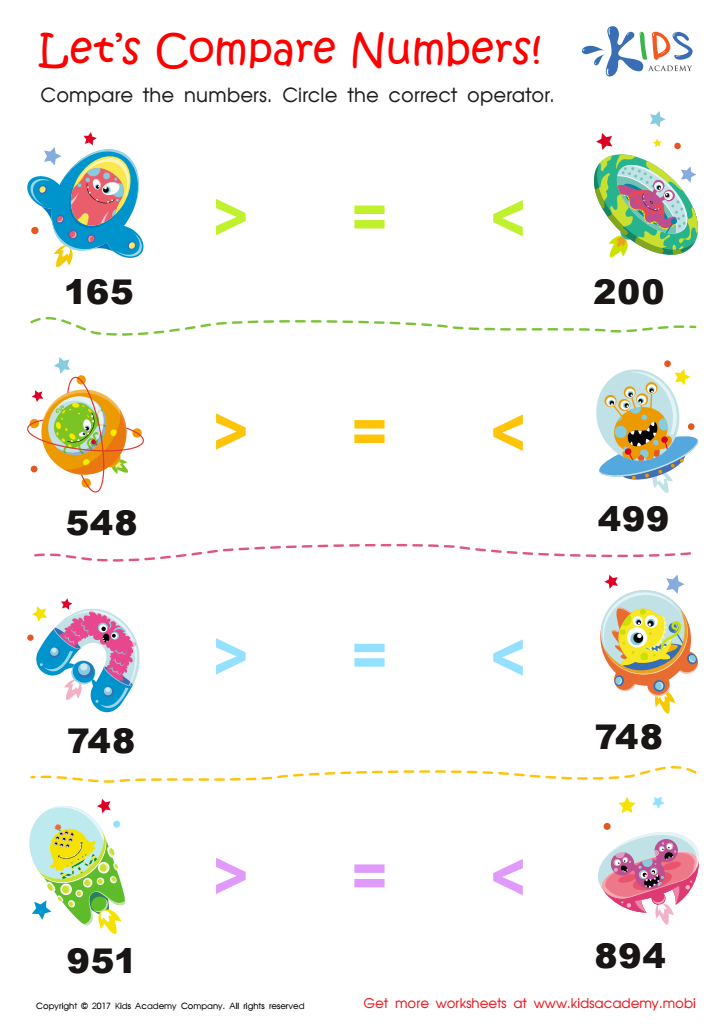
Comparing Numbers Worksheet for 2nd Grade
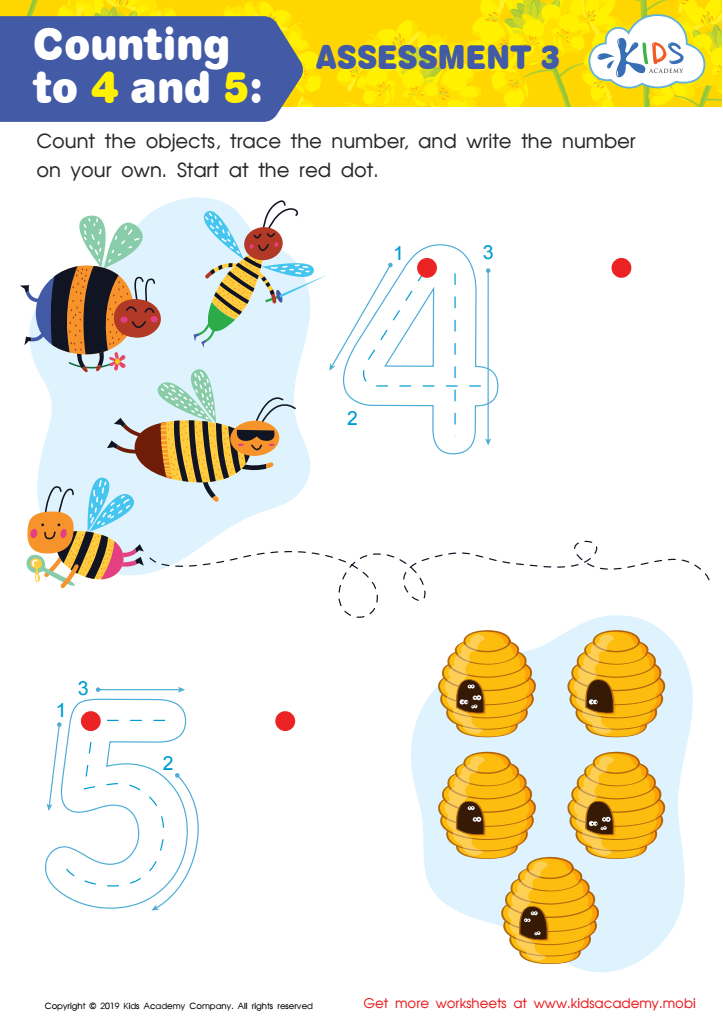
Counting to 4 and 5: Assessment 3 Worksheet
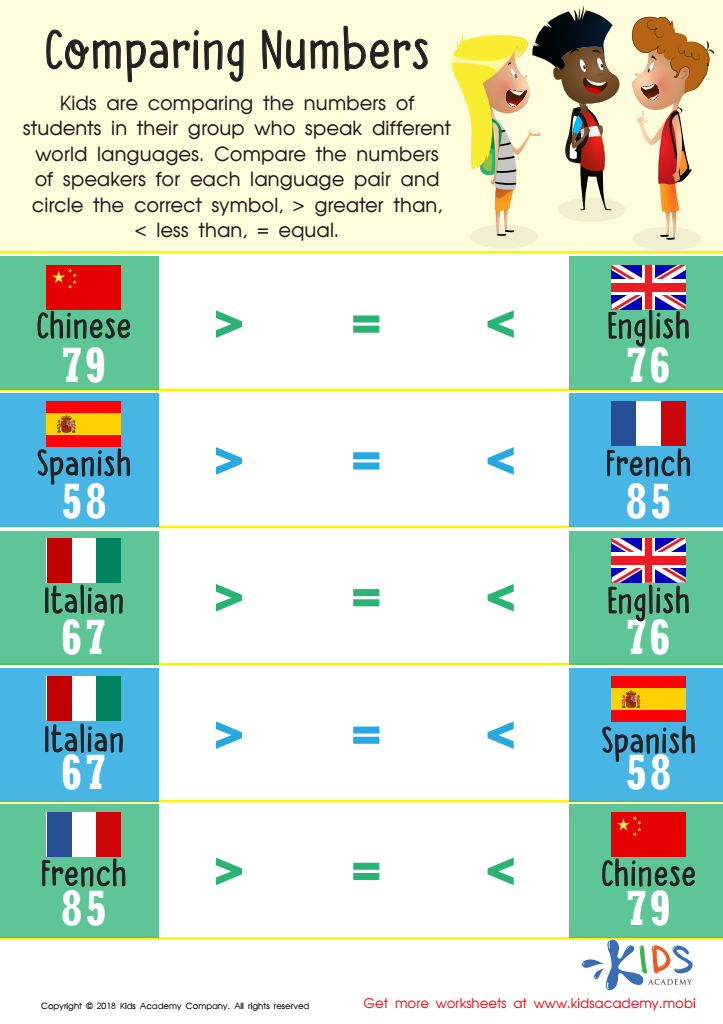
Comparing Numbers Worksheet for 1st Grade
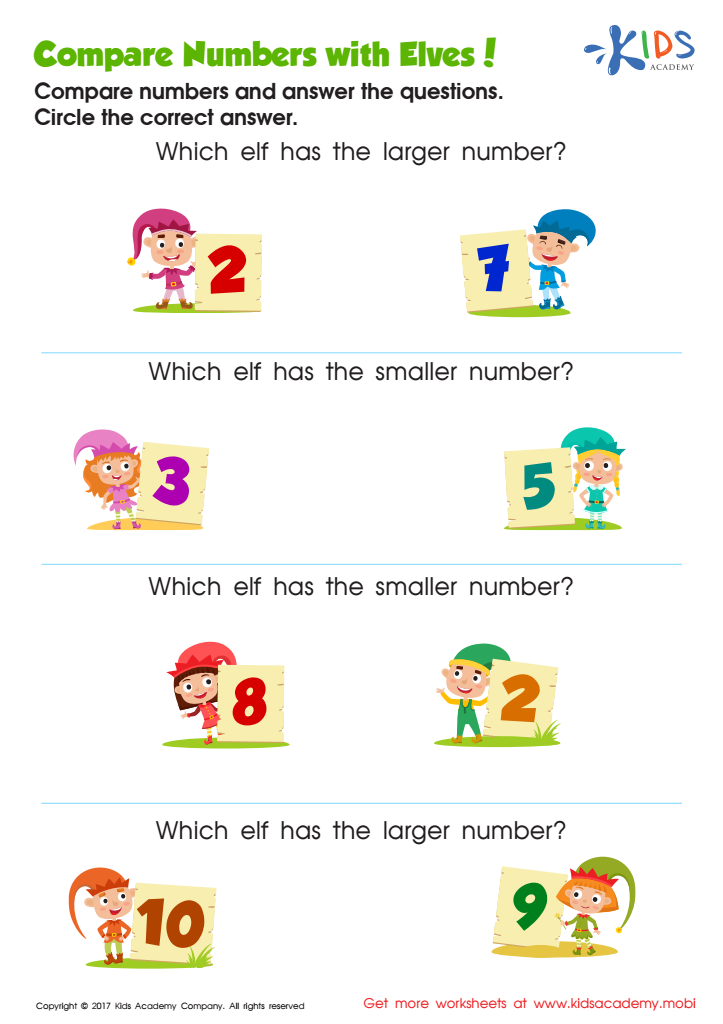
Comparing Numbers Worksheet for Kindergarten







Number comparison in early childhood, particularly for children aged 4-7, is crucial for developing foundational math skills. Understanding how to compare numbers helps young learners grasp concepts of quantity, size, and value, which are essential for their ongoing mathematical development. Parents and teachers should care about this skill because it lays the groundwork for more complex arithmetic and problem-solving abilities later on.
When children engage with number comparisons, they develop critical thinking skills, as they must evaluate two numbers and determine which is greater or smaller. This practice enhances their number sense, enabling them to make informed decisions in math and real-life situations, such as sharing items or understanding age differences.
Moreover, number comparison plays a vital role in promoting a child's confidence in math, reducing anxiety around numbers and fostering a positive attitude towards learning. In a classroom or home setting, encouraging discussions and activities centered around comparisons—like using physical objects or number games—can make math interactive and enjoyable. Ultimately, fostering these skills during the formative years sets children on a path toward academic success and a lifelong appreciation for mathematics.








