
Phonics development Normal Worksheets for Ages 4-7
3 filtered results
Difficulty Level
Grade
Age
-
From - To
Subject
Activity
Standards
Discover our engaging Phonics Development Normal Worksheets tailored for children ages 4 to 7. These carefully crafted resources help young learners build essential reading and language skills through fun and interactive activities. Each worksheet is designed to reinforce phonetic principles, enhance letter recognition, and develop blending and decoding abilities in a playful manner. Perfect for classroom use or home practice, our phonics worksheets foster a love for reading while supporting cognitive growth. Encourage your child's literacy journey today by providing them with the tools they need to succeed. Explore our collection and make learning phonics an enjoyable experience!
Favorites
With answer key
Interactive
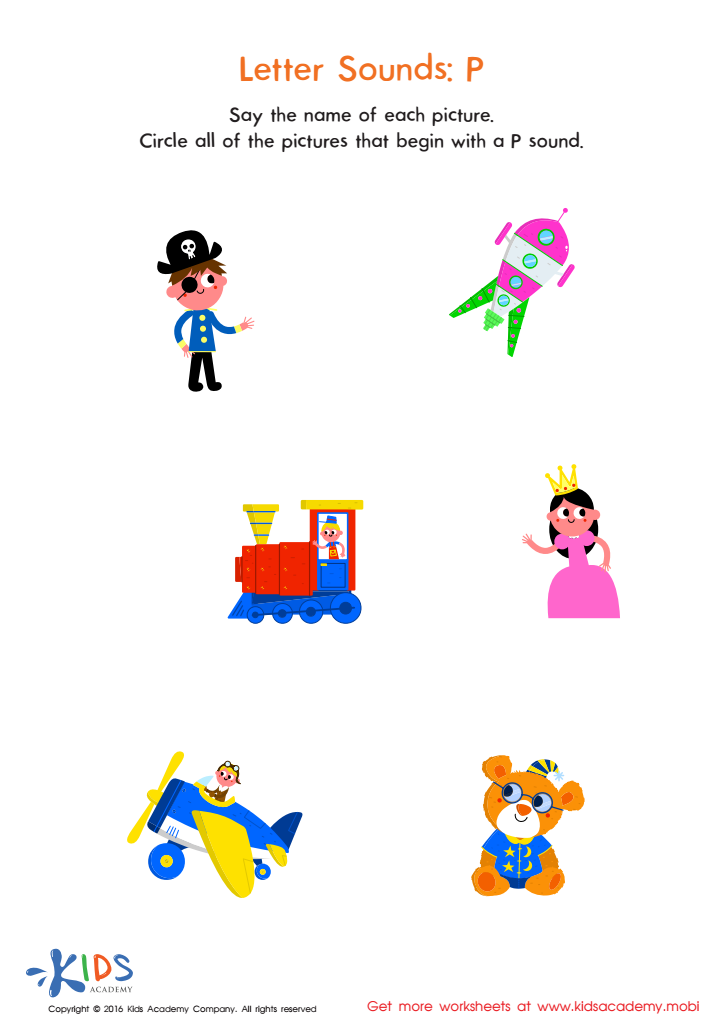
Letter P Sound Worksheet
Think P! Kids practice phonics with this fun letter P worksheet. With delightful illustrations, they'll sound out simple words and get closer to reading.
 Assign to My Students
Letter P Sound Worksheet
Worksheet
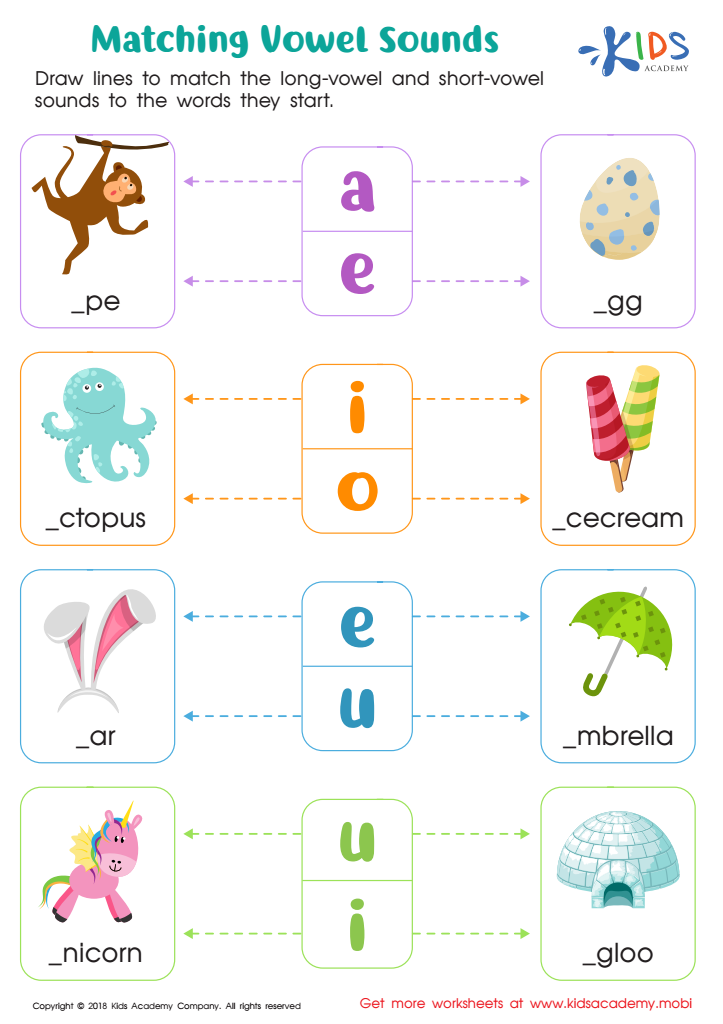
Matching Vowel Sounds Worksheet
Teach your child phonics with a fun worksheet! Ask your child to name a vowel sound and listen if it's long or short. Differentiating between long and short vowel sounds can be tricky, but this matching worksheet makes it easy for kids to understand. Have fun and master phonics - the worksheet will help them understand the difference between long and short vowel sounds!
Matching Vowel Sounds Worksheet
Worksheet
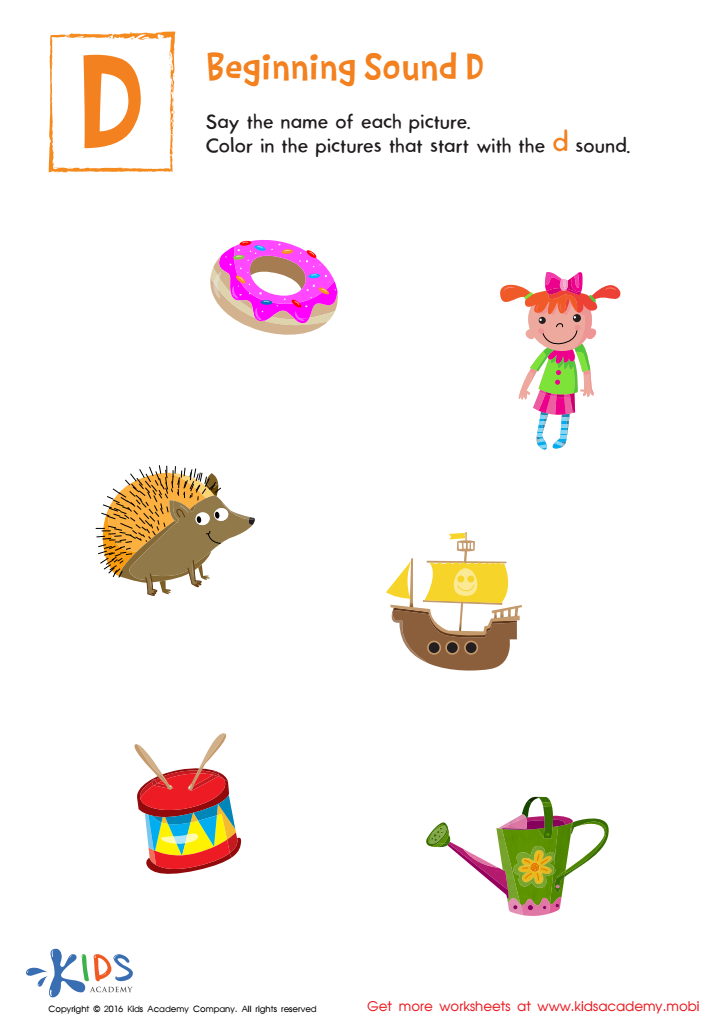
Beginning Sound D Worksheet
Reinforce phonics with this vibrant beginning sound d worksheet! Pictures help kids identify words beginning with 'd' and develop early reading skills. Sounding out each word increases literacy!
Beginning Sound D Worksheet
Worksheet
Join Kids Academy for Free
Who is primarily going to use this learning content?







Phonics development is crucial for children aged 4-7 as it lays the foundation for reading and writing proficiency. During these formative years, children are learning to decode words, understand sound-letter relationships, and develop phonemic awareness, which is vital for literacy skills.
Teachers and parents should care about phonics development because it directly influences a child’s academic success and overall confidence in reading. Mastery of phonics enables children to tackle unfamiliar words independently, fostering a love for reading and encouraging lifelong learning. Early phonics instruction helps prevent reading difficulties, setting children on a path of achievement in school and beyond.
Additionally, phonics connects with broader language skills, including spelling and comprehension, which are essential for effective communication. When children understand the building blocks of words, they are better equipped to understand complex texts as they progress in their education.
By prioritizing phonics, adults play a pivotal role in nurturing children’s language development, enhancing their ability to express themselves, and providing them with the tools needed for future academic endeavors. This foundational skill is essential not just for reading fluency but also for encouraging a positive outlook on learning and literacy.








