Phonics skills improvement Normal Worksheets for Ages 4-7
6 filtered results
-
From - To
Help your child master foundational reading skills with our Phonics Skills Improvement Normal Worksheets, specially designed for ages 4-7. These engaging worksheets offer a variety of fun activities that focus on letter sounds, word recognition, and pronunciation. Ideal for preschool, kindergarten, and early elementary students, our worksheets make learning phonics enjoyable and effective. Each activity is tailored to reinforce critical concepts while enhancing your child's confidence and love for reading. Download and print to provide your child with a strong phonics foundation, ensuring they are well-prepared for future reading success. Start building essential skills today!
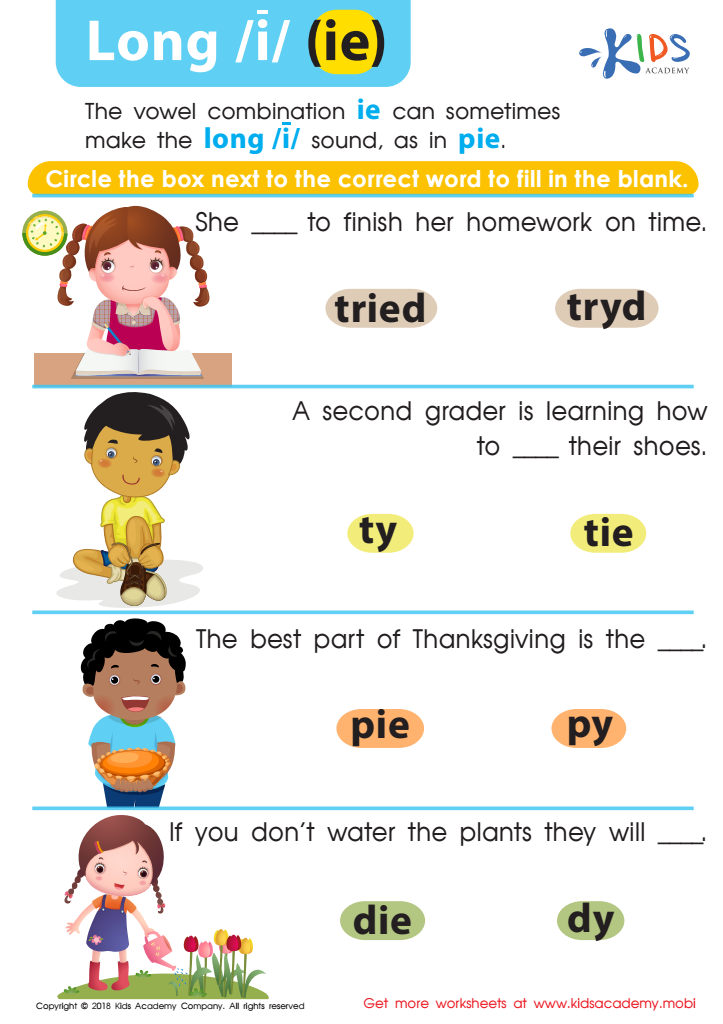
Reading: Long I and IE Worksheet
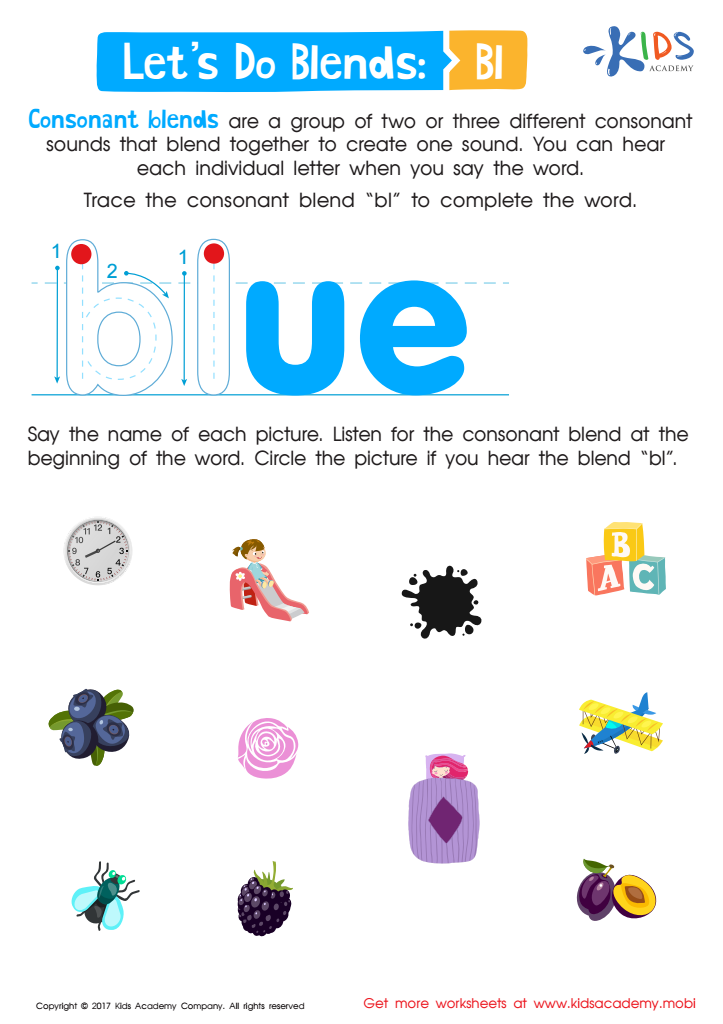
Beginning Blends: "Bl" Words Worksheet
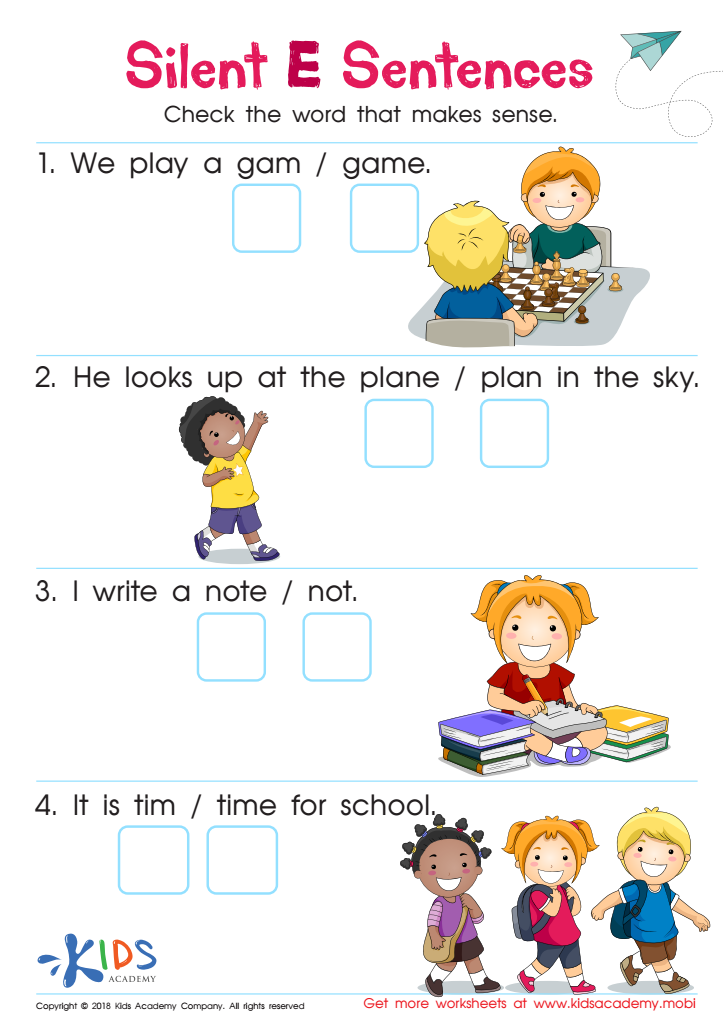
Silent E Sentences Worksheet

Long and Short U Worksheet
 Assign to My Students
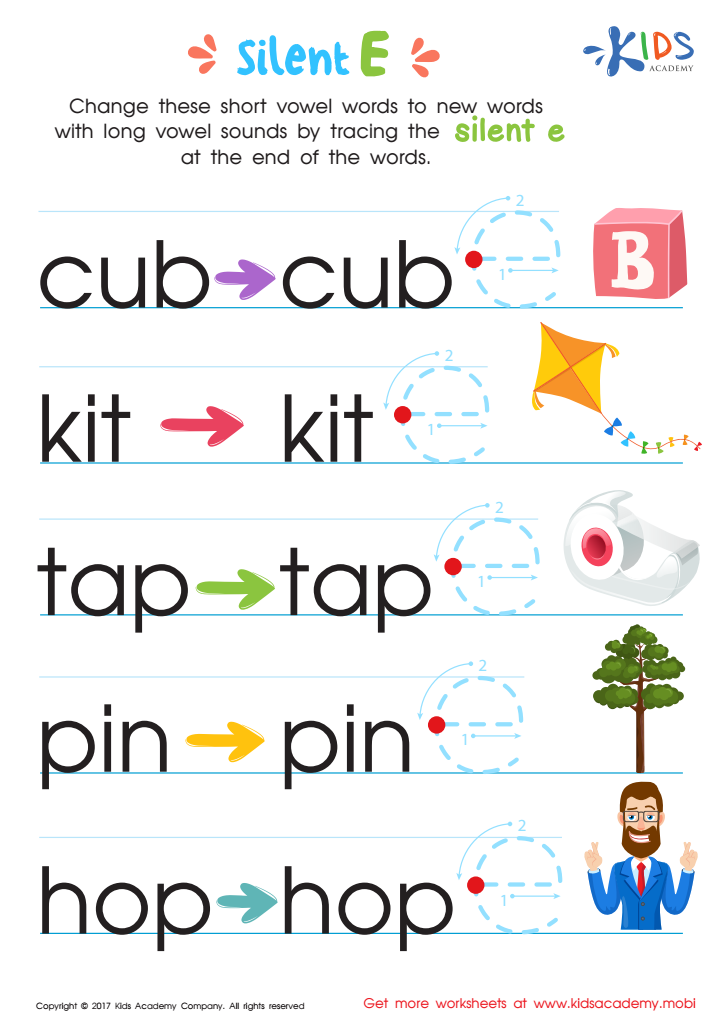
Silent E Words Worksheet
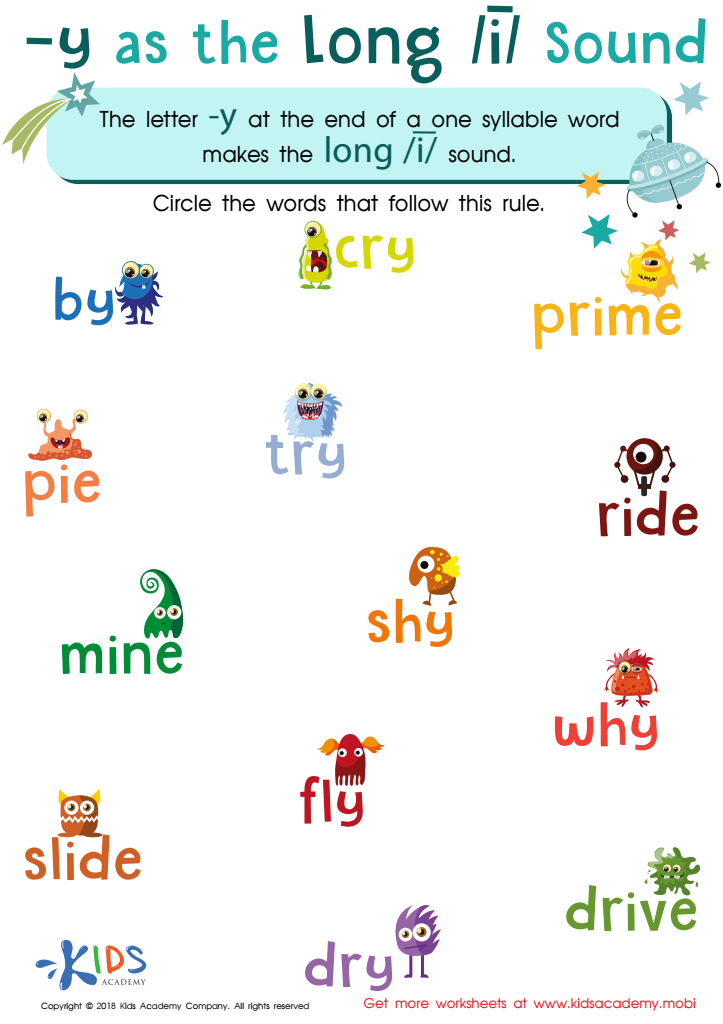
Reading: Y as Long I Worksheet







Phonics skills are foundational for young children's literacy development. For children aged 4-7, improving phonics skills is crucial as it directly influences their ability to read and write effectively. Phonics involves the relationship between sounds and their corresponding letters or groups of letters. By mastering phonics, children learn to decode words, which is essential for reading fluently.
When children have strong phonics skills, they can approach new words with confidence, breaking them down into recognizable sounds. This ability aids in reading comprehension, enabling them to understand and enjoy texts more fully. Moreover, good phonics skills positively impact spelling and writing, as children can more accurately reproduce sounds in written form.
From an educational perspective, the early years are critical for literacy development. A lack of proficiency in phonics can lead to difficulties across the curriculum, as reading is integral to most subjects. Issues in reading can also affect self-esteem and motivation, leading to further educational challenges.
Parents and teachers should therefore prioritize phonics skills to ensure children develop a strong foundation for future learning. By engaging in activities that promote phonics, such as reading together, playing sound games, and using educational resources, they can foster an environment where children become confident, skilled readers and writers.








