Plant identification Normal Worksheets for Ages 4-7
4 filtered results
-
From - To
Discover our engaging Plant Identification Normal Worksheets designed for children aged 4-7! These fun and educational resources help young learners explore the fascinating world of plants. Ideal for early science education, our worksheets encourage children to observe, identify, and understand various plants and their characteristics. With vibrant illustrations and interactive activities, kids will enjoy developing their observational skills and expanding their vocabulary. These worksheets are perfect for classroom use or at home, promoting learning through play. Cultivate a love for nature and encourage curiosity in your little ones with our delightful plant identification worksheets today!
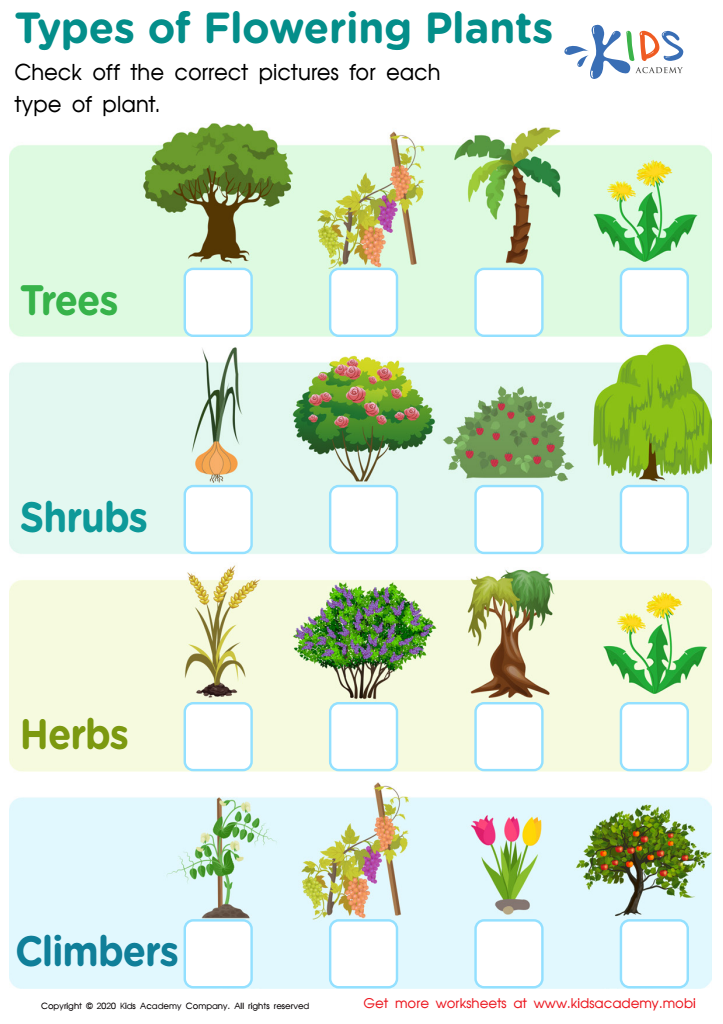
Types of Flowering Plants Worksheet
 Assign to My Students
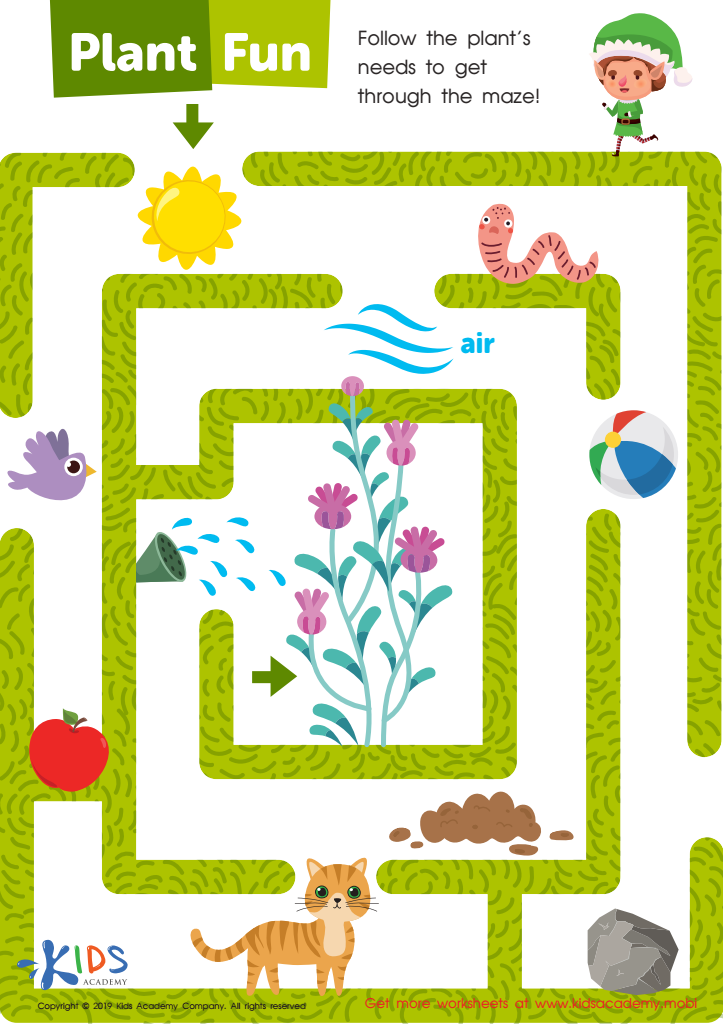
Plant Fun Worksheet
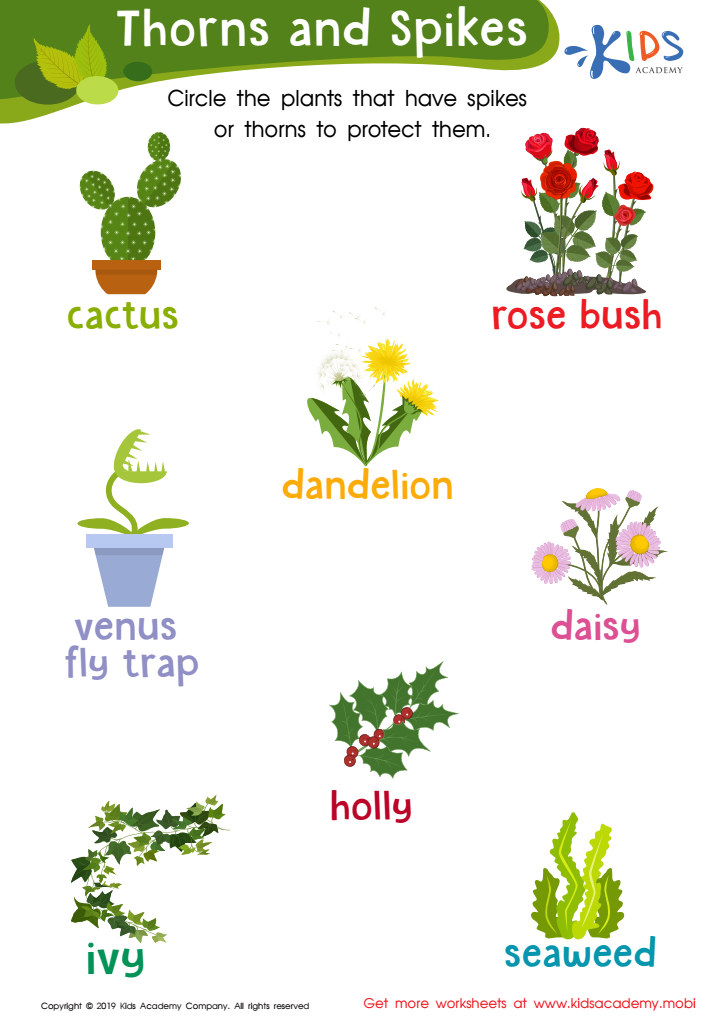
Thorns and Spikes Worksheet
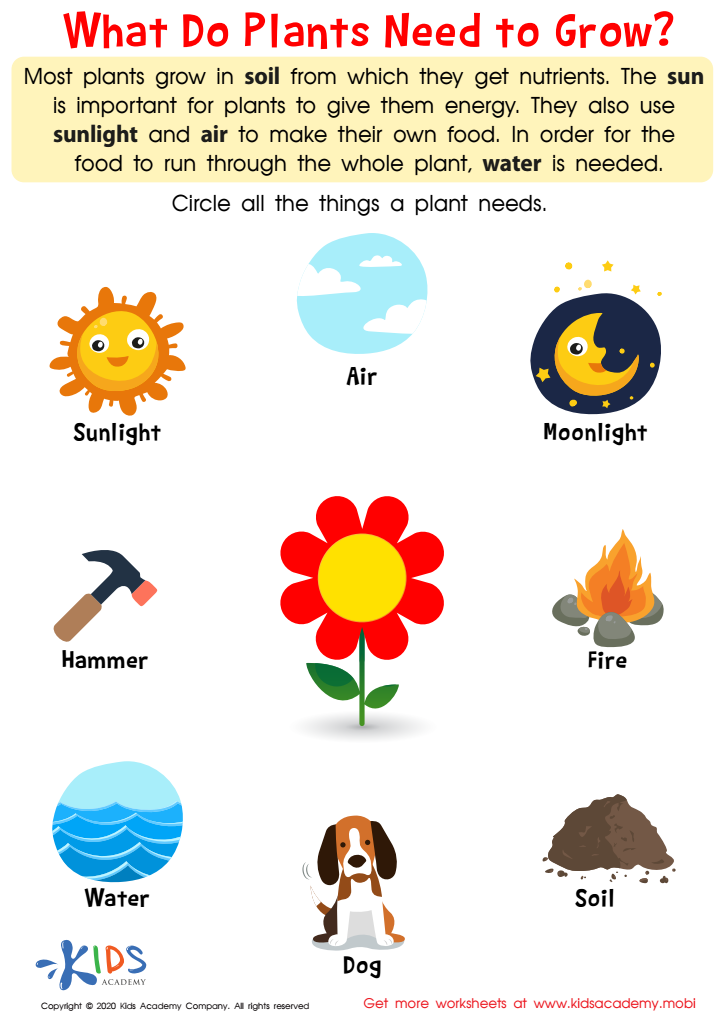
What Do Plants Need to Grow Worksheet








Plant identification is vital for children aged 4-7 for several reasons. First, it fosters a connection with nature, encouraging curiosity and exploration. Young children are naturally inquisitive, and learning to identify plants helps them engage with their environment, enhancing observational skills.
Understanding plants promotes ecological awareness. Teaching children about different species cultivates an appreciation for biodiversity and instills values of conservation. They'll learn the importance of plants not just for their beauty, but for their roles in ecosystems—providing habitats, food, and oxygen.
Additionally, plant identification can serve as an educational tool, integrating science with hands-on learning experiences. Activities such as scavenger hunts in a park or garden enhance cognitive skills like memory, categorization, and critical thinking. These outdoor learning experiences promote physical well-being, encouraging children to play and explore outside, reducing screen time.
Furthermore, it offers a wonderful opportunity for parents and teachers to bond with children while they explore and discover. Through direct involvement, adults can model enthusiasm for nature and learning, reinforcing the idea of lifelong discovery. Overall, plant identification nurtures curiosity, environmental responsibility, and essential cognitive skills in young learners.








