Reading analog clocks Normal Worksheets for Ages 4-7
3 filtered results
-
From - To
Discover our engaging "Reading Analog Clocks Normal Worksheets" designed for children ages 4-7! These fun, interactive worksheets help young learners master the art of telling time with analog clocks. Featuring colorful illustrations and simple exercises, each worksheet encourages students to identify hour and minute hands, read time accurately, and develop essential math skills. Perfect for home or classroom use, these activities foster confidence as children learn to manage and understand their time. Join us in making learning to tell time an enjoyable experience for your little ones – a vital skill that serves them throughout their educational journey!
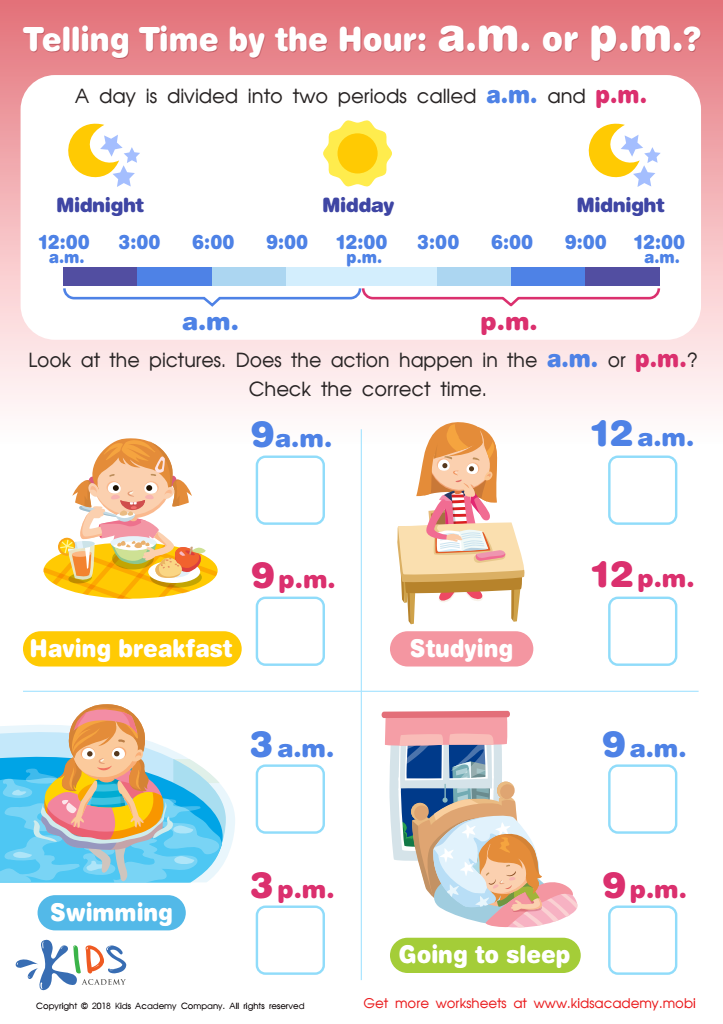
Tilling Time by the Hour: a.m. or p.m.? Worksheet
 Assign to My Students
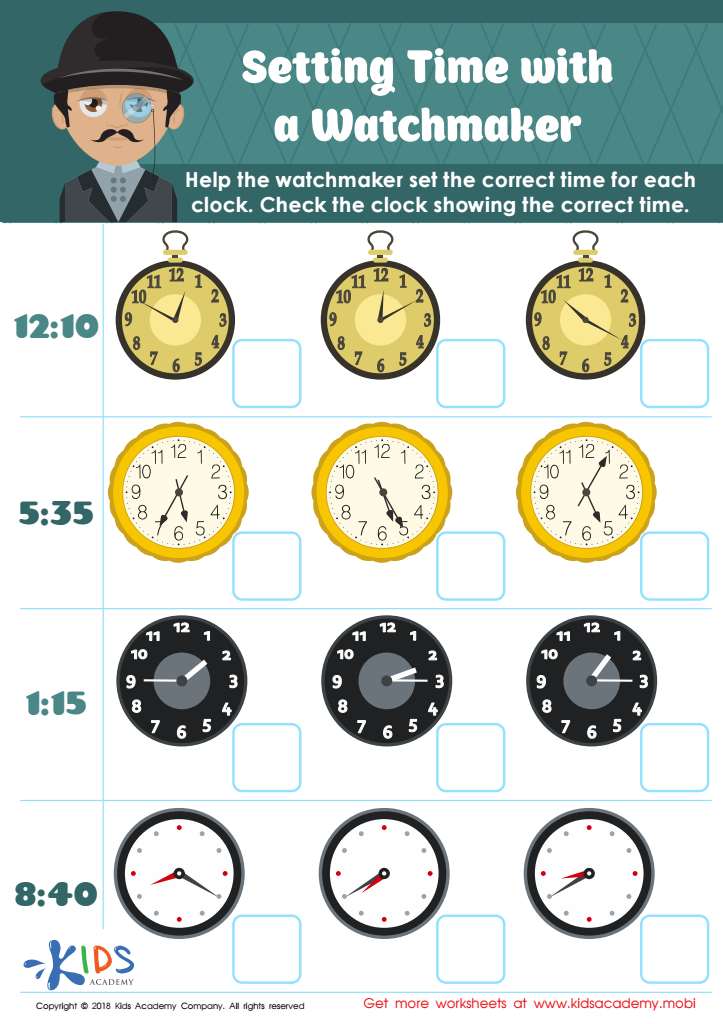
Setting Time with Watchmaker Worksheet
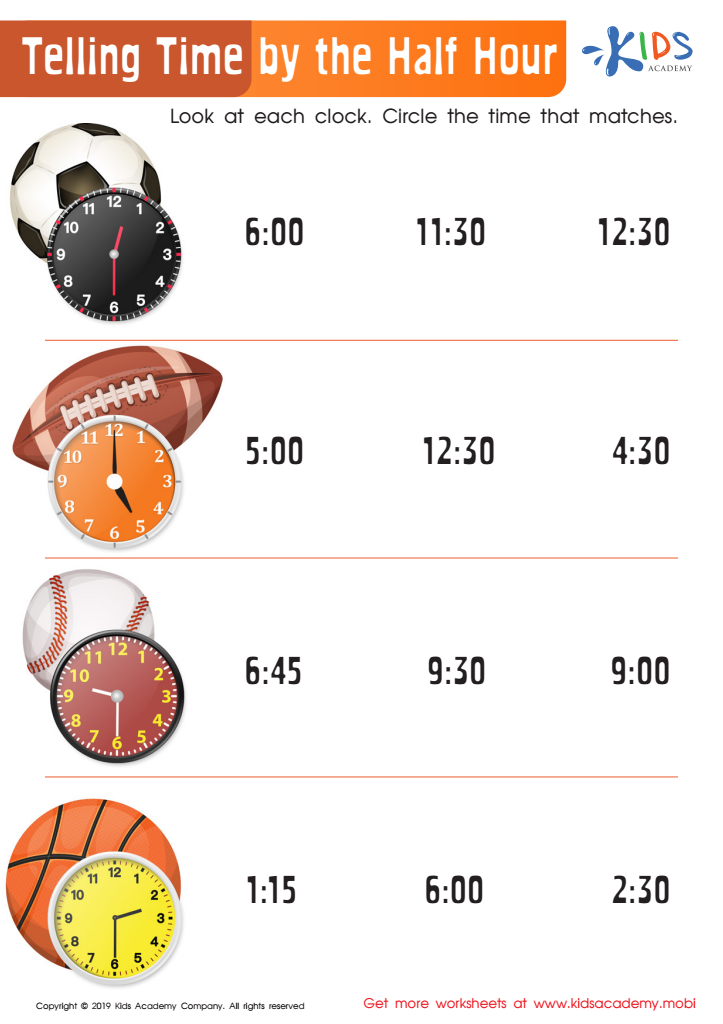
Telling Time by the Half Hour Worksheet








Teaching children to read analog clocks is essential for their overall development and daily functioning. For ages 4 to 7, this skill introduces them to the concept of time, an important aspect of their lives. Understanding analog clocks fosters a sense of responsibility, as children begin to manage their own schedules, routines, and activities, such as knowing when to wake up, eat, or go to bed.
Additionally, reading an analog clock enhances cognitive skills. It requires children to recognize numbers, understand spatial relationships, and develop problem-solving abilities while visualizing concepts of hours and minutes. This hands-on skill promotes critical thinking, as children assess the position of the hour and minute hands to gauge time accurately.
Teaching analog clock reading also encourages parents and teachers to engage with children in meaningful conversations about time. Shared activities, like planning a day using a clock, create bonding moments and make learning interactive and enjoyable. As children grow, these skills will help them navigate the world more independently, prepare them for challenges in school, and encourage discipline. Ultimately, mastering analog clocks is about fostering autonomy, awareness, and a strong foundation in numeracy and time management skills.








